Galvanized America Inn: Where Art, History, and Hospitality Meet in Bucks County
Some of my favorite travel experiences happen when I find myself somewhere that encourages me to slow down, settle in, and enjoy the company of people who have interesting stories to tell. After a long day of traveling through Pennsylvania, that was exactly what I needed when I arrived at Galvanized America Inn & Art Gallery in Pipersville, a quiet community in the heart of Bucks County.
I had come to experience a historic bed-and-breakfast, enjoy a little Pennsylvania countryside, and learn about the people behind the property. What I discovered was a 1754 farmhouse, a beautifully restored art gallery, a couple who had brought two very different professional backgrounds into hospitality, and a breakfast that certainly deserves its own moment in this story.
By the time I left, I had also made a new friend in Sherri Bennett, which is one of those unexpected pleasures that makes traveling so rewarding.
A 1754 Farmhouse and a Dream That Began in a Barn
Ed and Sherri Bennett hadn’t originally set out to become innkeepers. In fact, their search for a property had much more to do with Ed’s lifelong passion for art than any ambition to operate a bed-and-breakfast.
“He’s been looking for a property that had a barn because he wanted his art gallery in a barn,” Sherri explained during one of our conversations. “It had been his dream since he was little.”
When they found the property in Pipersville, they had the barn Ed wanted, but the farmhouse presented an opportunity neither had necessarily anticipated.
“When we walked into the farmhouse, we were like, ‘Wow, this would be a really cool bed-and-breakfast.’ So we went for it.”
I loved hearing that because there was something wonderfully organic about the way their business came together. Rather than starting with a conventional hospitality concept and searching for a building to accommodate it, they found a property that allowed them to bring together their interests, talents, and vision for the next chapter of their lives.
The farmhouse dates to 1754, meaning it was already standing more than twenty years before the United States declared independence. Today, the property encompasses more than six acres of countryside, complete with mature trees, gardens, a creek, and a pond.
The restored farmhouse has four guest accommodations, while the early-nineteenth-century bank barn houses Ed’s art gallery and studio. Together, they create a property that feels very much like an extension of the people who own it.
Ed and Sherri welcomed their first guests in 2018, following renovations that adapted the historic building for modern travelers while maintaining its farmhouse character.
As someone who enjoys historic properties but has absolutely no desire to sacrifice comfort for the sake of nostalgia, I appreciate that balance. There’s plenty to admire about an eighteenth-century building, but I also want the conveniences that make a getaway enjoyable.
From the Classroom to a New Kind of Hospitality
While Ed brings an artist’s sensibility to the property, Sherri contributes something equally valuable from her years working in education.
When I asked her what kind of teacher she had been, she told me she worked in elementary education with children who had special needs.
“And I miss the kids,” she added.
I could hear the affection in her voice as she spoke about teaching, and I told her something I genuinely believe: working with children who have special needs takes a special person.
That conversation gave me a better understanding of Sherri and the care she brings to welcoming guests. Teaching and hospitality are very different professions, of course, but both require patience, attentiveness, and the ability to recognize that different people need different things.
Throughout my stay, I appreciated how naturally Ed and Sherri moved between giving me the attention of thoughtful hosts and allowing me the space to relax.
After arriving, I was welcomed with food and wine while Ed prepared hors d’oeuvres in the kitchen and we began getting to know one another. Sherri showed me around the property, sharing its history and explaining how the rooms had originally functioned.
One of the spaces she pointed out was the former servants’ quarters, which became the inn’s smallest guest accommodation. Its winding staircase remains a reminder of how differently people designed and occupied homes in earlier centuries.
I always find those architectural details fascinating because they reveal something about everyday life that grand historical narratives often overlook.
Eventually, I had the opportunity to settle in and enjoy the quiet, which felt especially welcome after the effort it had taken to get there.
Breakfast, Conversation, and a Little Culinary Indulgence
If there’s one thing I appreciate about a good bed-and-breakfast, it’s waking up to a meal that someone has prepared with genuine care. Galvanized America certainly delivered on that part of the experience.
The following morning, Sherri brought out a beautiful hash brown-crusted quiche filled with spinach, tomato, green onion, ham, cheddar, and Swiss cheese. Alongside it came semolina toast, caramelized bacon, and preserves combining raspberry, cherry, strawberry, and red currant.

As she presented breakfast, she walked me through the ingredients, explaining each part of the meal with the ease of someone who enjoys sharing good food.
Now, anyone who knows me knows that food is never simply something I eat while traveling. I’m interested in the people who prepare it, the ingredients they choose, the traditions they preserve, and the ways a meal becomes part of our understanding of a place.
At Galvanized America, breakfast created another opportunity to sit together and talk. We moved easily from the history of the farmhouse to Ed’s artistic career, Sherri’s years as a teacher, and the rhythms of running an independent business in Bucks County.

The inn also serves coffee from The Coffee Scoop, a local coffee roaster, which is another nice example of how small hospitality businesses can incorporate nearby producers into the guest experience.
I particularly appreciate that kind of local connection because it allows the benefits of tourism to extend beyond the accommodation itself.
What Brings Travelers to Bucks County?
Naturally, I wanted to know what brings people to this part of Pennsylvania and how much business an inn outside a major city can attract throughout the year.
“Weekends are a big time,” Ed and Sherri explained, although midweek stays have been picking up.
Their busiest period generally runs from early spring through Thanksgiving, with some activity around Christmas before business slows considerably during the winter.
They were refreshingly candid about the seasonal nature of tourism in the region. Unlike places that attract visitors for skiing or other major winter activities, Bucks County experiences a quieter period once the holiday season passes.
Still, there is plenty to draw visitors during much of the year.
Ed and Sherri pointed to nearby state parks, local attractions, and the growing popularity of New Hope and Lambertville as destinations for people escaping New York City.
I had arrived through Peddler’s Village, which Sherri explained was only about ten minutes from the inn. The shopping village is one of the area’s better-known destinations, with shops, restaurants, seasonal activities, and events that attract visitors throughout the year.
The surrounding Bucks County region also has a long association with artists, historic properties, independent businesses, and scenic countryside.
During our conversation, Ed and Sherri even shared a story about musician Zayn Malik having a connection to the area. Although they hadn’t met him personally, they told me that his producer once stayed at the inn for a week while working on music.
Apparently, the producer kept a rather unusual schedule because Zayn preferred working late into the night. Breakfast wasn’t much of a priority when the workday began in the afternoon!
I thought that was pretty funny, and it was another reminder that you never quite know who might find their way into a small community.
The Barn That Became an Art Gallery
Although the farmhouse provides the accommodations, Ed’s gallery gives Galvanized America another dimension that makes it particularly interesting.
The early-nineteenth-century barn underwent an extensive restoration that transformed it into a working studio and fine art gallery. Rather than removing every trace of its agricultural past, Ed incorporated reclaimed materials and salvaged architectural elements into the design.
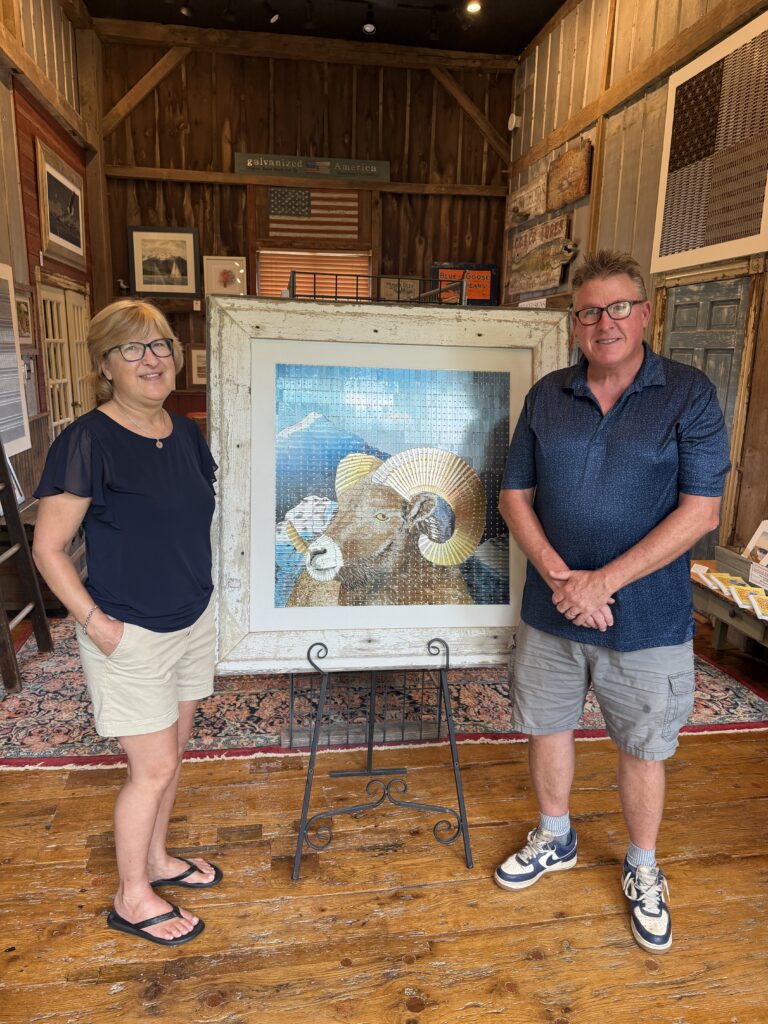
The gallery includes vintage lighting, weathered wood, and galvanized metal alongside his paintings, drawings, prints, handmade pieces, and signature razor blade artwork.
I was especially interested in the way Ed’s creative life had shaped the property because it meant the restoration wasn’t simply about making an old building attractive. It was about creating a place where he could finally fulfill a dream he’d carried since childhood.
“I was born an artist,” Ed told me when I asked how long he had been interested in art. He explained that teachers recognized his talent when he was five and that his mother made certain he had access to the instruction and encouragement he needed.
Although Ed spent 25 years working in advertising while raising his family, his creative ambitions never disappeared.

“At 60 years old, I have my dream gallery,” he told me.
I found that especially meaningful because we often talk about following our dreams as though there’s some universal timetable for doing so. Ed’s story offers a different perspective, one where fulfilling family responsibilities and building a professional career did not mean abandoning the artist he had always been.
His razor blade artwork has an especially unusual origin, involving a New York advertising agency, an enormous collection of discarded blades, and years of experimentation with color and technique. I explore that remarkable story in my companion feature about Ed Bennett’s art.
When a Place Becomes Part of the People You Meet
One of the things that distinguishes independent accommodations from larger hospitality operations is the opportunity to get to know the people who have invested their lives in creating them.
Of course, not every traveler wants that kind of interaction, and I can certainly appreciate the appeal of a beautiful hotel where I can enjoy a comfortable room, order a cocktail, and spend a little time doing absolutely nothing.

However, there are also trips when I’m especially interested in understanding the people, history, and culture of the destination.
My experience at Galvanized America belonged to that second category.
Through Ed and Sherri, I learned about the property, the gallery, the local tourism economy, and the choices that brought them to Bucks County. Those conversations added layers to my visit that I never would have discovered by simply checking into a room and leaving the next morning.
I also appreciated the ways their different backgrounds complemented one another. Ed had spent decades in advertising while developing his artistic practice, and Sherri had devoted her professional life to educating children. Together, they created a business that draws on both creativity and care.
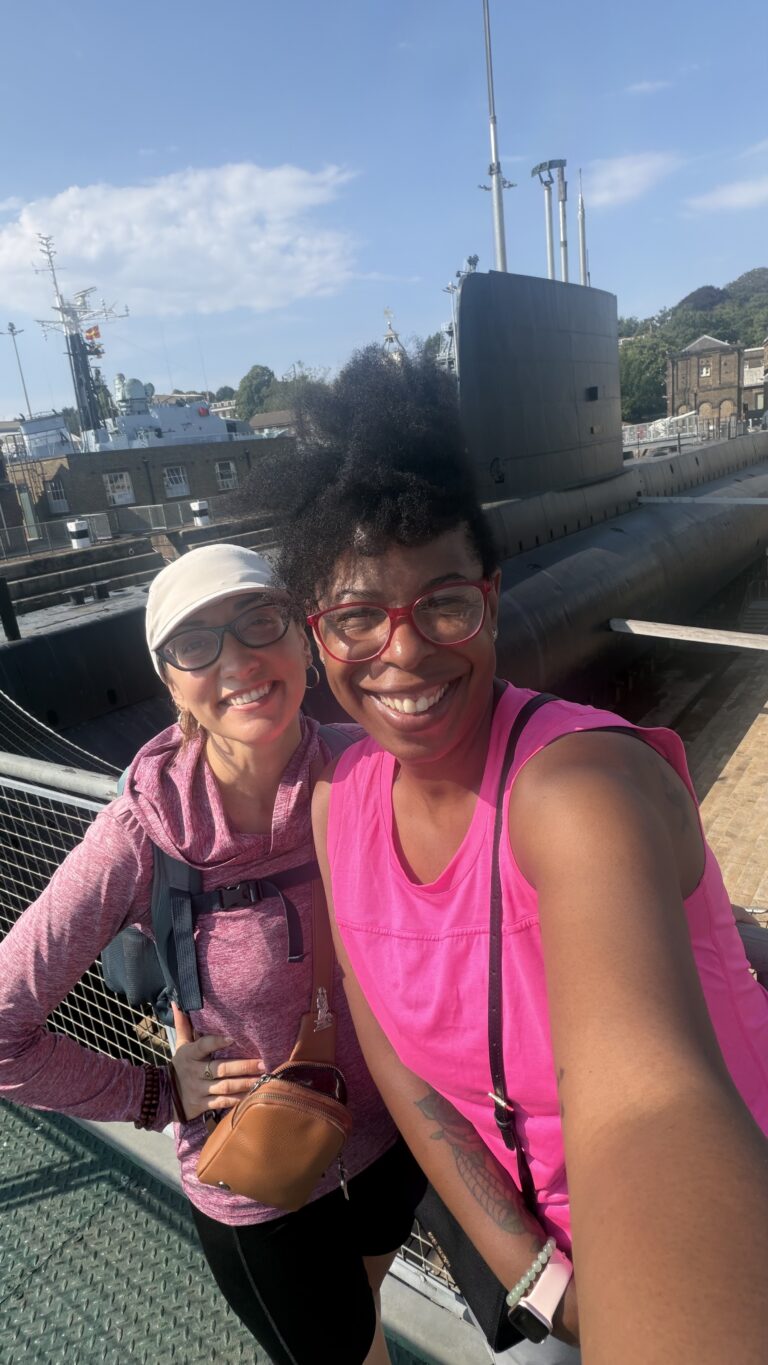
The relationship didn’t end when I checked out, either. Sherri and I spent additional time exploring the surrounding area, and somewhere along the way, our conversations began to feel less like an interaction between a journalist and an innkeeper and more like two women enjoying each other’s company.
By the time we parted ways, I genuinely considered her a new friend.
My DG Speaks Take: An Inn With More Than One Story to Tell
I often think about what our travel choices mean for the communities we visit. A hotel reservation can seem like a simple transaction, but where we stay influences which businesses receive our money and how much of our travel spending circulates locally.
At Galvanized America, the connections were especially easy to recognize.
The farmhouse provides a livelihood for Ed and Sherri, the gallery creates space for artistic expression and the work of other local artists, and guests have opportunities to explore nearby restaurants, shops, and attractions.
I also left thinking about Ed’s dream of having his own gallery and how finding the right property eventually led to an entirely different chapter for both him and Sherri.
What started with a search for a barn became a historic inn, a creative space, and a place where travelers from different backgrounds can come together over a good meal and an interesting conversation.
For me, that is much of what makes travel worthwhile. I enjoy beautiful surroundings, good food, comfortable accommodations, and opportunities to experience something new, but I also appreciate the relationships that develop when we take the time to engage with people.
Galvanized America gave me all of that, along with a friendship I certainly hadn’t anticipated when I first made my way to Pipersville.
Planning a visit? Galvanized America Inn & Art Gallery is located at 6470 Durham Road in Pipersville, Pennsylvania. Guests can explore accommodations, amenities, and reservations through the official Galvanized America website.
Disclosure: My stay at Galvanized America Inn & Art Gallery was hosted. As always, the experiences, observations, and opinions I share are my own.