
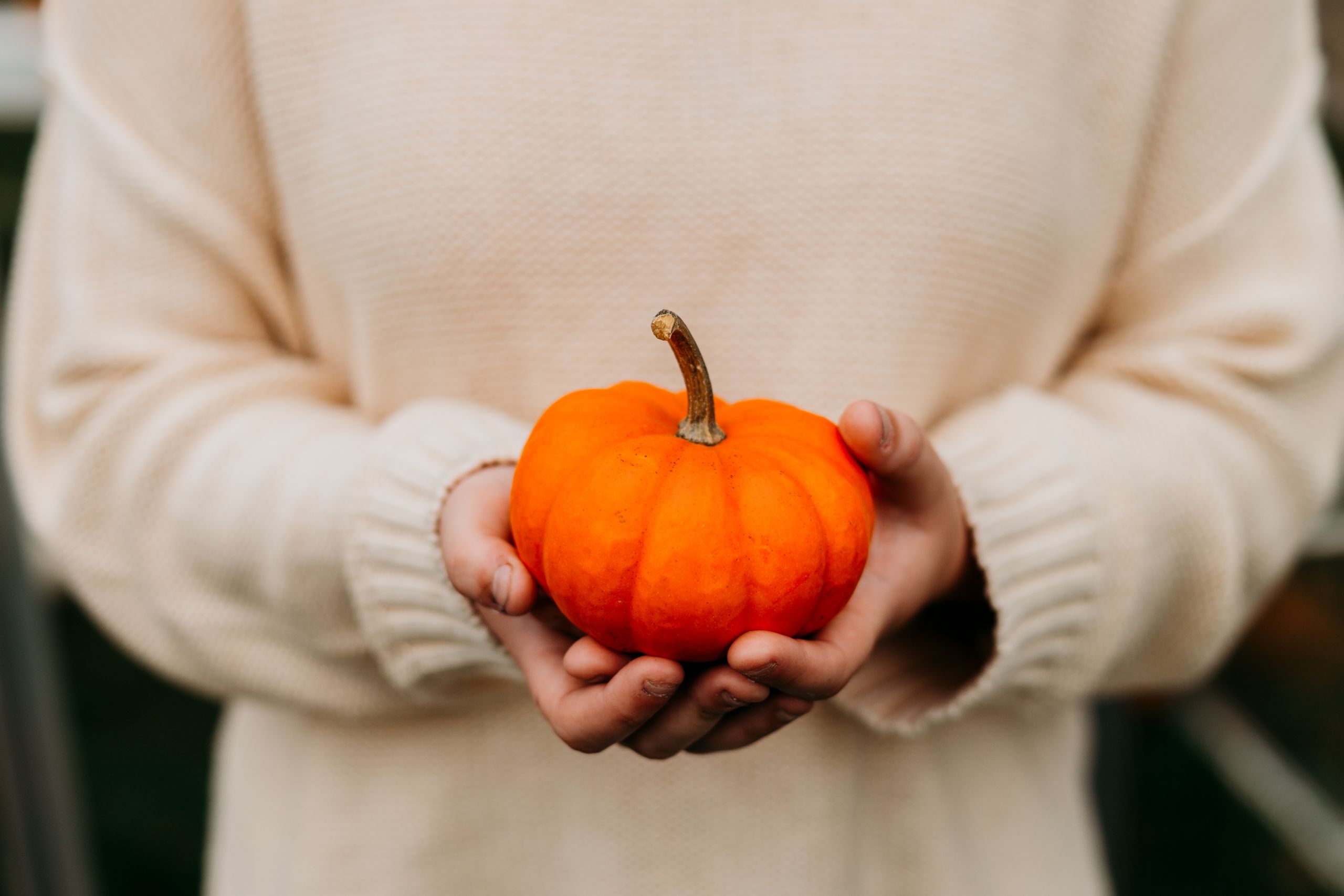
“Thanks a Lot! The Importance of Gratitude and the History of Thanksgiving!”
There is an old episode of Seinfeld in which Jerry weighs the rules of etiquette surrounding the words “thank you.” A friend gives Jerry tickets to a hockey game, so Jerry thanks him immediately. Kramer insists that Jerry should also thank him after the game. Jerry stubbornly refuses, but eventually caves.
“Thank you” is such a common phrase. Do we say it too often, or not enough? Perhaps the real issue is not how frequently we say it, but how sincerely we mean it.
Gratitude is complex. Parents teach children to say “the magic words” whenever someone does or says something kind. It can become similar to saying “I’m sorry,” where expressing the expected words appears more important than whether the feeling behind them is genuine.
Yet feeling the gratitude we express is the most important part. We can encourage gratitude, but the emotion must ultimately come from within. There are ways to strengthen our capacity for it, and Thanksgiving is one of them.
History of the Feast
It is not a coincidence that Thanksgiving occurs late in the year. Long before Aldi or Uber Eats, the autumn harvest was a primary source of nourishment, and communities had good reason to give thanks when it was successful. Prayers of thanks and harvest ceremonies were common long before the modern holiday developed.
The history of Thanksgiving in North America has roots in Protestant Reformation-era England.1 Its harvest-festival traditions began well before today’s late-November celebrations.2
During the reign of Henry VIII and the Church of England reforms of 1536, the number of recognized religious holidays dropped from 95 to 27. Puritan reformers sought to remove many additional celebrations and ceremonies, although they continued to recognize special Days of Fasting and Days of Thanksgiving in response to significant events.3
When English settlers arrived safely in Virginia in 1619, the charter establishing Berkeley Hundred called for an annual day of thanksgiving.4
Thanksgiving in Canada
Some historians trace an early North American thanksgiving ceremony to 1578, after Martin Frobisher returned from a voyage to what is now Canada while searching for the Northwest Passage.5
Other researchers note that there is no single origin story for Canadian Thanksgiving. Influences included French settlers in New France, Indigenous harvest traditions, and customs brought by Irish, German, and Scottish immigrants and United Empire Loyalists.6,7
The government of the Province of Canada declared Thanksgiving a religious holiday in 1859. In 1879, Governor General the Marquis of Lorne proclaimed November 6 a day of general thanksgiving for a bountiful harvest. In 1957, Canada established the holiday on the second Monday in October.8,9
Thanksgiving in the United States
In the United States, Thanksgiving is commonly associated with the English settlement at Berkeley Hundred in Virginia and the 1621 harvest gathering involving English colonists and the Wampanoag people in Plymouth.
The familiar national story often simplifies a more complicated history of cooperation, survival, colonization, displacement, and conflict between settlers and Indigenous nations.
Religious and political leaders continued to issue thanksgiving proclamations throughout New England. As president, George Washington designated November 26, 1789, as a day of public thanksgiving and prayer.1,10,11
In 1863, during the Civil War, President Abraham Lincoln proclaimed a national Thanksgiving observance.
Foodstuffs of Joy
Thanksgiving has become the holiday of all things food: turkey, ham, cranberry sauce, stuffing, gravy, sweet potatoes, mashed potatoes, rolls, pies, cookies, and brownies.
All these comfort foods arrive within one warm, welcoming, and often carefully decorated setting. How long should the turkey cook? What belongs in the stuffing? Which sauces should go on the table?
These questions create the familiar craziness and stress of the holiday. Yet it is often the good kind of stress, tied to hospitality, preparation, anticipation, and the desire to make people feel welcome.
That brings us back to gratitude.
Gratitude’s Opposite
Gratitude is not a single, uncomplicated emotion. People may feel deeply grateful for certain parts of life while carrying anger or disappointment about others.
We may feel thankful for family, friends, partners, coworkers, neighbors, emergency workers, utility crews, and others who support communities during difficult conditions.
Those forms of gratitude do not automatically eliminate resentment. English author Douglas Murray has described resentment as the opposite of gratitude.
Cain and Abel
In The War on the West, Murray refers to a passage involving Satan in Fyodor Dostoevsky’s The Brothers Karamazov to explore resentment. The biblical story of Cain and Abel offers another familiar example.
Cain becomes bitter when Abel’s offering receives greater favor. Instead of examining his own choices, he directs his resentment toward his brother and kills him.
The story shows how resentment can turn disappointment outward. Rather than confronting pain, envy, or personal responsibility, a person may try to destroy the individual who appears to represent everything they lack.
Resentment in Stories
Many films, television series, plays, and novels explore the tension between gratitude and resentment.
Star Wars: Revenge of the Sith, in which Anakin Skywalker completes his transition to the dark side, is one example. The penultimate episode of Game of Thrones, in which Daenerys allows grief and resentment to drive her destruction of a city, is another.
In both examples, resentment grows from despair and the belief that suffering has become inescapable.
In Dante’s Inferno, the lowest circle of Hell is depicted as a frozen lake occupied by those who betrayed others. The image connects bitterness with emotional coldness and isolation.
Taking Personal Stock
Gratitude, on the other hand, is often presented as a source of warmth. Deeper gratitude can emerge through recognizing loss, fragility, or how easily life could be different.
The COVID-19 pandemic exposed the vulnerability of systems many people had taken for granted. Financial stability, healthcare, public services, social contact, and ordinary routines suddenly felt far less dependable.
That experience led many people to appreciate running water, electricity, stocked grocery shelves, employment, physical safety, and time with loved ones more deeply.
It would be disingenuous for me to discuss gratitude from a soapbox. Although I believe strongly in its value, I am not free from resentment.
My resentment grows primarily from interpersonal experiences involving feelings of worthlessness and betrayal. Those feelings are unpleasant, and working through them remains an ongoing process.
I share this because honesty can include darkness without allowing darkness to define everything. I may still carry bitterness about certain experiences, but they represent only one part of my life.
What I Am Thankful For
I am thankful to have worked for more than five years with a productive and supportive team.
I am fortunate to have immediate and extended family members who are loving, caring, and understanding.
I am grateful to have had enough money to travel abroad and experience the historical wonders of Athens, Greece.
I am thankful for my furry companion, my sister, and the neighbors who cared for him while I traveled.
I am also grateful for meaningful interests, including self-defense and theatrical work.
Finally, I am thankful to DG Speaks and its founder for giving me the opportunity to publish my writing on this platform.
My gratitude extends to the everyday conditions that make life possible: electricity, running water, food on grocery-store shelves, a place to sleep, and the many people whose work supports daily life.
Giving Thanks Beyond the Holiday
Thanksgiving offers a formal occasion to practice gratitude, but appreciation should not depend entirely on one date.
The words “thank you” matter most when they are supported by attention. Gratitude means recognizing what another person contributed and refusing to treat care as something automatically owed.
It does not require pretending that life is perfect. Gratitude and resentment can exist at the same time. The challenge is deciding which one will receive more of our energy.
With that, let us sit down and enjoy the turkey, cranberry sauce, gravy, potatoes, and other familiar comforts of the holiday.
May we also remember the people, labor, history, and relationships that made the meal possible.
Sources
[1] Hodgson, Godfrey. A Great and Godly Adventure: The Pilgrims and the Myth of the First Thanksgiving. PublicAffairs, 2006.
[2] Baker, James W. Thanksgiving: The Biography of an American Holiday. University Press of New England, 2009.
[3] Forbes, Bruce David. America’s Favorite Holidays: Candid Histories. University of California Press, 2015.
[4] Dowdey, Clifford. The Great Plantation. Rinehart and Company, 1957.
[5] Mills, David, Laura Neilson Bonikowsky, and Andrew McIntosh. “Thanksgiving in Canada.” The Canadian Encyclopedia.
[6] Kaufman, Jason Andrew. The Origins of Canadian and American Political Differences. Harvard University Press, 2009.
[7] Solski, Ruth. Canada’s Traditions and Celebrations. McGill-Queen’s Press.
[8] Duncan, Dorothy. Canadians at Table: Food, Fellowship, and Folklore. Dundurn, 2006.
[9] Kelch, Kalie. Grab Your Boarding Pass. Review and Herald Publishing Association, 2013.
[10] Julian, Sheryl. “History Is Served.” The Boston Globe, November 20, 1996.
[11] “Thanksgiving Proclamation, 3 October 1789.” George Washington Papers, Library of Congress.
