
Coimbra Fado Made Me Hear Portugal Differently
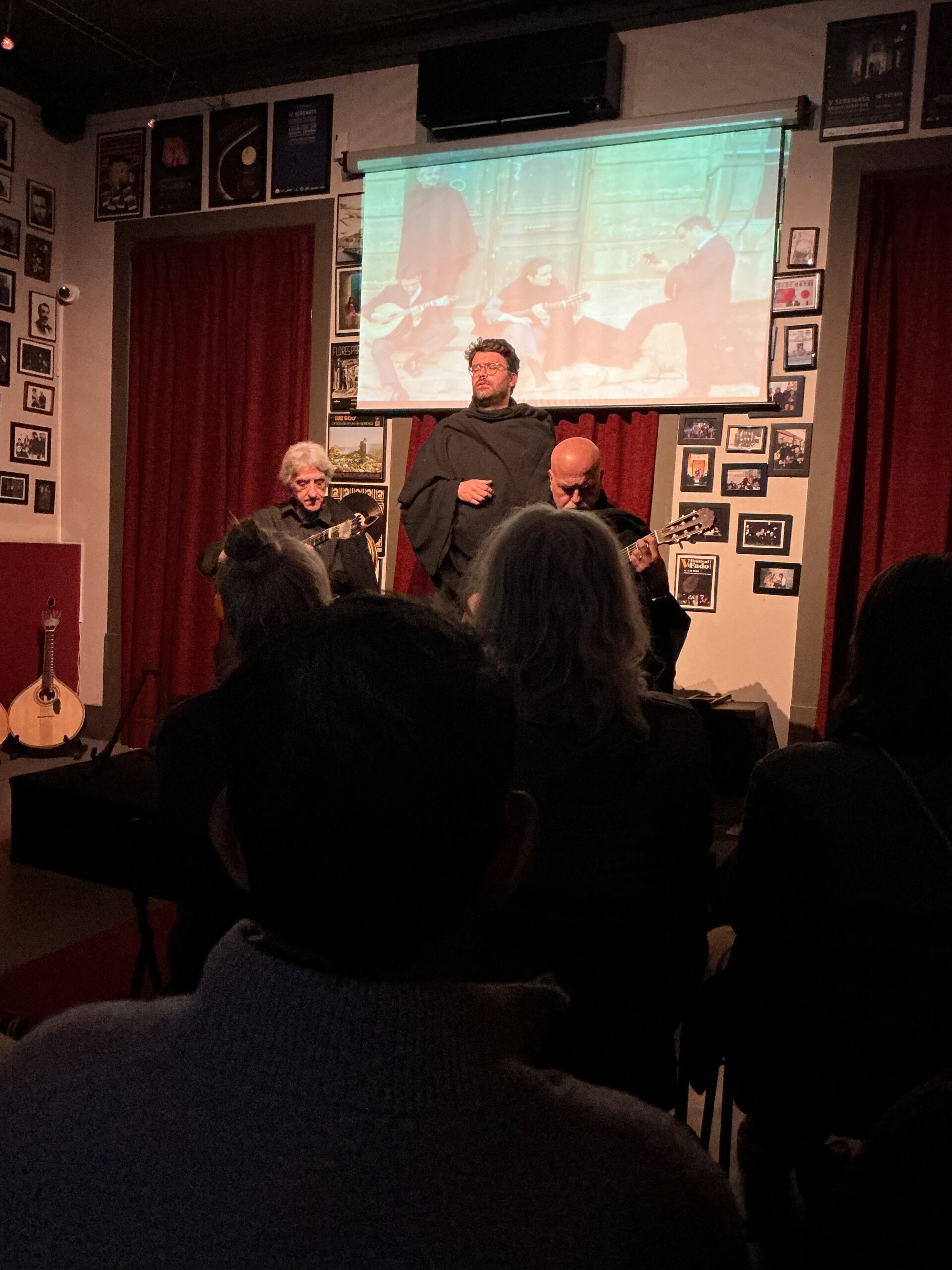
I had already heard fado in Lisbon, and the performances I experienced in Alfama had stayed with me. There was a sorrow in those songs that I could feel even when I did not understand every word. So when I arrived at Fado ao Centro in Coimbra, I thought I had a sense of what the evening might be like. Instead, I found myself smiling at how different the music felt.
When the musicians began, I noticed it almost immediately. The sound felt more like a serenade. There was longing, yes, but there was also a sweetness to it. I found myself smiling in places where I’d expected to feel sorrow. If Lisbon fado had taken me into someone’s heartbreak, Coimbra fado seemed to be standing outside someone’s window, hoping they’d come out.
I wanted to know why. And fortunately, I had someone to ask.
A song meant for someone
After the performance at Fado ao Centro, I spoke with Daniela about what sets the Coimbra tradition apart. She began with the stories commonly told about the two styles. Lisbon’s tradition, she explained, is often associated with sorrow and the women who waited for men to return from the sea. Coimbra’s music grew from student serenades, particularly songs sung to people the students loved.
It was a helpful way to describe the contrast I’d heard, though I wouldn’t pretend that either city’s entire musical history fits into a single origin story. Those traditions contain many voices and influences. Still, Daniela’s explanation gave me a way to understand my reaction. What I’d heard wasn’t simply a regional variation of the same performance. It came from a different social setting and a different relationship between the singer and the listener.
Daniela told me that Coimbra fado grew from student serenades, including songs sung for the girls students loved and for the city itself. Suddenly I could understand some of the feeling I had picked up during the performance. The music seemed to carry youth, affection, and the memory of student life. It was lovely to hear how those traditions had taken shape.
Why the melodies sound different
I told Daniela that I could feel the difference in the melodies. She smiled at that observation and explained another influence I’d never considered: Italian opera.
Students, she said, were inspired by the more lyrical style of operatic singing. That helps explain why Coimbra fado can feel expansive and serenade-like even when the music is emotionally restrained. It gave me something new to listen for, and it reminded me how much cultural exchange is hidden inside the traditions we call local.
I’m always interested in the stories people carry across borders. Food traditions do it, languages do it, and music certainly does it. Sometimes an art form becomes so closely associated with one city that we forget how many influences helped shape it. I liked hearing Daniela connect this very Portuguese sound with another European musical tradition without diminishing what makes it Coimbra’s own.
Then I asked about the women
Then I asked Daniela about something else I had noticed: the tradition of men performing Coimbra fado. Why, I wanted to know, had the serenades been sung by men? And what did people think about women joining in? I had come to listen to music, but this was the conversation that made me want to learn much more.
She didn’t try to make it more complicated than it was. It began as a men’s tradition, she told me, and that expectation remained strong for a very long time. But things were changing.
Daniela told me that two women had sung in the students’ Monumental Serenade the previous year. She was pleased to see that change, and when I asked how people were responding, she said the response was generally positive. Some listeners remained attached to the male tradition, but the music was opening to new voices. “We also have the right to do anything,” she told me. I loved that.
Now that was a conversation I could have kept going for another hour.
In my work I often return to a simple question: who gets to participate in the traditions a community values? We talk about preserving culture as though preservation means keeping every detail exactly as it was. But people change. Institutions change. Women’s opportunities change. If more women are studying at universities, as Daniela noted, why wouldn’t they also have a voice in the traditions that celebrate university life?
That doesn’t mean every traditionalist needs to feel the same way about a performance. People can love the sound and history they grew up with. What interests me is whether the conversation makes room for someone who was previously told the stage wasn’t hers.
I told Daniela there always seems to be a push and pull between tradition and change. She agreed, and her optimism stayed with me.
The part of travel I love most
I could have gone to the performance, enjoyed the music, and left with a few beautiful memories. Instead, I had a conversation that changed how I understood what I’d heard. That’s why I keep asking questions when I travel. A place becomes more interesting when someone who knows it is willing to share the things an audience might miss.
Coimbra was already giving me plenty to think about. I was in the city for the DIAITA colloquium, discussing the stories that travel through food and media. At DIAITA, I’d been thinking about who tells cultural stories and who is left out. My conversation with Daniela brought the same question into a completely different room.
I left with an appreciation for both styles of fado, not a need to choose one over the other. Lisbon had offered me songs that could sit with sorrow. Coimbra gave me the pleasure of a serenade and the chance to think about what happens when new voices join an old tradition.
And I left grateful to Daniela. She didn’t just tell me what I had heard. She helped me hear a little more.
If you’re visiting Coimbra and curious about its music, Fado ao Centro is a place to begin. Come for the performance, but leave room for the stories behind it.
Disclosure: This article reflects my firsthand visit and recorded conversation with Daniela. No hosting arrangement is asserted here.


