Why I Understand Pilgrimage Differently Now
Why I Understand Pilgrimage Differently Now
I understand pilgrimage differently now because I have felt it in my feet. Before the Camino, pilgrimage sounded like something that belonged mostly to religion, history, and people with a very specific kind of faith. I respected that, but I did not always see where I fit.
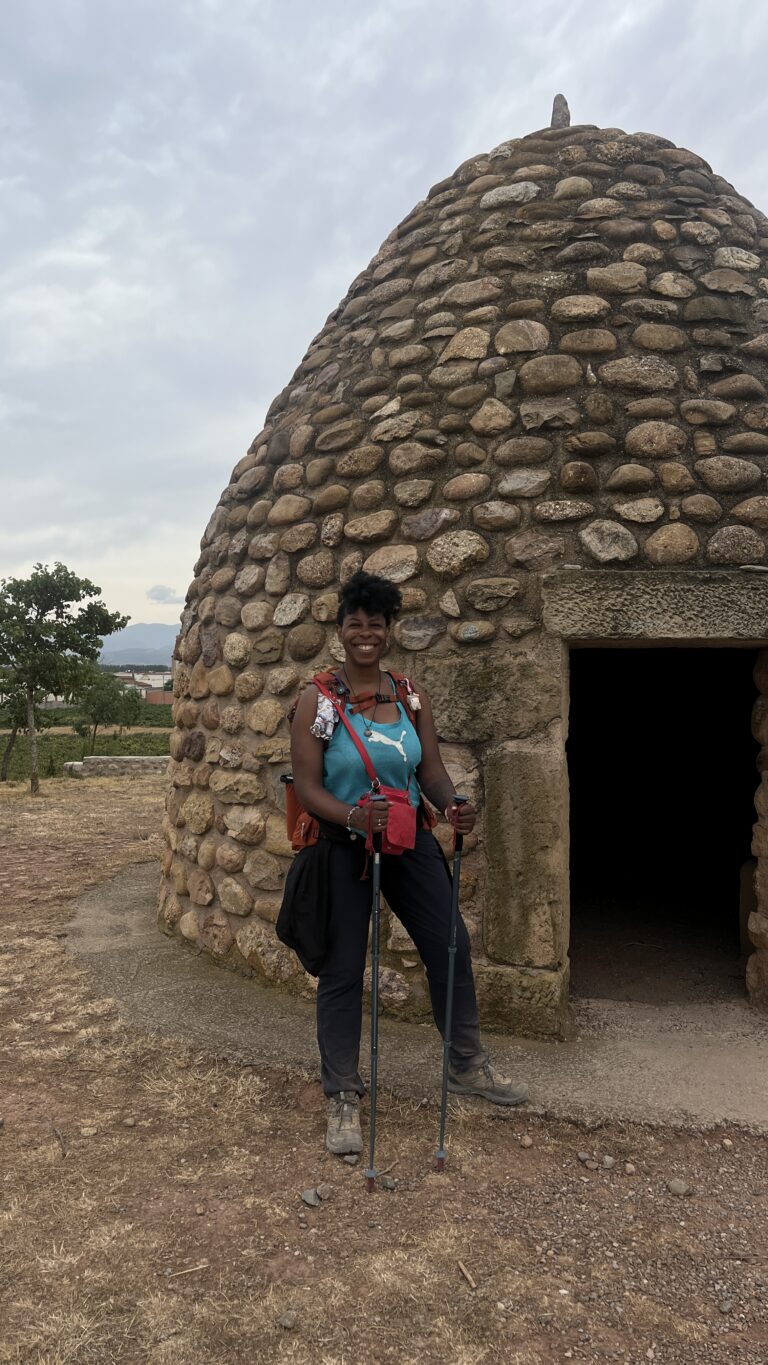
Then I walked the Camino Francés.
Now I understand pilgrimage as movement toward meaning. It can be religious, absolutely. But it can also be a way of carrying questions through the body until something inside you begins to shift.
The Camino Has Deep Christian Roots
The Camino de Santiago is an ancient pilgrimage connected to the tomb of St. James in Santiago de Compostela. That history matters. The churches, rituals, symbols, credentials, stamps, and Compostela all live inside that tradition.
I do not believe in flattening that history to make the Camino sound like a generic wellness walk. It is not. It carries centuries of devotion and sacrifice. Pilgrims walked this road long before it became a bucket-list adventure or a travel content niche.
For official context, visit the Pilgrim Reception Office and the Cathedral of Santiago.
I Walked as a Seeker, Not a Christian Pilgrim
I have been clear about this. I did not walk as a Christian pilgrim. I am not Catholic. I am not Christian. Still, the Camino called to me because I felt drawn to the energy of the route, the land, the history, the Mother, and the millions of human questions carried across those paths before mine.
That did not make my walk less meaningful. It made it honest.
I wrote about that more directly in Walking the Camino Without Being Religious. The Camino made room for my kind of seeking too.
Pilgrimage Lives in the Body
You can read about pilgrimage for years and still not understand what happens when your body becomes part of the prayer, question, or intention. Walking changes the way meaning moves through you.
My feet carried uncertainty. My knees carried humility. My lungs carried effort. My shoulders carried everything I thought I needed until the backpack started telling the truth.
That embodied part is why the Camino is not just a hike. It is walking with attention. Walking with history. Walking with something inside you that wants to be answered, even if you do not know the question yet.
Pilgrimage Does Not Require Certainty
One of the most liberating things I learned is that pilgrimage does not require perfect certainty. You can walk with questions. You can walk with doubt. You can walk with grief, curiosity, exhaustion, anger, hope, or a mixture of all of it.
The road does not demand that you have one neat reason. In fact, your reason may change as you walk.
That is why people walk the Camino for different reasons. The path is shared, but the inner pilgrimage is personal.
Pilgrimage Continues After Arrival
I used to think pilgrimage ended when the destination was reached. Now I know better. Santiago was an arrival, but the meaning kept unfolding after I returned home.
The post-Camino season became part of the pilgrimage too. Learning how to carry the lessons home, how to keep the rhythm alive, how to live differently after the road had changed me, all of that mattered.
For reflection and grounding after travel, I like tools such as Calm. If you want help planning your own pilgrimage-style journey, you can book travel coaching with me.
I understand pilgrimage differently now because I understand myself differently. The Camino did that. It gave me a road long enough to listen.