What Is the Camino de Santiago?
What is the Camino de Santiago? That is the question people keep asking me, and honestly, I understand why. From the outside, it sounds a little wild. You tell people you are walking across Spain, and they look at you like you have either found enlightenment or lost your mind.
The truth sits somewhere more interesting.
The Camino de Santiago is an ancient network of pilgrimage routes that lead to Santiago de Compostela in Galicia, Spain. For centuries, pilgrims have walked toward the Cathedral of Santiago, where Christian tradition honors the tomb of Saint James. Today, people still walk for religious reasons, but they also walk for grief, healing, adventure, culture, transition, fitness, curiosity, and sometimes because life has cracked open and they need somewhere honest to put their feet.
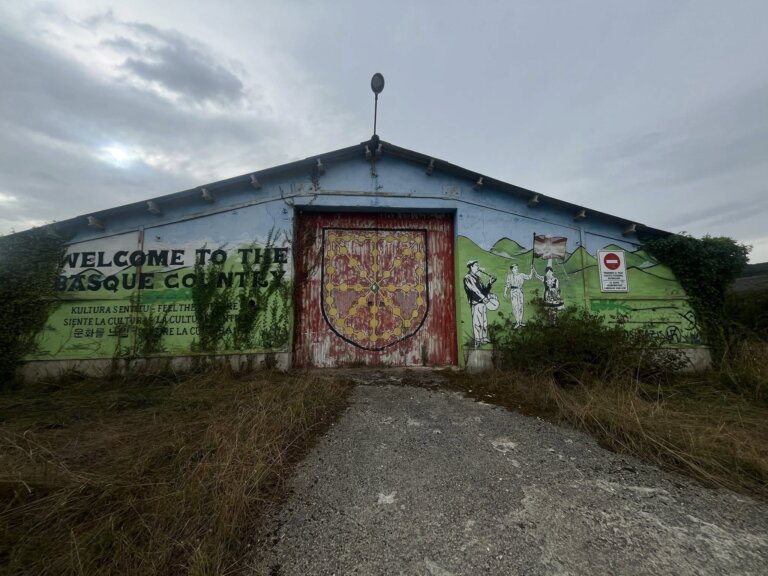
I walked the Camino Francés, which begins in Saint-Jean-Pied-de-Port, France, crosses the Pyrenees, and continues across northern Spain. It is the route many people picture when they hear “the Camino,” although it is only one path in a much larger system.
A Pilgrimage With Many Doorways
One thing I love about the Camino is that it does not demand one story from everyone. It allows people to arrive with whatever they are carrying.
Some pilgrims arrive with rosaries. Some arrive with spreadsheets. Some arrive with grief folded inside their backpacks. Some arrive newly divorced, newly retired, newly unemployed, newly brave, or newly tired of living a life that feels too small.
When I talked with my friend Katie after our Camino, that truth became even clearer. She had known about the Camino for years. It sat in the back of her mind as one of those someday dreams. Then work changed, life shifted, and suddenly the road that once felt distant became possible. Her story was different from mine, yet the invitation felt familiar. The Camino called at a moment of transition.
That is how the Camino works sometimes. It waits until you are ready, or until life makes you ready.
The Route I Chose: Camino Francés
The Camino Francés is one of the most popular Camino routes. It moves through places that feel almost mythical when you first read about them: Saint-Jean-Pied-de-Port, Roncesvalles, Pamplona, Logroño, Burgos, León, Ponferrada, Sarria, and finally Santiago de Compostela.
Official tourism resources describe the Camino as a journey filled with heritage, landscapes, cuisine, and historic destinations. That is true. Spain is stunning. The villages are layered with memory. The food can heal a bad day faster than you expect. Still, the magic is not only in what you see. It is in what walking does to your nervous system, your habits, your ego, and your understanding of enough.
For official planning context, Spain Tourism has a strong overview of the Camino de Santiago. The Pilgrim Reception Office also provides information about arriving in Santiago, credentials, and the Compostela.
It Is Not Just a Hike
The Camino is physical, yes. You walk for hours. Your feet swell. Your knees send strongly worded messages. Your shoulders begin negotiating with your backpack. You learn quickly which socks love you and which socks are out to ruin your whole ministry.
However, calling it only a hike misses the point.
A hike can be beautiful. The Camino is relational. You relate to the land, to strangers, to café owners, to bunkmates, to church bells, to your body, to your fear, and to the version of yourself that keeps showing up every morning.
There were days when I did not feel strong. There were moments when I questioned my choices. Yet each day asked only one thing from me: take the next step. That simplicity became its own kind of medicine.
Who Is the Camino For?
The Camino is for the curious. It is for the faithful and the questioning. It is for people who want a challenge, but also for people who need a pause. It is for people who love culture, food, architecture, history, and landscape. It is also for people who do not know what they need yet, but know they cannot keep moving through life the same way.
Women walk it alone. Retirees walk it. College students walk it. Couples walk it. People recovering from loss walk it. People between jobs walk it. People who have never hiked seriously in their lives walk it, although I strongly suggest doing at least some training before you go. Learn from me, friends.
If you are planning your first Camino, start with my Camino de Santiago hub. Then read Why I Walked the Camino at 50 and Walking the Camino Without Being Religious. Those two stories explain why my Camino was never only about reaching Santiago.
Practical Tools Before You Go
Before you book anything, think through the whole journey. You may need accommodation before your first walking day, travel insurance, a gear list, and a realistic budget. I like Hostelworld for comparing budget stays, SafetyWing for travel medical coverage, and my Amazon storefront for lightweight travel finds.
If you want support planning your own Camino, you can book a coaching or consulting session through my Calendly. Sometimes, it helps to talk through your route, budget, fears, and expectations with someone who has already cried on the mountain and lived to tell the tale.