
$5.7 Billion Says Black Real Estate Is Not a Side Story
Every once in a while, a number lands in my inbox that makes me stop scrolling.
This time, that number was $5.7 billion.
According to the National Association of Real Estate Brokers, the Black real estate professionals recognized through its 2026 Top 100 awards collectively generated more than $5.7 billion in transactions during 2025.
Not million.
Billion.
The honorees include individual agents, teams, residential brokerages, commercial professionals, and developers working across the country.
Numbers that large deserve attention on their own. Yet I think the more interesting story begins when we ask what those billions represent.
They represent Black professionals operating at scale in an industry deeply connected to who owns property, who accumulates wealth, who develops neighborhoods, and who gets access to one of America’s most important financial assets.
That makes this about much more than an awards ceremony.
Go Ahead and Sit With That $5.7 Billion for a Minute
The numbers get interesting very quickly.
Among individual professionals, Tracy Goins of Keller Williams Preferred Properties led NAREB’s list with more than $32.6 million in transactions. Keith James of Keller Williams Capital Properties followed with more than $31.6 million, while Rashidah Martin recorded more than $27 million.
The team numbers climb much higher.
Claudienne Hibbert-Smith of eXp Realty led that category with more than $287.6 million in production. Terri Marie Gleaton followed at more than $262.1 million.
Then we get to brokerages.
Kymber Lovett-Menkiti of Keller Williams Capital Properties topped NAREB’s brokerage leaders with more than $2 billion in transactions.
One Black-led brokerage operation.
More than $2 billion.
Those figures challenge any lingering tendency to discuss Black participation in real estate as though we are standing outside the industry asking for permission to enter.
Black professionals are already doing the business.
I Am Less Interested in the Trophy Than the Power Behind It
Awards are lovely.
Recognition has value, particularly when talented people have historically received less visibility than their work deserves.
Still, the part that interests me is economic power.
Real estate occupies a peculiar place in American life because a home serves two purposes at once. It is where people live, raise families, rest, gather, and build community. It is also an asset.
That second function has shaped American wealth for generations.
Property can appreciate.
Equity can finance education, entrepreneurship, retirement, or another property. Homes can pass from one generation to another.
Development decisions can reshape entire neighborhoods.
So when Black professionals move billions of dollars through the real estate economy, I see more than sales volume.
I see people participating in decisions about land, ownership, investment, and community development.
We Cannot Talk About Black Wealth Without Talking About Housing
Black Americans have never participated in the American housing market on equal terms.
That history is not abstract.
Housing discrimination shaped where families could live, which mortgages they could obtain, what neighborhoods received investment, and whether property ownership could become a reliable path toward generational wealth.
NAREB itself emerged from that history.
The organization formed in 1947 with a mission centered on securing equal housing opportunities regardless of race, creed, or color. Over the decades, it has advocated for fair housing, access to credit, sustainable homeownership, and business opportunities for Black real estate professionals.
NAREB describes that mission as “Democracy in Housing.”
That phrase carries considerable historical weight.
Black real estate professionals were building networks and advocating for access long before the housing industry could credibly describe itself as equal.
Understanding that history makes today’s $5.7 billion figure feel different.
This did not happen in an industry where Black professionals always received an equal shot.
Black Women Are All Over These Numbers, and Yes, I Noticed
One thing jumped out at me while reading through the honorees.
Black women appear throughout the rankings.
Tracy Goins leads the individual category. Claudienne Hibbert-Smith and Terri Marie Gleaton hold the top two team positions. Kymber Lovett-Menkiti leads the brokerage category with more than $2 billion.
In development, Tya Kennedy of TLK Housing leads the listed honorees with $300 million.
I notice women in economic stories because women’s participation in an industry never tells us only who has a job.
It can tell us who controls resources.
Who makes investment decisions.
Who builds companies.
Who develops property.
Who employs other people.
Who accumulates assets.
And, eventually, who has wealth capable of moving across generations.
That is a much more useful conversation about women’s economic agency than simply celebrating representation.
Representation Feels Different When Someone Controls the Deal
We talk frequently about representation, and for good reason.
People should see themselves in professions, leadership positions, media, education, politics, and every other part of public life.
Yet I am increasingly interested in what happens after representation.
Being in the room is one thing.
Having authority inside the room is another.
Real estate gives us a particularly clear example because transactions have measurable economic value.
A professional responsible for $20 million, $200 million, or $2 billion in business does not merely occupy space within an industry.
That person has market influence.
The distinction deserves more attention.
Then There Are the People Actually Building Things
The developer category may be the most fascinating part of NAREB’s list for me.
Tya Kennedy of TLK Housing led the category with $300 million. Other honorees included Robbie Wilson of Diceman Real Estate Development, Courtney Johnson-Rose of GEJ Development, Andre Beraud of YesToRealEstate, Leslie Smith of Property Quest, and several others.
Development changes the conversation from selling property to creating it.
Developers influence what gets built, where construction happens, which communities receive investment, what kinds of housing enter the market, and how land gets used.
Those decisions can shape communities for decades.
That is power with a physical footprint.
You can drive down a street and see its consequences.
A Transaction Is Never Just a Transaction
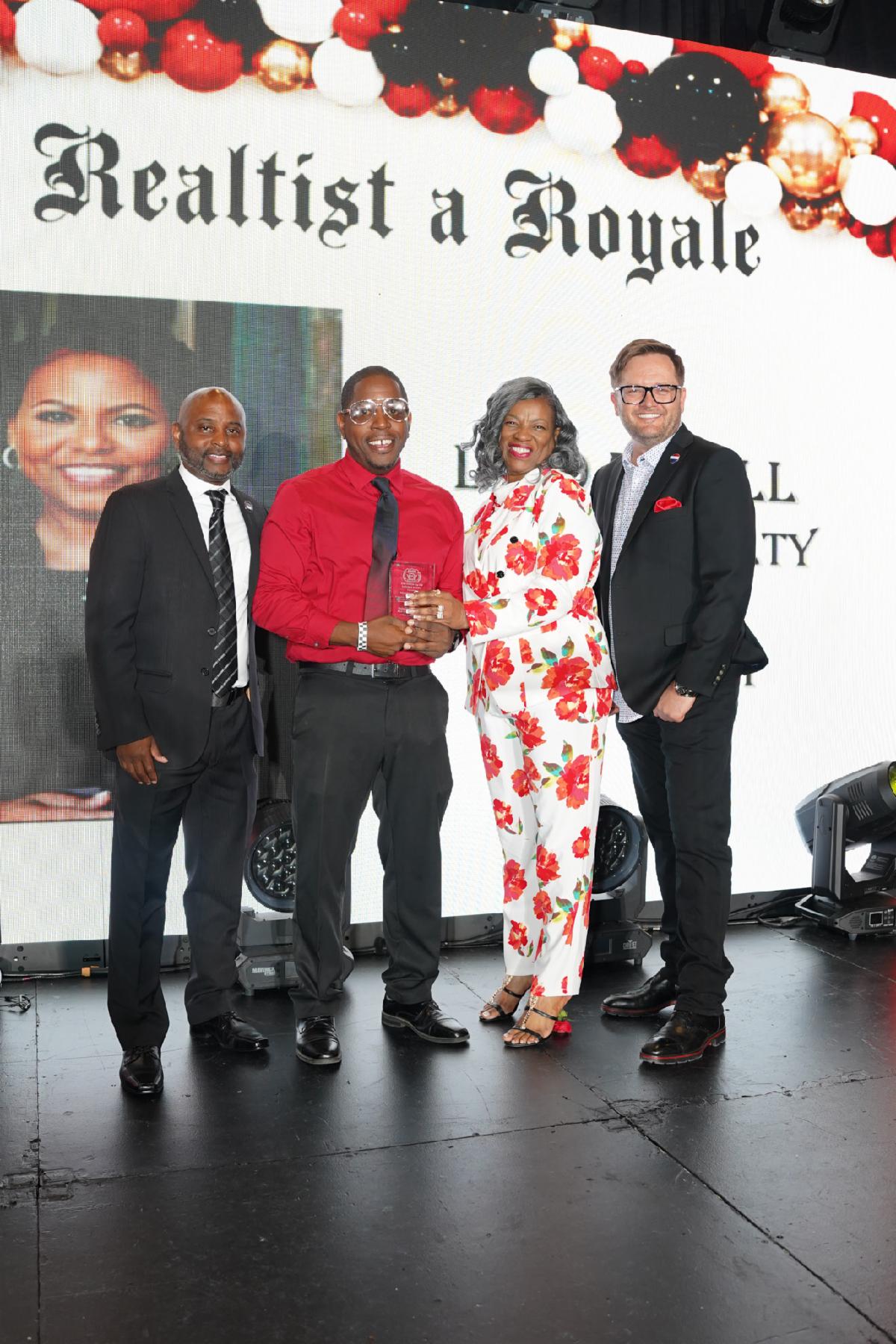
NAREB President Ashley Thomas III connected the Top 100 honorees to the organization’s broader pursuit of housing opportunity and wealth creation.
I think that connection deserves some nuance.
Billions in real estate transactions do not automatically solve America’s racial wealth gap. A successful Black agent does not erase discriminatory lending. A thriving brokerage does not suddenly make housing affordable.
Celebrating Black professional success should not require pretending structural barriers disappeared.
Both realities can exist at the same time.
Black professionals can achieve extraordinary success within an industry while Black consumers continue confronting barriers within that same industry.
In fact, that tension makes organizations like NAREB particularly interesting.
The work happens on both sides.
There is the business of building successful Black professionals and enterprises.
Then there is the larger work of expanding access to housing and ownership.
Black Excellence Is Wonderful. Black Economic Agency Is Better.
I enjoy seeing Black excellence celebrated.
Still, I do not want us to stop at celebration.
The more compelling question is what success allows people to do next.
Can thriving Black brokerages hire and mentor more Black professionals?
Can successful developers create housing and commercial spaces that strengthen communities?
Can industry expertise help more families navigate homeownership?
Can professional networks create opportunities that extend beyond one generation?
Those questions take us from representation toward agency.
Agency means having the resources, knowledge, relationships, and authority to make decisions rather than merely reacting to decisions somebody else made.
That is where economic participation becomes transformative.
That $5.7 Billion Is a Beginning, Not a Conclusion
NAREB’s Top 100 awards celebrated professionals whose collective 2025 transactions surpassed $5.7 billion.
That deserves recognition.
It also deserves curiosity.
I want to know what businesses grow from those transactions.
I want to know how many younger professionals enter the field because someone on this list mentors them.
I want to see what Black developers build.
I want to understand how Black homeownership changes when more professionals inside the industry understand the historical barriers their clients may face.
Most of all, I want us to recognize the difference between visibility and power.
Seeing Black faces in an industry is important.
Seeing Black professionals control businesses, develop property, negotiate deals, generate billions in transactions, and participate in shaping communities tells us something more.
Black real estate is not a side story in the American economy.
$5.7 billion makes a pretty convincing argument.
