I Walked Into Faversham and Found More Than 300 Years of Beer Still Brewing
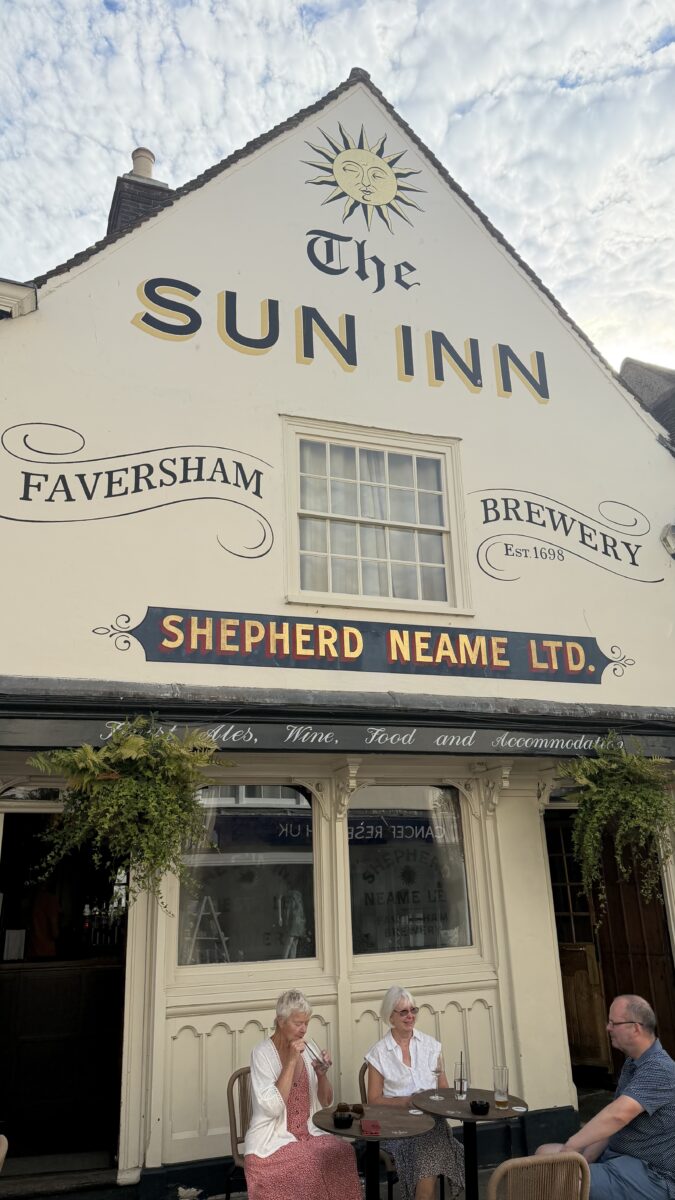
Faversham had already given me exactly what I needed when I arrived on foot after another day walking the Pilgrims’ Way. I had a comfortable room at The Sun Inn, food downstairs and the enormous satisfaction of taking off my walking shoes knowing they could remain off for the rest of the evening. By the following afternoon, however, my curiosity had won.
One of the reasons I had been particularly interested in Faversham was Shepherd Neame, the brewery whose presence is woven through the town. I knew it was Britain’s oldest brewer before I arrived, but knowing a historical fact and walking into the place where that history continues every day are two very different experiences.
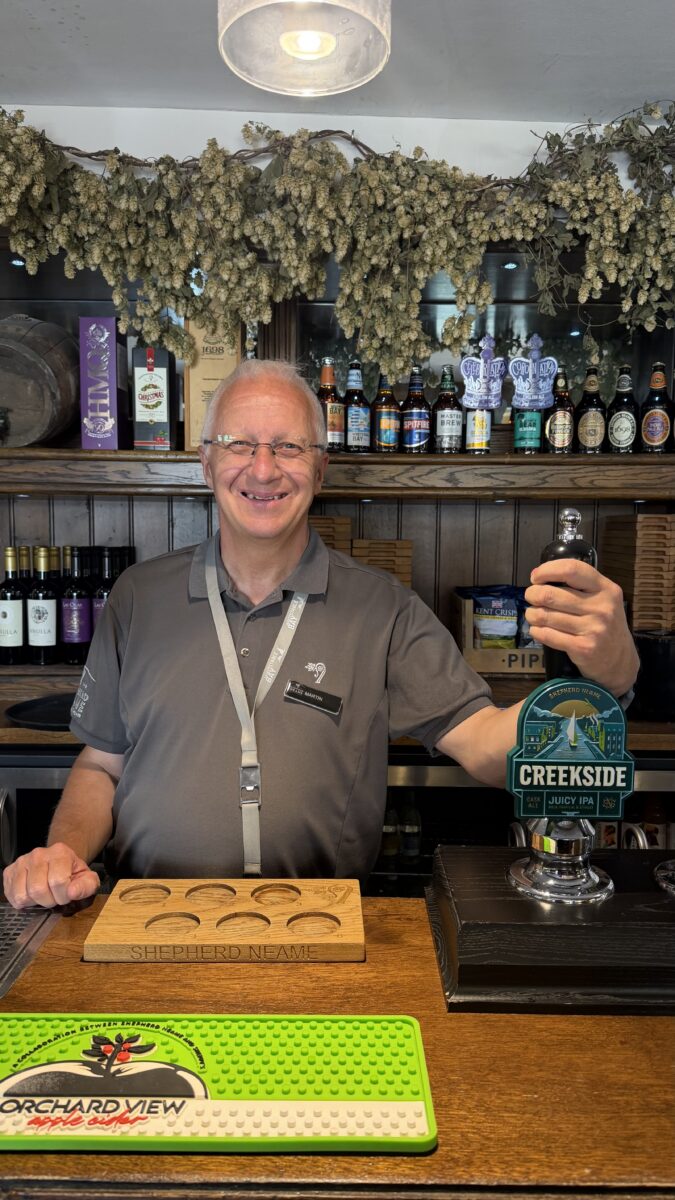
My timing wasn’t particularly convenient. Shepherd Neame doesn’t normally offer brewery tours on Tuesdays, which happened to be the day I was there. Yet after I reached out to explain that I was covering Faversham during my London-to-Canterbury journey, the team arranged for Martin, one of their guides, to come in specifically to give us a private tour.
That generosity changed the experience completely. Instead of moving through the brewery as part of a large group, I could linger, look closely, ask questions and follow Martin through the details that interested me most. He gave me an unusually personal introduction to Shepherd Neame, from centuries of brewing history and Kentish agriculture to modern production and, eventually, a very generous tasting. For someone fascinated by the relationship between food, culture and place, it was an excellent way to spend an afternoon.
Disclosure: My private brewery tour was hosted by Shepherd Neame as part of my coverage of Faversham during my Pilgrims’ Way journey from London to Canterbury. Shepherd Neame also hosted my stay at The Sun Inn. All experiences and opinions shared here are my own.
Britain’s Oldest Brewer Has Been Watching Faversham Change for Centuries
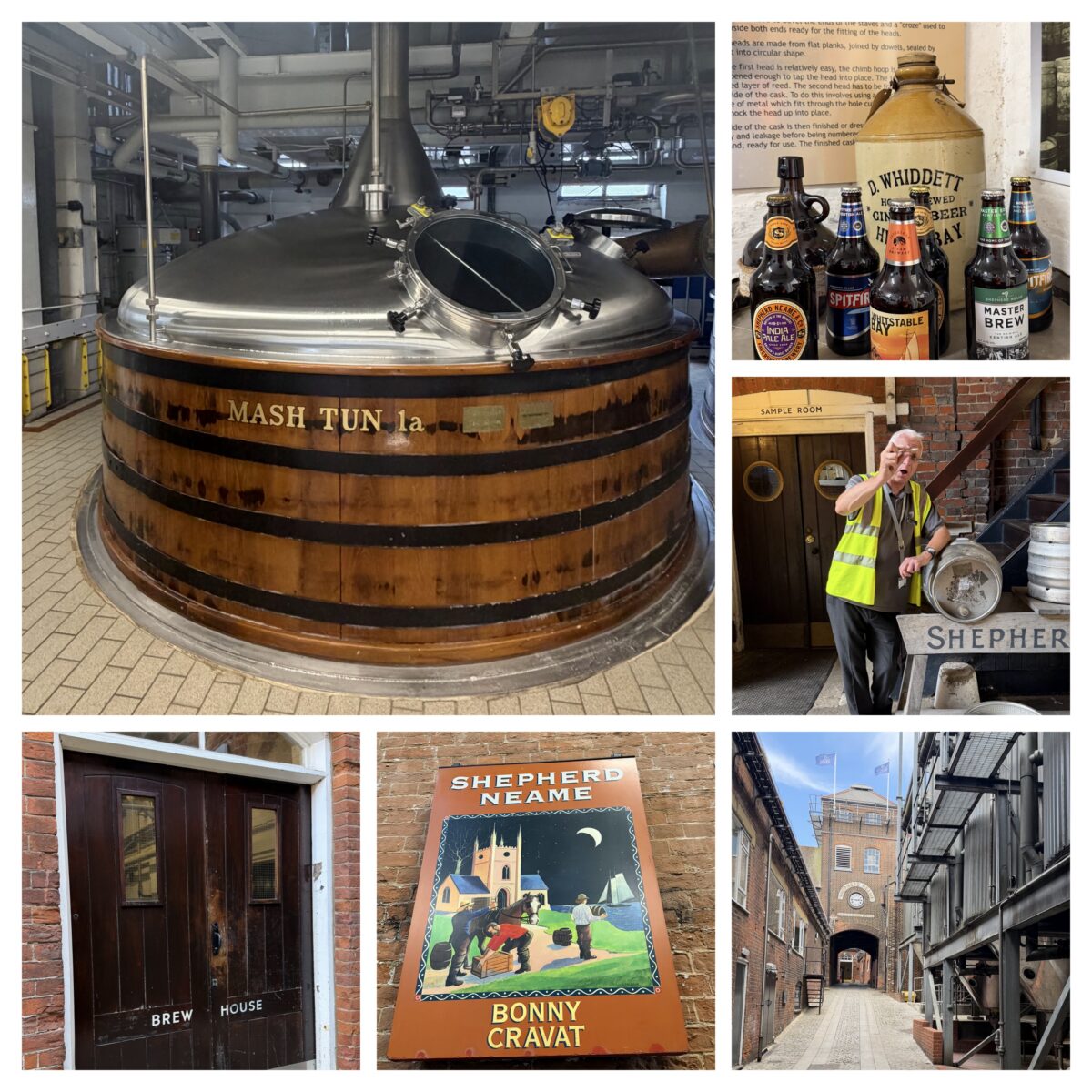
Calling Shepherd Neame an old brewery doesn’t quite capture the scale of its history. The company officially dates its brewing heritage to 1698, which makes Shepherd Neame Britain’s oldest brewer. However, evidence indicates that brewing was taking place on the Faversham site as early as 1573, while the town’s relationship with brewing stretches further back through the medieval period.
That history became considerably easier to comprehend while standing inside the brewery. Companies frequently celebrate heritage through old photographs, vintage packaging and dates printed prominently on labels, but at Shepherd Neame, the more compelling story is that brewing never became merely historical. Generations of brewers kept working here while Faversham, Britain and the technology surrounding beer production changed around them.
As Martin guided me through the site, I became increasingly interested in that continuity. The equipment surrounding us belonged to modern beer production, but the reasons brewing developed here in the first place remained closely connected to the landscape outside. The brewery had adapted alongside enormous social and technological changes without abandoning the town where its story began.
Kent Was Already Supplying the Ingredients for a Brewing Tradition
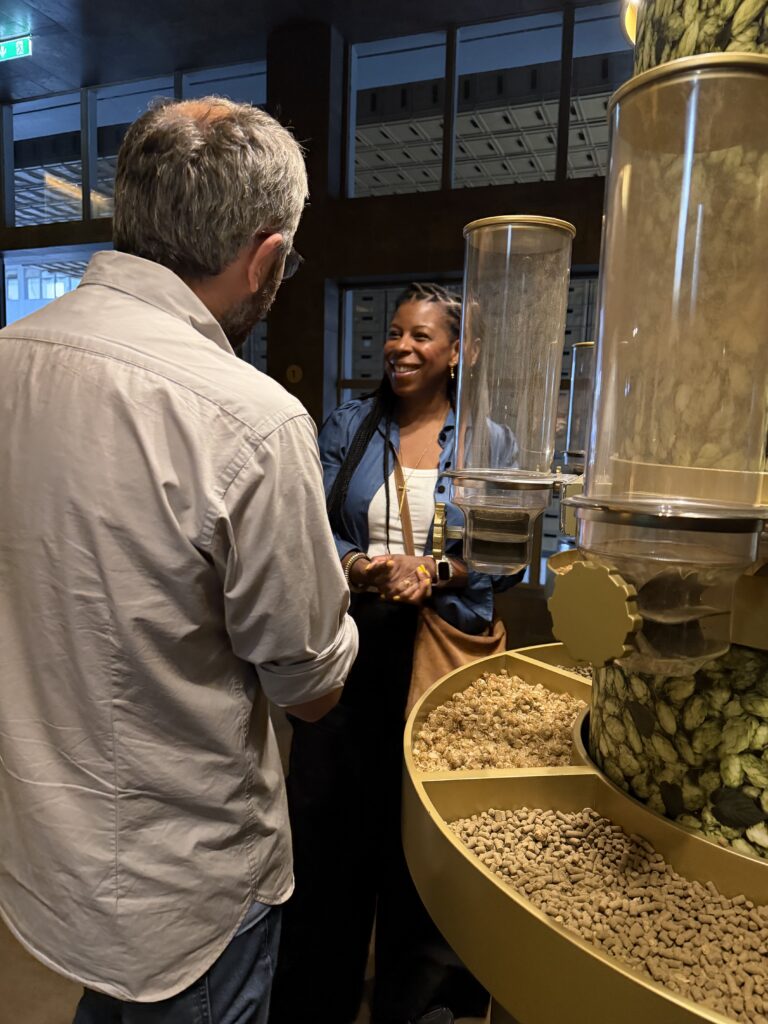
You cannot understand Shepherd Neame particularly well without understanding Kent. The county has a long agricultural relationship with brewing, particularly through its famous hop-growing tradition, and Shepherd Neame continues to use Kentish ingredients in several of its beers, including locally grown hops and barley.
That connection immediately pulled me toward the agricultural side of the story. When we drink beer, the finished product can make its origins surprisingly easy to forget. Yet beer begins with agricultural commodities, and the character of a brewing region develops partly through the crops farmers can grow there, the varieties brewers select and the knowledge that accumulates around those ingredients.
Shepherd Neame has also participated directly in preserving some of that agricultural heritage. The company provided land at nearby Queen Court Farm for the National Hop Collection, established there in 2007. The collection maintains almost 200 historic hop varieties, preserving genetic material that might otherwise disappear while supporting research and the development of future varieties.
I found that particularly interesting because preserving food heritage requires far more than preserving recipes. Those recipes depend upon ingredients, while ingredients depend upon biological diversity, agricultural knowledge and people continuing to grow them. Protecting an old hop variety therefore preserves another piece of the cultural history sitting inside a pint of beer.
Beneath Faversham, Another Ingredient Has Been Waiting All Along
The landscape contributes something else to Shepherd Neame’s beer that isn’t visible in the fields: water. Rainfall gradually filters through the chalk beneath Kent before collecting in an underground aquifer, and Shepherd Neame draws the water used in its brewing from an artesian well beneath the Faversham brewery.
Martin’s explanation of the brewing process made that local geography unexpectedly tangible. Water represents most of what ultimately ends up in a glass of beer, yet it receives considerably less attention from consumers than hops or malt. Standing at the brewery made the connection difficult to ignore because the water belonged to the geology beneath the town where the beer was being produced.
That dependence also makes water management part of the brewery’s environmental story. Shepherd Neame installed a water recovery plant in 2013 that allows it to recycle a substantial portion of the water used during production, with recovered clean water returned to Faversham Creek. For a company whose brewing history stretches across centuries, managing the resources that support production has an obvious practical dimension alongside the environmental one.
Martin Had Three Centuries of Stories and I Had Plenty of Questions
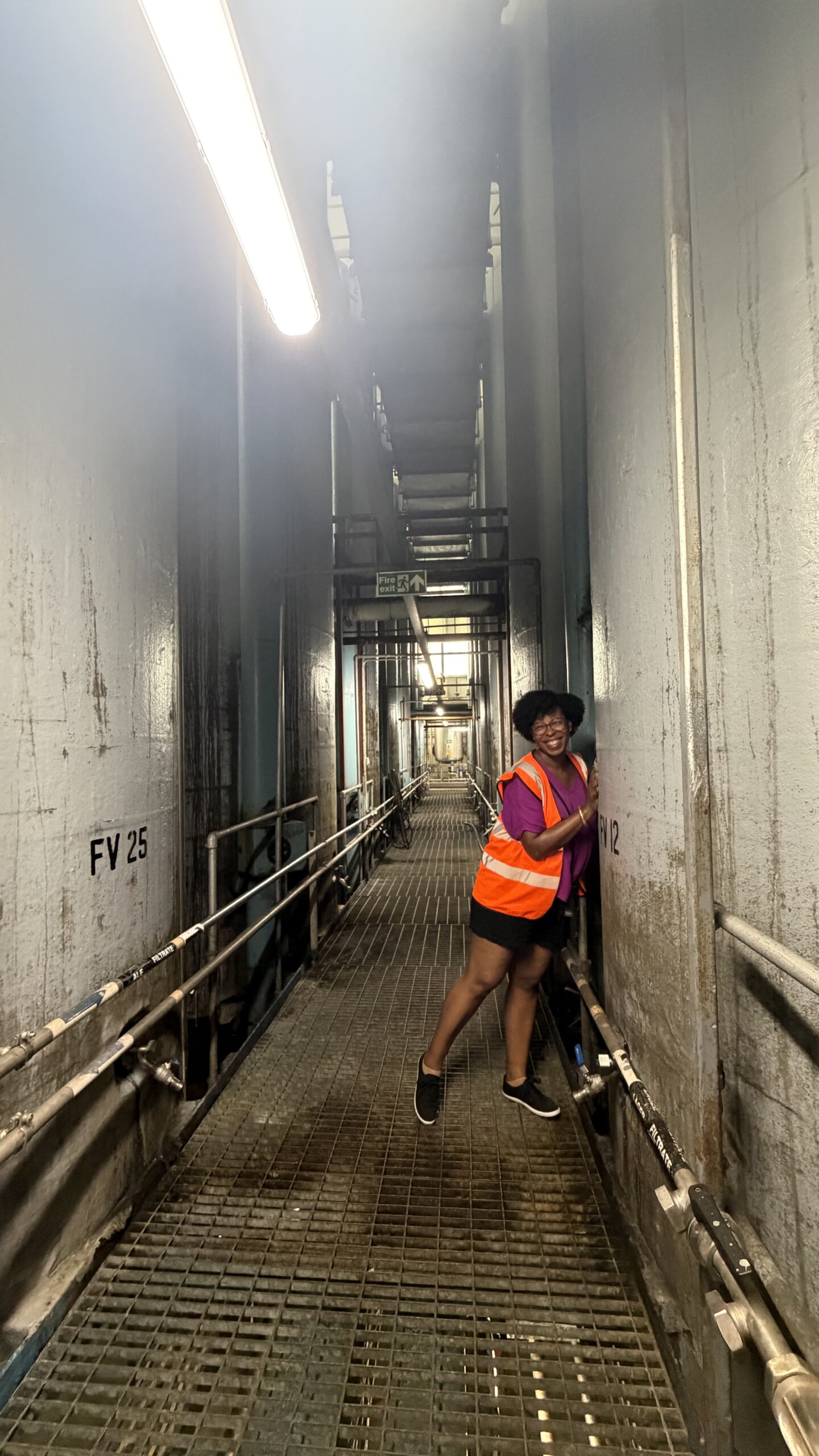
The advantage of a private tour became increasingly apparent as we moved through the brewery. Martin knew the history, but he also understood how to make the production side approachable. We could move between conversations about old brewing practices and questions about what was happening around us now without turning the afternoon into a technical lecture.
Having spent much of my career thinking about food systems, I rarely experience a production facility solely as a tourist. I want to understand where the ingredients originate, how processing changes them, what happens when production reaches scale, which traditions survive modernization and how the finished product becomes connected to the culture surrounding it. Martin indulged that curiosity throughout the visit.
The result felt less like being led through a sequence of predetermined tour stops and more like exploring a working brewery with someone who genuinely understood how all the pieces fit together. That kind of access changes what you notice because there is time to look beyond the obvious and follow the questions that emerge as you move through the facility.
The Machinery Changed, but Faversham Never Lost the Brewery
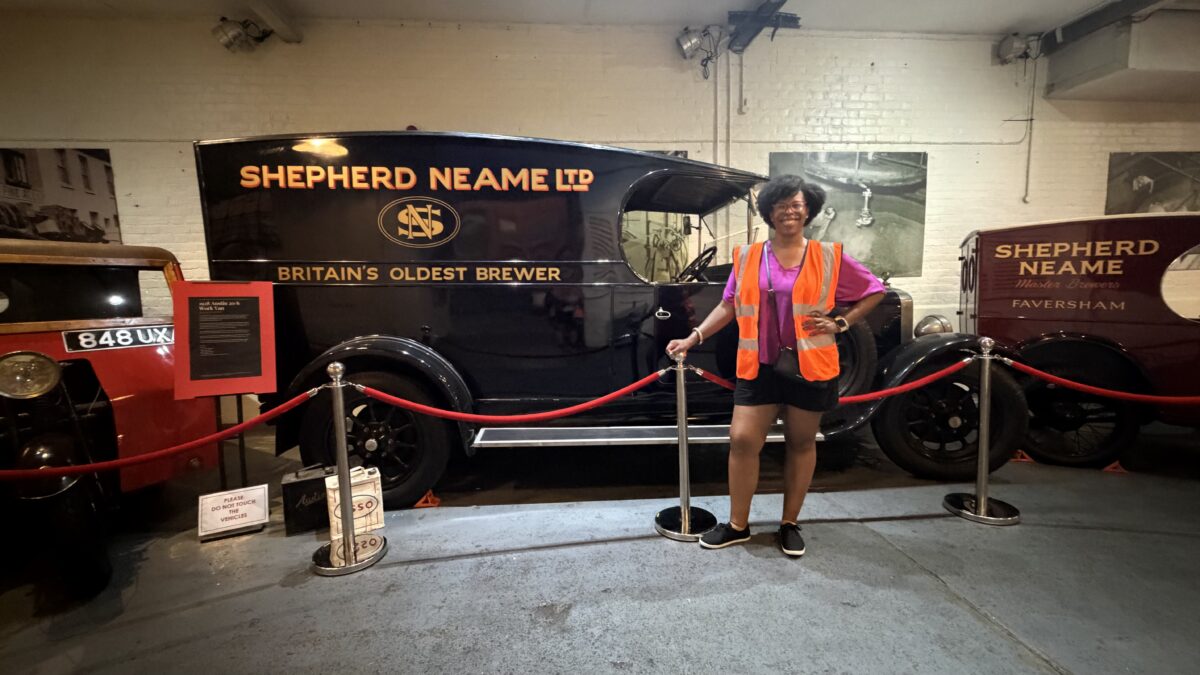
Shepherd Neame’s history also provides a fascinating window into the industrial changes that transformed British food and beverage production. The brewery adopted steam power remarkably early. In 1789, Julius Shepherd purchased a Boulton & Watt Sun and Planet steam engine, bringing mechanization into the brewery during a period when the Industrial Revolution was reshaping manufacturing across Britain.
Rail transportation brought another transformation when service reached Faversham in 1858, giving the brewery much easier access to London and other markets. Production expanded, transportation changed and brewing technology continued advancing, yet Shepherd Neame stayed in Faversham.
Today, the brewery produces on a scale that would have been unimaginable to the people brewing here centuries ago, but modern production continues on the historic site in the center of town. Walking through the facility allowed those eras to overlap without pretending beer is still produced as it was in the eighteenth century. Heritage here survives partly because the business kept adapting, a useful reminder that preserving tradition does not necessarily require freezing it.
One Beer Connected Directly to the Road That Brought Me There
Of all the stories Martin shared, Bishops Finger immediately became personal. Shepherd Neame first brewed the strong Kentish ale in 1958, and its unusual name comes from the traditional finger-shaped signposts that directed pilgrims toward Canterbury and the shrine of Thomas Becket.
I had just spent days walking toward Canterbury, so suddenly the brewery and my pilgrimage belonged to the same story. I had walked into Faversham following a pilgrimage tradition stretching back centuries, only to discover that one of Britain’s oldest brewery’s signature beers took its name from the markers associated with those same journeys.
Bishops Finger carries its Kentish identity into the brewing process as well. Shepherd Neame produces it using Kentish hops and barley along with the mineral water drawn beneath the brewery. Travel occasionally rewards me with connections I could never have planned quite so neatly, and discovering Bishops Finger while walking the Pilgrims’ Way was certainly one of them.
Spitfire Put Another Chapter of Kent Into a Glass
Another of Shepherd Neame’s best-known beers carries a very different piece of local history. The brewery created Spitfire in 1990 to commemorate the 50th anniversary of the Battle of Britain, much of which unfolded in the skies above Kent. Shepherd Neame originally intended it as a limited release connected to charitable fundraising, but its popularity turned it into a permanent part of the brewery’s portfolio.
The beer illustrates something I found increasingly interesting during the tour. Shepherd Neame’s products often carry stories beyond their ingredients, with names and identities connected to places, events and traditions familiar to the communities drinking them.
Those cultural references feel particularly relevant because the brewery itself has occupied the same landscape for centuries. Shepherd Neame hasn’t simply borrowed stories from Kent. Its own history has unfolded alongside many of the people, industries and events that shaped the county, giving the relationship between beer and place considerably more depth.
Being the Oldest Hasn’t Prevented Them From Trying Something New
A brewery with this much history could easily become overly protective of tradition, yet Shepherd Neame has repeatedly experimented. In 1968, the company became the first regional brewer in Britain to brew lager, producing Hürlimann at a time when lager was still establishing itself with British drinkers.
Today, that experimental approach continues through the dedicated Small Batch brewery, where brewers can work with different ingredients, techniques and styles on a scale considerably smaller than the main operation. I liked seeing that side of the company because heritage businesses face a difficult balancing act. Consumers want continuity from products they already love, while food and drink cultures continue evolving around them.
New tastes emerge, production technologies improve and younger generations develop their own expectations. A brewery can respect the recipes that built its reputation while still giving its brewers room to experiment, and after more than three centuries, Shepherd Neame’s history demonstrates how important that ability to adapt can be.
Eventually, Martin Put the History Into Glasses
After spending the afternoon talking about ingredients, agriculture, production and history, we reached the tasting. Martin gave us a generous introduction to the brewery’s range, and sampling the beers together made the differences among them much easier to appreciate. Variations in malt, hops, brewing style and balance that can sound technical when discussed abstractly became far clearer once the beers were sitting in front of me.
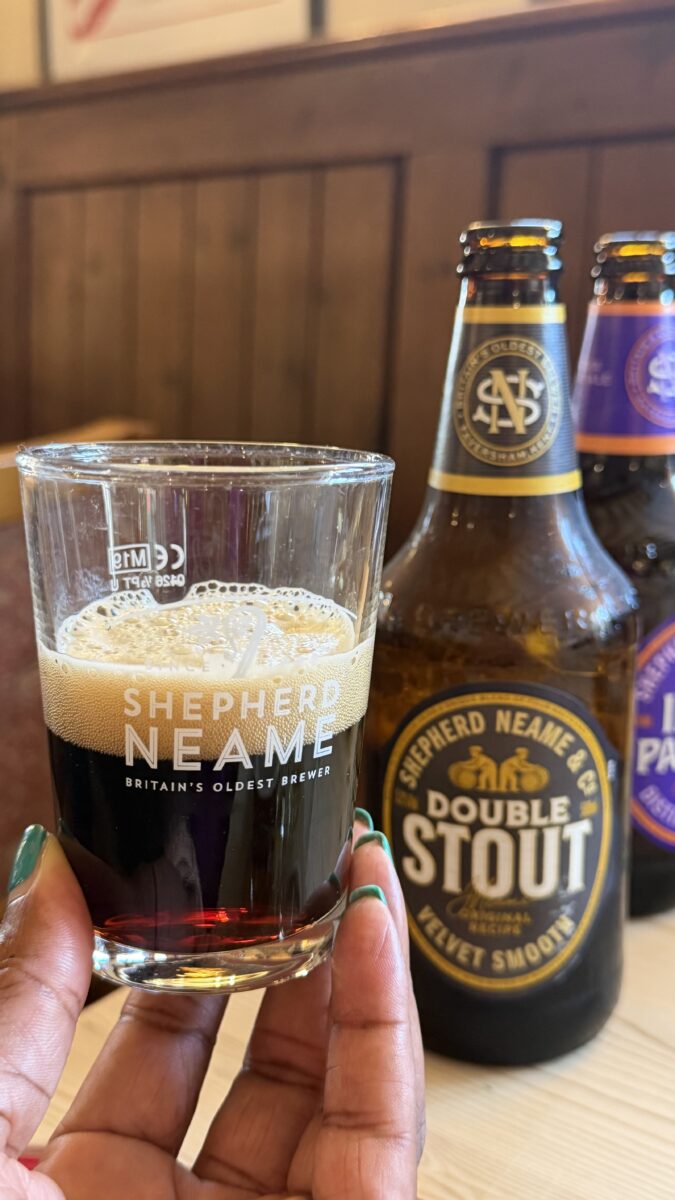
One of the beers I tasted was Shepherd Neame Double Stout, a dark beer that offered a striking contrast to the lighter styles in the tasting. Its deep color and malt-forward character gave me another way to experience the range of flavors that can emerge from the same basic brewing ingredients. Holding that little Shepherd Neame tasting glass while looking at the bottle beside it also made for one of my favorite photographs from the afternoon.
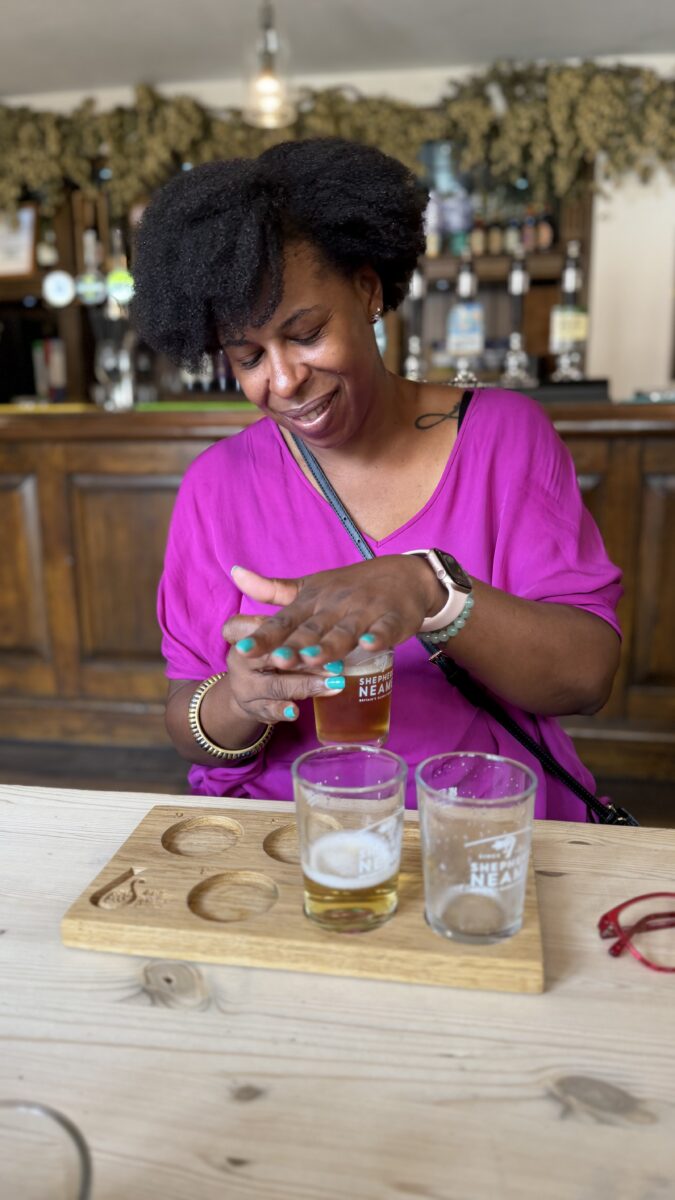
The tasting brought together much of what Martin had spent the tour explaining. The hops I had been thinking about in terms of Kent’s agricultural heritage became aroma and bitterness, while malt contributed sweetness, body, color and the darker roasted characteristics that were particularly apparent in the Double Stout. Even the water drawn from beneath Faversham, which had seemed like an interesting geological detail earlier in the tour, was now part of what I was actually drinking.
The range also demonstrated how broadly Shepherd Neame interprets its brewing tradition. A brewery with centuries of history does not have to produce a single kind of beer indefinitely, and tasting different styles made that balance between continuity and experimentation much easier to understand. Martin gave us plenty of time to taste, compare and ask questions, which felt entirely consistent with the personal way he had guided us through the brewery.
By that point, the afternoon had moved full circle from the Kentish landscape and raw ingredients to production, history and finally the finished beer in my glass. Double Stout was one particularly memorable stop along that journey, and being able to taste the beer where it was brewed made the connection between product and place considerably more tangible.
The Brewery Makes More Sense Once You Spend Time in the Pub
My Shepherd Neame experience extended beyond the production facility because I was also staying at The Sun Inn, one of the company’s historic Faversham properties. That gave me another perspective on the relationship between brewing and British pub culture.
Shepherd Neame operates pubs and hotels throughout London and southeast England, which means the company participates not only in producing beer but also in many of the social spaces where people drink it. Staying above one of those pubs after visiting the brewery made that relationship unusually visible.
Beer leaves the production environment and enters a completely different kind of system inside a pub. There it becomes part of meals, conversations, gatherings and the everyday rhythm of spaces shared by locals and travelers. Experiencing both sides helped me understand why the British pub belongs within the country’s food culture rather than being considered simply somewhere alcohol is sold.
Walking Into Faversham Changed the Way I Understood Its Beer
When I first contacted Shepherd Neame, my request was fairly straightforward. I wanted to learn about Britain’s oldest brewer and understand its relationship with Faversham while covering the town during my Pilgrims’ Way journey. By the end of my afternoon with Martin, that relationship had become much easier to see.
Geography, agriculture, water, industrial history, brewing knowledge, pubs and local identity have accumulated around this company for centuries. Shepherd Neame survived because it changed with the world around it, but its connection to Faversham remained remarkably intact. Arriving on foot made that relationship feel even more immediate because I had already spent days moving slowly through the Kentish landscape before entering the town.
A few days later, I would reach Canterbury and complete the Pilgrims’ Way from London. Faversham became one of the places I remembered most clearly from that journey, partly because it gave my tired body somewhere comfortable to recover, but also because it gave me an unexpected way to understand the landscape I had been walking through.
I arrived knowing that Shepherd Neame was Britain’s oldest brewer. I left understanding why that fact is only the beginning of the story.