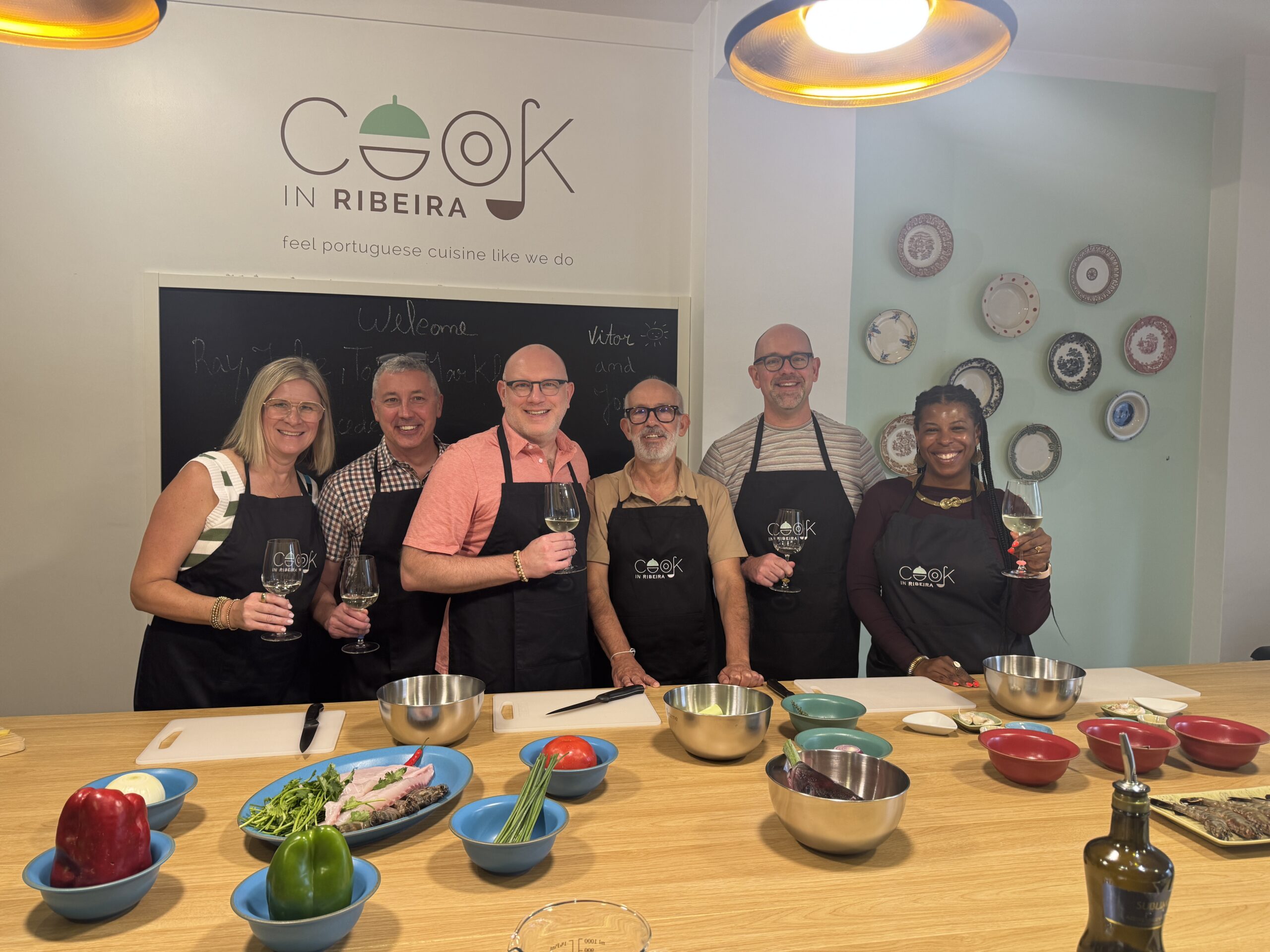
Cook in Ribeira Porto: Where Food Becomes a Conversation
I love a good food tour, but the experiences that stay with me usually have very little to do with simply tasting something delicious. They have everything to do with the people behind the food. That’s what made my October 1 visit with Cook in Ribeira such a special day in Porto.
We went to the market, met the people selling the ingredients, and then cooked together. By the end, I’d had a wonderful time with four fellow travelers, learned a few things I wasn’t expecting, and discovered that squeezing the head of a shrimp into a sauce can lead to something absolutely delicious. Yes, you read that correctly!
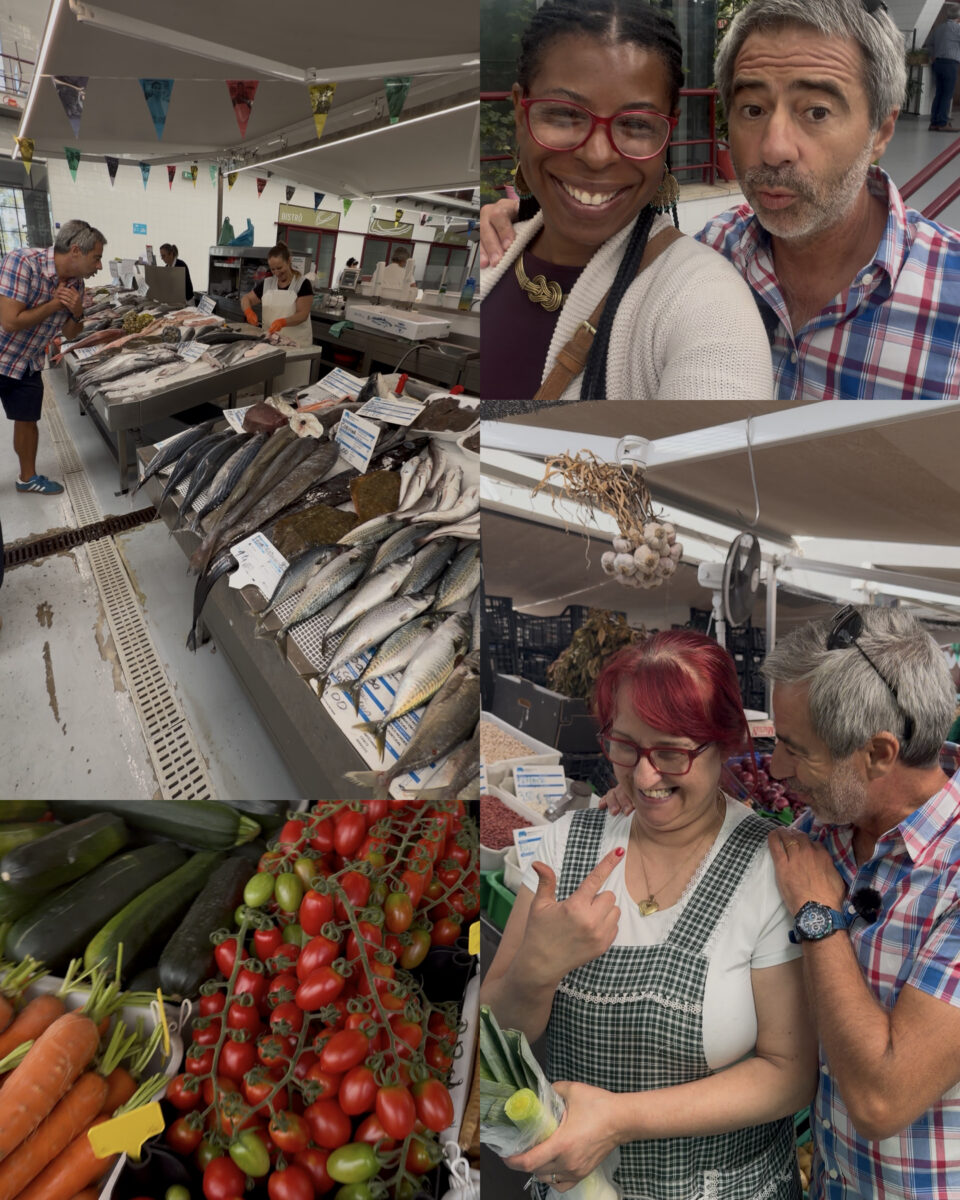
Vitor Knew the People Behind the Produce
The market tour was my favorite part of the experience. Not because I had never been to a market before. After years of working in food systems and traveling around the world, I’ve visited plenty. What made this one different was watching how naturally Vitor interacted with the vendors. He wasn’t simply walking a group past counters and pointing out ingredients. He had personal relationships with the people who worked there.
That matters to me. When somebody knows the people behind the products, the entire conversation changes. You’re no longer looking at a display of vegetables or seafood as though it appeared out of nowhere. You’re meeting the people whose knowledge, hard work, and daily routines help feed a city.
And I especially loved meeting the women. The female produce sellers and women working in the fish trade absolutely made my day. Their presence reminded me of something I’ve seen repeatedly in my professional work: women often play central roles in food economies, yet their knowledge and labor don’t always receive the recognition they deserve.
There’s so much expertise in knowing how to select good ingredients, respond to customers, understand what’s fresh, and keep a business running. I appreciated the opportunity to meet some of the women doing that work in Porto. I came for a cooking experience, but those encounters were just as rewarding as anything we prepared later.
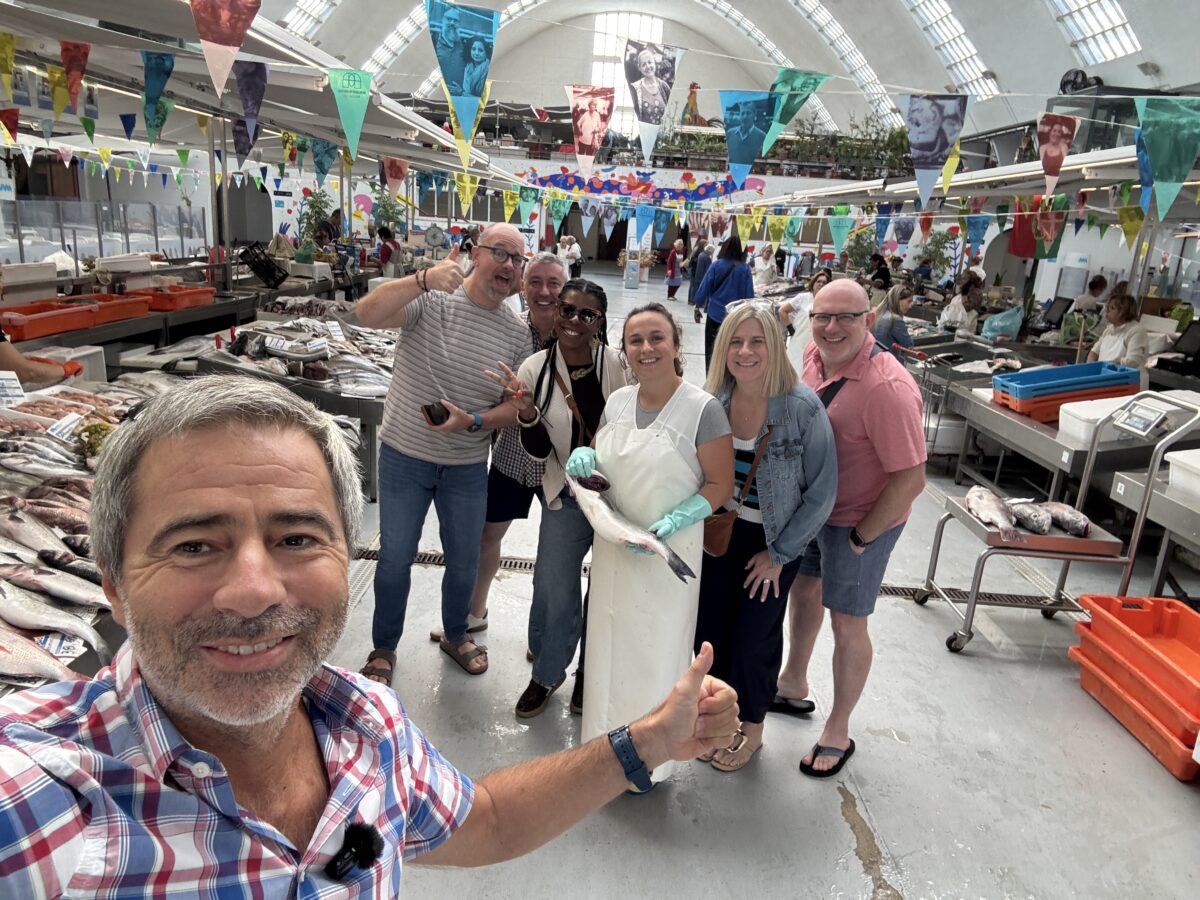
Four Americans and a Very Unexpected Good Time
Now, I have to admit something that makes me laugh a little when I think about it.
When I learned the experience would be shared with four other Americans, my first reaction was, “Oh my God, this is what I came to Porto to escape!” I travel because I want to encounter the cultures and communities of the places I visit, and I was worried a group of Americans would make the day feel less like the local experience I was looking for.
Well, I couldn’t have been more pleasantly surprised.
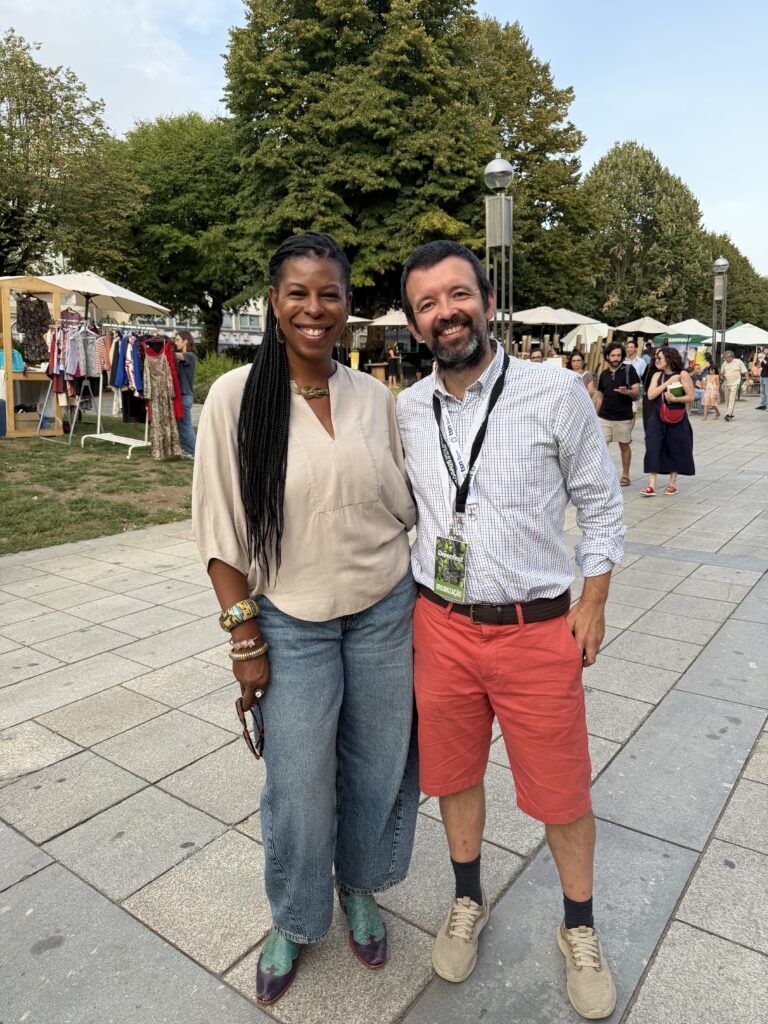
The four people in my group were absolutely lovely. We had a wonderful time together, and the shared experience became part of what made the day so much fun. It’s funny how travel can expose our assumptions, even when we like to think we’re the open-minded ones. Sometimes the people you least expect to connect with become part of a beautiful memory.
By the time we moved from exploring the market to cooking together, the energy felt easy and warm. Vitor and his partner made the whole experience magical. They kept us involved, made learning enjoyable, and created a setting where it was perfectly fine to be curious, make discoveries, and laugh along the way.
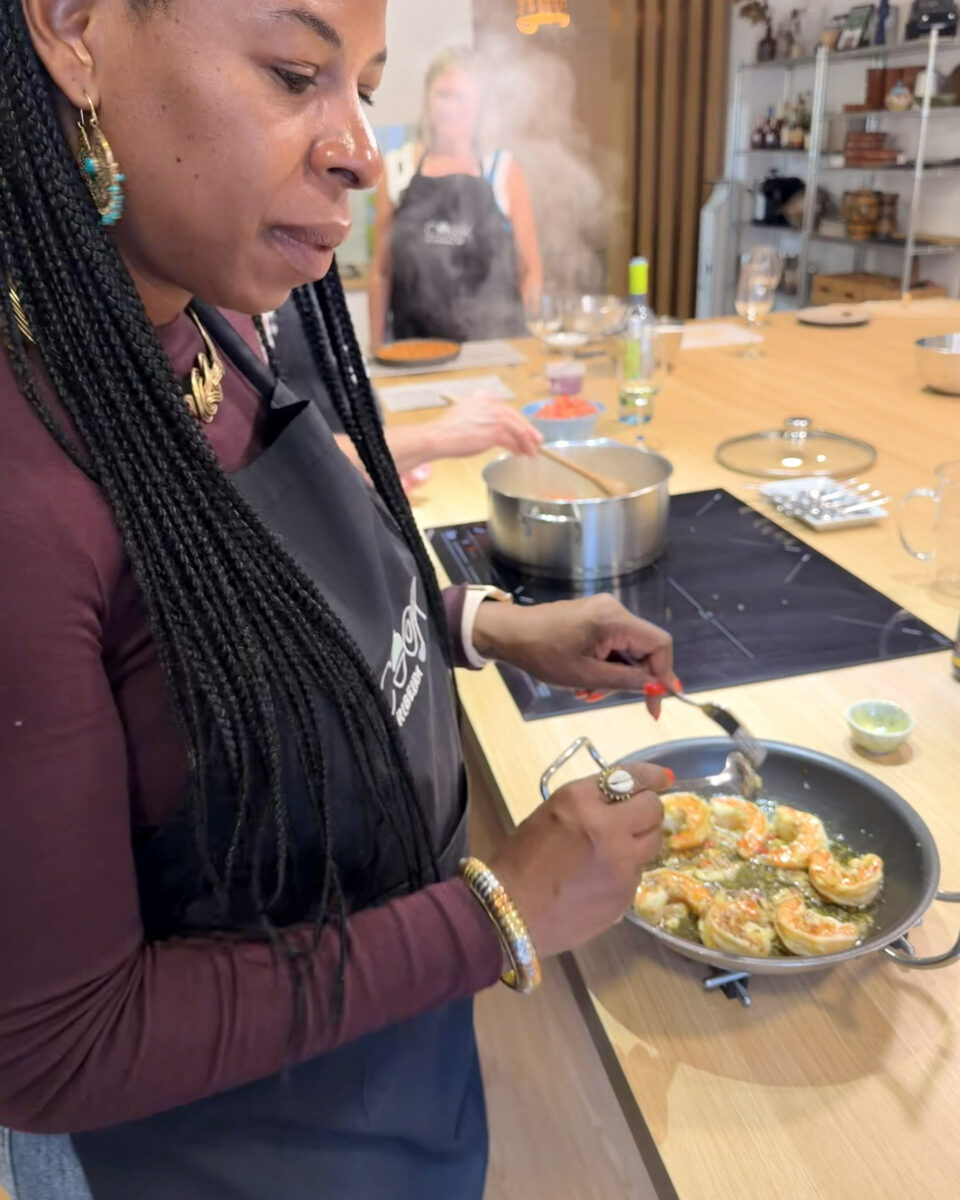
The Day I Put Shrimp Heads in My Sauce
I enjoy learning about ingredients, especially techniques that encourage us to use more of the food we bring into the kitchen. During the cooking portion, I got a lesson in using parts of an animal that many home cooks might simply discard. That was especially memorable while I was preparing my fish hors d’oeuvres.
At one point, Vitor told me to squeeze the head of a shrimp into the sauce.
My immediate reaction? “Ew, shrimp brains!”
It was not exactly an elegant culinary moment, but I’m not going to pretend otherwise. The idea initially grossed me out. Still, I gave it a try, and the result was a wonderfully flavorful sauce. I loved it!
That little surprise captured something I appreciate about hands-on cooking. We can have strong ideas about what seems appetizing or acceptable, often before we understand why a technique exists. Working directly with an experienced cook gives us the chance to question those assumptions. In this case, the part I almost rejected helped make the dish delicious.
It also brought the conversation back to how we use the ingredients available to us. Using more of an ingredient can be one way to reduce avoidable kitchen waste, although its wider sustainability impact depends on how food is produced and handled. What I enjoyed most was seeing that practical knowledge come alive in a recipe, rather than hearing it presented as a lecture.
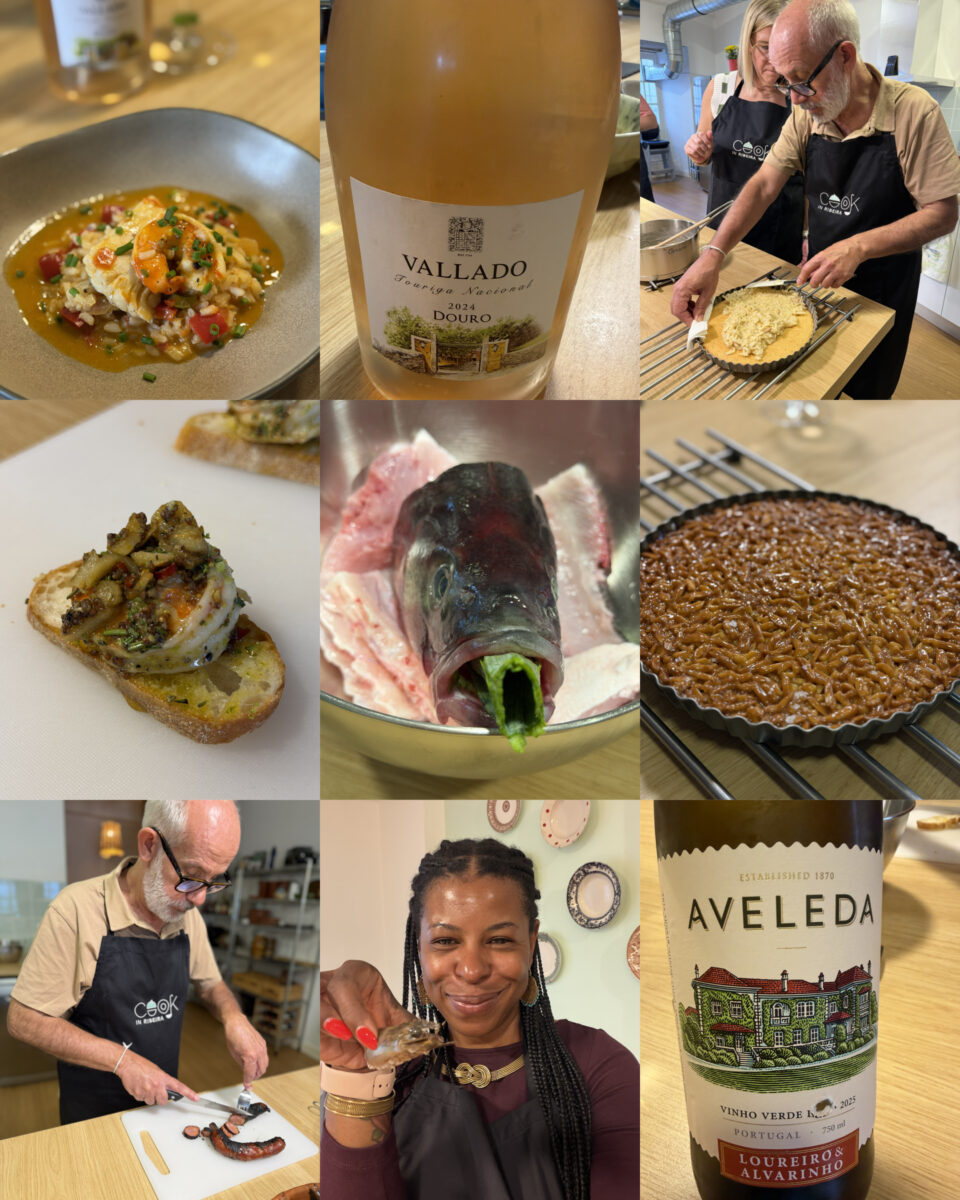
A Market Tour Is Also a Lesson in Food Systems
My professional background inevitably shapes how I experience food. I notice producers, supply relationships, livelihoods, and the people who keep local food economies moving. But I don’t need every culinary adventure to become a seminar on sustainability. Sometimes a joyful encounter teaches the lesson much better.
Meeting women at the market, watching Vitor’s relationships with vendors, and then taking the ingredients into the kitchen connected several parts of the food system in one afternoon. We saw where some of the food came from, interacted with the people selling it, and practiced turning it into a meal. There was nothing abstract about the connection.
That’s one of the things I love about Porto. I can explore its culture in many ways, from learning about port wine alongside traditional Fado to spending time with the people who make the city’s food culture feel alive. Each experience reveals something different.
When the Animals Disappear From the Market
One of the conversations with Vitor stayed with me long after the cooking was finished. He explained that live animals were no longer allowed at the market. What struck me was how he understood that change. He didn’t see it as evidence that people had stopped eating meat. Instead, he described a growing discomfort with seeing the living animals from which meat comes.
Vitor put the disconnect into words that made me laugh and think at the same time. In his telling, children might grow up imagining that milk comes from the supermarket and animals are somehow born there, too. He was making a serious point with humor: consumers can become so removed from food production that the living origins of what they eat almost disappear from view.
I haven’t independently examined the specific market rule or the reasons officials adopted it, so I wouldn’t claim that consumer discomfort was the only force behind the policy. But Vitor’s observation raised a question that I believe deserves attention. What happens when we want to eat meat but would rather not acknowledge the animal?
As an omnivore, I don’t see appreciation for meat and respect for animals as contradictory. Quite the opposite. I believe they belong together. If an animal provides food for my table, I want to recognize that life, the work involved in raising or catching it, and the responsibility to avoid needless waste. That does not mean everyone needs to make the same dietary choices I do. It means I think we should be willing to understand our own.
I’ve long been moved by Indigenous teachings that approach animals and food through relationships of gratitude, reciprocity, and responsibility. Practices and beliefs differ greatly among Native nations, and I wouldn’t presume to speak for them as one culture. Still, the idea that taking animal life for sustenance carries an obligation of respect speaks deeply to me.
It also brought me back to that shrimp-head sauce. At first, I recoiled from using a part of the animal I wasn’t accustomed to cooking. Then I tasted the result and realized how much flavor I would have discarded. The moment was funny, but the lesson stayed with me. Appreciating food means being willing to see where it comes from, learn what can be used, and treat the ingredients with care.
Why Cook in Ribeira Stayed With Me
When I look back on this experience, I don’t just think about what we cooked. I think about the women at the market, the warmth between Vitor and the vendors, the laughter with my four fellow travelers, and the surprise of discovering just how good a sauce could be after I nearly talked myself out of making it.
Those are the stories I want to bring home from my travels. They’re personal, a little unexpected, and full of the human connections that make a place memorable.
For travelers who enjoy meeting people and getting their hands into the cooking process, Cook in Ribeira’s market and cooking experiences offer a chance to learn through doing. Check the current schedule and tour details before visiting, since group formats and availability can change.
And if a cooking instructor suggests something that sounds a little strange, don’t dismiss it immediately. Sometimes the most unexpected ingredient turns out to be the best part of the meal.
Disclosure: My Cook in Ribeira experience was arranged as an editorial collaboration. All views and experiences shared here are my own.