Sleeping in a Train Station Has Never Looked This Good
There are hotels that could exist almost anywhere, and then there are hotels that make absolutely no sense without the place surrounding them.
Axis Avenida belongs firmly in the second category.
I arrived in Viana do Castelo by train after spending the previous few days in Braga for Greenfest Portugal. My stay at Basic Braga by Axis had already made rail travel ridiculously convenient, but when I reached Viana, the relationship between my hotel and the railway became something entirely different.
This time, I wasn’t simply staying beside the station.
My hotel was part of it.
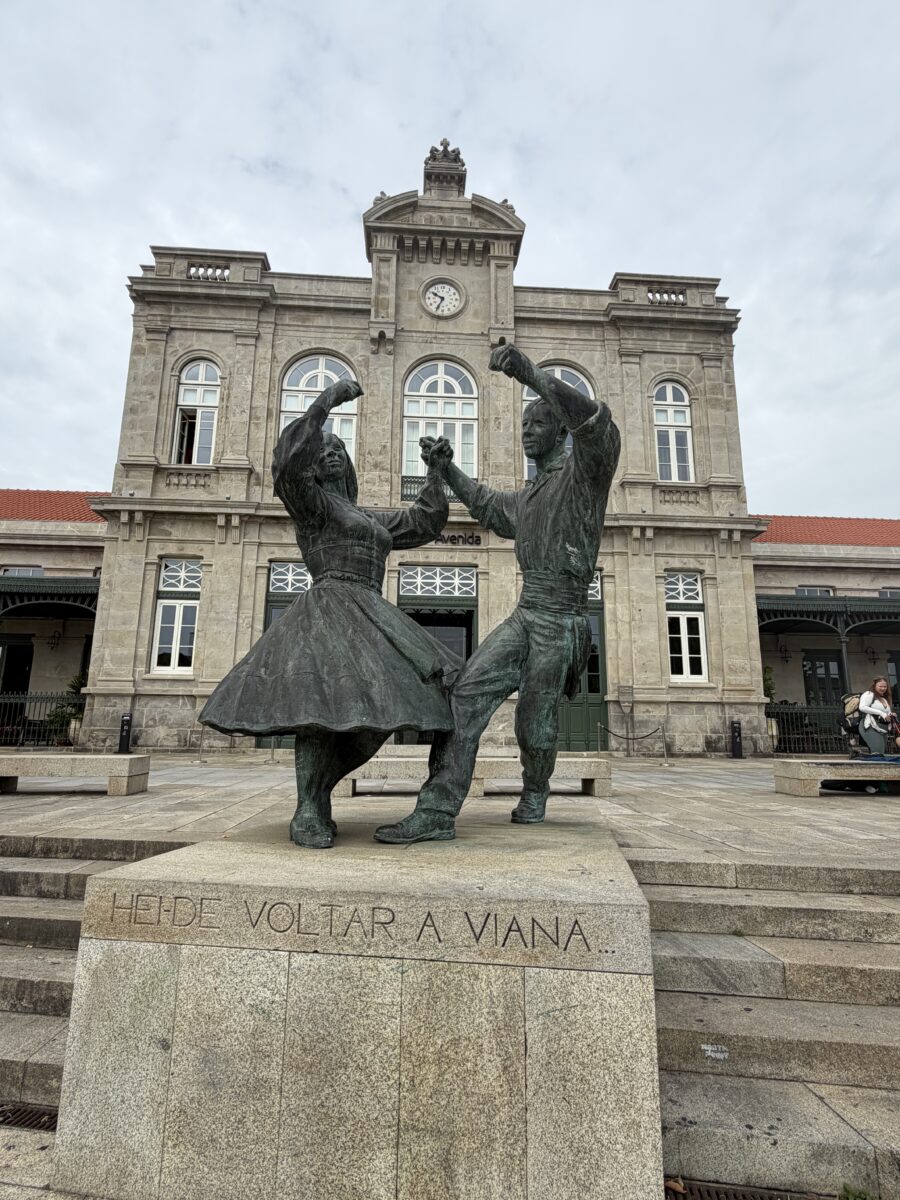
Axis Avenida occupies Viana do Castelo’s historic railway station, and from the moment I arrived, the building’s past became part of the experience. Rather than hiding that history behind a conventional hotel renovation, the design plays with it in ways that are sophisticated, colorful, and occasionally just plain fun.
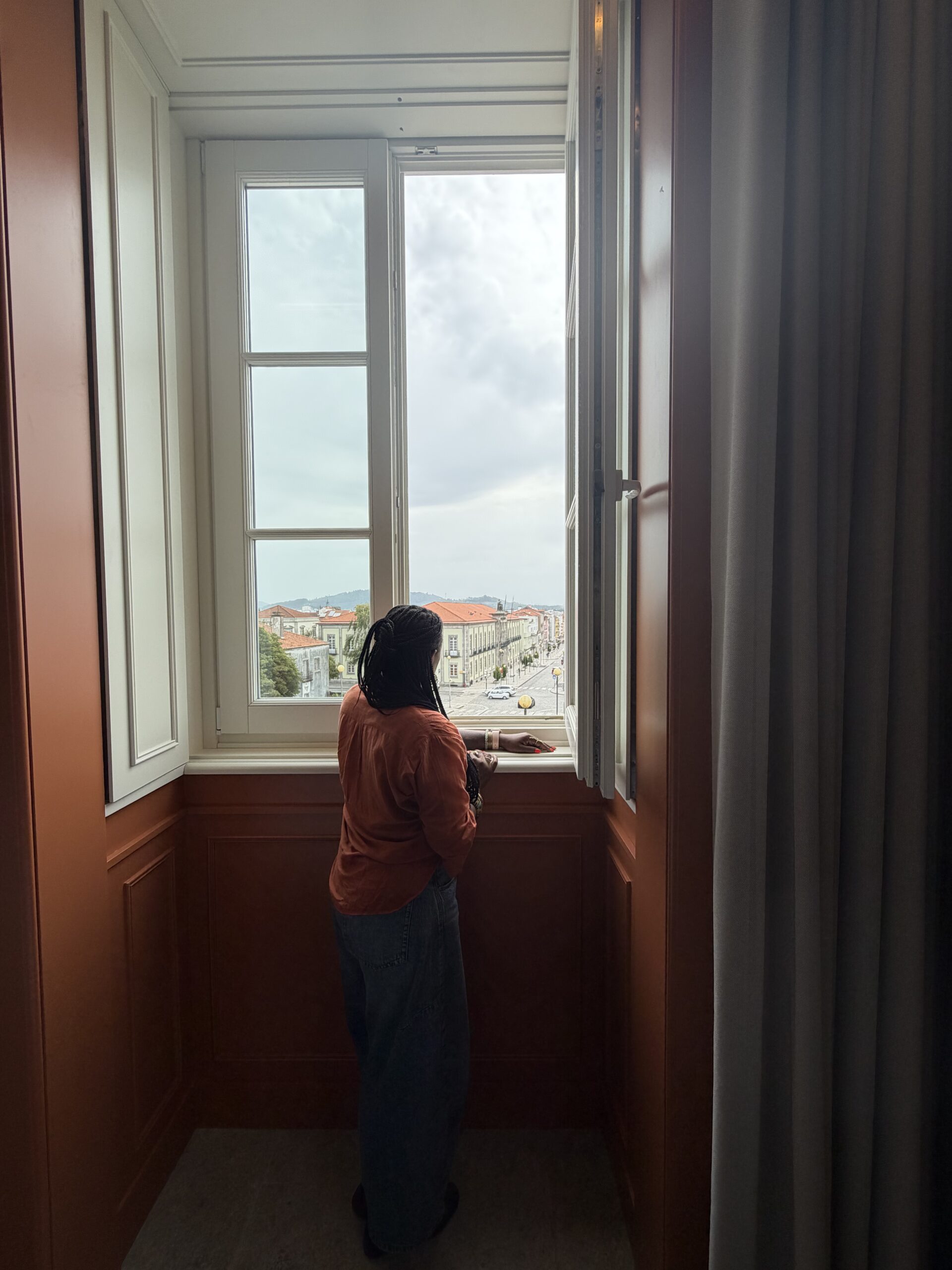
Then I got to my room and saw the view.
Viana had my attention.
Disclosure: My stay at Axis Avenida was hosted by Axis Hotels as part of my Portugal travel coverage. All experiences and opinions shared here are my own.
From One Railway Platform to Another
I had traveled to Viana do Castelo directly from Braga, continuing a journey through northern Portugal that was becoming increasingly centered around the railway.
There was something satisfying about that continuity.
I had stayed beside the tracks in Braga, walked back to the station when it was time to leave, boarded my train, and arrived in Viana do Castelo at another hotel intimately connected to rail travel.
Only Axis Avenida took the concept much further.
The hotel occupies the rehabilitated historic railway station in Viana do Castelo, giving a building created for an earlier era of travel a completely new purpose. I love adaptive reuse for exactly this reason. We don’t always need to demolish the old and start over to create something exciting.
Sometimes the more interesting question is what an existing building can become next.
In Viana, the answer is a hotel that remembers what it used to be.
Somewhere Along the Way, the Train Became the Decor
Once inside Axis Avenida, I started noticing the railway references everywhere.
The hotel doesn’t approach its history timidly. Train imagery and details appear throughout the property, including the elevator doors, bathroom doors, and room entrances. At times, walking through the hotel feels a little like moving through a beautifully reimagined train.
I loved it.
The room doors were among my favorite details because they gave me the sensation of entering a train carriage rather than simply opening another hotel room. The effect could easily have become kitschy, but the surrounding design keeps everything polished.
Color also plays a major role.
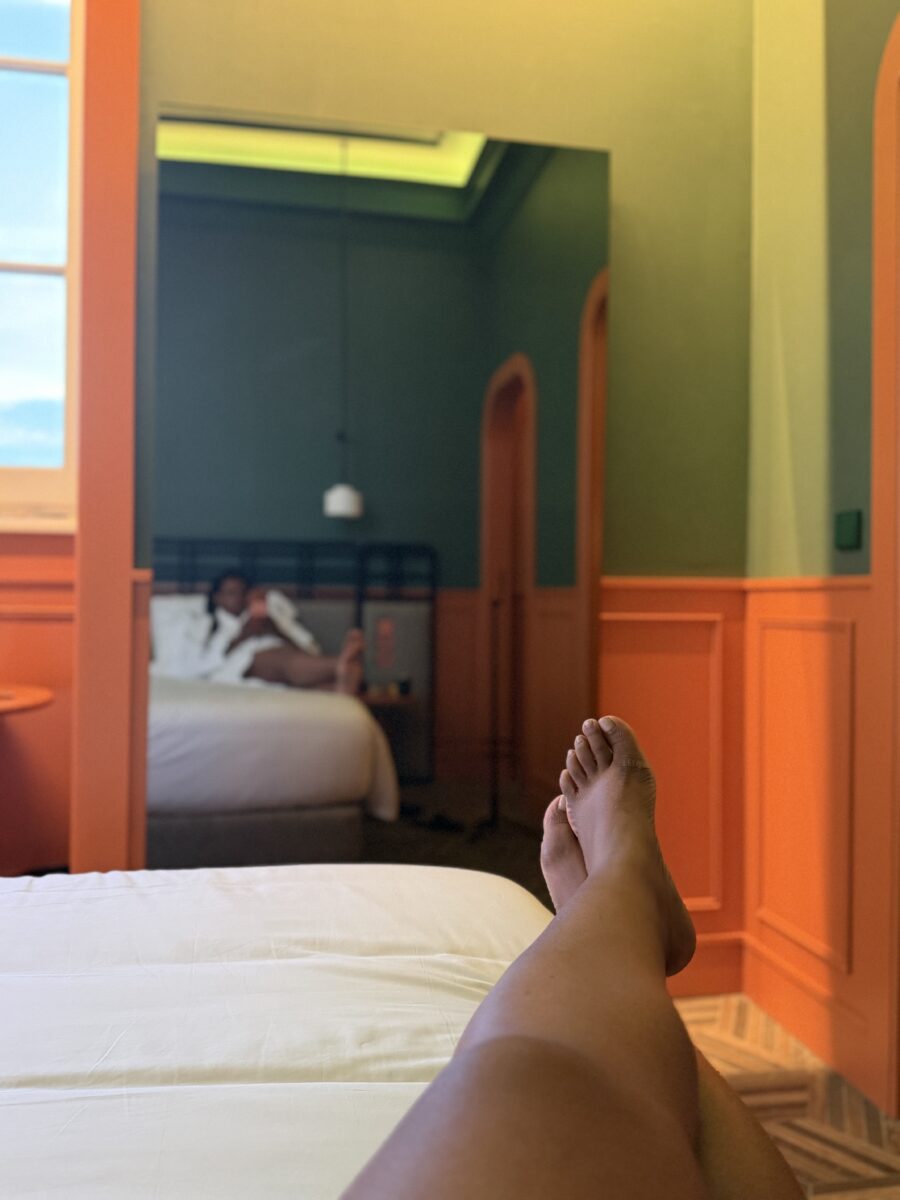
Axis Avenida has a beautiful palette that gives the interiors energy while still feeling sophisticated. Combined with the railway motifs, those colors create a hotel with an actual personality.
I stay in enough hotels to appreciate that.
When I can wake up the next morning and clearly remember what a property looked and felt like, someone has made deliberate design choices.
Then I Opened the Curtains
As much as I enjoyed discovering the railway details throughout Axis Avenida, one of my strongest memories from the stay came from something the hotel couldn’t manufacture.
The view from my room was beautiful.
Opening the curtains and looking out over Viana do Castelo immediately connected the room to the destination outside. I wasn’t looking at a generic courtyard or another hotel wall. I could look outside and feel that I was somewhere.
That sense of place changes how I experience a hotel room.
I spend plenty of time outside when I travel, but I also genuinely enjoy being in a beautiful room. After walking around a city, taking photographs, working, eating, and exploring, there is a particular pleasure in returning to a space where I can sit quietly and still feel connected to the destination.
Between the natural light, the colors inside the room, and the view beyond it, I was perfectly content to linger for a while.
Sometimes the best sightseeing happens before you’ve even put your shoes back on.
Giving an Old Station Another Departure
The sustainability story at Axis Avenida begins long before we get to the smaller details I noticed inside.
It begins with the building.
Adaptive reuse offers an interesting alternative to the assumption that new development always requires new construction. Existing buildings contain materials, embodied energy, history, and cultural memory. Finding new uses for them can preserve some of that value while extending the life of the structure.
For a hotel, that can also create something increasingly difficult to manufacture: authenticity.
Axis Avenida doesn’t need a decorative story invented by a branding team. The building already has one.
People traveled through this station long before hotel guests began sleeping here. Trains, departures, arrivals, reunions, ordinary commutes, and journeys to somewhere new were already woven into the place.
Now the station is beginning another chapter.
For someone like me, who spends so much time thinking about sustainability, development, and how communities evolve without losing their identities, that made the property particularly interesting.
Preservation doesn’t have to mean freezing a building in time. Sometimes preserving something means finding a reason for people to keep using it.
The Little Wooden Key Holder That Said a Lot
One of the sustainability details that caught my attention appeared almost immediately.
My room key came with a wooden holder bearing a very direct message:
“We say ‘NO’ to plastic.”
I smiled when I saw it.
The holder also carried the FSC mark, another small detail that made me stop and take a photograph.
Working in sustainability has made me particularly attentive to these everyday decisions because reducing waste in hospitality isn’t only about the highly visible initiatives. It’s also about examining the ordinary objects that pass through thousands of guests’ hands.
Where can disposable materials be reduced? Where can something be redesigned? What does the hotel actually need to provide, and what has simply become standard because that’s how the industry has always done it?
Those questions interest me.
I also appreciated that the message wasn’t hidden somewhere on a sustainability page I would have needed to search for online. I encountered it while checking in and settling into my room.
The hotel’s position was literally in my hand.
The Best Sustainability Measures Don’t Spoil the Fun
There is an unfortunate tendency to imagine sustainable travel as a diminished version of regular travel.
Less comfort. Less pleasure. Fewer choices.
I have never found that framing particularly useful.
At Axis Avenida, sustainability existed alongside beautiful interiors, a wonderful room, an excellent view, good food, and a hotel concept that was genuinely fun to explore.
The railway location also makes arriving without a car remarkably natural. I had traveled from Braga by train and arrived at a hotel incorporated into the station itself. There was no reason for me to arrange another vehicle simply to reach my accommodation.
That combination interests me much more than sustainability presented as a list of things guests shouldn’t do.
Good design can make lower-impact choices easier without making the guest experience feel restrictive.
In this case, the railway was simultaneously part of the hotel’s history, its design identity, and one of the easiest ways to reach it.
That’s a pretty wonderful combination.
Breakfast Deserved a Slow Morning
I am not one of those people who needs an enormous breakfast every morning, but I do appreciate a beautiful hotel breakfast when I have time to enjoy one.
Axis Avenida delivered.
The breakfast presentation was beautiful, and it gave me a reason not to rush through the morning. Instead of grabbing something quickly and immediately heading out, I could sit down, eat, and ease into the day.
That slower pace suited Viana do Castelo.
Food is always part of how I remember a destination, even when I’m eating inside the hotel. I pay attention to the setting, the presentation, the ingredients, and whether the meal feels connected to the overall experience of the property.
Breakfast at Axis Avenida felt considered rather than purely functional.
It was the kind of morning that encourages another cup of coffee.
I didn’t argue.
Dinner Wasn’t an Afterthought Either
Then there was the restaurant.
I have eaten at plenty of hotels where the restaurant exists primarily because guests need somewhere convenient to have dinner. That’s perfectly fine, but it doesn’t necessarily make the meal memorable.
My dinner at Axis Avenida was memorable.
The food was exceptionally good, and the restaurant felt like part of the experience rather than simply somewhere to eat because I happened to be staying upstairs.
That distinction is important to me, particularly because food occupies such a large place in both my professional work and the way I travel.
I want meals to tell me something.
Sometimes that’s about local ingredients or culinary tradition. Other times it’s simply the pleasure of discovering that the restaurant inside your hotel is far better than you expected.
Either way, I left dinner very happy.
Beautiful Hotels Are Better When the People Are Lovely Too
Design may be what initially catches my attention, but hospitality still comes down to people.
The staff at Axis Avenida were exceptionally friendly throughout my stay. That warmth balanced the sophistication of the property and made the hotel feel welcoming rather than precious.
I appreciate beautiful design, but I never want to feel as though I’m staying somewhere I’m afraid to touch anything.
Axis Avenida didn’t have that problem.
I could admire the architecture and the interiors, laugh at the train details, enjoy the view from my room, take far too many photographs, eat very well, and still feel relaxed.
That combination is harder to achieve than it looks.
A hotel can impress me visually in five minutes. Making me feel comfortable there for two days requires something else.
Viana Gave the Old Station Somewhere New to Go
By the time I left Axis Avenida, I kept returning to the idea of transformation.
The building once existed to move people somewhere else. Today, it has become a reason to stop.
I find that wonderfully poetic.
The station’s history hasn’t disappeared. Instead, it shows up in the architecture, the hotel’s design, the playful doors, and the simple fact that trains are still part of the experience of arriving in Viana do Castelo.
At the same time, the building has acquired a completely new life.
That balance between preservation and reinvention is one of the things I enjoy most about traveling through Portugal. History is everywhere, but the most interesting places aren’t necessarily treating history as something that belongs behind glass.
Sometimes they’re living inside it.
Or, in my case, sleeping inside it.
Apparently, I Have a Thing for Traveling by Train Now
My stays in Braga and Viana do Castelo left me thinking about how I want to explore more of Portugal.
There is something about train travel that changes my relationship with distance. Instead of concentrating on driving, parking, directions, or traffic, I can sit by a window and watch the landscape shift around me.
Then I arrive.
In Braga, the railway gave me an incredibly practical base for exploring the city on foot. In Viana do Castelo, the railway became part of the hotel itself.
Axis Avenida gave me the more dramatic second chapter.
I got history without feeling like I was staying in a museum. I got sustainability without sacrificing comfort. I got playful design that made me smile every time another train-inspired door appeared. I ate exceptionally well, woke up to a beautiful view, and stayed somewhere that could not simply be picked up and dropped into another city.
That’s what I want from travel.
I don’t need every destination to impress me in the same way. I want places to retain enough of themselves that I know where I am.
Axis Avenida did exactly that.
And when it was finally time to leave, there was something beautifully appropriate about gathering my things, saying goodbye, and heading back toward the tracks.
After all, this was a railway station.
Eventually, I had another train to catch.