I Went to Braga for Greenfest. I’m Still Thinking About the Pork.
I went to Braga to talk about sustainable food systems.
I did not expect to leave thinking quite so much about a piece of pork.
Yet somewhere between speaking at Greenfest Braga, walking through the city, and settling into a few days of life in northern Portugal, I sat down at Taberna do Paço and ate a pork leg that became one of the best things I have ever eaten.
That is not travel-writer exaggeration. I have eaten my way through a fair number of countries over the years, and I am still thinking about this pork.
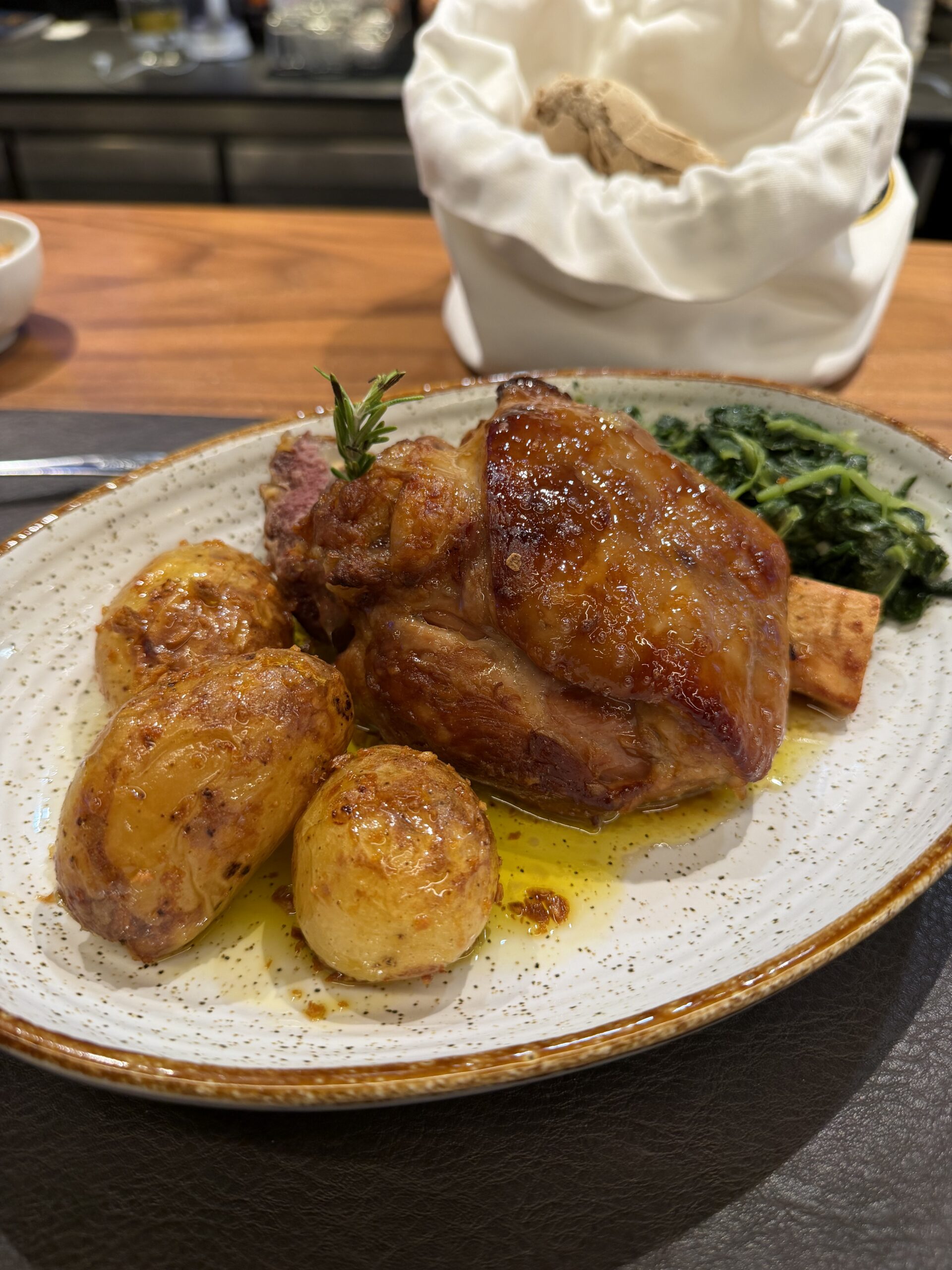
It arrived without much ceremony: a generous piece of pernil de porco, roasted potatoes, greens, and enough of those glorious pork juices pooling around everything to make the bread on the table suddenly very important.
The plate looked hearty, rustic, and relatively simple.
Then I took the first bite.
Braga Had Already Given Me Plenty to Talk About
Food was already occupying a lot of my thoughts that weekend.
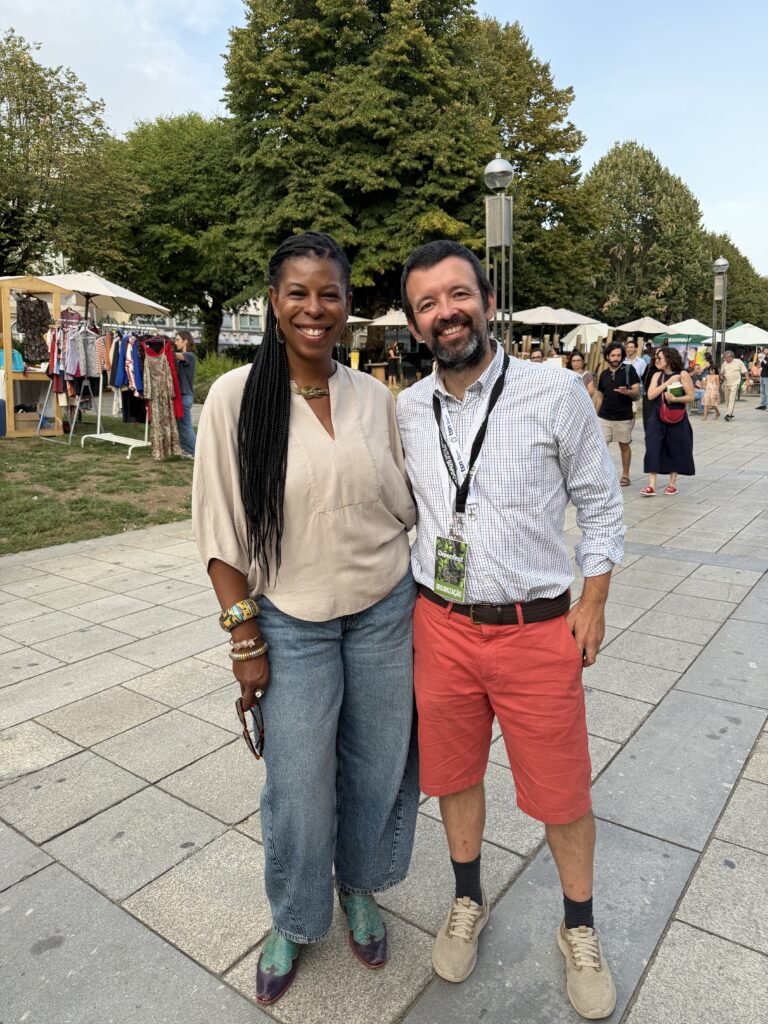
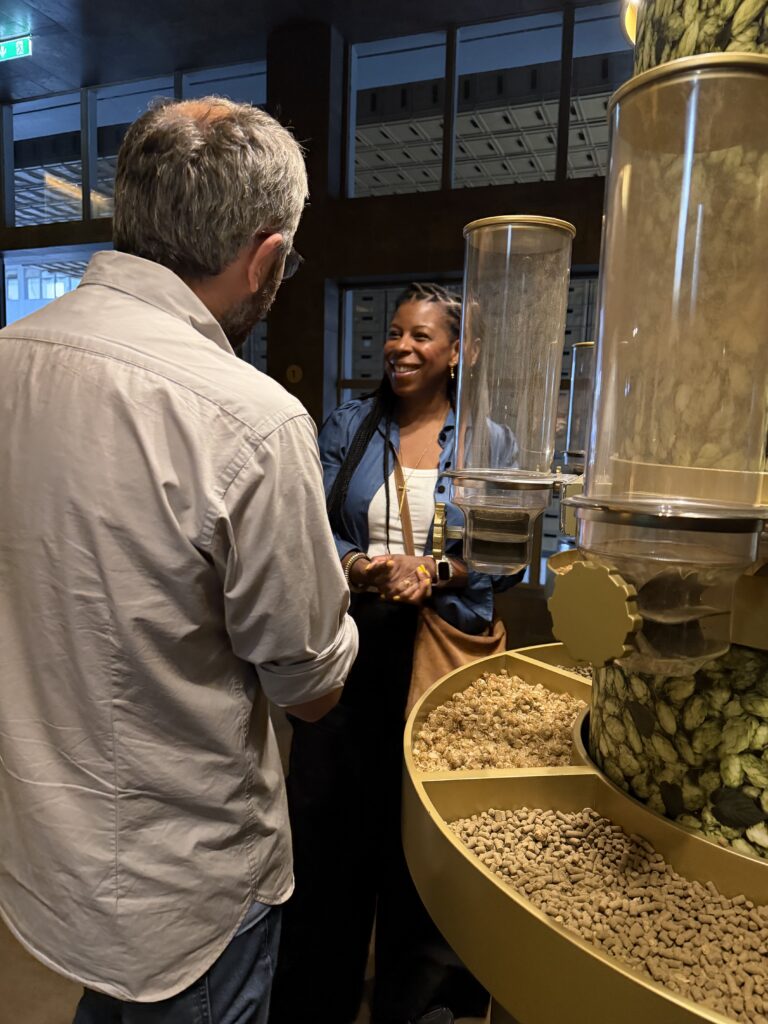
I had returned to Braga to speak at Greenfest Portugal about women and sustainable food systems, bringing together much of what I have learned through more than two decades of working in international development, agriculture, and food systems around the world.
After spending the day discussing food from that perspective, I was ready to experience it from a much simpler one.
I was hungry.
Braga is a particularly good city in which to find yourself in that condition. The historic center is compact and wonderfully walkable, with restaurants, cafés, bakeries, and bars woven into streets where centuries of architecture remain part of ordinary daily life.
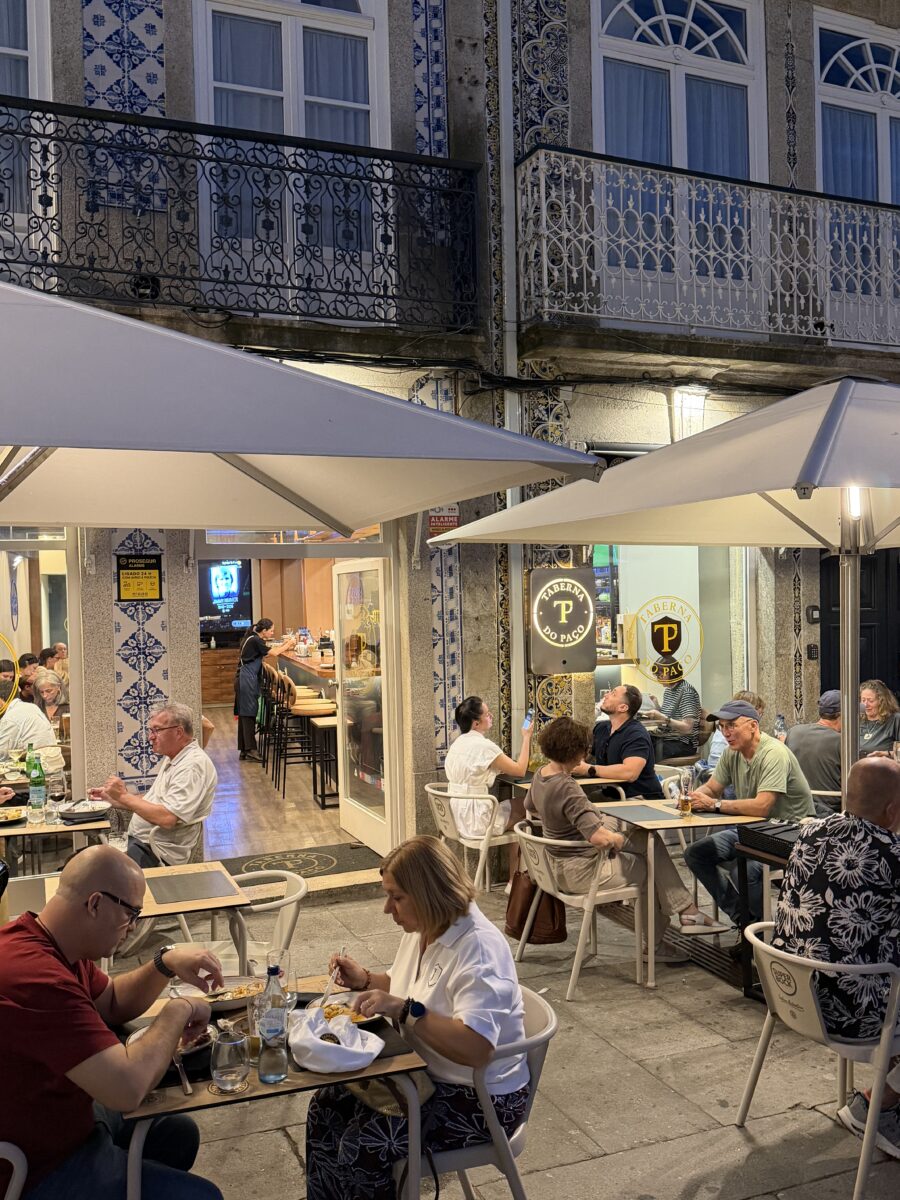
Taberna do Paço sits right in the middle of it, on Largo do Paço. Its location puts you among some of Braga’s most recognizable historic surroundings, but once I sat down, I wasn’t particularly interested in sightseeing.
Dinner had my attention.
Then the Pernil Arrived
The first thing I noticed was the skin.
It was deeply browned and glossy, covering a substantial piece of pork leg sitting in its own juices. Beside it were whole roasted potatoes and dark greens, with a basket of bread waiting behind the plate.
There are meals that arrive looking impressive because somebody in the kitchen has spent considerable time arranging them to look impressive.
This wasn’t that kind of plate.
It looked good because the food itself looked good.
The pork was rich and succulent beneath that beautifully browned exterior. The meat had the softness you get when a substantial cut has been given enough time for its tougher structure and fat to surrender, but it hadn’t lost the character that makes pork so satisfying in the first place.
And those juices.
They ran underneath the meat and around the potatoes, carrying all that rendered pork flavor with them. Every potato sitting on that plate had landed in exactly the right place.
Portugal Knows Its Way Around a Pig
Once you begin eating your way through Portugal, it doesn’t take long to understand that pork occupies serious culinary territory here.
It appears cured and smoked in presunto and enchidos, tucked into bread as a bifana, chopped into dishes such as carne de porco à Alentejana, roasted in substantial cuts, simmered in stews, and transformed into regional preparations that make use of nearly every part of the animal.
That relationship is especially visible in the hearty cooking traditions of northern Portugal.
My pernil de porco at Taberna do Paço fit comfortably into that world. Pork leg is a cut that rewards patient cooking. Given enough time, heat works through the connective tissue and fat while the exterior develops the browning that makes roasted pork so irresistible.
The result doesn’t require much decoration.
That may be one of the reasons I loved it so much.
I tend to gravitate toward food that allows the main ingredient to remain recognizable. Grill it. Roast it. Steam it. Cook it over fire. Give it enough seasoning and enough time, then resist the temptation to interfere with it unnecessarily.
This plate understood that perfectly.
The Potatoes Had the Best Seat in the Restaurant
It would be unfair to discuss that pork without spending a little time on the potatoes.
They were whole, golden, and roasted until their skins had developed color while their interiors remained soft. More importantly, they were sitting directly beside the pork.
That meant they caught everything.
As the juices collected on the plate, the potatoes absorbed the seasoning, fat, and flavor coming from the meat. By the time I got to them, calling them a side dish seemed almost insulting.
The greens played a quieter but equally useful role. Their slight bitterness and freshness interrupted the richness just enough before I inevitably went back for another bite of pork.
Then there was the bread.
Portuguese restaurants have made me increasingly convinced that leaving good sauce or meat juices on a plate is a personal failure. I tore off pieces and used them accordingly.
Nothing went to waste.
Greenfest would have been proud.
A Belgian Beer Walked Into a Portuguese Taberna
I could have ordered Portuguese wine.
Instead, I ended up with a dark Grimbergen, served in one of those beautiful rounded glasses that somehow makes drinking beer feel slightly more ceremonial.
It turned out to be exactly what I wanted.
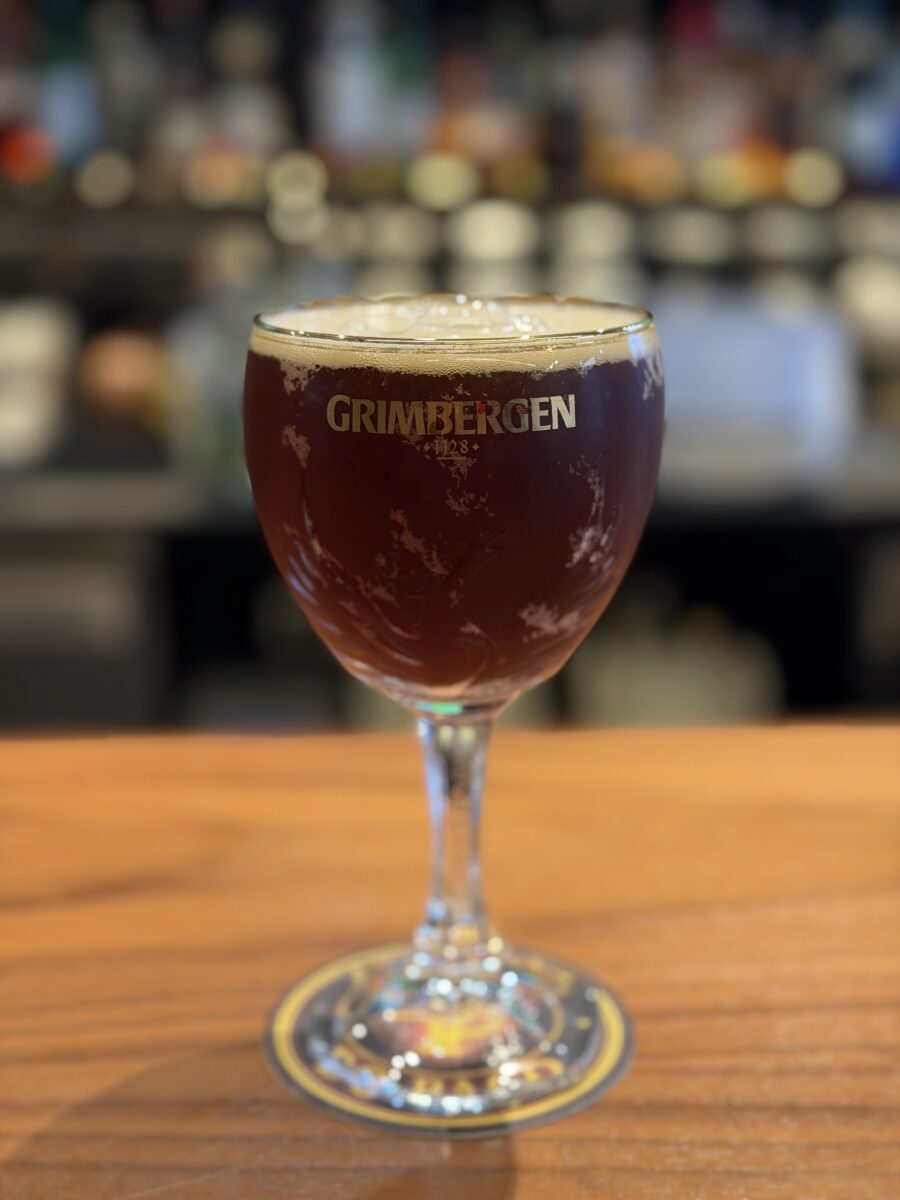
The beer had enough maltiness and depth to stand beside the pork rather than disappear behind it. At the same time, the carbonation offered a welcome break from the richness of the meat before the next bite.
The pairing also made more sense at Taberna do Paço than it might seem at first glance. The restaurant gives drinks a prominent place in the experience, and Belgian beers are among the offerings associated with its bar selection.
So there I was in one of Portugal’s oldest cities, eating roasted pork and potatoes in a Portuguese taberna while drinking Belgian beer.
Travel does not always need to be culturally tidy.
Sometimes it just needs to taste good.
Simple Food Has Nowhere to Hide
The older I get, and the more I travel, the less interested I become in complexity for complexity’s sake.
That doesn’t mean I don’t appreciate creative chefs or beautifully constructed tasting menus. I do.
But simple food carries its own kind of risk.
When a plate contains pork, potatoes, greens, and little else, every component has to do its job. There isn’t a complicated sauce to distract from poorly cooked meat. There aren’t fifteen garnishes creating visual excitement while the main ingredient quietly disappoints.
You taste the pork.
You taste the potatoes.
You know whether the person cooking them understood what they were doing.
At Taberna do Paço, they did.
That pork leg reminded me why some of the most memorable food experiences of my travels have involved remarkably uncomplicated plates. Good ingredients, proper seasoning, patience, and technique can create something far more exciting than a dish trying desperately to prove how clever it is.
My Work Brain Never Completely Leaves the Table
There was also something wonderfully appropriate about having this particular meal during Greenfest.
I spend a great deal of my professional life thinking about food before it reaches a restaurant table. I think about farmers, agricultural production, markets, labor, gender, livelihoods, environmental pressures, supply chains, and all the complicated relationships that determine how food moves through the world.
At Greenfest Braga, I had been speaking about women at the heart of sustainable food systems.
Then I walked into a restaurant and became the person at the other end of that system.
An eater.
Sitting there with a beautiful plate of pork in front of me was a reminder that food systems eventually become deeply personal. Agriculture may begin with soil, water, labor, animals, crops, knowledge, and markets, but eventually somebody sits down at a table.
Food becomes pleasure.
It becomes culture.
It becomes memory.
And occasionally, it becomes the reason somebody writes more than a thousand words about a piece of pork.
Some Meals Refuse to Stay at the Restaurant
I have eaten hundreds of meals while traveling, and most of them eventually fade into the larger memory of a trip.
A handful refuse.
I can still remember specific meals from places I visited years ago because the food somehow attached itself to the destination. Remembering the city brings back the plate, the smells, the room, and sometimes even the exact moment when I realized I was eating something special.
Braga now has that pork.
When I think about returning, there are plenty of things I would happily revisit. I loved being able to walk through the historic center. Greenfest gave me a reason to engage with the city professionally. Staying beside the railway made exploring northern Portugal remarkably easy.
But I would also go back to Taberna do Paço.
And I already know what I would order.
The pernil de porco would arrive with its browned skin, roasted potatoes and greens. I would order another dark beer. I would keep the bread close enough to deal with whatever juices survived the potatoes.
Then I would probably wonder whether the pork was really as good as I remembered.
I have a feeling it would be.