€2.50 Bought Me a Bifana, a Beer and a New Favorite Lunch in Porto
There are plenty of ways to spend €2.50 in Porto.
Apparently, one of them is getting a pork sandwich and a beer.
That is how I finally tried my first bifana, one of Portugal’s most beloved everyday sandwiches. I had heard about them almost from the moment I started spending time in Portugal, but somehow I had managed to eat my way around quite a few Portuguese dishes without actually ordering one.
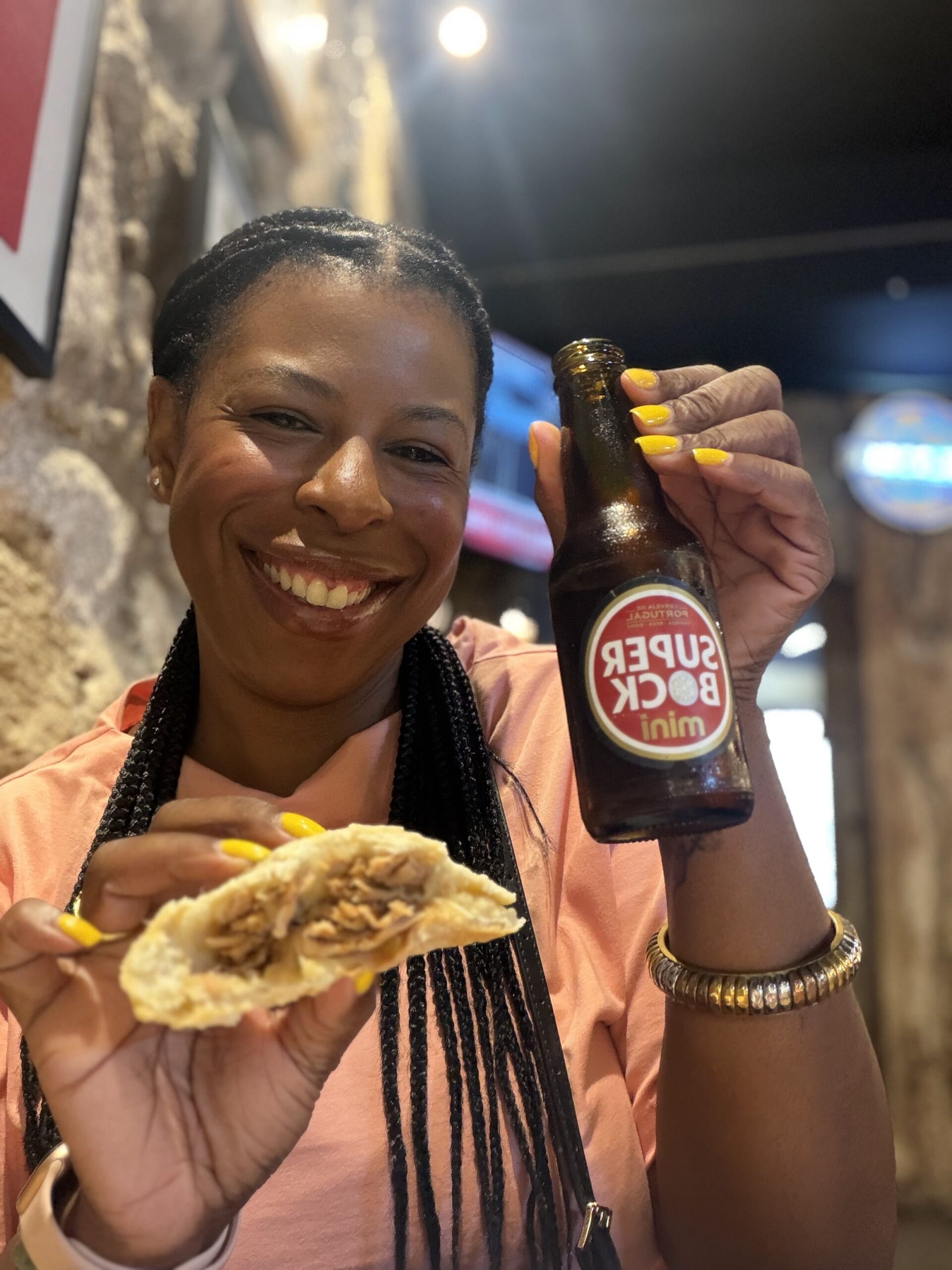
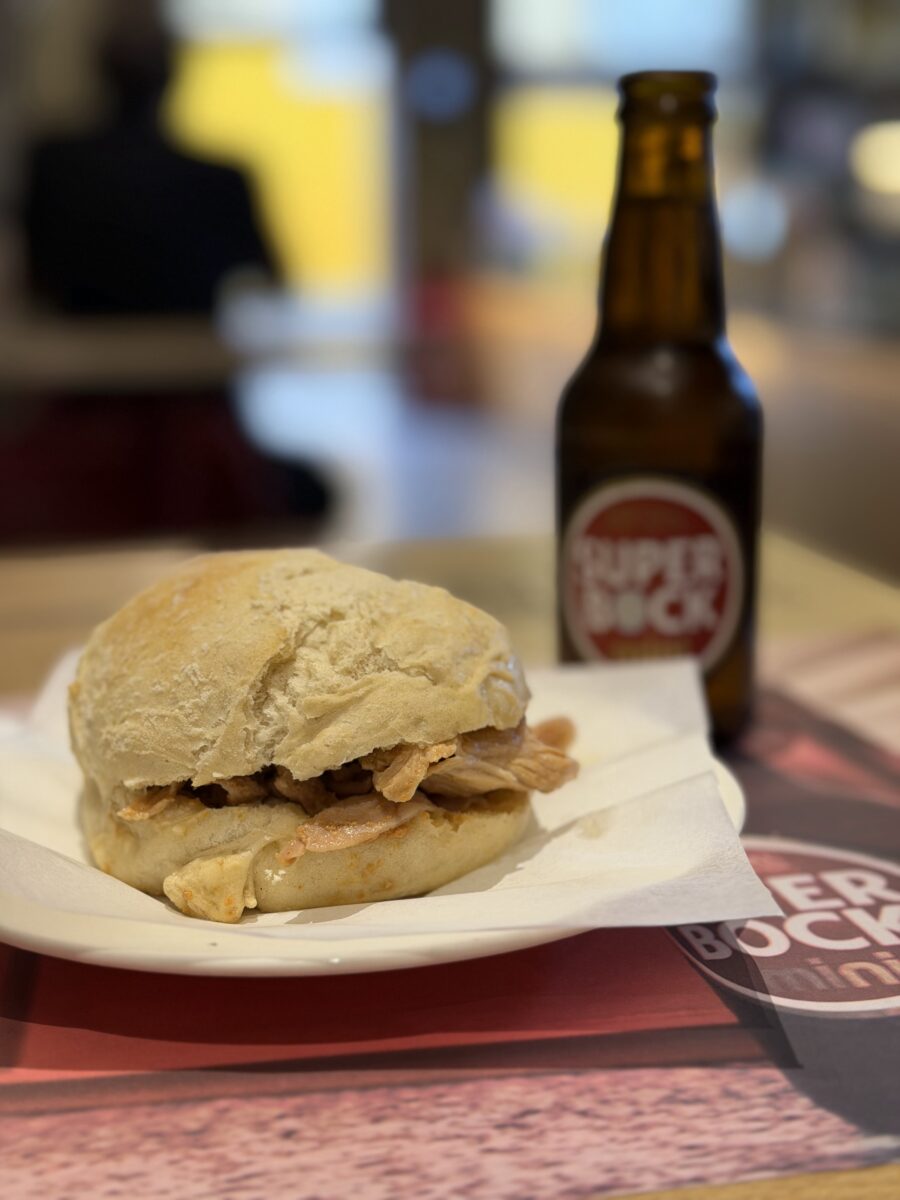
Then I found myself at Espaço 77 in Porto with a bifana in my hands and a mini Super Bock beside it.
The sandwich wasn’t elaborate. There was no impressive plating, towering pile of ingredients, or complicated explanation of what I was about to eat. It was bread and pork, with the juices from the meat working their way into the roll.
For €2.50, I wasn’t expecting a culinary revelation.
I probably should have been.
Porto Has a Remarkable Talent for Feeding You Without Making a Fuss
One of the things I have come to appreciate about living in Portugal is how often good food appears in completely ordinary places.
Not every memorable meal requires a reservation. Sometimes you walk into a neighborhood café, bar, or tasca, order something people have been eating for generations, and discover that the simplicity is precisely the point.
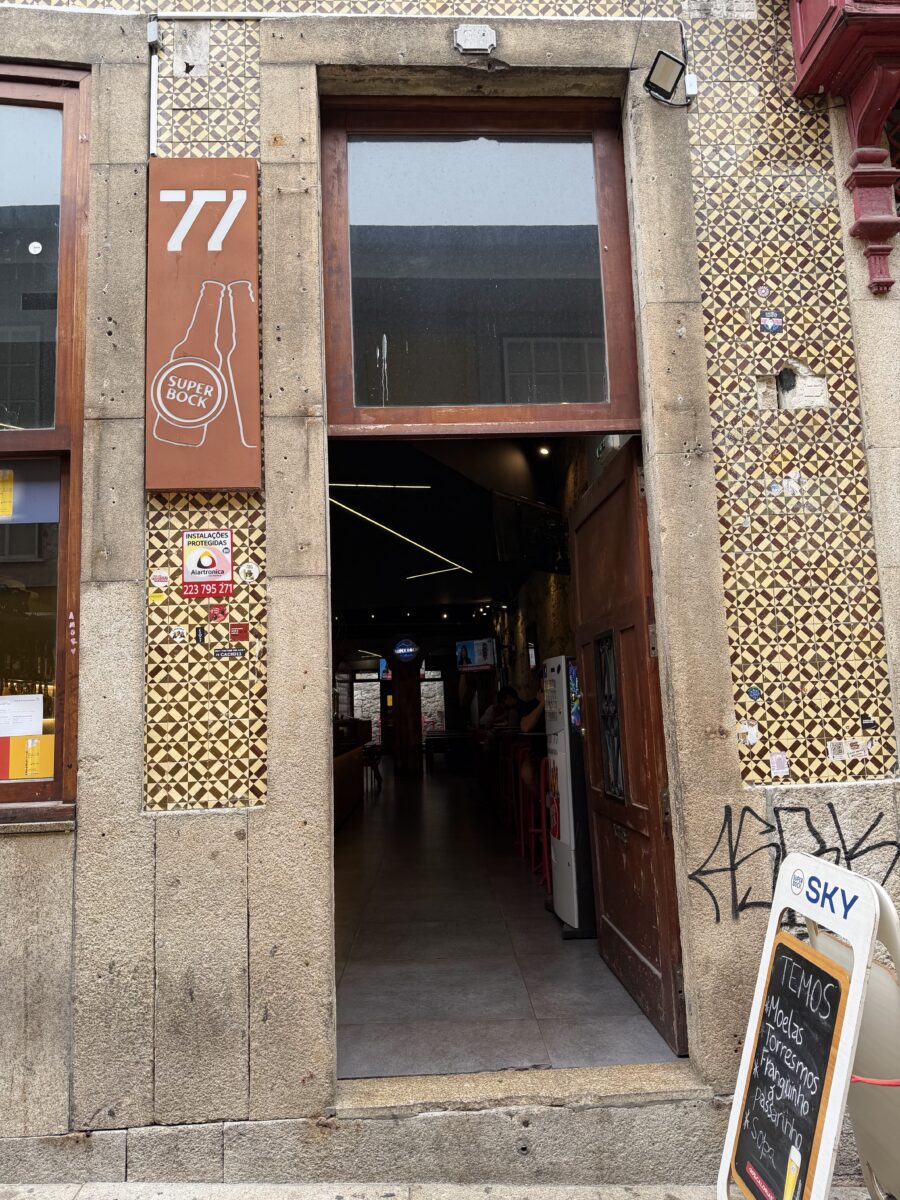
Espaço 77 fits comfortably into that side of Porto.
The bar sits on Travessa de Cedofeita and has developed a reputation around something particularly Portuguese: mini Super Bocks. Its own social profile describes it as the bar that sells the most minis, and the place has been associated with inexpensive little bottles of beer for years.
I wasn’t there to conduct an investigation into Porto’s beer-drinking habits.
I wanted lunch.
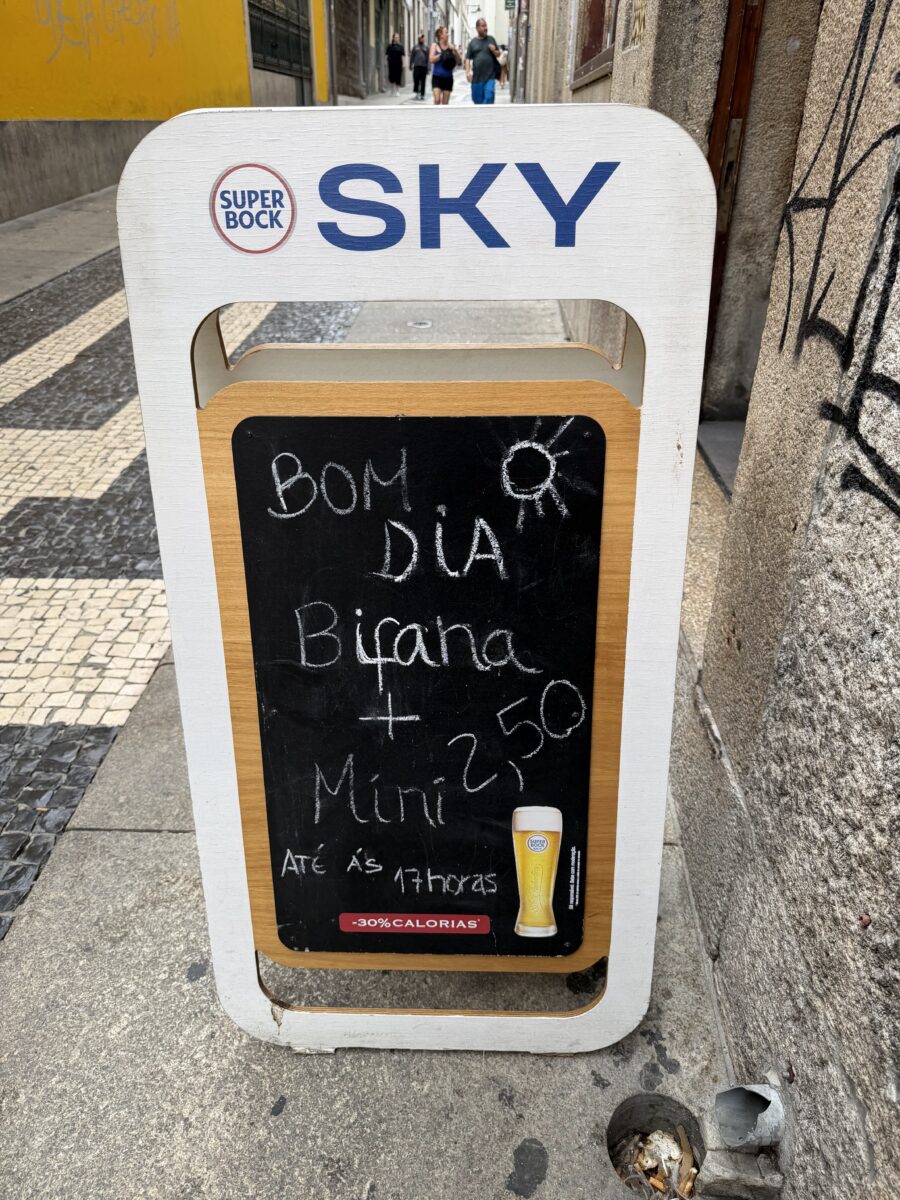
And there on the menu was the combination that immediately got my attention: a bifana and a mini Super Bock for €2.50. The same combination was still being reported by customers at Espaço 77 in 2026, so I had apparently stumbled onto one of the city’s particularly economical little pleasures.
At that price, there really wasn’t much to debate.
Then I Picked Up My First Bifana
A bifana is one of those foods whose description almost undersells it.
At its simplest, it is pork and bread.
Thin pieces of pork are seasoned and cooked until tender, then tucked inside a white bread roll. The sandwich is eaten throughout Portugal, and the country’s official tourism organization includes the bifana among the traditional Portuguese sandwiches worth seeking out in cafés, tascas, bars and other everyday places where locals eat.
Mine looked exactly like the kind of food I love discovering when I travel.
Nothing fancy.
Nothing complicated.
Just a soft roll stuffed generously with pork that was juicy enough to flavor the bread around it.
Then I bit into it.
The first surprise was how much flavor could come from something that looked so simple. The pork was tender, juicy and deeply seasoned, while the bread had absorbed enough of the cooking juices to become part of the experience rather than simply something holding the meat together.
The second surprise was how filling it was.
This little €2.50 lunch had considerably more substance than I had expected when I ordered it.
I Had Been Warned About the Spice
Before trying a bifana, I had heard that they could have a little kick.
That made sense once I started learning more about how bifanas are prepared in different parts of Portugal.
In northern Portugal, and particularly around Porto, bifanas are commonly made from smaller pieces of pork cooked together in a seasoned sauce. The northern version is often spicy, and some of that sauce soaks directly into the bread. Travel south and the sandwich changes. The pork may remain as a larger, flattened steak, with garlic playing a bigger role and considerably less sauce involved.
My bifana at Espaço 77, however, wasn’t spicy to me at all.
I kept waiting for the heat I had heard about.
It never arrived.
What I got instead was a wonderfully savory, juicy sandwich with plenty of seasoning and enough pork packed into that small roll to make me wonder why I had waited so long to try one.
That is also part of the fun of a dish like this. There isn’t one bifana experience waiting for you across Portugal. Recipes change from region to region and from kitchen to kitchen.
Which gives me an excellent excuse to keep ordering them.
Somewhere Between Porto and Alentejo, the Bifana Changes Clothes
Portugal may be a relatively small country, but its food becomes much more interesting once you stop treating Portuguese cuisine as one uniform thing.
The bifana is a perfect example.
The version most associated with Porto tends toward saucier pieces of pork, often with some spice. Farther south, the sandwich takes on a different personality. Vendas Novas in the Alentejo is particularly associated with bifanas, and the southern style commonly features a flattened pork steak rather than the smaller pieces of meat familiar in northern versions.
Neither approach requires much.
Pork. Bread. Seasoning.
Maybe mustard.
Yet those few ingredients have created regional variations recognizable enough that people can debate which style they prefer.
I haven’t eaten nearly enough bifanas to enter that argument yet.
Give me time.
The Mini Super Bock Wasn’t Just There for Decoration
Then there was the beer.
A mini in Portugal is exactly what it sounds like: a small bottle of beer, typically 20 centiliters. At Espaço 77, those little Super Bocks are practically part of the establishment’s identity. Historical accounts of the bar document hundreds of thousands of minis being sold there annually more than a decade ago.
The combination also makes perfect sense with a bifana.
A cold lager gives you something crisp and refreshing beside the rich pork and sauce-soaked bread. Even Porto food specialists recommend beer as the natural companion to the city’s bifanas.
There is something else I enjoy about the mini.
It is enough beer to accompany a sandwich without turning lunch into an afternoon commitment.
Bifana in one hand. Little Super Bock nearby.
Porto had solved lunch.
Everyday Food Tells Me Things a Tasting Menu Can’t
I love an excellent restaurant.
I appreciate chefs who experiment, beautiful dining rooms, creative menus and the occasional meal that turns dinner into an event.
But I would never want to travel only that way.
Some of the foods that tell me the most about a place are the ones people eat without thinking very much about them. They are affordable, familiar and woven into ordinary routines. You grab them for lunch, order them at a bar, eat them standing at a counter, or pick one up because you’re hungry and know exactly what you’re going to get.
Portugal’s tourism authority actually encourages visitors to seek out traditional sandwiches such as bifanas in the cafés, tascas, bakeries, markets and bars where locals eat them.
That interests me far more than chasing a checklist of supposedly essential restaurants.
Food culture doesn’t exist only in celebrated kitchens.
It lives in the places people can afford to return to.
€2.50 Should Not Have Made Me This Happy
I kept coming back to the price.
Two euros and fifty cents.
For the sandwich.
And the beer.
Porto is changing, and anyone spending time here will quickly discover that not everything in the city is inexpensive. Yet experiences like this still exist alongside the wine bars, fashionable restaurants and increasingly polished tourism economy.
There is something deeply satisfying about discovering a food that doesn’t need exclusivity to feel special.
My bifana wasn’t memorable because it was expensive.
It wasn’t memorable because someone told me it was difficult to get.
Nobody had to secure me a reservation.
It was simply juicy, flavorful, filling and delicious.
For €2.50.
Listen.
I Think I Found My Porto Lunch
My first bifana created a small problem.
Now I want to try the others.
I want the spicy versions I had been warned about. I want to compare the saucy northern bifanas with the flatter southern versions. Eventually, I want to eat one in Vendas Novas and see what happens when a sandwich this simple becomes part of a town’s culinary identity.
But I also know I will go back to Espaço 77.
There is something wonderfully unpretentious about walking into a bar, ordering a little pork sandwich and a tiny beer, and leaving completely satisfied.
Travel doesn’t always need a grand culinary moment.
Sometimes you need bread, pork and a Super Bock.
Sometimes you need €2.50.
And sometimes the cheapest lunch you’ve had in a while becomes the one you can’t wait to eat again.