What Lentils, Leather, and Leftovers Taught Me About Innovation at Católica Porto Business School’s INSURE.Hub
From food science to circular economies, my experience at the 6th International Conference on Innovation, Sustainability, and Regeneration revealed how unexpected discoveries can inspire meaningful change.
What do a Portuguese codfish fritter, a loaf of gluten-free bread, wastewater, and a potential cancer treatment have in common?
Apparently, quite a bit!
At least, that’s what I found myself contemplating during the 6th International Conference on Innovation, Sustainability, and Regeneration at Universidade Católica Portuguesa in Porto.
Now, I attend my fair share of conferences. Some leave me inspired, while others leave me wondering whether anyone has considered what happens when those beautiful PowerPoint presentations meet the realities of everyday life. I’m talking about the messy part, where budgets are limited, markets are unpredictable, equipment breaks down, and the people expected to implement all these wonderful ideas have their own challenges to navigate.
That is the part I’m usually most interested in, and it is precisely why the research at Católica Porto captured my attention.
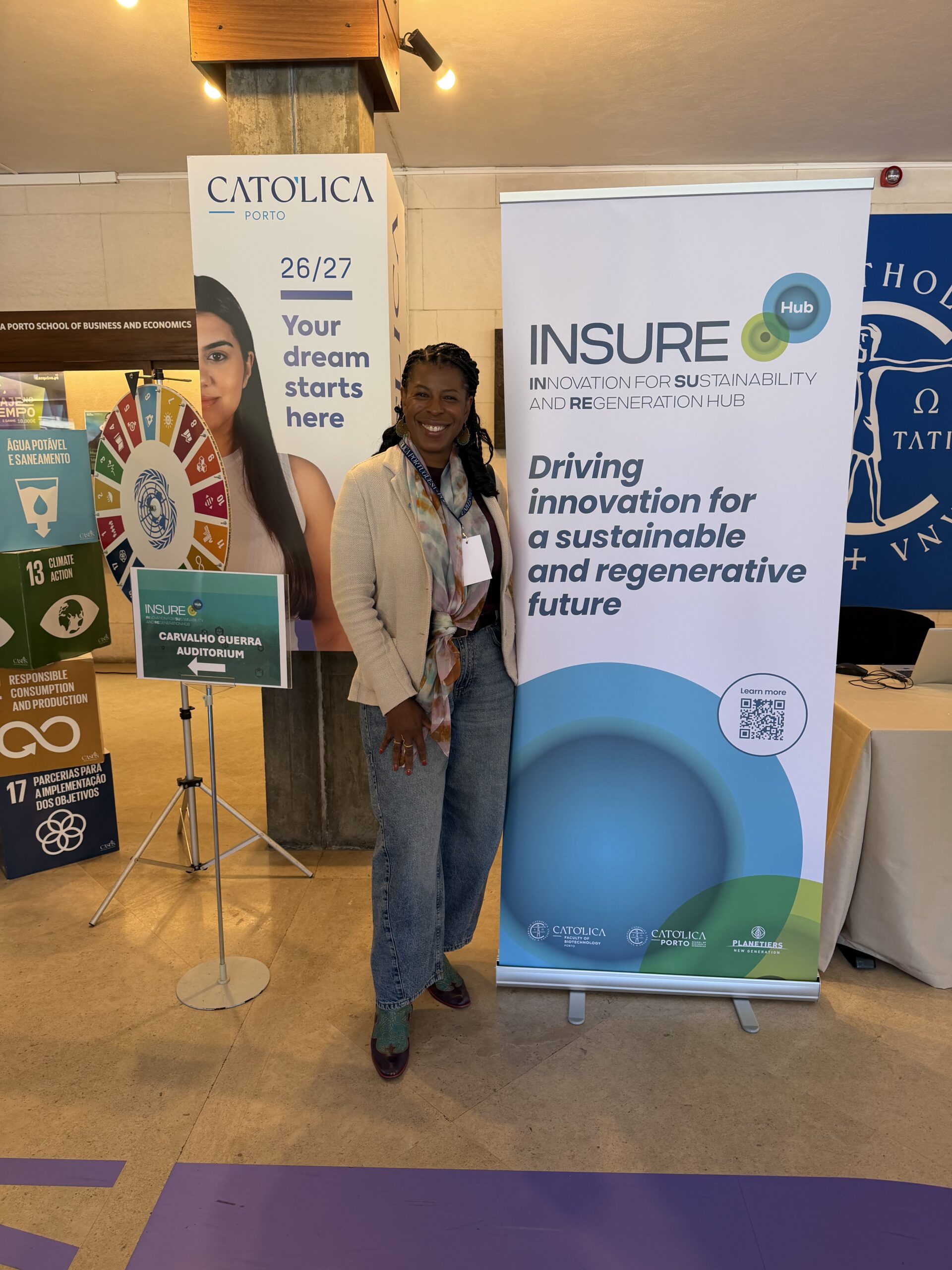
Held October 28–29, 2026, the conference brought together scientists, students, entrepreneurs, academics, and sustainability professionals through INSURE.Hub, an initiative connecting Universidade Católica Portuguesa and Planetiers New Generation. As I considered the various presentations, I kept finding connections between discoveries in the laboratory and challenges I’ve encountered throughout my career in sustainable food systems and international development.
After more than two decades working with agricultural enterprises, communities, and development institutions, I’ve come to believe that our greatest challenge isn’t always a shortage of innovative ideas. Far too often, we struggle to connect those ideas with the people, resources, relationships, and institutions necessary to make them work.
And that’s where I believe the real conversation about sustainability innovation needs to begin.
Lentils, Sorghum, and the Beauty of Looking Again
Of all the things that might capture my attention at an international sustainability conference, lentils probably wouldn’t top anyone’s list of predictions. Yet there I was, thinking about these familiar little legumes and the extraordinary possibilities that researchers continue to explore within crops that people have cultivated for generations.
One presentation examined lentil-based food innovation for sustainable diets, while another explored the biotechnological potential of sorghum for gluten-free bread and low-alcohol beer production. What fascinated me wasn’t simply the possibility of creating new products. I was thinking about the agricultural communities that already produce these crops, the traditional knowledge surrounding their cultivation, and the opportunities that might emerge if scientific research could help producers capture more value from what they grow.
Sorghum, for example, holds an important place in food cultures across Africa and Asia, where communities have developed countless ways to prepare and consume it. Lentils carry their own remarkable culinary histories, connecting kitchens across the Mediterranean, South Asia, the Middle East, and beyond. These crops have nourished people for centuries, long before anyone began describing them as potential ingredients in innovative food products.
That relationship between traditional knowledge and modern research is something I find particularly compelling. Throughout my travels, I’ve learned that some of the most interesting food innovations begin not with the invention of something entirely new, but with a willingness to recognize the possibilities within resources we already have. My experiences exploring the relationship between food and culture have only deepened that appreciation.
However, my enthusiasm for these discoveries comes with a healthy dose of practical experience. I’ve worked with agricultural entrepreneurs who had excellent products, ambitious plans, and deep knowledge of their markets, yet struggled to access processing equipment, affordable financing, or the infrastructure necessary to expand their operations. Their challenges remind me that developing an innovative product and building a sustainable enterprise are two very different accomplishments.
When I consider the commercial possibilities for sorghum or lentil-based products, I also think about the farmers who could supply the raw materials, the processors who would need to invest in new technologies, and the consumers whose purchasing decisions would ultimately determine whether those products succeed. I wonder how much of the economic value would remain in agricultural communities and whether women-owned businesses would have a fair opportunity to participate.
Those questions aren’t intended to diminish the research. Instead, they help us imagine what successful innovation could look like beyond the laboratory. Scientific discovery becomes especially exciting when it creates opportunities for people who have historically received the smallest share of the value generated by their own agricultural resources.
A Portuguese Food Fight: Seaweed Versus Bacalhau
Now, anyone who has followed my culinary adventures around Portugal knows that I’ve developed a genuine affection for the country’s food traditions. I love discovering the stories behind regional specialties, meeting the people who preserve them, and understanding how history and geography influence what eventually reaches our plates. So, when I came across a research presentation comparing the sustainability of pastel de algas, a seaweed-based pastry, and pastel de bacalhau, Portugal’s beloved codfish fritter, my curiosity immediately went into overdrive.
I could almost imagine the conversations that might unfold around a Portuguese dinner table if someone suggested reconsidering such a familiar dish. Bacalhau occupies a distinctive place in Portuguese culinary identity, reflecting centuries of fishing, preservation, trade, and adaptation. A traditional food like this carries cultural significance that no environmental assessment can fully capture on its own.
Yet this is precisely what makes the research interesting. As environmental concerns encourage food producers to explore alternative ingredients, we need thoughtful ways to assess how different products use resources and affect ecosystems. The comparison between a seaweed-based pastry and a codfish fritter invites researchers to consider questions about sourcing, processing, energy requirements, transportation, and other factors that contribute to a product’s environmental footprint.
Of course, I wouldn’t assume that a food becomes more sustainable simply because its ingredients sound environmentally friendly. The actual evidence has to support that conclusion, particularly when production methods and supply chains can significantly influence environmental outcomes. But even when the science identifies a promising alternative, another challenge remains: creating something that people genuinely want to eat.
Food carries memory, identity, and emotion. We connect particular flavors to childhood, celebrations, family gatherings, and the places we call home. I find it difficult to imagine a successful transformation of our food systems that ignores those powerful cultural relationships. After all, we don’t make food choices exclusively through environmental calculations, no matter how compelling the research might be.
My experiences in Portuguese markets and kitchens have reinforced that understanding. During a market-to-table cooking experience in Porto, I saw how culinary traditions connect ingredients, producers, local knowledge, and the joy of preparing food together. Experiences like that remind me why sustainability conversations need to include cultural heritage alongside scientific analysis.
Rather than viewing traditional foods and innovative alternatives as opposing forces, I prefer to imagine what we could accomplish by bringing those perspectives together. Scientific research can help us understand environmental impacts, while culinary knowledge can guide us toward products that respect local identities and respond to changing needs. The most successful innovations may be those that invite people to explore new possibilities without asking them to abandon the food traditions they love.
The Tiny Organisms Doing Some Very Big Work
My curiosity about food innovation didn’t stop with the ingredients we can see. Another presentation explored the potential of indigenous yeasts collected from environmental samples, bringing attention to microorganisms that quietly contribute to some of the world’s most beloved foods and beverages.
Whenever I enjoy a good loaf of bread, a glass of wine, or a thoughtfully prepared fermented food, I rarely find myself thinking about the microorganisms responsible for the transformation. Yet fermentation has supported food preservation, flavor development, and culinary traditions across cultures for generations. Research into indigenous yeasts offers scientists opportunities to better understand microbial biodiversity and investigate organisms that may possess useful characteristics.
As I considered this research, my thoughts naturally turned toward the relationship between biological diversity and economic opportunity. Different regions possess distinctive environmental conditions, agricultural resources, and food traditions that could help inform future research and product development. Understanding those resources might eventually support specialized food enterprises or new applications in fermentation technology, provided further studies establish their suitability and safety.
My experience in international development also makes me attentive to questions about access and ownership. When researchers identify potentially valuable biological resources, how do we ensure that commercial opportunities develop responsibly? What role should local communities play in decisions about resources connected to their environments, and how can benefit-sharing arrangements reflect the contributions of different stakeholders?
These considerations become especially important when scientific discoveries move toward commercialization. I believe research institutions and businesses have an opportunity to establish partnerships that recognize local knowledge, respect biodiversity, and create more inclusive economic opportunities. The potential of indigenous yeasts is scientifically fascinating, but the wider conversation about how we use and value biological resources may be equally consequential.
From Wastewater to Agricultural Resources: Now That’s Circular Thinking
I have to admit that wastewater doesn’t sound like the most glamorous subject for an inspiring conversation about the future. Yet some of the most compelling sustainability research begins with resources that we normally overlook, undervalue, or simply want to dispose of as quickly as possible.
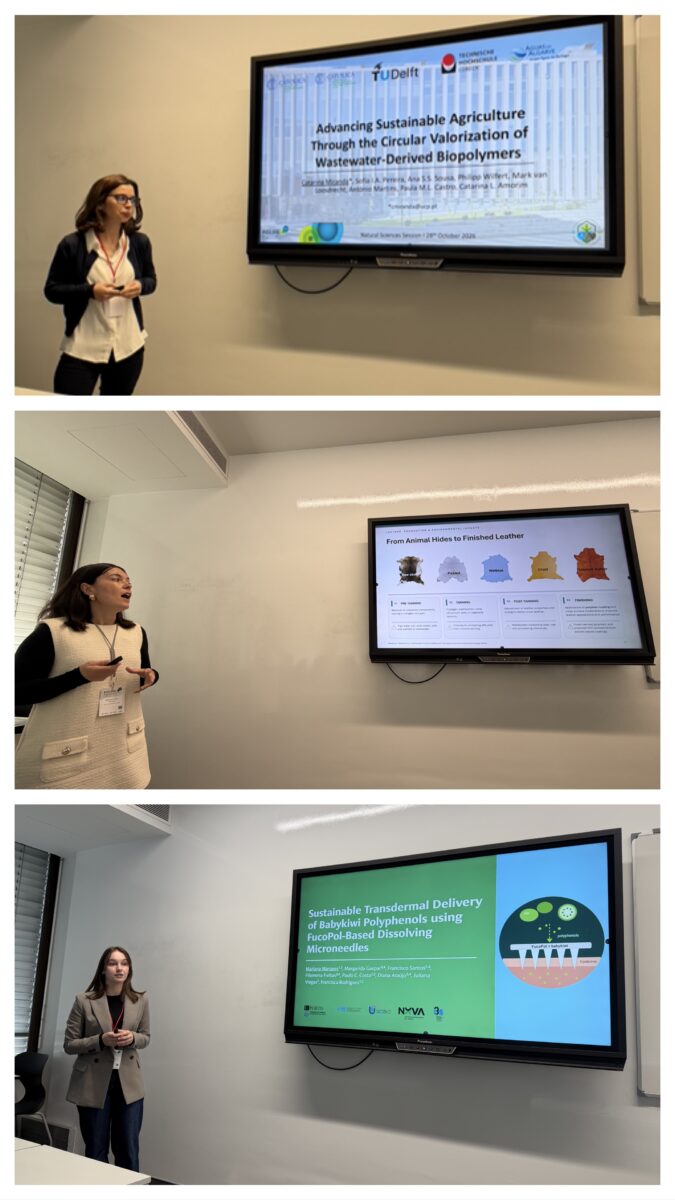
One of the research presentations, Advancing Sustainable Agriculture Through the Circular Valorization of Wastewater-Derived Biopolymers, explored precisely this type of challenge. The research team included Catarina Miranda, Ana Sofia Silva Sousa, Philipp Wilfert, and their collaborators, whose work forms part of a broader effort to investigate how recovered biological materials might contribute to more sustainable agricultural systems.
What interests me about circular economy research is the fundamental change in perspective it encourages. Conventional production models frequently treat waste as the inevitable end of a process, whereas circular approaches challenge us to consider whether materials might retain value after their original use. Rather than continually extracting new resources and discarding what remains, researchers and businesses can explore opportunities to recover materials, reduce losses, and rethink production systems.
I’ve encountered similar questions throughout my work with food processors and agricultural enterprises. In many settings, producers focus so heavily on their primary products that they have limited capacity to explore whether by-products could serve another purpose. Yet investigating those possibilities requires more than creativity. Businesses also need suitable technologies, reliable information, sufficient investment, and markets capable of supporting any new products or processes.
The research on wastewater-derived biopolymers offers an interesting direction for further investigation, although scientists must establish the safety, effectiveness, environmental performance, and economic feasibility of specific applications. Those requirements are particularly important when recovered materials may eventually enter agricultural systems.
I think about farmers and processors who already navigate narrow profit margins, unpredictable weather, changing input costs, and complicated regulations. Introducing a promising technology into that environment requires a clear understanding of the risks and resources involved. A solution that depends on expensive equipment or specialized technical expertise may work beautifully in one setting but remain inaccessible in another.
That’s why I see circular innovation as both a scientific opportunity and a development challenge. We need researchers who can establish what is technically possible, entrepreneurs who understand commercial realities, and practitioners who can help adapt promising approaches to the circumstances of different communities. When those perspectives come together, circularity has a better chance of becoming a useful business practice rather than another attractive concept confined to conference presentations.
Sustainability Doesn’t Stop at the Farm Gate
Although sustainable food systems are my professional home, I have never believed that agriculture exists independently of the industries and institutions surrounding it. Food production depends on energy, water, transportation, manufacturing, financial services, and markets, while the environmental consequences of those activities often extend across borders and generations.
The conference reflected that interconnected reality through research addressing circular alternatives for leather finishing, alongside biomedical work investigating polyphenol-loaded nanostructured lipid carriers for potential applications related to cutaneous melanoma. These subjects occupy very different scientific fields, and experimental biomedical research requires substantial validation before anyone can draw conclusions about treatment effectiveness. Nevertheless, their inclusion highlighted the remarkable range of questions scientists can explore when they reconsider conventional materials, technologies, and production processes.
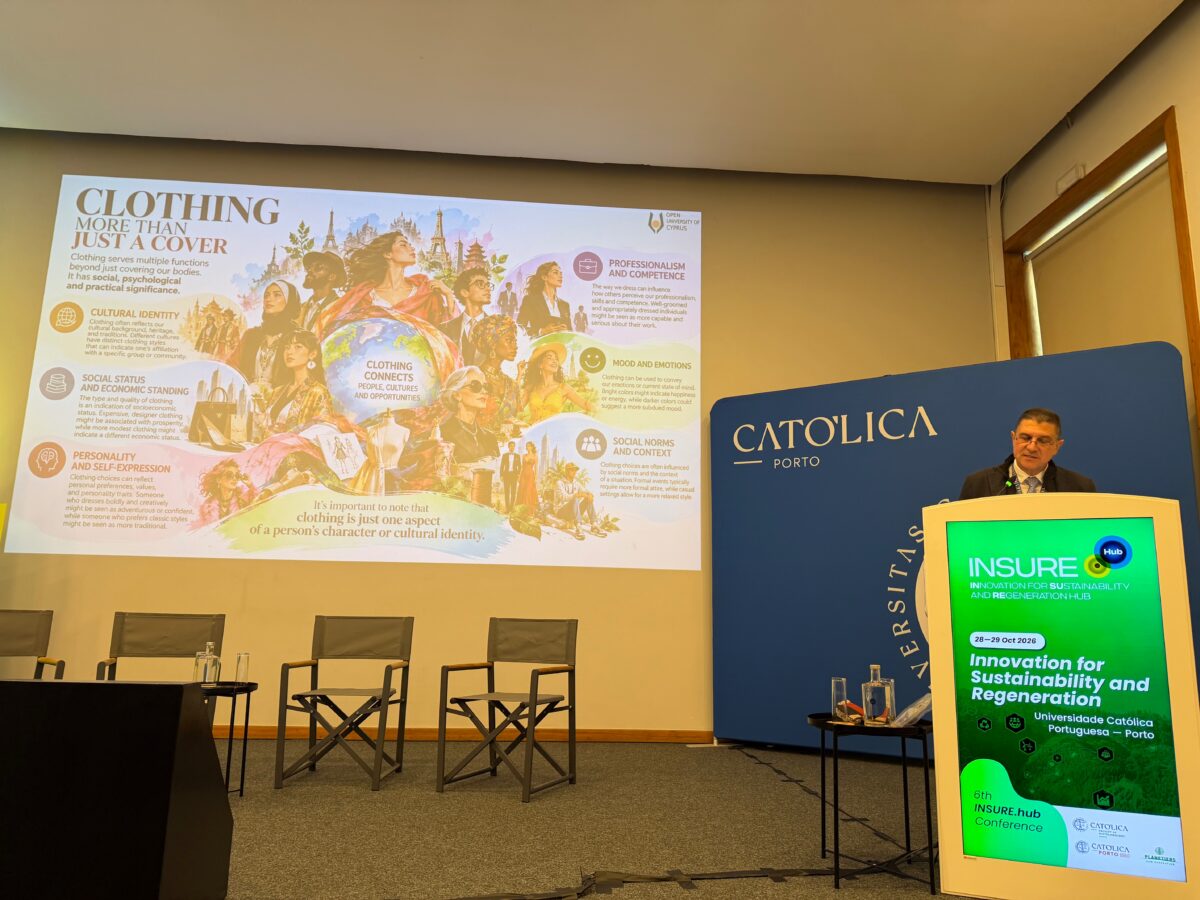
The wider program also examined environmental challenges in the fashion industry, including resource consumption and the consequences of increasingly disposable clothing. Circular economy specialist Antonis Zorpas brought attention to the hidden environmental costs that conventional pricing often fails to reflect.
Now, I love beautiful clothes, and I make no apologies for appreciating good design. Still, I also recognize that the price we pay at a shop rarely tells the complete story of how something reached us. The same applies to food, electronics, household products, and countless other goods that pass through complex supply chains before entering our everyday lives.
My interest in sustainability has always included those relationships between production and consumption. When we focus exclusively on the final product, we can easily overlook the workers, natural resources, transportation systems, and manufacturing processes that contributed to its creation. An environmentally preferable ingredient or material may represent progress, but understanding its broader impact requires looking at the entire system.
This systems perspective also creates opportunities for industries to learn from one another. Agricultural researchers investigating resource recovery may encounter ideas relevant to manufacturing, while materials scientists may discover approaches that inform packaging or food processing. The possibilities become even more interesting when scientific collaboration includes economic, environmental, and social expertise from the beginning.
Beyond Greenwashing: Let’s Talk About Who Benefits
As much as I enjoy discovering new technologies and listening to researchers explain their work, my professional experience has taught me to approach sustainability claims with both enthusiasm and a healthy amount of skepticism. I’ve spent too many years working with communities and development institutions to assume that an impressive technical achievement will automatically translate into meaningful social progress.
In recent years, sustainability has become an increasingly attractive part of institutional language. Businesses announce ambitious environmental commitments, governments introduce strategies, and development organizations describe initiatives designed to improve resilience, productivity, or inclusion. Many of these efforts reflect genuine intentions, but intentions alone cannot tell us whether the people and ecosystems involved are experiencing lasting benefits.
Consider an agricultural project that increases production without improving the incomes of the farmers involved. On paper, the initiative may demonstrate impressive productivity gains. Yet if rising input costs absorb the additional revenue, or if producers lack the bargaining power to secure fair prices, the economic outcomes may look quite different from the headline achievements.
I’ve also seen how women contribute essential labor, knowledge, and entrepreneurial skill throughout agricultural value chains while facing barriers to land ownership, financing, market access, and leadership. A new production technology might improve efficiency without addressing any of those inequalities. In some circumstances, it could even deepen existing disparities if only better-resourced businesses can afford to adopt it.
These experiences have shaped the way I evaluate development programs and sustainability initiatives. I want to understand not only whether a project achieved its technical objectives, but also how it changed economic opportunities, participation, and decision-making power. Those outcomes deserve serious attention because environmental improvements and social progress do not always advance together.
I’ve explored these practical challenges in my work with women-led agricultural enterprises, including the strategic questions involved in supporting Mosaic Grove’s agribusiness development in Ghana. Experiences like that continually remind me that meaningful change depends on understanding the enterprise, its market environment, and the people responsible for carrying its ambitions forward.
For me, regeneration invites an even more ambitious conversation than sustainability alone. Rather than focusing exclusively on reducing damage, we can ask how economic activities might help restore ecological health, strengthen local institutions, and expand opportunities for communities that have historically been excluded from decision-making.
Achieving those outcomes requires strong evidence and an honest willingness to examine whose interests our interventions serve. I believe researchers and practitioners should welcome those questions because they can help us design more effective solutions, identify unintended consequences, and ensure that progress reaches beyond the institutions receiving recognition for it.
The Missing Ingredient Is Often Collaboration
One of the reasons I appreciate conferences that connect universities with businesses and development professionals is that they create space for conversations that rarely fit neatly within a single discipline. Researchers may understand the technical potential of a discovery, while entrepreneurs bring knowledge of markets, investment requirements, and operational realities. Communities contribute lived experience and local expertise, and development practitioners can help connect these perspectives through implementation, facilitation, and evaluation.
The INSURE.Hub program reflected that ambition through discussions on transatlantic cooperation, regenerative investment, and strategic partnerships. Contributions from sustainability scholar Wayne Visser and blue economy thinker Gunter Pauli helped situate innovation within larger questions about economic systems, environmental stewardship, and international collaboration.
These themes resonate with my own professional journey. My work has taken me across Africa, Latin America, and other regions, where I’ve collaborated with agricultural producers, entrepreneurs, institutions, and communities facing very different circumstances. Although the challenges often share common features, their solutions rarely arrive in identical packages.
A technology that succeeds in Portugal may require significant adaptation before it becomes practical in Ghana or Ecuador. A business model that makes sense in a well-capitalized market may prove unrealistic for an enterprise operating with limited infrastructure or expensive financing. Even policies that appear progressive can struggle when the institutions responsible for implementation lack the resources or authority necessary to make them effective.
I’ve learned that meaningful collaboration begins with listening, particularly to the people whose everyday experiences reveal problems that outside experts might never recognize. Communities possess knowledge about agricultural conditions, consumer preferences, local institutions, and informal economic relationships that research teams cannot always capture through technical measurements alone.
That is why I would like to see more partnerships where researchers and practitioners work together from the earliest stages of project development. Instead of waiting until a scientific discovery is ready for commercialization, imagine involving entrepreneurs, community organizations, and local producers in identifying the problems worth solving. Those relationships could help shape research questions, identify implementation barriers, and develop practical pathways for adoption.
Universities have extraordinary opportunities to encourage this kind of exchange, particularly when they recognize that expertise exists both inside and outside academic institutions. The most productive collaborations acknowledge the value of scientific knowledge while respecting the experience of people who have spent years navigating the systems researchers hope to transform.
Celebrating the People Behind the Research
Amid all the conversations about innovation and regeneration, I also appreciated the attention given to the individuals and organizations contributing to the field. The conference recognized academic research, practical business applications, and professional leadership, reflecting the different forms of expertise required to advance sustainability.
Ana Sofia Sousa received the Best Paper Award in natural sciences, while Brian Henning received the corresponding recognition in social sciences. Refinarias de Açúcar Reunidas and Associação Ajudar Moçambique earned Best Use Case awards, and Fernando Leite, former CEO of LIPOR, received a Career Achievement Award recognizing his contributions to sustainability.
I find this combination of recognition encouraging because scientific achievements and practical applications depend on one another. Research can expand our understanding of what is possible, but businesses, communities, and public institutions frequently determine whether discoveries lead to wider changes in the way we live and work.
Celebrating those contributions also reminds us that progress rarely emerges from a single brilliant individual working in isolation. Behind meaningful innovations are research teams, mentors, technicians, entrepreneurs, community partners, and countless people whose contributions may never appear on the main conference program. Their collective effort deserves recognition as part of the broader story of scientific and social change.
The Real Innovation Begins After Everyone Goes Home
As I reflect on my experience at Católica Porto, I keep thinking about how easily the excitement of a conference can fade once everyone returns to their regular responsibilities. We exchange ideas, make new connections, discover promising research, and leave with fresh enthusiasm for what might be possible. Then the familiar demands of everyday life return, and the difficult work of turning those possibilities into something tangible begins.
I’ve attended enough international gatherings to know that inspiring discussions don’t automatically become partnerships, and partnerships don’t always lead to implementation. Sustained progress requires people willing to take responsibility for the next steps, secure resources, navigate institutional challenges, and remain engaged long after the final presentation ends.
When I think about the student research presented in Porto, I imagine the many directions it could take. Investigations into sorghum and lentils might inform future food enterprises, while research into microorganisms could contribute to new applications in fermentation. Circular approaches to agricultural materials may eventually help businesses manage resources differently, provided their safety, effectiveness, and economic feasibility withstand further scrutiny.
Each possibility raises practical questions that deserve as much attention as the original scientific discovery. Who will invest in the next stage of development? Which businesses will have the capacity to participate? How will researchers measure environmental and social outcomes? And what mechanisms will ensure that small producers, women entrepreneurs, and underserved communities can share in the opportunities that emerge?
Those questions are especially important to me because I have spent much of my professional life trying to bridge the distance between development ambitions and lived realities. I know how much creativity exists within communities, how much knowledge people develop through experience, and how often structural barriers prevent them from turning their ideas into sustainable enterprises.
That perspective doesn’t make me pessimistic about innovation. Quite the opposite. It gives me a greater appreciation for research that responds to real needs and partnerships that recognize the value of different kinds of expertise.
The conversations at INSURE.Hub reminded me that the future of sustainability will require more than better technologies or more ambitious commitments. We also need institutions willing to challenge established practices, businesses prepared to reconsider how they create and distribute value, and communities empowered to influence decisions about their own futures.
I came away from Porto encouraged by the creativity and intellectual curiosity reflected in the conference’s research. More importantly, I found myself thinking about the enormous possibilities that emerge when we connect those discoveries with the experience, aspirations, and knowledge of people working beyond the university walls.
For me, regeneration means building systems that can support ecological recovery while creating fairer economic opportunities and stronger communities. It asks us to recognize the connections between our food, our environment, our institutions, and one another, rather than treating each challenge as an isolated problem.
The researchers at Católica Porto are contributing important questions and new directions for exploration. What we choose to do with that knowledge will determine its wider significance.
Because the future of sustainability won’t be shaped by science alone. It will emerge from the relationships we build around that science, the people we invite into the conversation, and our willingness to create systems where the benefits of progress are more widely shared.
And after everything I’ve seen and experienced throughout my career, that’s the kind of innovation I remain excited about.
Mercedes Diane Griffin Forbes, MA, MPH, is a sustainable food systems consultant, global educator, and Editor of DG Speaks. Her work explores the intersections of food, culture, gender equity, public health, and sustainable development.