Mailchimp: The Email Platform That Followed Me Through a Decade of Work
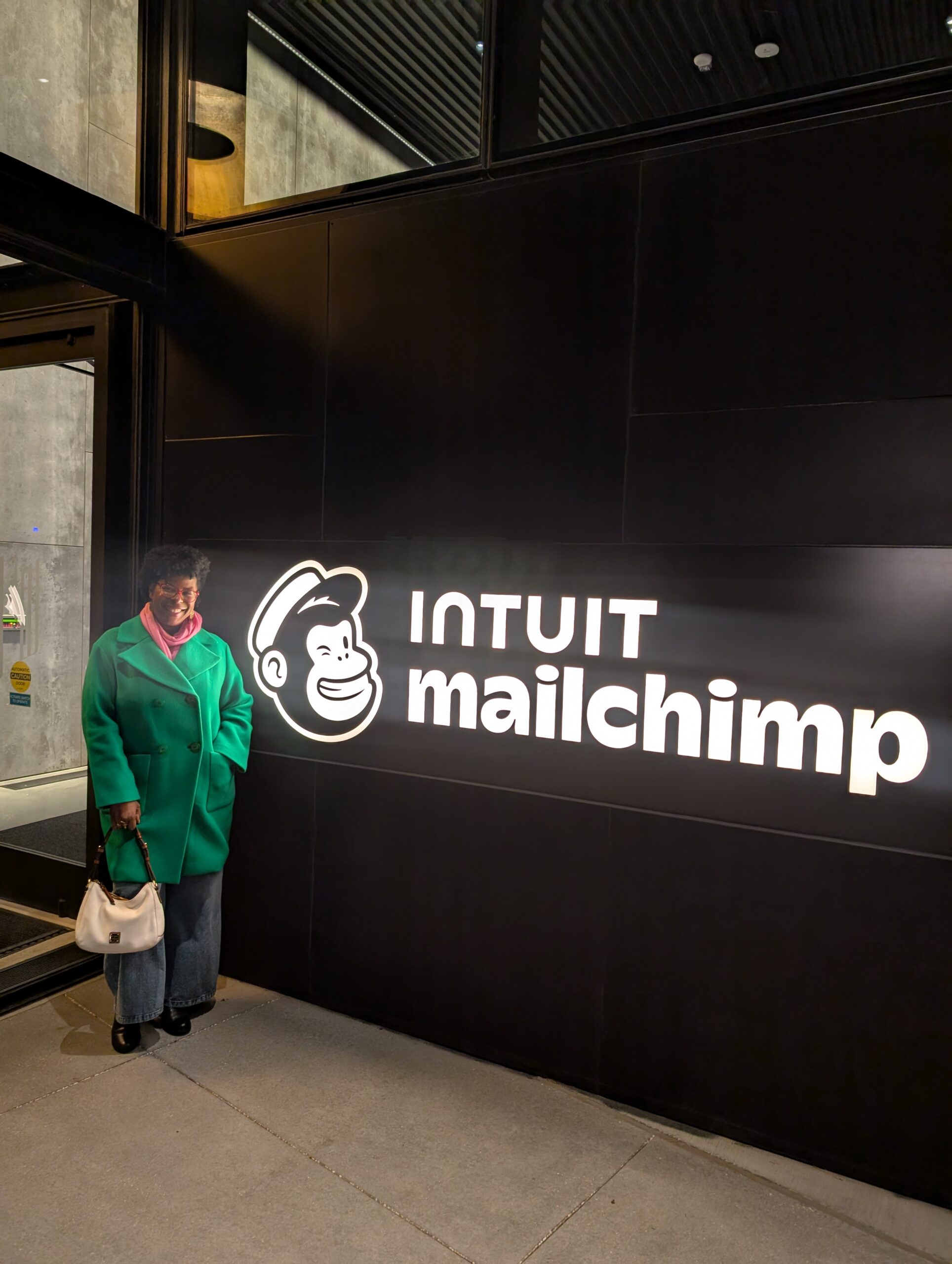
In December 2024, I stood beneath the glowing Intuit Mailchimp sign in Atlanta and smiled for a photograph. Behind me was the name of a company that had quietly traveled through more than a decade of my professional life.
Long before Mailchimp became part of Intuit, I relied on the platform while serving as Director of Development and Communications for Humanities DC. Later, it followed me into consulting projects, nonprofit communications, DG Speaks, the Mercedes Parra Foundation, and my own professional outreach.
By the time I reached that Atlanta office, Mailchimp no longer felt like a new technology company. Instead, it felt like a familiar colleague that had shown up through many chapters of my career.
Across those years, the audiences changed. So did my titles, responsibilities, and goals. Yet the need to maintain meaningful relationships with donors, readers, clients, partners, volunteers, and supporters never disappeared.
That is how I use Mailchimp. I use it to keep important work visible and relationships active, even when people get busy, algorithms shift, and social media posts quickly vanish from view.
The Platform That Followed Me From Role to Role
When I first started using Mailchimp more than ten years ago, email marketing felt far simpler than it does today.
Organizations needed a practical way to collect contacts, design professional messages, and reach large groups without placing hundreds of addresses inside one enormous email chain. Mailchimp made that process feel accessible.
Complicated coding knowledge was not required. Instead, I could organize an audience, build a campaign, add photographs, write a message, and send it directly to the people who wanted to hear from us.
Over time, the platform became part of the quiet structure behind my work. Whenever I needed to announce a program, invite people to an event, promote a story, share an update, or reconnect with supporters, Mailchimp gave me a reliable place to begin.
Since those early years, the platform has expanded considerably. Today, Mailchimp offers email and SMS marketing, audience management, automation, segmentation, landing pages, analytics, and other tools. Still, the number of features is not the main reason I return.
Trust matters more.
Whenever I need a dependable way to communicate, I know where to go. Readers can explore the platform’s current capabilities through the official Mailchimp features page.
When Communication Became Part of the Mission
My relationship with Mailchimp deepened during my time as Director of Development and Communications for Humanities DC.
In that role, communication and development were never separate. The stories we shared helped donors understand why their support mattered. Event announcements connected residents with public programs. Meanwhile, regular updates reminded partners that the work continued between major events.
We were doing far more than distributing information.
Every message helped people understand the relationship between humanities programming, cultural memory, community life, and public engagement. Email gave us a direct path into that larger conversation.
Unlike a social media post that can disappear within hours, an email reaches someone who has already chosen to remain connected. However, that permission comes with responsibility.
Each message should respect the reader’s time, offer something useful, and strengthen the relationship. Otherwise, the person on the receiving end begins to feel like another number on a list.
Every Email Address Tells Part of a Story
Years of email marketing taught me that a contact list is not merely a database. It is a map of relationships.
One person may be a donor, while another may be a client, volunteer, reader, journalist, former participant, customer, or community partner. Although they may all care about the work, they do not necessarily need the same message.
A donor may want to see evidence of impact. A DG Speaks reader may be searching for a new travel story. Meanwhile, a consulting contact may value professional insight, and a former program participant may be waiting for the next opportunity.
Mailchimp allows me to organize contacts and communicate with smaller groups based on interests, activity, and relationships. As a result, I can send messages that feel more relevant and thoughtful.
Relevance is a form of respect.
When people receive information that fits their interests, the communication feels more personal. It also prevents every announcement from landing in front of every person, whether it applies to them or not.
Mailchimp explains its audience targeting options through its official segmentation guide.
Helping Clients Speak Before They Need Something
Consulting introduced me to another common communications problem.
Many organizations reach for email only when they need something. Registration opens, a fundraiser begins, a product launches, or a deadline approaches. Suddenly, a message appears.
Then silence returns for several months.
Eventually, audiences begin to associate the organization with requests rather than relationships. Every message feels transactional because people only hear from the brand when action is required.
Mailchimp has helped me create a steadier rhythm for clients. Between major campaigns, organizations can share progress, introduce team members, explain decisions, celebrate milestones, offer resources, and show the work unfolding behind the scenes.
That consistency builds trust because the audience becomes part of the journey before another request arrives.
Of course, consistency does not mean sending an email simply because a calendar reminder appears. The goal is to remain present without becoming intrusive.
A reliable platform supports that rhythm. However, thoughtful communication must still begin with understanding the people receiving the message.
One Tool Across Several Parts of My Work
Over the years, Mailchimp has also become part of my own professional ecosystem.
Within my consulting work, the platform helps me maintain relationships with people who may need my services, refer me to an organization, or benefit from the insights I share.
For the Mercedes Parra Foundation, email provides a way to stay connected with supporters, partners, volunteers, and people who care about the mission.
Through DG Speaks, Mailchimp gives my stories another route to readers.
Someone may discover an article through Google, Pinterest, social media, or a shared link. However, joining an email list creates an opportunity for that person to return.
That returning relationship matters because DG Speaks has never belonged to one narrow category. I write about travel, food, culture, women, technology, personal growth, and the experiences that shape how I understand the world.
A well-crafted email can bring those stories together and show readers how one subject connects with another.
A Familiar Chimp in the Middle of Toronto
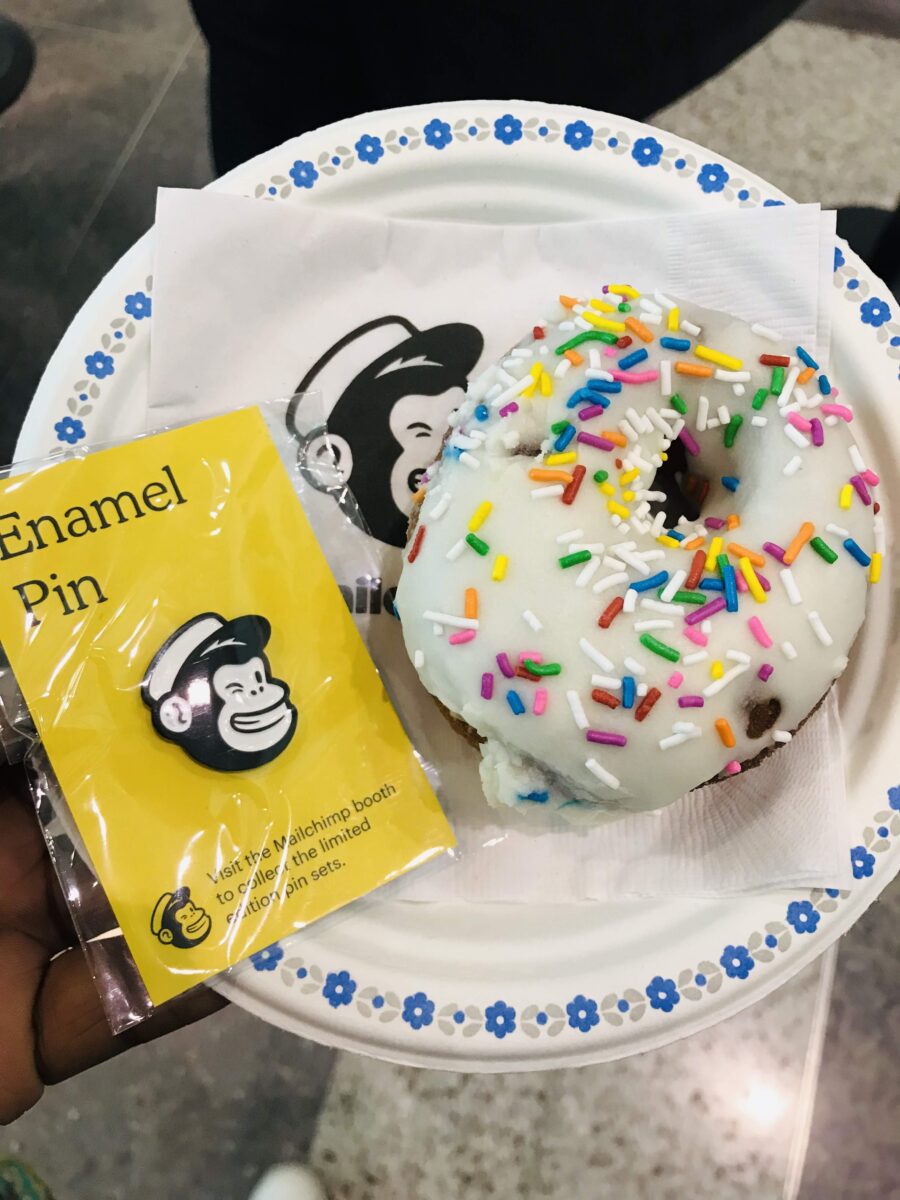
In May 2019, I was moving through Collision in Toronto when a familiar yellow backdrop caught my attention.
There, in the middle of a major technology conference, was the smiling Mailchimp logo.
By then, I had already spent years using the platform behind the scenes. I knew Mailchimp through dashboards, contact lists, subject lines, campaign reports, and carefully planned newsletters.
Suddenly, the brand had stepped out of my computer and into the physical world.
The pop-up felt bright, playful, and unmistakably Mailchimp. I picked up a branded coffee cup, an enamel pin, and a doughnut covered in rainbow sprinkles.

Those small details captured something the company has done particularly well. Mailchimp made marketing technology feel approachable.
Email lists, analytics, segmentation, and automation can sound intimidating. Yet Mailchimp placed those tools inside a brand identity that felt creative, friendly, and far less technical.
For nonprofit teams, independent professionals, and small organizations, that approachability matters. Powerful features mean very little when users do not feel capable of navigating them.
The Newsletter Was Never the Real Problem
For years, people have predicted the death of email. Nevertheless, inboxes remain central to how we receive invitations, confirmations, professional opportunities, updates, purchases, and news.
The newsletter itself was never the real problem.
Boring and self-centered communication was.
A good newsletter should not feel like several announcements pasted into a template. Instead, it should sound like a real person or organization reaching out with something worth sharing.
Sometimes, that may mean sending a personal note. Another message may highlight a story, event, opportunity, resource, or invitation.
Ultimately, the relationship behind the message matters more than the format.
Mailchimp provides the structure. I still have to bring the voice.
Automation Should Protect the Welcome
As Mailchimp evolved, automation became one of its most useful tools.
A new subscriber can receive a welcome message immediately. Someone who requests a resource can receive the next step without waiting. Meanwhile, an organization can introduce its mission through a thoughtful series instead of allowing new contacts to sit silently inside a database.
Used well, automation supports consistency.
Still, convenience should never erase humanity.
An automatically delivered message should reflect the same voice, values, and personality as a manually written one. Otherwise, the welcome begins to feel mechanical.
Good automation handles repetition while preserving warmth. It gives people timely information and creates more room for the humans behind the organization to focus on meaningful work.
Readers can explore those tools through the official Mailchimp automation page.
The Platform Grew, but the Need Stayed the Same
Over the years, I watched Mailchimp grow from the newsletter tool I first knew into a much broader marketing platform.
Today, it can support email campaigns, contact management, signup forms, landing pages, automated journeys, audience segmentation, testing, analytics, and other communication needs.
That growth has been useful because my own work also became more complex.
A signup page may help me collect interest for a new project. A report can reveal which stories attracted attention. Meanwhile, a welcome sequence may introduce someone to a brand before the next major campaign begins.
Mailchimp’s landing-page tools, for example, can give people one focused place to join a list, explore an offer, or take a specific action.
Even so, more features do not automatically create better communication.
Analytics can show whether someone opened an email or clicked a link. However, numbers cannot fully explain the feelings, motivations, or decisions behind that action.
Data can guide me. Empathy still has to lead.
Years Later, I Found the Atlanta Home Behind the Screen
Standing outside the Intuit Mailchimp office in Atlanta in 2024 connected several chapters of my professional life.
Mailchimp began in Atlanta and joined Intuit in 2021. Today, the company continues to operate as Intuit Mailchimp while maintaining a major presence in the city. Readers can learn more through Mailchimp’s announcement about its Atlanta office.
While standing beside the illuminated sign, I thought about how many times I had logged into the platform from somewhere else.
Mailchimp had accompanied me through offices, consulting assignments, nonprofit communications, client campaigns, foundation work, and the growth of DG Speaks.
Across those years, the software changed. My titles changed. The organizations and audiences changed as well.
Yet the need behind the work remained steady.
People wanted to know that the relationship continued.
A Marketing Tool Cannot Care on My Behalf
No platform can create a meaningful communications strategy on its own.
Mailchimp cannot decide why a story matters, what an audience needs, or whether a message sounds sincere. Those choices require thought, empathy, judgment, and a clear understanding of the people on the other side of the screen.
The platform can organize contacts, send campaigns, automate repetitive steps, and provide useful information about audience behavior. However, it cannot care on my behalf.
Remembering that every email address belongs to a person remains my responsibility.
Once the tool becomes more important than the relationship, the communication loses its purpose.
Four Tools Supporting Four Parts of My Life
This article belongs to a larger series about the digital tools that support my everyday life.
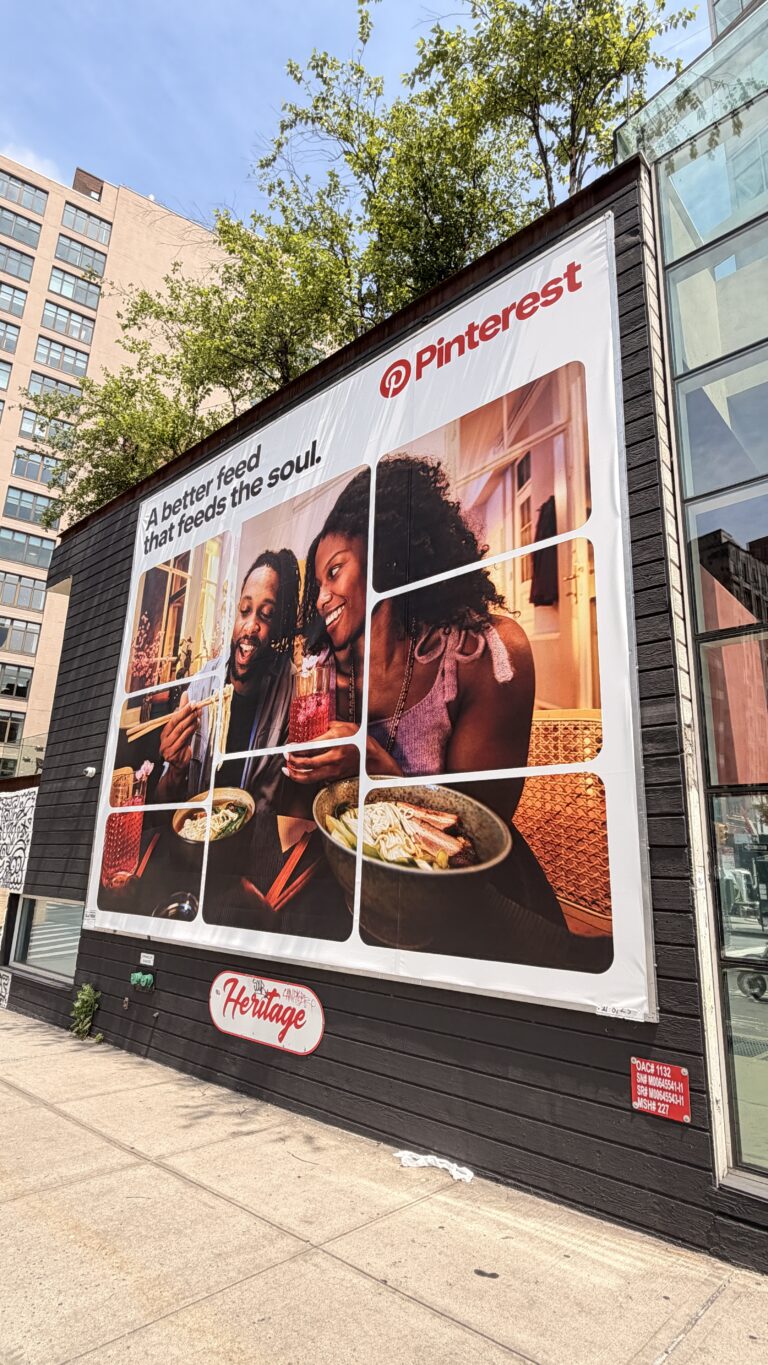
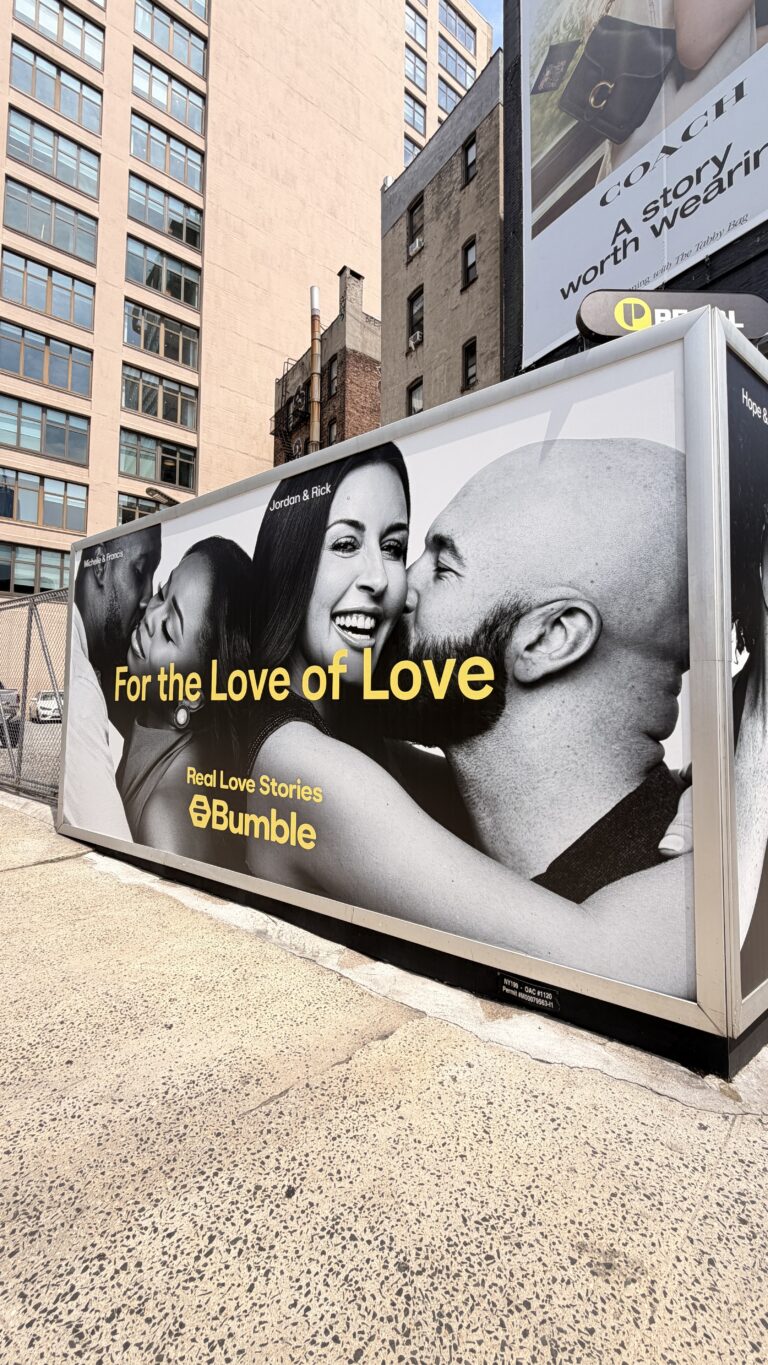
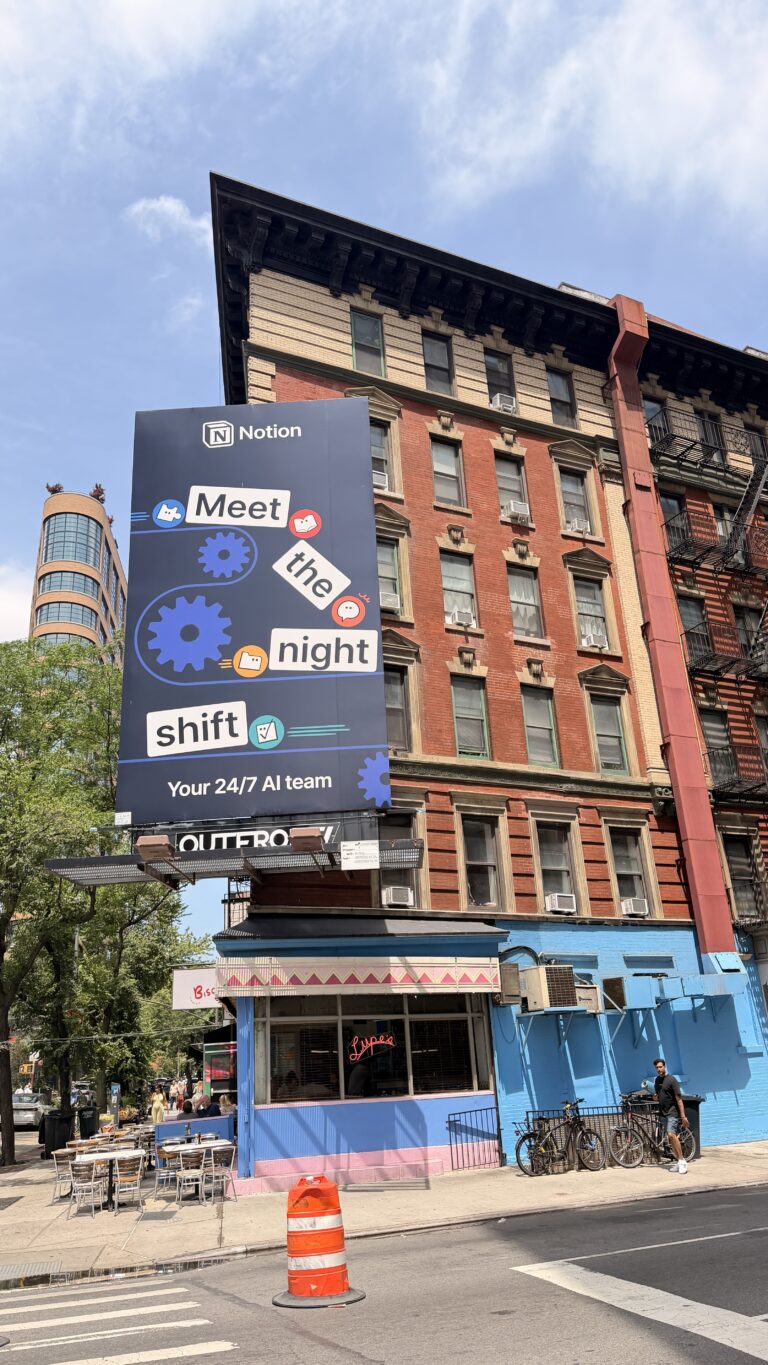
Notion helps me organize projects, goals, travels, learning, and ideas. Meanwhile, Bumble BFF helps me connect with other women and create community. Pinterest helps me visualize my style, home, travel, food, and creative direction.
Mailchimp helps me communicate.
Through email, I can take the work I have organized, the ideas I have imagined, and the relationships I value and keep those connections active over time.
Together, these platforms expand the larger story of how I use technology to organize, connect, create, and communicate.
Consistency Is Its Own Form of Care
More than ten years after I first began using Mailchimp, I continue to discover new ways to make it work for me.
The platform has become more intuitive, flexible, and expansive than the newsletter tool I first knew. Yet the reason I return remains unchanged.
I need a dependable way to speak to the people who care about the work. Readers, clients, supporters, partners, and communities deserve communication that does not disappear between major announcements.
Consistency shows people that they matter.
It tells the person who attended an event, supported a campaign, read a story, made an introduction, or joined a mailing list that the relationship did not end after one interaction.
Across many roles and seasons of my life, Mailchimp has helped me return to people with greater consistency. It has also kept valuable connections from becoming names buried inside a forgotten spreadsheet.
Mailchimp may manage the email, but the relationship is always the point.