The Sun Inn Gave My Pilgrims’ Way Journey Exactly the Pause It Needed
By the time I walked into Faversham, I had stopped thinking about travel in terms of how much I could fit into a day. After several days walking the Pilgrims’ Way from London toward Canterbury, my priorities had become wonderfully uncomplicated: take off my shoes, put down my bag, eat something good and sleep somewhere comfortable.
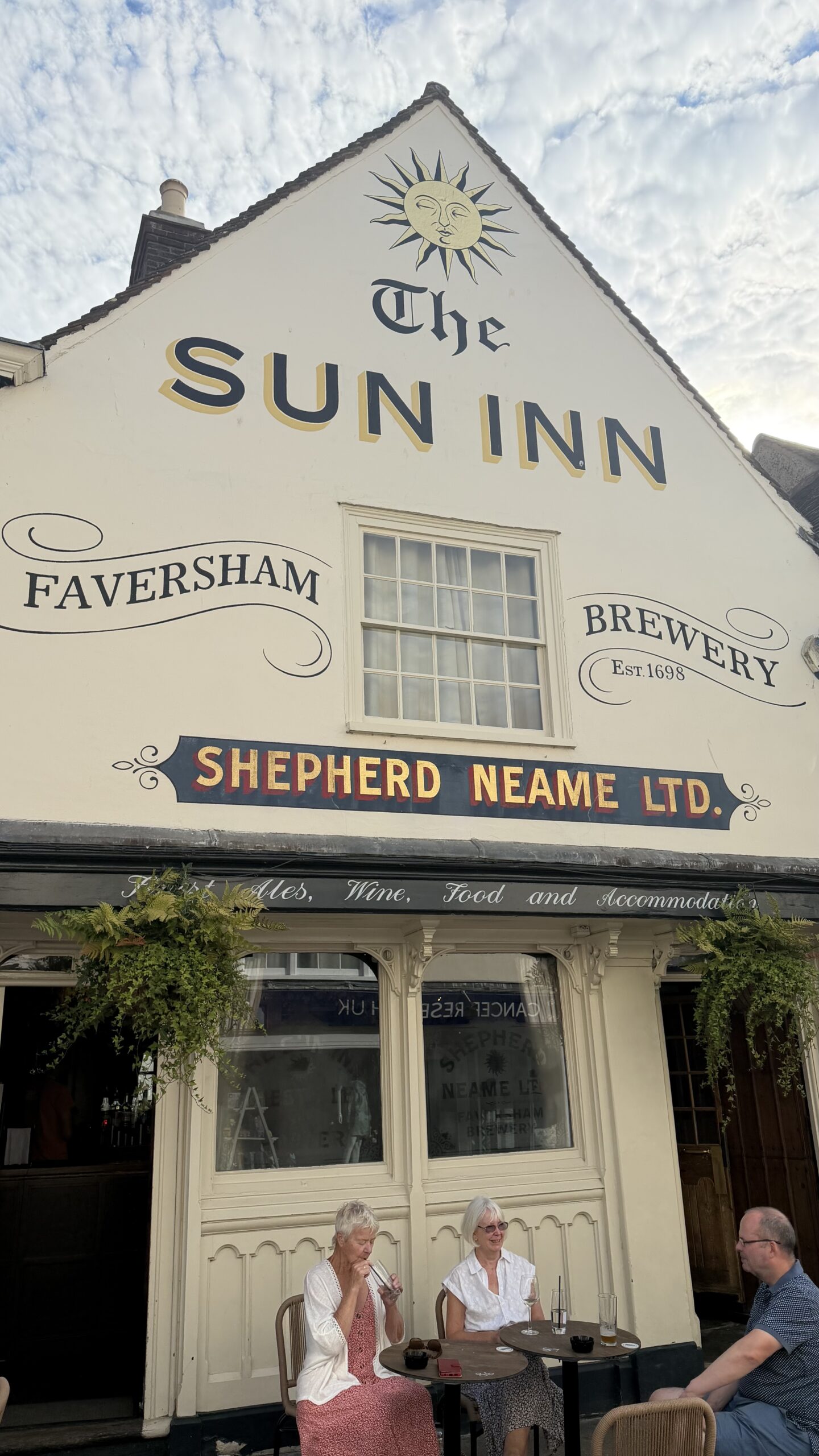
Fortunately, The Sun Inn was waiting for me. Set in the heart of historic Faversham, the centuries-old inn felt particularly appropriate for a journey shaped by walking, old roads and the communities that have grown around them. I had arrived on foot, as travelers have been doing for generations, although I suspect considerably fewer of them immediately started thinking about a hot shower and a glass of wine.
The timing made my stay memorable, but so did the setting. The Sun Inn gave me a chance to experience Faversham from inside one of the institutions that has long shaped British travel and social life: the traditional inn. After spending my days moving slowly through the English landscape, staying somewhere so connected to the history and everyday life of the town felt like a natural continuation of the journey.
Disclosure: My stay at The Sun Inn was hosted by Shepherd Neame as part of my coverage of Faversham during my Pilgrims’ Way journey from London to Canterbury. All experiences and opinions shared here are my own.
By Faversham, I Had Earned the Right to Put My Feet Up
Walking into a destination creates a very different relationship with arrival. There is no station platform separating the journey from the city and no taxi whisking you from one environment into another. One street gradually becomes another until you realize that the place you have been walking toward for hours is finally beneath your feet.
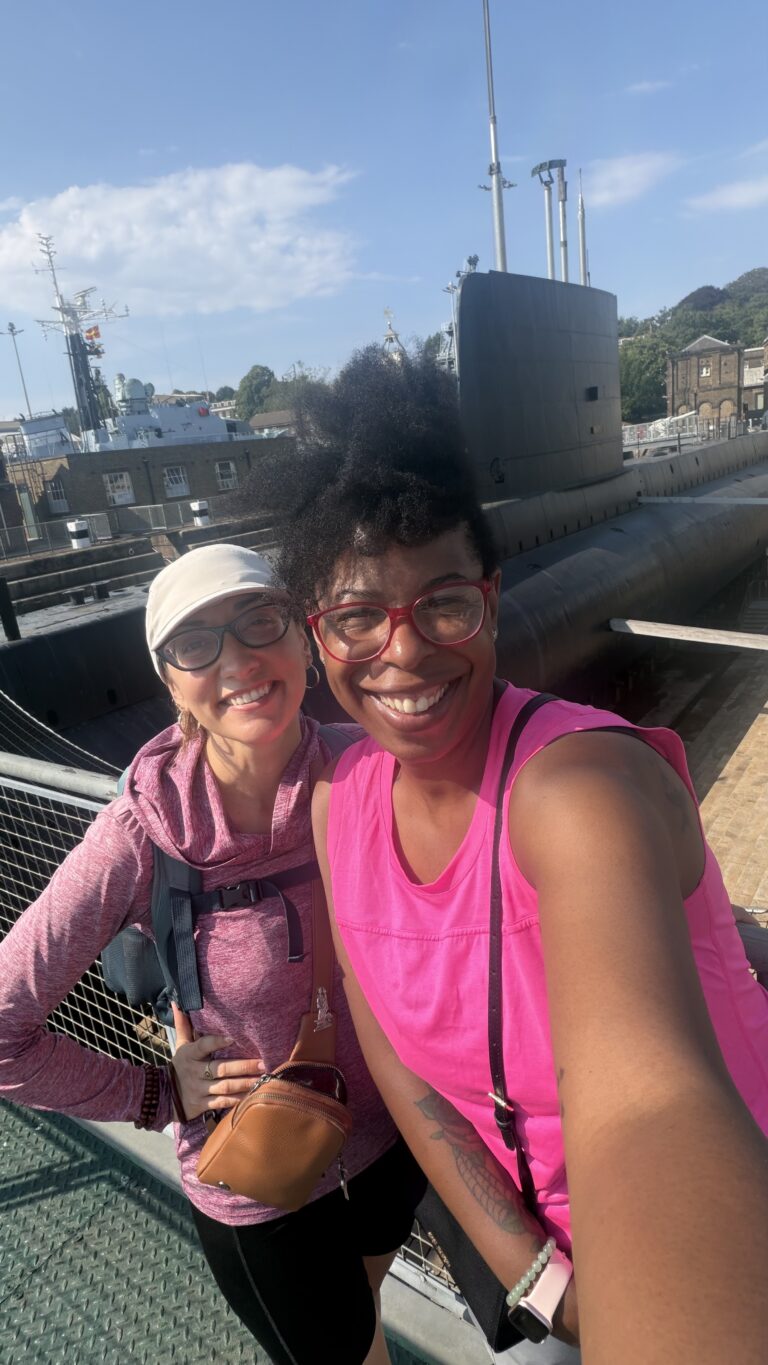
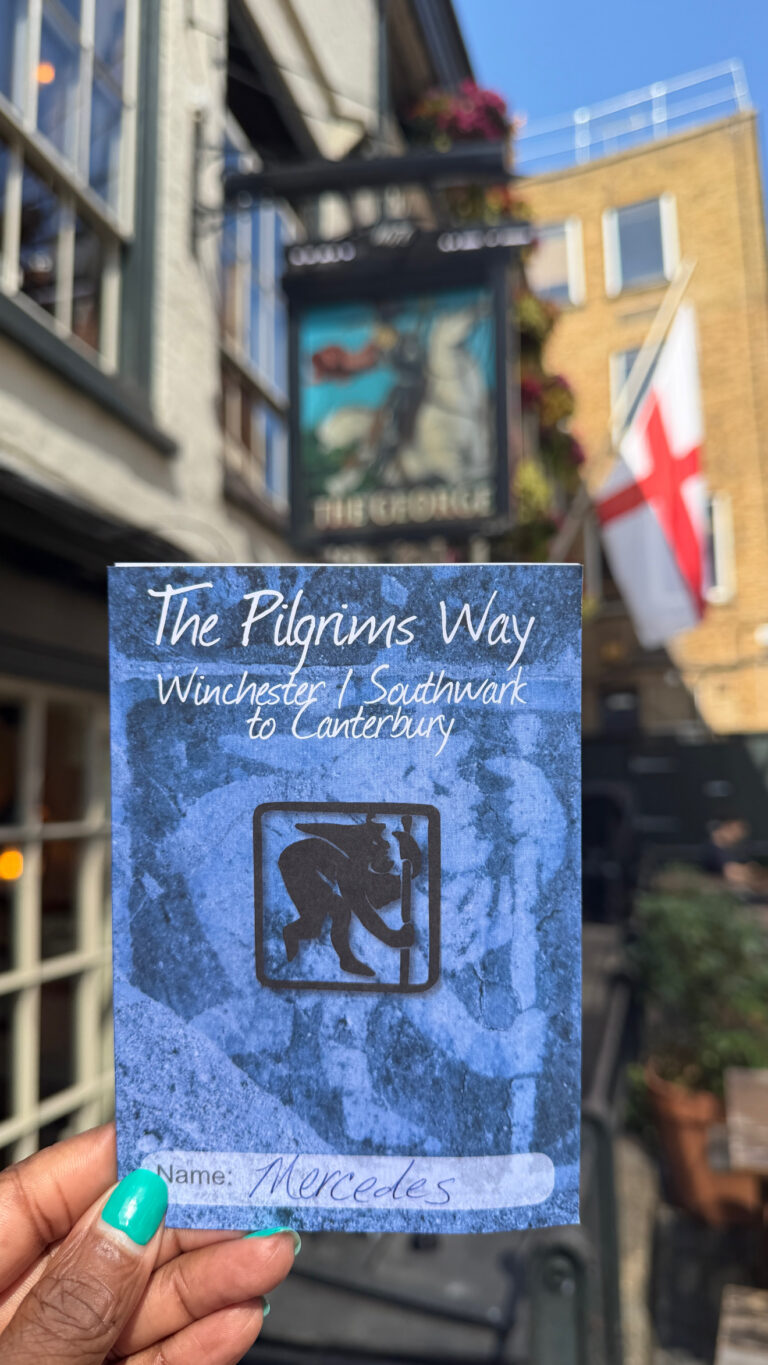
That was how Faversham appeared for me. My friend and I had been walking from London toward Canterbury, following a route connected to centuries of pilgrimage. Each day brought its own combination of beautiful countryside, historic towns, questionable decisions about how much farther we could reasonably walk and the enormous satisfaction of finally reaching wherever we were sleeping that night.
Faversham was especially interesting because I already knew the town had a strong identity of its own. Its medieval streets, market-town history and long association with brewing made it a place I wanted to experience rather than simply use as another overnight stop. Still, after walking into town carrying everything I needed for the journey, exploration could wait until my feet and I had renegotiated our relationship.
An Old English Inn Was Exactly Where This Journey Should Have Taken Me
The Sun Inn belongs naturally to its surroundings. Its timber-framed architecture immediately places you within the historic character of Faversham, and the building carries the irregularities and details that make centuries-old properties considerably more interesting to me than hotels designed to look identical in every city.
Yet heritage only works as hospitality when people can comfortably live inside it. I love historic buildings, but after walking for hours, I was not searching for an immersive recreation of medieval pilgrimage conditions. I wanted the atmosphere of an old English inn accompanied by the comforts of the present day, and The Sun Inn struck that balance beautifully.
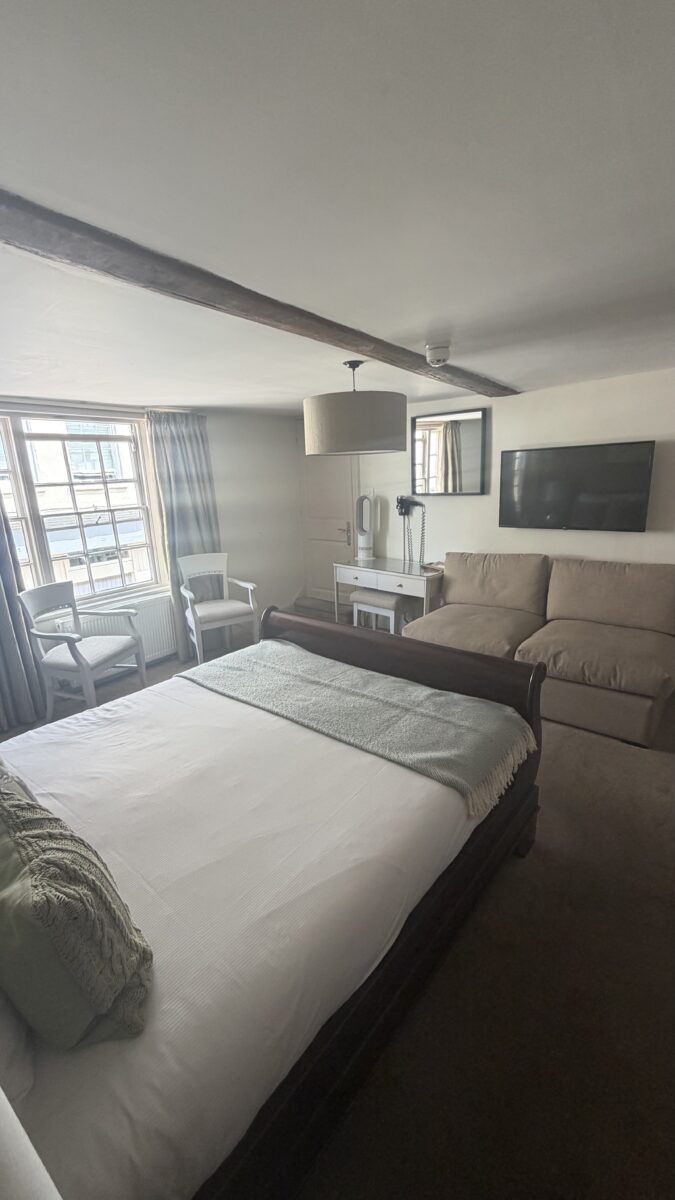
Once I reached my room, I could finally stop moving. I put down my belongings, settled in and enjoyed the peculiar luxury of knowing that nothing else required immediate attention. After days organized around distance, directions and reaching the next destination, having nowhere I needed to go for a while felt exceptionally good.
The room also reminded me how dramatically long-distance walking can recalibrate your appreciation for simple comforts. A good bed becomes exciting. A shower feels restorative rather than routine. Even taking off your shoes becomes a small ceremony when you know they have carried you across another substantial piece of England.
Faversham Was Downstairs and Outside the Door
Location becomes much more important when you are exploring a destination on foot. Every unnecessary journey suddenly announces itself in miles, minutes and increasingly opinionated leg muscles. The Sun Inn placed me directly in historic Faversham, which meant I could experience the town without adding another complicated layer of transportation to the visit.
That suited the rhythm of the Pilgrims’ Way perfectly. Slow travel had already changed the scale at which I was experiencing England. Instead of moving between major attractions, I was noticing smaller details: architecture, landscapes, local businesses, pubs, conversations and the gradual transitions between one community and the next.
Staying somewhere so firmly rooted in Faversham allowed that experience to continue even after I stopped walking for the day. I wasn’t retreating to a hotel on the outskirts and returning to the town the following morning. The inn placed me inside the historic center, where the accommodation itself belonged to the place I had come to explore.
Dinner Required a Journey of Approximately One Flight of Stairs
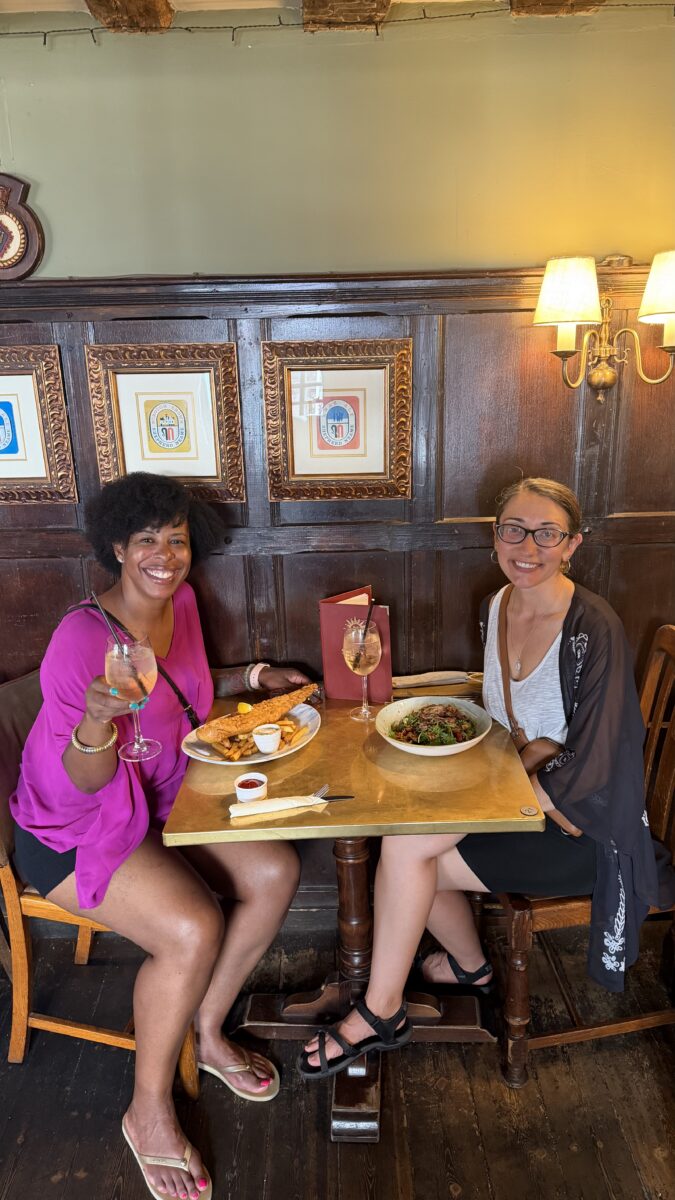
There are evenings when I enjoy searching for an interesting restaurant and turning dinner into an expedition of its own. After spending much of the day walking, however, the prospect of having a pub and restaurant downstairs was extremely appealing.
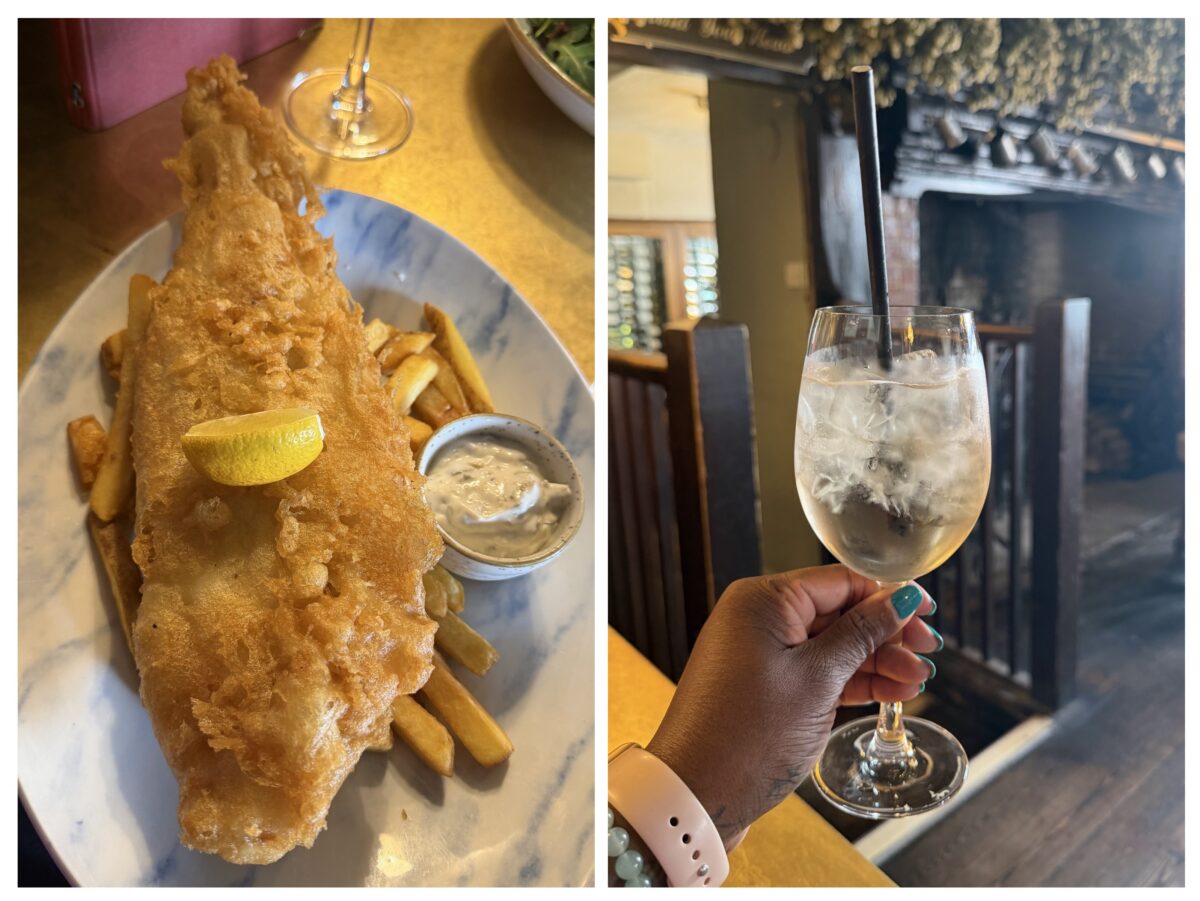
Better still, eating at The Sun Inn didn’t feel like choosing convenience over experience. Traditional inns historically offered travelers food, drink and accommodation under one roof, and after several days on the Pilgrims’ Way, that arrangement suddenly seemed exceptionally sensible. I had spent enough time getting myself to Faversham. I was perfectly happy to let dinner require considerably less effort.
The meal also matched the mood of the evening. Straightforward British pub food made sense in this setting, particularly after hours of physical activity. I wasn’t searching for culinary theater. I wanted something satisfying, familiar and generous enough to convince my body that I had adequately apologized for everything I had put it through that day.
Experiences like this are also why I resist the idea that memorable travel meals always need to be elaborate. Context contributes enormously to how we experience food. A simple meal served in the right place, at the right moment, can become far more memorable than something technically impressive that has little connection to the journey surrounding it.
A Pub Tells You Things a Hotel Lobby Never Will
One of the pleasures of staying at The Sun Inn was being able to experience the building as both accommodation and gathering place. Hotels often separate visitors from local life. You enter a lobby designed primarily for travelers, take an elevator to a corridor occupied by other travelers and experience the destination again when you walk back outside.
A traditional pub inn operates differently because people use it for different reasons at the same time. Some come for dinner, others meet friends over drinks, local residents stop in because it is part of their normal social landscape, and travelers like me disappear upstairs when their feet have decided the day is officially over.
Those overlapping uses give the building a social life that extends well beyond its guestrooms. For a traveler interested in culture, that distinction is significant because sometimes understanding a place begins with watching how people actually use it.
The Sun Inn offered that opportunity without requiring me to manufacture an “authentic” experience. I was simply staying in a place that already belonged to the community around it, and the ordinary rhythm of the pub became part of my experience of Faversham.
Then Shepherd Neame Made Faversham Even More Interesting
The Sun Inn introduced another layer to the town’s identity because it is part of the Shepherd Neame collection of pubs and hotels. Britain’s oldest brewer is headquartered in Faversham, where its brewing history officially dates to 1698 and evidence of brewing on the site reaches even further back.
Its presence in the town isn’t confined to a brewery hidden away from everyday life. Brewing, pubs and hospitality have become intertwined with Faversham’s identity over generations, which became increasingly clear as I moved between The Sun Inn and the brewery itself.
Shepherd Neame had arranged something particularly generous for my visit. Tours were not normally offered on the Tuesday we arrived, but the team arranged for Martin, one of their guides, to come in and give us a private tour. He walked us through the brewery’s history, ingredients and production while giving me the freedom to ask the many questions that inevitably appear when you put someone interested in food systems inside a working brewery.
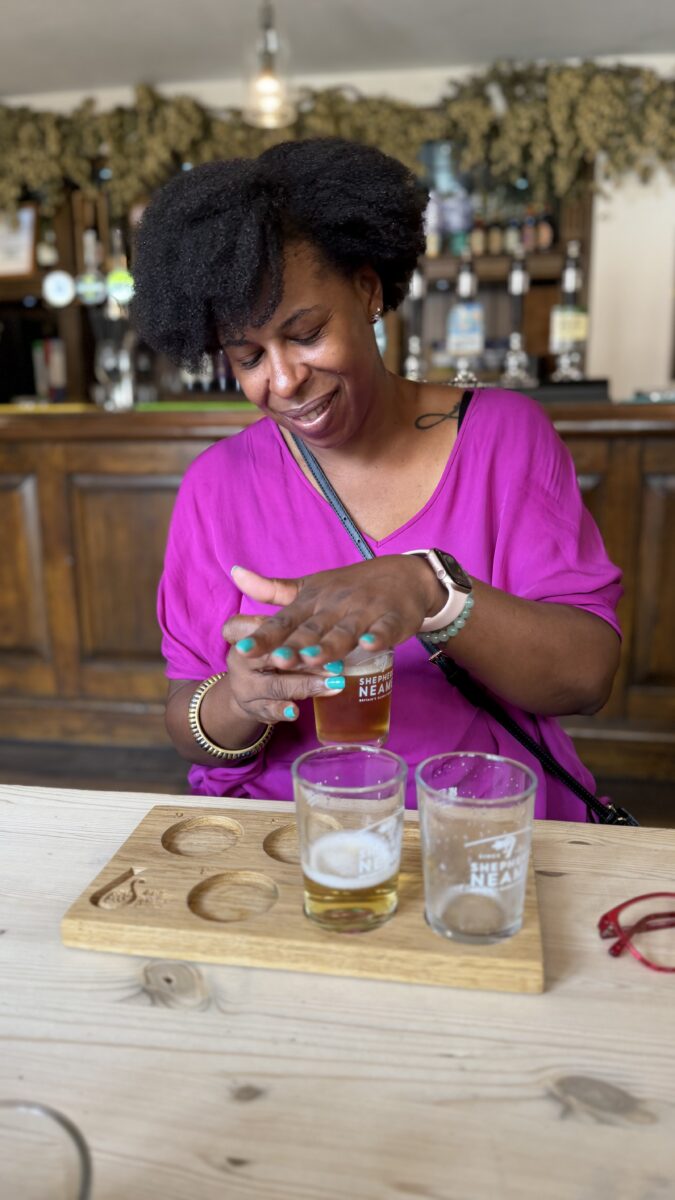
That experience deserves its own story, but staying at The Sun Inn helped me understand the broader relationship before I ever stepped inside the production facility. The beer wasn’t simply being produced in Faversham and shipped somewhere else. It remained part of the social spaces and hospitality traditions of the town that produced it.
The Inn and the Brewery Belong to the Same Faversham Story
Travel often presents food and drink as finished experiences. We order something, enjoy it and continue with our day without seeing the network of agriculture, production, transportation, businesses and people behind it.
Faversham made several of those connections unusually visible. Kent’s agricultural landscape has long supported hop and barley production, while Shepherd Neame turns brewing ingredients into beer in the middle of the town. Its pubs and hotels then create places where those beers become part of meals, conversations and everyday social life.
Experiencing those pieces together made my stay more interesting because The Sun Inn stopped feeling like an isolated accommodation choice. It belonged to a much longer local story about brewing, hospitality and the movement of people through this part of Kent.
That is the kind of cultural context I increasingly look for when I travel. I want to know why something is here, how it became part of the place and what relationships have allowed it to survive. Museums can provide some of those answers, but in Faversham, I found quite a few of them simply by staying at the pub.
Walking Had Quietly Changed What I Considered Luxurious
Long-distance walking has an amusing way of recalibrating your standards. Things I might barely notice during an ordinary hotel stay suddenly became deeply appreciated at The Sun Inn. A comfortable bed felt magnificent, being able to shower and change clothes felt restorative, and having food available downstairs seemed like exceptionally thoughtful urban planning.
None of this required extravagance because the luxury came from ease. That distinction has become increasingly important to me as a traveler. I still want beautiful surroundings, interesting food and memorable experiences, but I have little interest in inconvenience masquerading as adventure.
A trip can challenge me during the day and still provide comfort when the day is finished. The Pilgrims’ Way was already supplying plenty of physical challenge, so having a warm, characterful place to land at the end of the day allowed me to enjoy the journey rather than turn endurance into the entire point of it.
The Sun Inn worked particularly well because that comfort didn’t require separating myself from Faversham. I could rest while remaining connected to the town, its history and its social life.
Eventually, the Pilgrims’ Way Wanted Its Walker Back
Canterbury was still ahead of us, and the journey wasn’t going to complete itself simply because I had become very comfortable in Faversham. Eventually, the bag had to be repacked, the walking shoes had to go back on and the road had to reclaim us.
Still, I left with a richer understanding of the town than I would have gained from passing through for a few hours. Faversham had given me historic streets, brewing heritage, an exceptionally personal visit to Britain’s oldest brewer and a night inside an inn that connected those experiences to the everyday culture surrounding them.
The Sun Inn also reminded me why accommodation can become such an important part of a travel story. The stays I remember most aren’t necessarily the ones that remove me from a destination behind resort gates or anonymous hotel corridors. They are often the places that help me understand where I have arrived.
For one very tired pilgrim making her way toward Canterbury, The Sun Inn did exactly that. It gave me a comfortable place to put down my bag and rest my feet while keeping me firmly inside the story of Faversham.