What Albergue Life Really Taught Me on the Camino
What Albergue Life Really Taught Me on the Camino
Camino albergue life will humble you fast. I do not care how grown, independent, or well-traveled you are. Put a bunch of tired pilgrims in bunk beds, add snoring, wet socks, open windows, and a 10 p.m. lights-out rhythm, and you will learn a few things about yourself.
Some lessons are spiritual. Others are very practical. For example, bring a real sleeping bag.
The YouTubers Did Not Tell the Whole Truth
Before the Camino, I watched videos like everybody else. Many people said a sleep sheet would be enough. Let me say this plainly: that was not true for me.
I spent too many nights curled into a little ball, freezing. It was not winter. It was not even what I would call cold-weather season. Still, those albergues could get chilly at night.
Sometimes the windows stayed open because rooms were full of tired, sweaty pilgrims. I understand the need for fresh air. I also understand the misery of shivering until morning.
The Sleeping Bag Became a Love Story
By the time I bought a sleeping bag, I felt like I had upgraded my whole life. Warmth changes your personality. Sleep does too.
If I were packing again, I would check lightweight options through my Amazon Storefront and choose comfort over trying to be the most minimalist pilgrim on the road.
Minimalism is beautiful until you are cold at 2 a.m. and mad at everybody breathing near you.
Lights Out Means Lights Out
Katie and I laughed about the little things you do not think about before the Camino. In an albergue, 10 p.m. is not a suggestion. It is a cultural agreement.
Maybe you still need to journal. Maybe your bag is half unpacked. Maybe your brain wants to process the day. Unfortunately, 100 other pilgrims may want those lights off.
That teaches you to adjust. You learn to organize earlier. You learn to use a headlamp carefully. You learn that community living requires small acts of consideration.
Privacy Becomes a Luxury
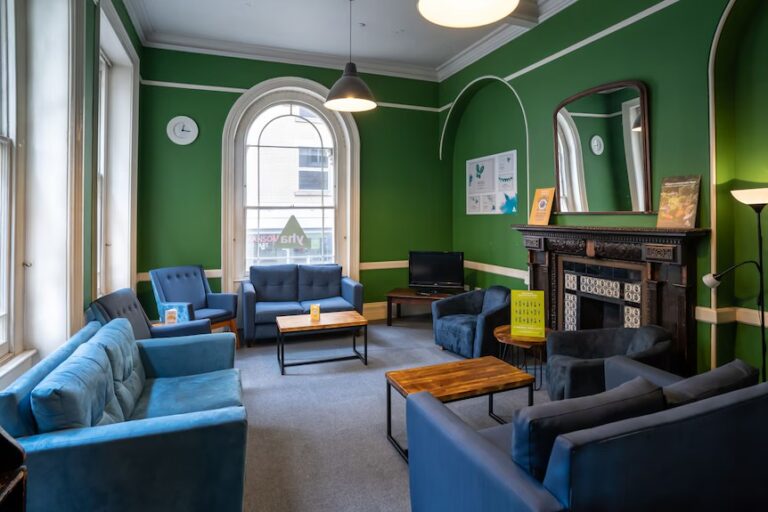
Albergue life strips away your illusions about privacy. You sleep near strangers. You hear everything. You smell things you did not request. You learn which plastic bags make the loudest noise at 5 a.m.
And yet, somehow, it works.
People adapt. They whisper. They share outlets. They help each other find laundry lines. They warn each other about hot showers, cold showers, missing blankets, and questionable mattresses.
Community Is Built in Ordinary Ways
Some of my favorite Camino moments happened in these simple spaces. Not because they were fancy, because most were not. But because they made people human quickly.
You cannot pretend too much when your socks are drying beside someone else’s underwear.
A shared table, a crowded dorm, and one available phone charger can do more for human connection than a polished networking event ever could.
Budget Travel With a Pilgrim Heart
Albergues help make the Camino accessible. That matters. Not everyone can walk across Spain while staying in hotels every night.
For nights before or after the route, I would still compare budget lodging through Hostelworld. During the Camino itself, I would mix municipal, donativo, private albergues, and occasional private rooms when my body needed mercy.
There is no prize for suffering just to prove a point.
What Albergue Life Taught Me
Albergue life taught me patience. It taught me humility. It taught me to pack better, move faster in the morning, and stop judging small discomforts like they were emergencies.
It also taught me that community is not always cozy. Sometimes community is inconvenient. Sometimes it snores. Sometimes it turns the lights off before you are ready.
Still, it gives you a place to rest.
Read more in my Camino de Santiago guide, Camino packing list for women, and Camino family story.