Camino Gear Guide: What Helped and What I Would Change
I bought most of my Camino gear after I arrived in Spain. Looking back, I would not recommend that strategy unless you enjoy learning expensive lessons on the side of a mountain.
This Camino gear guide is not a packing list copied from the internet. It is the guide I wish someone had handed me before I climbed out of Saint-Jean-Pied-de-Port carrying equipment I had not fully tested. Some things worked beautifully. Others taught me lessons the hard way.
The Camino exposes every unnecessary ounce, every poor gear choice, and every assumption you make about what you will need. Fortunately, it also teaches you how surprisingly little you need to keep moving.
The Gear Mistakes I Would Not Repeat
My first mistake was buying too much after arriving in Spain. I did not have enough time to test everything, and the Camino made that clear quickly.
- Buying gear too close to the start date.
- Not testing everything fully loaded before Day One.
- Underestimating how cold some albergues could feel.
- Carrying “just in case” items I barely touched.
- Waiting too long to treat hot spots on my feet.
- Thinking I needed more content gear than my body wanted to carry.
Choose a Backpack That Fits Your Body
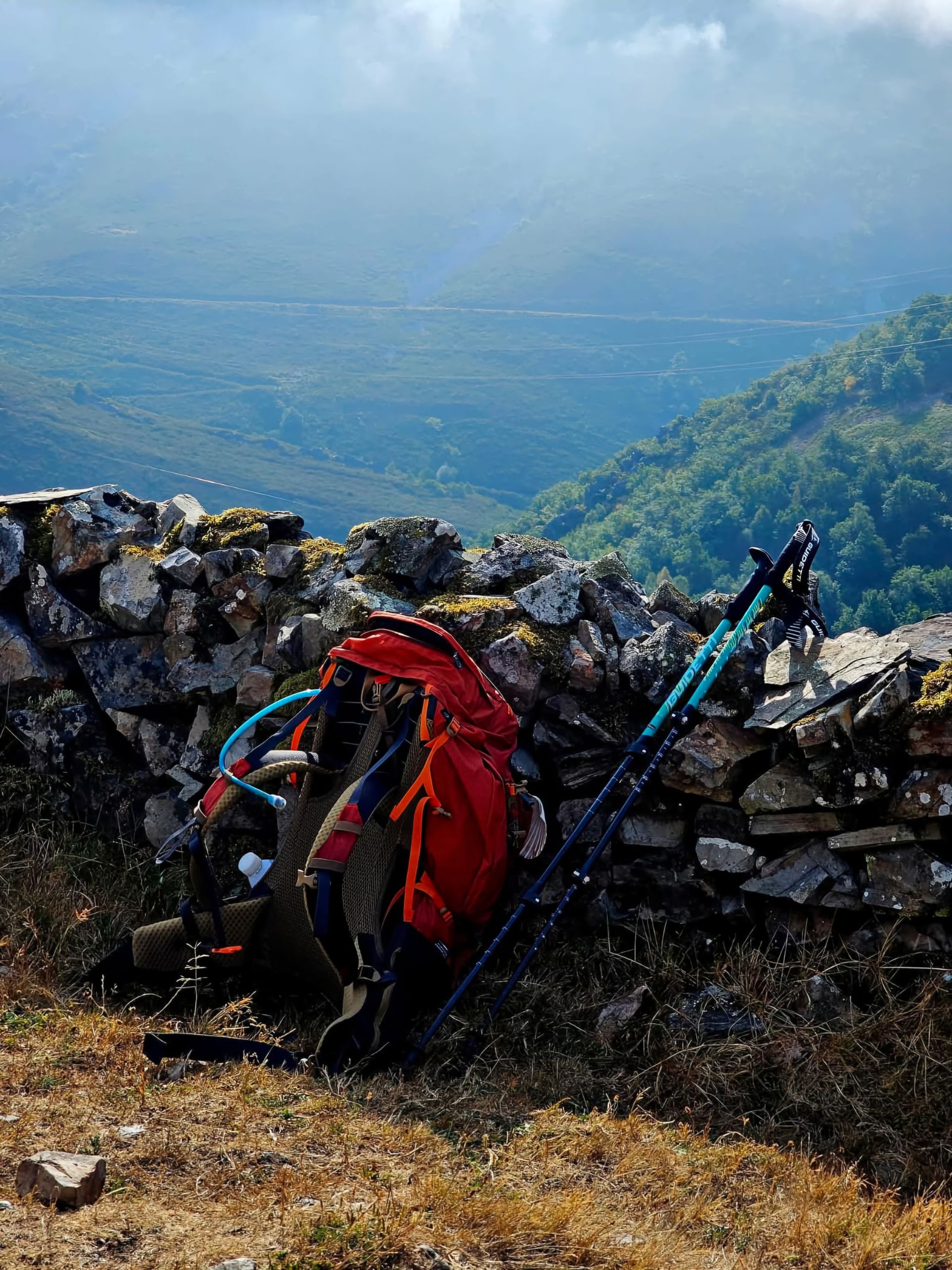
Your backpack should fit your torso, hips, and walking style. Do not choose one only because it looks popular online. A pack that works beautifully for someone else may feel terrible on your back.
Look for strong hip support, comfortable straps, accessible pockets, and enough space without encouraging overpacking. Bigger bags often invite bad decisions.
If possible, test your backpack fully loaded before the trip. Walk stairs. Walk hills. Walk when you are tired. That is when you learn whether the pack supports you or fights you.
Shoes Are Personal, But Break Them In
I met pilgrims wearing expensive hiking boots, trail runners, sandals after injuries, and everything in between. The lesson was not that one shoe was perfect. The lesson was that the best shoe is the one your feet already trust.
The Camino includes pavement, dirt paths, rocks, hills, long descents, and village streets. Because of that, your shoes need to handle variety.
Break them in. I cannot say that loudly enough. Do not let your first real test be the climb out of Saint-Jean-Pied-de-Port.
Socks and Foot Care Deserve Respect
Good socks matter. Blister care matters. Foot care is not glamorous, but neither is limping into a village because you ignored a hot spot three miles back.
- Bring quality walking socks.
- Carry blister tape or treatment.
- Air your feet when needed.
- Change socks if they get wet.
- Stop early when your feet start complaining.
My feet became some of my greatest teachers on the Camino. They taught me that pushing through is not always wisdom. Sometimes the bravest thing you can do is stop, adjust, and take care of the body carrying you.
Sleeping Bag or Sleep Sheet
I run cold, and a sleep sheet was not enough for me. A lightweight sleeping bag would have made some albergue nights much more comfortable.
Sleep affects everything on the Camino. It shapes your mood, recovery, patience, and your ability to not hate the sound of someone packing a plastic bag at dawn.
If you sleep cold, take that seriously. Warmth is not a luxury when your body needs recovery every night.
Rain Gear Is Not Optional
Bring rain protection that works for your season. Some pilgrims prefer ponchos that cover both body and pack. Others use rain jackets and pack covers.
Whatever you choose, test it before you need it. Being wet for hours can turn a manageable day into a miserable one.
Rain gear is one of those items that may feel unnecessary until suddenly it becomes the most important thing in your backpack.
Clothing Should Dry Fast and Feel Like You
Choose clothing that dries quickly, layers well, and feels comfortable after many hours. Avoid fabrics that stay wet forever or seams that become enemies by noon.
Even so, I still believe in feeling like yourself. Style does not disappear on the Camino. It just needs to cooperate with function.
Bring fewer pieces than you think you need. Laundry becomes part of the rhythm, and nobody on the Camino cares if they saw your shirt two days ago.
Electronics Should Stay Simple
- Phone
- Charging cable
- Power bank
- Adapter
- Offline maps or Camino app
Keep electronics simple. You do not need to carry a production studio unless content creation is part of your purpose. Even then, remember that you have to carry what you bring.
I love documenting my travels, but the Camino reminded me that every extra cord, tripod, and device has weight. Choose what supports the story without stealing too much from the walk.
Five Things I Would Never Walk Without Again
- Comfortable trail shoes or walking shoes already broken in.
- Quality walking socks.
- Trekking poles for long descents and tired days.
- A lightweight sleeping bag if you sleep cold.
- A reliable power bank.
Five Things I Would Question Before Packing
- Extra outfits packed for style instead of function.
- Too many toiletries.
- Heavy books or journals.
- Extra camera accessories.
- Anything packed only because of fear.
That last one matters. Fear is heavy. It tells you to pack for every possible problem. Wisdom tells you to prepare well, then trust yourself to adapt.
Safety and Travel Support
Gear is not only physical. Travel support matters too. Consider SafetyWing for travel medical coverage, iVisa for visa research, and official guidance from the Pilgrim Reception Office.
Good planning will not prevent every challenge, but it gives you more space to respond calmly when something changes.
Where to Shop for Camino Gear
For gear ideas, visit my Amazon Storefront. Use it as a starting point, not a commandment. Your body gets the final vote.
Before buying anything, ask whether the item solves a real problem. Then ask whether you are willing to carry it for hundreds of miles.
My Best Camino Gear Advice
Choose gear that supports your Camino, not someone else’s. Test what you can. Keep weight low. Prioritize your feet, sleep, rain protection, hydration, and recovery.
Do not pack for fear, but do not pack for fantasy either. The Camino is beautiful, but it is still physical. Your gear should respect both the dream and the reality.
By the end of my Camino, I cared much less about having perfect gear and much more about carrying only what truly served me.
That is probably true far beyond Spain.
The Camino has a funny way of teaching that the lightest backpack is not always the one with the fewest belongings. Sometimes it is the one carrying the fewest expectations.