Camino FAQ: Honest Answers Before You Walk
This Camino FAQ is the article I wish every curious pilgrim had before walking. Not because it has every possible answer, but because it tells the truth. The Camino de Santiago is beautiful, challenging, spiritual, practical, frustrating, funny, exhausting, and life-giving all at once.
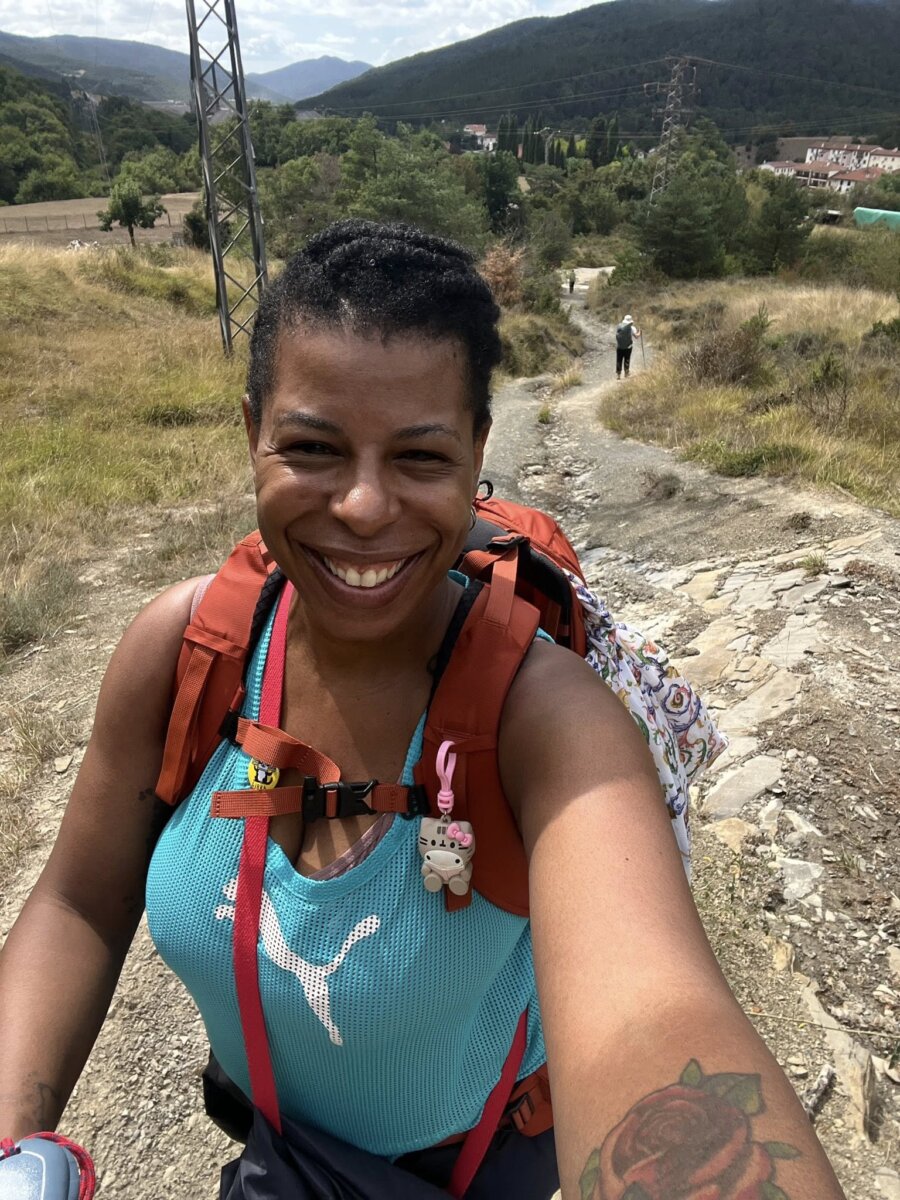
I walked the Camino Francés from Saint-Jean-Pied-de-Port to Santiago de Compostela from August 26 to October 3, 2025. I walked as a woman entering 50, as a solo traveler, as someone who is not Christian, and as someone who needed a reset after a season of transition. Later, my conversation with Katie helped me understand even more clearly that every pilgrim walks the same path differently.
So this is not a generic list. These are real answers shaped by my walk, my body, my mistakes, my conversations, and the questions people ask when they are thinking about their own Camino.
Camino Basics
What is the Camino de Santiago?
The Camino de Santiago is a network of pilgrimage routes leading to Santiago de Compostela in Spain. The route has deep Christian history connected to St. James, but today people walk for many reasons: faith, grief, change, adventure, health, curiosity, or the need to hear themselves think again.
Which route did I walk?
I walked the Camino Francés, starting in Saint-Jean-Pied-de-Port and ending in Santiago de Compostela. It is one of the most popular routes because it has strong infrastructure, iconic towns, community, and a long tradition of pilgrimage.
How long did my Camino take?
My Camino took 38 days. That gave me room to move at a pace that respected my body. Some people finish faster, while others take more time. I do not think speed should be the measure of a meaningful Camino.
Do I have to be religious?
No. You do not have to be religious to walk the Camino. However, you should respect the religious history of the route. I did not walk as a Christian pilgrim, but I felt the sacred weight of the land, the history, the churches, and all the human longing carried across those paths.
Why did I decide to walk?
I walked because I was turning 50, because life had shifted, and because I needed to choose something brave for myself. I did not want to enter this decade shrinking. I wanted movement, nature, challenge, and a path long enough to quiet the noise.
Why do other people walk?
People walk for every reason imaginable. Katie had carried the Camino in the back of her mind for years. Some people walk after work changes, divorce, grief, retirement, illness, burnout, or a spiritual nudge they cannot explain. The route is shared, but the reason is personal.
Planning Your Camino
How far in advance should I plan?
Plan enough to protect your body, budget, and peace of mind. You do not need to plan every step for a year, but you should understand your route, season, lodging options, travel documents, and gear needs. Start with my Camino Planning Guide.
Should I book ahead?
I recommend booking the first night or two, especially if you start in Saint-Jean-Pied-de-Port or plan to stop in Orisson. After that, you can decide whether you want flexibility or certainty. Busy seasons may require more reservations.
When is the best time to walk?
The best time depends on your body and tolerance for heat, cold, rain, and crowds. I began in late August and finished in early October. That gave me summer heat, early fall beauty, and shorter days as the walk continued.
Can I walk only part of the Camino?
Yes. Many people walk sections. Some walk the final 100 kilometers to qualify for the Compostela. Others walk a week or two and return later. The Camino does not belong only to people who walk every mile from France.
Where can I find official information?
Use the official Camino de Santiago in Galicia, the Pilgrim Reception Office, and Spain Tourism’s Camino Francés guide.
Training and Fitness
Do I need to train?
Yes, train if you can. Walk with a loaded backpack. Practice hills. Break in your shoes. Walk multiple days in a row. I trained on the Stairmaster, and it helped, but the Pyrenees quickly reminded me that gym training and mountain walking are not the same thing.
How fit do I need to be?
You do not need to be an athlete, but you do need respect for the physical challenge. Your body will adapt, but the Camino is not gentle every day. Go prepared, listen closely, and build rest into your plan.
What if I am slow?
Then be slow. Slow is not failure. The Camino taught me to trust my own pace. Someone will always walk faster, but their pace is not your assignment. Your job is to reach each day safely and honestly.
Packing and Gear
What should I pack?
Pack light, but do not pack cruelly. Bring what supports your real body: good shoes, socks, layers, rain protection, blister care, toiletries, documents, a power bank, and a sleep system that actually works for you. Read my Camino Packing Guide and Camino Gear Guide.
Trail runners or hiking boots?
Choose what works for your feet. Some pilgrims love trail runners. Others prefer hiking shoes or boots. The important thing is fit, support, and testing before you begin.
Do I need a sleeping bag?
If you run cold, yes. Many people said a sleep sheet would be enough. For me, it was not. A lightweight sleeping bag would have made several nights more comfortable.
Can I ship my backpack?
Yes. Backpack transport exists along much of the Camino Francés. There is no prize for unnecessary suffering. Use it when your body needs mercy.
Budget and Money
How much does the Camino cost?
Costs vary by season, route, lodging, food, gear, and travel style. You can walk affordably, but you still need a realistic budget for food, lodging, laundry, medicine, transportation, and emergencies. Start with my Camino Budget Guide.
Can I do the Camino on a tight budget?
Yes, but be honest. Municipal albergues, grocery store meals, simple breakfasts, and careful pacing help. Still, do not underbudget for food, recovery, or emergencies.
Should I carry cash?
Yes, carry some cash. Cards are widely accepted in many places, but small villages, albergues, cafés, and donativo spaces may require cash.
Albergues and Daily Life
What is an albergue?
An albergue is pilgrim accommodation. It may be municipal, private, parish-run, or donativo. Some are simple. Some are charming. Some will test your patience and your relationship with snoring.
Is albergue life hard?
It can be. Shared rooms, early alarms, bunk beds, limited bathrooms, and noisy packing are real. But albergues also create community. They are part of the Camino classroom.
What is albergue etiquette?
Be quiet early and late. Do not turn on bright lights when people are sleeping. Pack respectfully. Keep your things contained. Be patient in shared bathrooms. Remember, everyone is tired.
Food and Water
What do people eat on the Camino?
People eat café breakfasts, tortillas, bocadillos, fruit, soup, pilgrim menus, grocery store meals, snacks, and whatever the day offers. Food along the Camino can be simple, but after enough miles, simple food can feel sacred. See my Camino Food Guide.
What is a pilgrim menu?
A pilgrim menu is a set meal offered in many Camino towns. It often includes a starter, main, dessert, and drink. Some are excellent. Some simply do the job. Both can be appreciated when you are hungry.
Should I carry snacks?
Yes. Camino hunger is real. Carry snacks every day, especially if you need regular protein or if cafés may be closed between villages.
Solo Women and Safety
Is the Camino safe for solo women?
Generally, I found the Camino supportive for solo women, but safety still matters. Share your plan, trust your instincts, avoid unnecessary walking in the dark, and stay aware. Solo does not mean careless.
Was I lonely?
Sometimes, but not in the way people might expect. The Camino gave me solitude and community at the same time. I could walk alone, then share dinner with people I had met that day.
Did I make friends?
Yes, and that surprised me. I did not come looking for a Camino family, but people kept reappearing until they became part of the story. Katie’s experience reminded me that this happens in many Camino journeys.
Mental and Emotional Questions
Did I ever want to quit?
On my first day, I seriously wondered what I had done. I was motion sick, climbing toward Orisson, and scared I would not make it in time. That day taught me quickly that the Camino would not let me coast.
Did the Camino change me?
Yes. It changed my body, patience, relationship with enough, and understanding of community. It did not fix my life, but it gave me evidence that I could walk through uncertainty and keep becoming.
What surprised me most?
The emotional afterlife of the Camino surprised me. Finishing was not the end. The lessons kept unfolding after I returned home. Post-Camino blues are real, and the adjustment deserves honesty.
Santiago and the Compostela
What is the Compostela?
The Compostela is the official certificate issued to qualifying pilgrims who complete the required distance and meet the pilgrimage criteria. It matters, but for me, it was not the real prize. The real prize was the woman who arrived.
Was arriving in Santiago emotional?
Yes, but it was complicated. I felt pride, relief, gratitude, and grief because the road was ending. Santiago was an arrival, not the end of the Camino’s work in me.