Camino Food Guide: What to Eat While Walking Across Spain
I expected the Camino to teach me about walking. I did not expect it to teach me so much about eating. Somewhere between Saint-Jean-Pied-de-Port and Santiago, food stopped being something I simply consumed and became part of the rhythm that carried me forward.
This Camino food guide combines practical advice with the lessons I learned walking the Camino Francés. Some meals were unforgettable. Others were surprisingly ordinary. Yet almost every meal reminded me that food is never just fuel. It is hospitality, culture, community, and sometimes the reward for putting one foot in front of the other all day long.
As someone who has spent much of my career working in sustainable food systems, I could not help noticing what was happening beyond my plate. Every café represented a local economy. Every loaf of bread reflected generations of baking traditions. Every pilgrim menu reminded me that feeding travelers has been part of Camino culture for centuries.
Breakfast Starts the Day, Even When It Is Simple
Most Camino mornings begin quietly. A café con leche, toast with tomato or butter and jam, a croissant, yogurt, fruit, or tortilla often becomes breakfast before the day’s first kilometers.
For me, breakfast became less about variety and more about consistency. My body appreciated knowing it would receive something before another long day of climbing hills and crossing villages.
If you need additional protein or have dietary restrictions, plan ahead. Not every village opens early, and not every café offers exactly what your body needs.
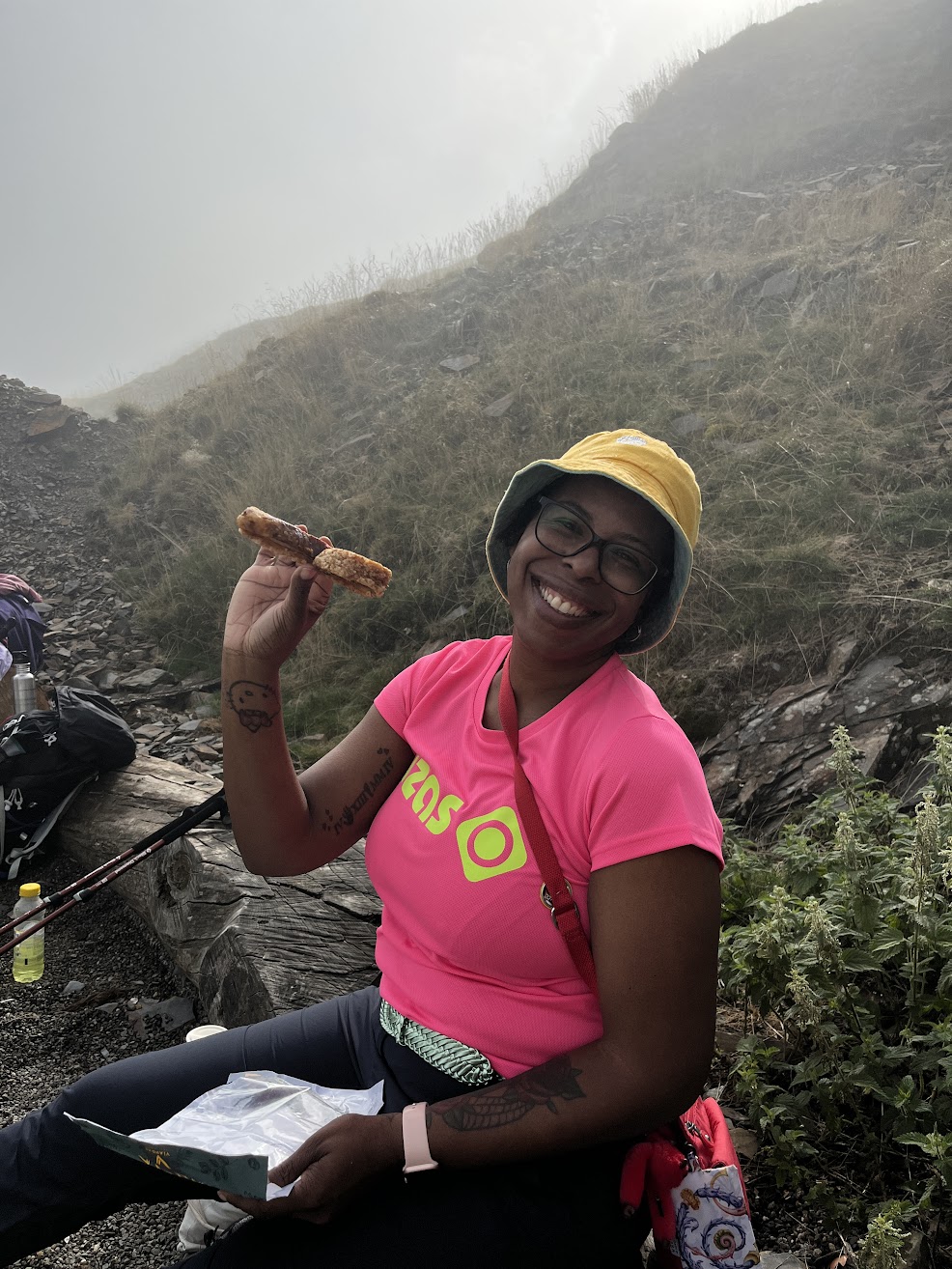
I always recommend carrying a backup snack. Nuts, protein bars, dried fruit, or shelf-stable foods can rescue both your mood and your blood sugar when the next café turns out to be farther away than expected.
Lunch Depends on the Road
Unlike vacations built around restaurant reservations, the Camino often decides lunch for you.
Some days I stopped for tortilla española, bocadillos, soup, salad, or a simple plate of pasta. Other days I sat on a bench with groceries from my backpack because the next restaurant was still several kilometers away.
Camino hunger has very little patience. It arrives quickly, and once it does, decision-making becomes remarkably less graceful.
Eat before you become desperate. Future-you will appreciate present-you for making that decision.
Pilgrim Menus Are Part of Camino Culture
One of my favorite Camino traditions is the menú del peregrino, or pilgrim menu.
Usually offered at an affordable fixed price, these meals often include a starter, main course, bread, dessert, and a drink. Quality varies from place to place, but the idea behind them is beautiful. Pilgrims receive a filling meal without needing an unlimited travel budget.
Some dinners became memorable because of the food itself. Others became memorable because of the conversations happening around the table. Complete strangers arrived hungry and often left feeling like temporary family.
I explore that experience more deeply in Food Tastes Different When You’ve Earned It.
Grocery Stores Can Save Your Budget
One of the smartest Camino habits is becoming comfortable with grocery shopping.
Fresh bread, cheese, fruit, yogurt, tuna, eggs, olives, chocolate, nuts, and ready-to-eat meals can become affordable lunches or dinners while giving you more control over your nutrition.
This matters even more if you have food allergies, strong dislikes, or simply need something different after eating similar meals for several weeks.
Walking all day teaches you that simple food can feel luxurious when your body genuinely needs it.
Hydration Is Not Optional
Water became as important as food.
Long walking days, especially during warmer weather, require constant hydration. I quickly learned that waiting until I felt thirsty usually meant I had already waited too long.
Electrolytes can make a tremendous difference after difficult stages, particularly if you sweat heavily or spend hours climbing.
For lightweight travel essentials, hydration products, and Camino recommendations, visit my Amazon Storefront.
Food Is One of the Camino’s Greatest Teachers
Because I work in food systems, I rarely see meals as isolated events.
Every café reminded me that somebody harvested the vegetables. Somebody baked the bread before dawn. Somebody unlocked the restaurant while most pilgrims were still sleeping. Somebody washed the dishes after we continued west toward Santiago.
The Camino quietly reveals how many invisible hands support every journey. Food becomes one of the clearest reminders that travel is always connected to local communities.
That realization deepened my appreciation not only for Spanish cuisine but also for the people whose daily work makes pilgrimage possible.
Try the Regional Foods Along the Way
One of my favorite parts of walking across Spain was watching regional food traditions change from one area to another.
If your budget allows, say yes to local specialties whenever you can. The Camino is not only a walking route. It is also one of Europe’s great cultural corridors.
After your pilgrimage, consider exploring local food tours through GetYourGuide in cities like Pamplona, Burgos, León, or Santiago de Compostela. You can also learn more through the official Spain Tourism website.
My Best Camino Food Advice
- Carry snacks every day.
- Drink water before you think you need it.
- Do not assume every café will be open.
- Use grocery stores to stretch your budget.
- Eat enough protein whenever possible.
- Try regional specialties.
- Accept invitations to share tables.
- Remember that every meal is part of the Camino experience.
The Meals I Remember Most
Oddly enough, I remember very few fancy meals from the Camino.
Instead, I remember hot coffee on cold mornings. Fresh bread after exhausting climbs. Pilgrims laughing over dinner after surviving another difficult stage. Grocery store picnics that somehow tasted perfect because I had earned every bite.
The Camino reminded me that hunger changes your relationship with food. Gratitude changes it even more.
By the time I reached Santiago, I realized the Camino had quietly taught me something I already believed but understood much more deeply: food is never just food. It is culture, memory, generosity, labor, and one of the oldest ways human beings care for one another.