Coexistence, My Ass! Sundance 2025 Review: Laughing Loud, Speaking Truth
Some stories ask you to listen quietly. Others grab your attention, shake you by the shoulders, and demand you feel something. Coexistence, My Ass! does exactly that. Directed by Amber Fares, this documentary blends politics, comedy, and identity into a truth-telling performance that is equal parts laughter and ache.
When I watched it at Sundance 2025, I was reminded of why I fell in love with storytelling in the first place. It is the power of one woman on a stage, standing in her truth, using humor to dismantle fear.
A Mic, a Mission, and a Woman Who Refuses to Be Silent
The film follows Noam Shuster-Eliassi, an Israeli-Iranian comedian, activist, and former peace worker who decides that diplomacy needs a new language. After years of watching political negotiations fail, she trades the conference table for a microphone and begins using stand-up comedy to say what no one else dares to.
Her show, also called Coexistence, My Ass!, takes direct aim at the polite clichés surrounding peace and coexistence in the Middle East. Through humor, she exposes the contradictions that many would rather ignore. One moment she has the audience roaring with laughter, and the next, she leaves them speechless.
Watching her on stage felt like watching a woman break chains with words. Every joke carried both risk and release. I thought about how many women across cultures have had to find creative ways to speak truth in spaces that punish honesty. Comedy becomes her armor, her activism, and her therapy all at once.
Humor That Cuts and Heals
What makes this documentary special is its balance. It is funny, uproariously funny, but it also refuses to let you escape the gravity of what Noam is saying. Amber Fares weaves together stand-up scenes, intimate moments from Noam’s daily life, and historical context about the ongoing conflict. The tone moves fluidly between humor and heartbreak, revealing how closely those two emotions live inside the human experience.
The editing keeps a rhythm that mirrors performance itself. Jokes build into moments of reflection. The laughter fades, and you feel the silence that follows. It reminded me of what I have always believed about humor: it is not the opposite of pain; it is what makes pain bearable.
Noam uses that duality as her weapon and her healing. You can see how the act of performing transforms her, turning frustration into connection. It reminded me of how storytelling—whether on stage or in writing—can be a form of self-liberation.
A Feminist Voice in a Complicated Landscape
There is no mistaking that this is a woman’s story told through a woman’s lens. Director Amber Fares, known for Speed Sisters, approaches her subject with empathy and respect. She understands that women navigating politics, identity, and creativity face unique challenges.
Noam is Jewish, Arab, Iranian, and a woman. She lives at the intersection of overlapping and often conflicting identities. Instead of choosing one, she claims them all. That complexity is what makes her so powerful.
As I watched, I thought about how often women are told to simplify themselves to be understood. To pick one label. To play small so others can feel comfortable. Noam refuses. She embodies every contradiction, and Fares lets us see the beauty in that refusal.
For me, this was deeply personal. As a Black and Latina woman who moves between cultures and languages, I know what it means to exist in many worlds at once. Watching Noam felt like seeing a sister on another stage, halfway across the world, living the same truth: our diversity is not confusion; it is power.
The Art of Laughing in Hard Places
There is something radical about using laughter to challenge systems of oppression. Comedy requires vulnerability. It also requires courage to stand before an audience and reveal your truth in a way that invites them to see themselves.
Noam’s performances cross boundaries, literally. She tours through Israel and Palestine, performing for audiences on both sides of the divide. Each crowd responds differently, but every reaction matters. Some laugh. Some glare. Some stay quiet, thinking. That range of response is part of the point.
Amber Fares captures those moments with sensitivity. She shows us not just the performances but the preparation behind them, the nervous energy, the exhaustion, the doubt. It is a portrait of an artist trying to create dialogue in a world that thrives on division.
The result is more than a film about politics. It becomes a film about human connection. How do we speak across difference? How do we find humor when the world around us feels heavy?
When Art Becomes Resistance
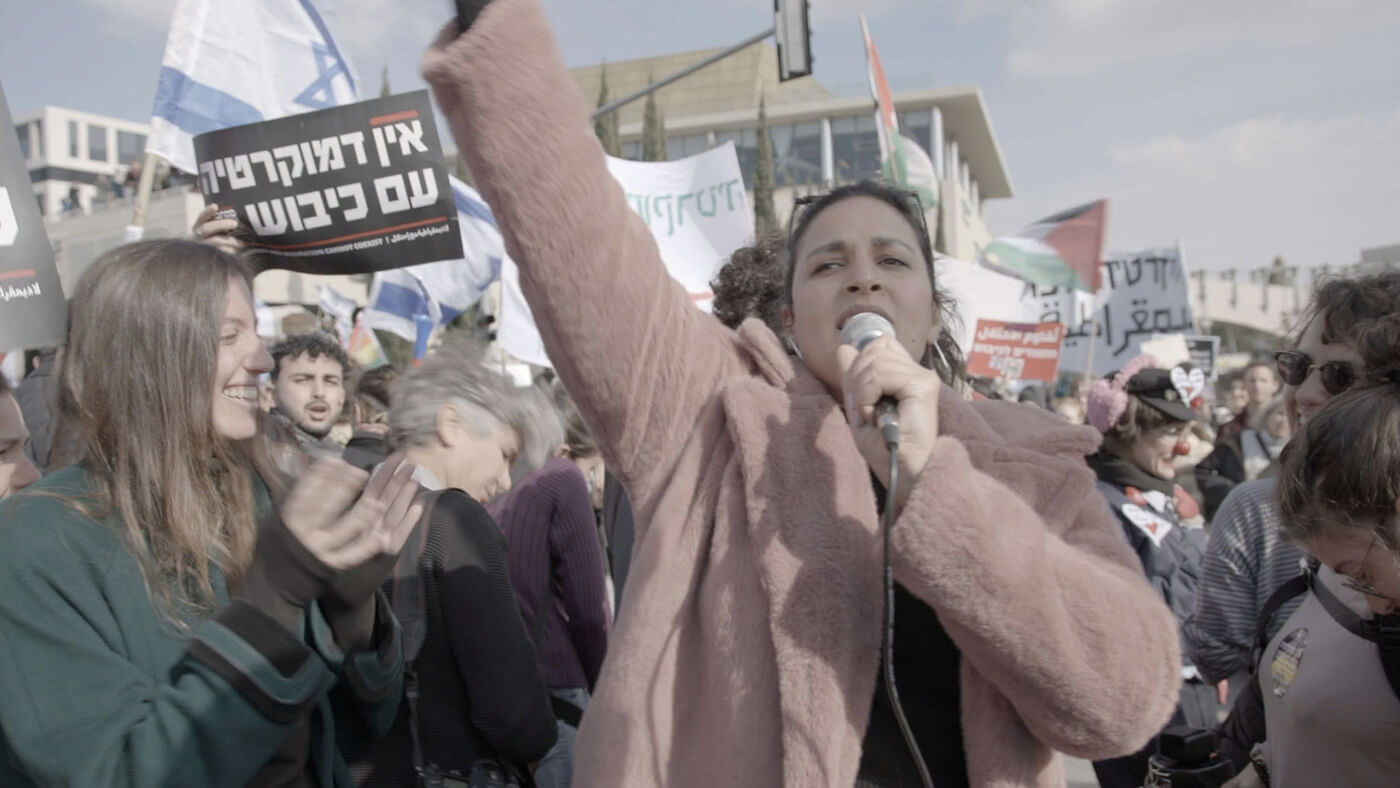
What I love about Coexistence, My Ass! is how it expands the idea of activism. Not every protest requires a sign. Sometimes activism looks like standing under a spotlight and making people laugh while you dismantle stereotypes.
Noam’s art is resistance because it challenges both external and internal limitations. She is not only confronting political narratives but also reclaiming her right to take up space. As a woman in comedy, she must constantly assert her legitimacy. As a Middle Eastern voice, she faces assumptions from Western audiences. Yet she stands firm, reminding us that authenticity is the most disarming truth of all.
Watching her made me think about how I use my own platforms, writing, travel, teaching, to bridge divides and start conversations. Whether we are talking about food systems, identity, or culture, the question is the same: how can we create understanding without losing ourselves?
Why Stories Like This Matter
In a festival filled with high-budget features and glossy productions, this film felt refreshingly raw. It reminded me that sometimes the simplest tools, a microphone, a camera, and a voice, are enough to spark transformation.
Coexistence, My Ass! also challenges how we think about global feminism. It centers a woman whose experience is tied to conflict and community, not to Western ideals of empowerment. Her feminism is rooted in survival, creativity, and humor. That feels honest. It is a reminder that women’s liberation takes many forms, shaped by our local realities yet connected by our shared determination to be heard.
For audiences in the United States and beyond, this film opens a window into the Middle East that is rarely seen: one that is layered, self-aware, and deeply human. It replaces headlines with faces and replaces fear with empathy.
Final Reflection
Coexistence, My Ass! is not an easy watch, but it is a necessary one. It invites us to sit in discomfort, to laugh through complexity, and to question what coexistence really means. It asks whether peace without truth is peace at all.
Amber Fares and Noam Shuster-Eliassi have created a film that proves humor can be revolutionary. It can hold pain and joy at the same time, allowing both to breathe.
When I walked out of the screening, I felt renewed. Not because the world suddenly seemed simpler, but because it reminded me that voices like Noam’s exist. Voices that refuse silence, that tell uncomfortable truths, that use laughter to carve light into heavy spaces.
As women, as storytellers, and as global citizens, that is the kind of courage we need to celebrate.