
Exploring Star Trek: The Modern Mythology
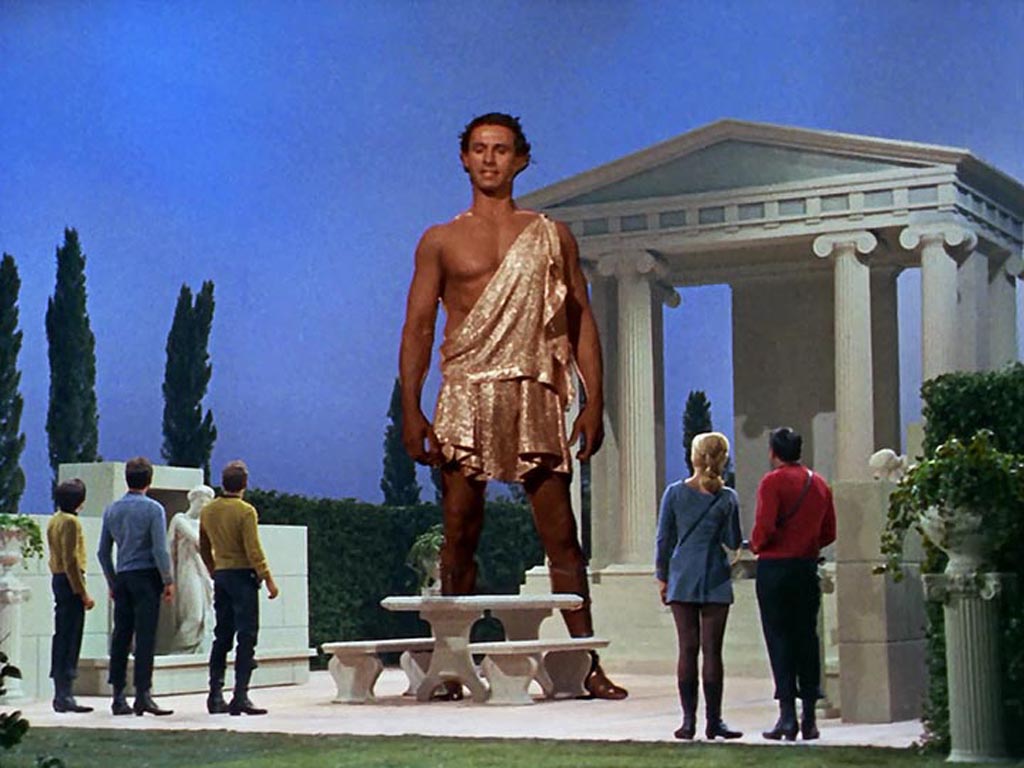
Every civilization leaves behind stories that explain what it fears, what it values, and what kind of future it hopes to deserve. Ancient cultures had epics, gods, tricksters, prophets, and quests. Modern culture has television, film, and the shared worlds we return to again and again. That is why Star Trek modern mythology still feels so rich to me.
Star Trek is not really about space. Space gives the story scale, beauty, and mystery, but the deeper subject has always been humanity. The franchise uses alien civilizations, starships, and distant planets to ask old questions with new language. What do we owe one another? How should power behave? Can difference become relationship instead of threat?
Myths Are How Civilizations Explain Themselves
Mythology has never been only about the past. It gives people symbols for the present and possibilities for the future. In that sense, Star Trek functions like a modern myth because it gives us a moral universe to argue with.
Kirk, Picard, Sisko, Janeway, and the captains who followed them are not simply commanders. They are figures moving through questions of duty, curiosity, restraint, sacrifice, and justice. Their missions may involve strange new worlds, but their hardest journeys usually lead inward.
Episodes like “The City on the Edge of Forever” and “The Inner Light” endure because they do more than tell clever science fiction stories. They ask what memory, love, grief, and responsibility do to a person over time.
Science Fiction Is Anthropology in Disguise
People often describe science fiction as a genre about the future. I have never fully believed that. At its best, science fiction is anthropology with better costumes. It creates distance so we can look at ourselves without immediately raising our defenses.
Star Trek uses alien civilizations to explore colonialism, religion, nationalism, gender, artificial intelligence, disability, diplomacy, and war. The costumes may be futuristic, but the questions are ancient.
That is why the franchise still gives critics and fans so much to discuss. It keeps building new laboratories for moral imagination. Every planet becomes a question. Every first contact becomes a test.
The Federation Is an Argument, Not a Perfect Government
I do not think Star Trek has always gotten diversity right. At times, the franchise congratulates itself too quickly. Still, it deserves credit for imagining a future where curiosity carries more status than conquest.
After spending much of my life crossing borders and working across cultures, I no longer see diversity as a slogan. Diversity is a negotiation. It can be beautiful, but it can also be awkward, exhausting, humbling, and necessary.
That is one reason I return to Star Trek. The best episodes do not suggest that different civilizations suddenly understand one another. Instead, they ask what happens when people decide that the relationship itself is worth protecting.
Every Captain Faces the Same Ancient Question
The captains differ in temperament, but each one faces the same old human question: what do you do with power once you have it?
Kirk often leads through instinct and risk. Picard leads through language, restraint, and principle. Sisko carries the moral weight of war and faith. Janeway navigates isolation, survival, and command without the comfort of easy answers.
That range matters because leadership should never have one face. Sometimes courage looks like action. Other times, it looks like patience, diplomacy, or the refusal to become cruel simply because cruelty would be easier.
Technology Never Solves the Human Problem
Star Trek gave popular culture some of its most beloved futuristic technologies. Communicators, transporters, tricorders, replicators, and warp drives all captured the imagination. Yet the franchise rarely treats technology as salvation by itself.
The deeper question is always ethical. Who gets access? Who gets protected? What happens when progress outruns wisdom? What kind of character must people develop before they can responsibly use powerful tools?
Even something as ordinary as food in the world of Star Trek opens a larger conversation about abundance, tradition, and what convenience cannot replace.
The Episodes That Refuse Easy Answers
The franchise becomes most powerful when it refuses simple morality. “The Measure of a Man” asks whether Data deserves personhood. “In the Pale Moonlight” forces us to sit with Sisko’s choices during war. Those episodes stay with viewers because they make certainty uncomfortable.
That discomfort is part of the point. Good storytelling does not always confirm what we already believe. Sometimes it pushes us into the gray area, where values collide and easy answers fall apart.
This is also why I connect Star Trek to my broader writing about how science fiction imagines power and gender. The genre works best when it expands our moral imagination instead of simply moving old limitations into new galaxies.
Why We Still Need Star Trek
Star Trek endures because it offers hope without pretending humanity has nothing left to learn. Its future still contains arrogance, fear, prejudice, grief, and failure. However, it also insists that growth remains possible.
That hope does not feel childish to me. It feels disciplined. Believing in a better future requires more than optimism. It requires imagination, responsibility, and the courage to become worthy of the world we say we want.
That is what makes Star Trek more than entertainment. It is a cultural mirror, a moral playground, and one of the most ambitious modern mythologies popular culture has produced. It gives us stories large enough to hold our fears and hopeful enough to keep us reaching.
DG Speaks Take
Star Trek became modern mythology because it made the future feel like a moral choice. Its greatest gift is not warp speed or alien worlds. Its greatest gift is the belief that humanity can become more curious, more just, more compassionate, and more willing to learn from difference.
For more DG Speaks culture and sci-fi writing, explore how Star Trek uses food to talk about culture, what science fiction gets wrong about strong women, and how The Hunger Games uses food to reveal power.
