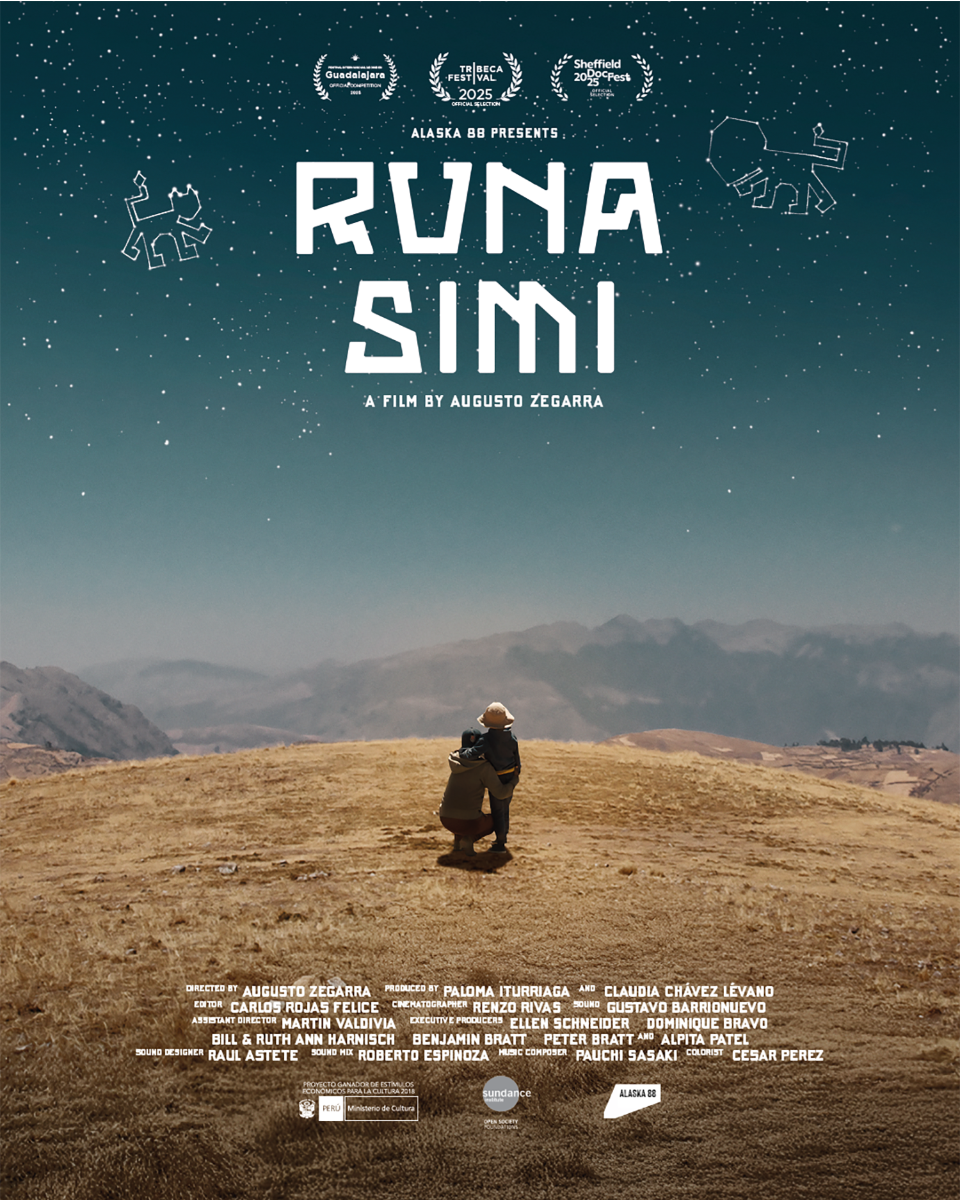
Runa Simi Documentary: Who Gets to Hear Their World Speak Back?
Imagine growing up surrounded by movies, television shows, books, and characters you love, yet rarely hearing any of them speak the language of your family.
Now imagine deciding to do something about it.
That is where the story behind Runa Simi grabbed me.
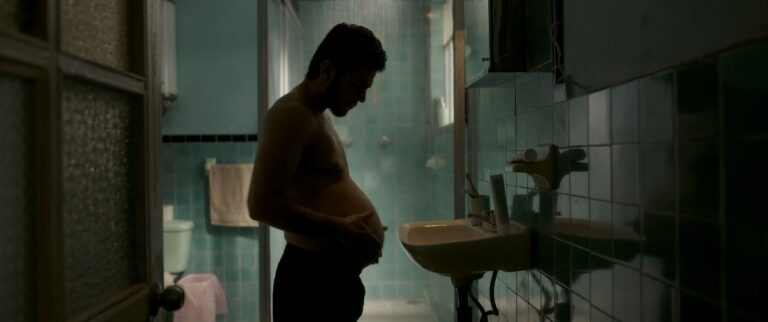
The award-winning Peruvian documentary follows Fernando Valencia, an Indigenous voice artist, painter, activist, radio host, and single father from Cusco. Fernando has an extraordinary talent for creating voices, but his ambitions reach far beyond entertainment. He wants people who speak Quechua to hear their language in the stories that fill popular culture.
His dream becomes wonderfully audacious: dub Disney’s The Lion King into Quechua.
Not a clip.
The whole movie.
On the surface, that premise sounds charming. Look a little deeper, however, and Runa Simi opens a much larger conversation about language, power, cultural memory, parenthood, and who gets to hear their world speak back to them.
A Homemade Studio, a Little Boy and One Very Big Idea
Fernando was 29 when filmmaker Augusto Zegarra documented his quest. Working from Cusco in the Peruvian Andes, he had already created Quechua Clips, a project that reimagined familiar animated scenes in Quechua.
People responded.
Suddenly, something that might have looked like one man’s creative experiment revealed a much larger hunger. Quechua-speaking audiences wanted popular stories in their own language.
Fernando decided to go further.
With a homemade recording studio and help from his energetic eight-year-old son, Dylan, he began pursuing the seemingly impossible task of creating a Quechua version of Disney’s 1994 classic The Lion King.
The project gives Runa Simi its playful heart, but it also creates a vehicle for examining something I have encountered repeatedly throughout my international work: knowledge and culture do not become less valuable simply because dominant institutions fail to document, translate, digitize, or distribute them.
Sometimes the problem is not that a community lacks stories.
The rest of the world has failed to listen.
Language Carries More Than Words
My work has taken me into communities across Africa, Latin America, and other parts of the world where knowledge does not always move through the systems outsiders expect.
People teach through conversation. Skills move between generations through observation. Agricultural knowledge lives in practices repeated season after season. Women often preserve enormous amounts of cultural and practical knowledge through cooking, farming, craft, caregiving, storytelling, and community traditions.
Much of that knowledge never enters a textbook, database, research paper, or digital archive.
That has consequences.
Language is not simply a collection of interchangeable words. It carries humor, memory, relationships, values, history, and ways of understanding the world.
When a language disappears from public life, something larger begins disappearing with it.
This is one reason the premise of the Runa Simi documentary feels so relevant beyond Peru. Fernando is not merely translating Simba, Mufasa, and the rest of a familiar animated world.
He is insisting that Quechua belongs there too.
Who Gets Included When Technology Learns About Humanity?
I think about this question even more as artificial intelligence becomes embedded in our everyday lives.
We often talk about AI as if it represents the accumulation of human knowledge. That description sounds impressive until we ask whose knowledge actually made it into the material these systems can access.
For communities whose histories and traditions rely heavily on oral transmission, the gap can become enormous.
Knowledge that was never written down cannot magically appear in a dataset. A language with limited digital content cannot have the same technological visibility as English. Cultural practices passed from grandmother to granddaughter may remain effectively invisible to systems trained primarily on written and digitized information.
Women can become especially vulnerable to this kind of erasure because so much of their knowledge has historically moved through informal cultural systems rather than institutions that decided what deserved documentation.
That does not make the knowledge informal in value.
It reveals the limitations of the archive.
Fernando’s project approaches this problem through popular culture rather than technology policy. Still, the underlying question feels remarkably similar.
What happens when people cannot find themselves inside the systems increasingly defining modern life?
Sometimes a Cartoon Lion Can Carry a Revolution
There is something wonderfully subversive about using The Lion King for this particular mission.
Popular culture travels incredibly well.
A child does not need an academic lecture on linguistic preservation to understand the thrill of hearing a beloved character speak the language used at home. That moment can communicate belonging more immediately than pages of policy recommendations ever could.
Fernando understood the emotional power of familiarity.
Rather than asking people to care about Quechua preservation in the abstract, he took something millions already recognized and asked a simple question: why shouldn’t this exist in our language too?
That question transforms dubbing into something larger.
Representation often gets discussed in terms of who appears on screen. Language reminds us to think about who gets heard as well.
Culture Survives Because People Carry It
One of the things I have learned from working across cultures is that preservation does not always look like preservation.
Sometimes it looks like a grandmother teaching a recipe.
It can be a farmer showing someone when to plant by reading environmental signs rather than consulting an app. Elsewhere, it might be an artisan teaching a technique that has never appeared in a manual.
In Fernando’s world, cultural preservation can look like a father and his son standing in front of microphones making cartoon characters speak Quechua.
I love that.
Culture stays alive when people use it, play with it, argue in it, create with it, teach it to children, and allow it to evolve.
A language confined to museums and academic research may survive as an object of study. A language spoken between a father and his eight-year-old son has something more powerful.
It has a future.
Now the Rest of Us Get to Listen
Director Augusto Zegarra spent nine years developing Runa Simi, his first feature-length documentary. The film eventually traveled far beyond Peru, screening at more than 60 film festivals across over 30 countries, according to materials supplied by Cinema Tropical.
Its festival journey brought significant recognition. Zegarra received the Albert Maysles Award for Best New Documentary Director at the 2025 Tribeca Festival, while the film also received honors at Sheffield DocFest and the Palm Springs International Film Festival.
Now Runa Simi is heading to a New York theatrical run.
The 81-minute documentary opens Friday, August 28, 2026, at Firehouse: DCTV’s Cinema for Documentary Film in New York City and runs through September 3. The film features Quechua, Spanish, and English with English subtitles.
For anyone traveling to New York for the screening, I would make the film part of a larger exploration rather than rushing in and out of the city. New York’s immigrant communities make it one of my favorite places to experience the world without leaving a single city. Looking through local cultural and food experiences on GetYourGuide can uncover neighborhood tours and experiences that go well beyond the usual Times Square itinerary.
That feels particularly appropriate for a film asking us to pay closer attention to cultures and voices that dominant narratives often overlook.
If Peru Starts Calling After the Credits Roll, I Understand
Films like Runa Simi tend to make me curious about the places behind the story.
Cusco is familiar to many international travelers as the gateway to Machu Picchu, but reducing the region to one archaeological destination misses much of what makes it culturally fascinating. Quechua language and identity remain part of the living Andes, not simply remnants of an Inca past packaged for visitors.
Should Runa Simi inspire a future trip to Peru, I would encourage approaching Cusco with enough time to experience the people and culture around the famous landmarks. Browsing local experiences and tours through my DG Speaks Viator shop can help you see what is available before deciding how you want to explore.
International travel also becomes much easier when you can navigate without immediately hunting for Wi-Fi. I prefer having mobile data ready through Airalo when I arrive somewhere new because maps, transportation information, translations, and messages are usually the first things I need after landing.
Still, I hope anyone inspired to visit Peru by this film remembers something Fernando’s story makes beautifully clear.
A destination is not merely scenery.
People live there.
I Keep Coming Back to the Same Question: Who Gets Heard?
I have spent much of my career thinking about participation.
Who sits at the table?
Who speaks?
Who feels comfortable enough to speak?
Whose knowledge gets treated as expertise?
Who gets translated?
And who disappears because the systems we create never learned how to hear them?
Those questions show up in food systems, international development, gender work, education, technology, and culture. They also show up in a Peruvian father’s determination to make a cartoon lion speak Quechua.
That is what makes Runa Simi so interesting to me.
The story starts with dubbing a movie.
It leads somewhere much bigger.
Fernando Valencia is asking for something profoundly simple: the right to hear his language participate in the modern world rather than watching it slowly disappear from it.
His son Dylan gets to grow up hearing that language not only from family members but through creativity, technology, humor, and stories he recognizes.
Perhaps that is how languages survive.
Not because someone places them carefully behind glass, but because another generation finds a reason to speak them.