All Things Go Gives Emerging Artists a Festival Stage
Music festivals are at their best when they do more than recycle the same names across different cities. Discovery is part of the magic. There is something special about watching an artist before the rest of the world has decided that everyone should know them.
That idea sits at the center of a new partnership between All Things Go Music Festival and TikTok LIVE.
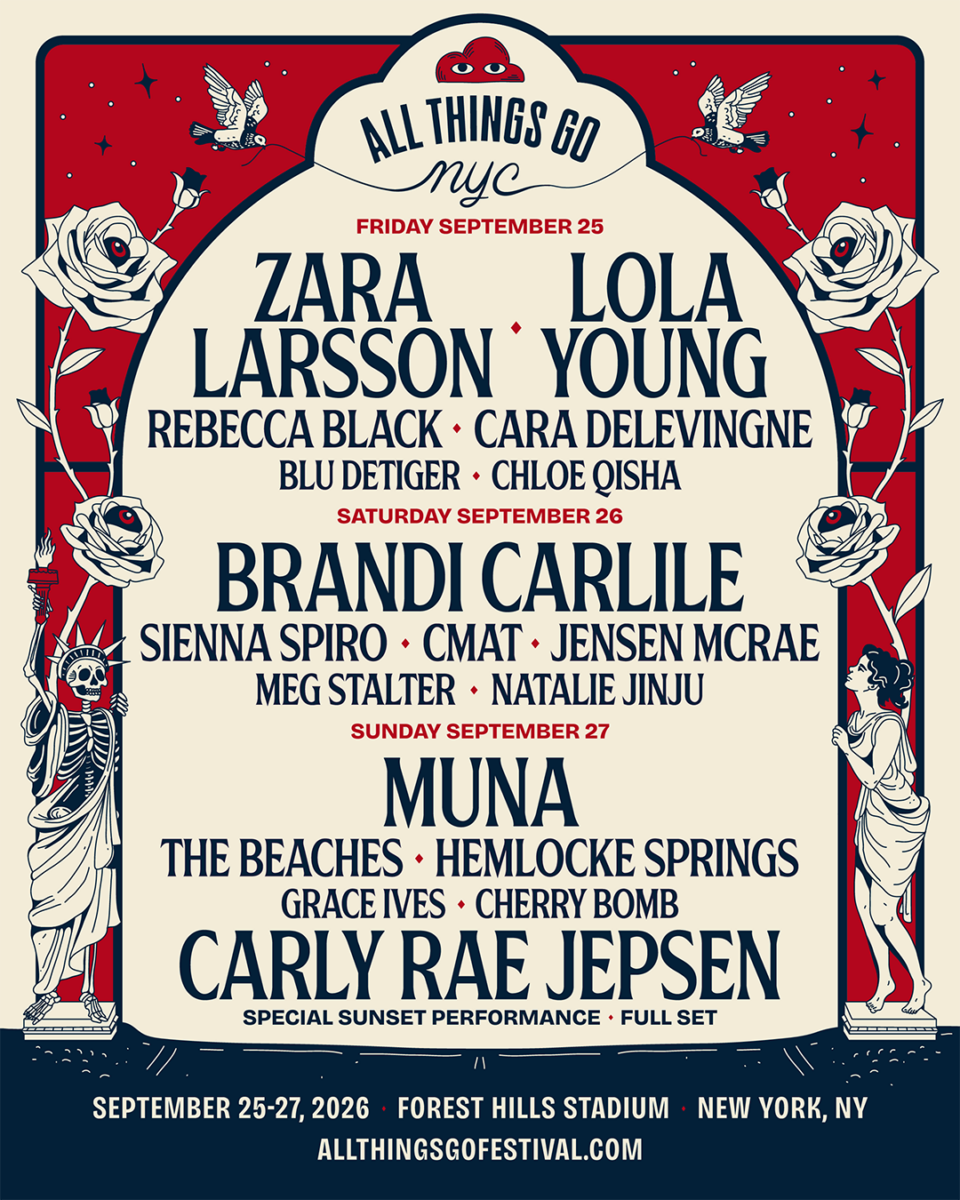
The collaboration creates a direct bridge between TikTok LIVE’s Music on Stage contest and a real festival audience. A U.S. winner will move from competing online to performing at Forest Hills Stadium during All Things Go New York, scheduled for September 25–27, 2026.
From TikTok LIVE to All Things Go
Artists are competing live on TikTok throughout August. Regional finals are scheduled for August 28, with Lizzy Plapinger joining as a guest judge.
Lizzy Plapinger will take part in the regional finals as a guest judge. Her perspective spans both sides of artist development: she is a musician herself, helped launch Neon Gold Records and advises All Things Go. Her career has long involved discovering and supporting emerging talent.
The prize puts a developing artist on the same festival weekend as established and fast-rising acts, including Brandi Carlile, Carly Rae Jepsen, MUNA, Zara Larsson, Lola Young, Sienna Spiro and The Beaches.
That is a meaningful jump in visibility for an artist still building an audience.
Music Discovery Has Changed
There was a time when a handful of radio programmers, label executives, music journalists and local promoters held enormous influence over who reached a wider audience.
Those gatekeepers still matter, but discovery is much more fragmented now.
An artist can build a following through short-form video, livestreaming, independent releases, niche online communities and direct interaction with fans. A song can become culturally significant before traditional music media fully notices it.
TikTok has been central to that shift.
The All Things Go partnership recognizes something the music industry has been learning for years: online communities are not separate from “real” music audiences. They are real music audiences.
A Festival Can Be a Career Accelerator
For emerging artists, festivals offer something streaming statistics cannot fully replicate.
There are industry people in the crowd. There are journalists. There are potential collaborators. There are fans who arrived to see someone else and leave talking about the artist they discovered at 3:30 in the afternoon.
That kind of exposure can change the trajectory of a career.
It also gives audiences a reason to show up early.
I love a festival headliner as much as anyone. However, some of my favorite festival memories have come from artists I did not know before I arrived.
All Things Go Has Built Its Identity Around Community
All Things Go began in 2011 and now operates in Washington, D.C., New York City and Toronto. Its past lineups have included Billie Eilish, Lana Del Rey, Janelle Monáe, Doechii, Hozier, Charli XCX, Mitski, Lorde, HAIM and many others.
The festival also talks openly about community and belonging. Its fan base even has its own name: “The Besties.”
That community orientation makes an emerging-artist competition a logical extension of the brand.
Rather than treating discovery as a side stage afterthought, the partnership turns it into part of the festival narrative.
The Line Between Creator and Musician Keeps Blurring
The language around musicians has changed too.
Artists are now often creators, video producers, livestream hosts, community managers and marketers at the same time. That reality can be exhausting, but it also gives independent musicians more direct control over how they build an audience.
The Music on Stage competition reflects that new environment. Artists are not waiting quietly to be discovered. They are performing in public, building communities and testing their work in real time.
Then, in this case, the digital stage can lead directly to a physical one.
Why This Matters for Festival Culture
Festivals help define which artists become part of our shared cultural memory.
That makes access important.
When festivals create clearer pathways for emerging musicians, they can broaden the pool of artists who get heard. The opportunity becomes especially meaningful when discovery extends beyond established industry networks.
Of course, one competition cannot solve the structural challenges facing independent musicians. Artists still contend with streaming economics, touring costs, marketing pressure and an overcrowded attention economy.
Still, a major festival slot is real opportunity.
And I would rather see festivals actively building discovery into their programming than treating emerging artists as decoration around a headliner-heavy bill.
Sometimes the Best Festival Story Is Who Comes Next
All Things Go has already built a reputation around major names. This partnership asks audiences to pay attention to someone they may not know yet.
That is exciting.
Because every headliner was once the person trying to get someone to listen.
For more DG Speaks coverage of live culture, community and events, browse our cultural festivals hub and festival coverage.