Why Solo Travel Keeps Asking Me Better Questions
Solo travel makes certain questions impossible to avoid.
Where do I want to go next? How long do I want to stay? Am I tired, afraid, bored, hungry, or simply following a plan that no longer fits?
When I travel with other people, decisions can hide inside compromise. Someone else wants the restaurant, the museum, the earlier train, or the longer route. Even when the arrangement is fair, shared preferences soften the responsibility of choosing.
Solo travel questions feel different because the answers belong to me.
There is nobody else’s appetite to follow, no committee to blame, and no companion whose confidence can temporarily replace my own. The journey becomes a conversation with myself, often in places where I cannot rely on familiar routines.
Alone Is Not the Same as Empty
People sometimes describe solo travel as though companionship has been removed from the experience.
In reality, being alone can make the day feel fuller. I notice the sounds around me, the way my body responds to a street, and the small preferences that disappear inside group planning.
I learn how long I actually want to remain in a museum. I discover whether I enjoy a busy restaurant alone or prefer a quiet lunch near a window.
Solitude creates information.
The absence of another person does not leave the trip empty. It creates room for observation, improvisation, and a more direct relationship with desire.
The First Question Is Often Practical
At a station, airport, or unfamiliar intersection, the first question may be simple: Where do I go now?
Practical decisions carry emotional weight when I make them alone. A missed turn feels more personal, while finding the correct platform creates a quiet sense of capability.
Each decision becomes evidence that I can gather information, assess options, and move forward.
This is how solo travel confidence develops through finding my own rhythm. Confidence does not arrive before the journey. It grows through small problems solved repeatedly.
What Do I Choose When No One Votes?
Freedom sounds uncomplicated until every choice belongs to one person.
I can eat anywhere, but now I must decide. I can change cities, stay longer, or leave early, yet each option requires judgment.
That freedom reveals preferences that may have remained unexamined.
Do I choose the famous attraction or the neighborhood walk? Am I selecting this restaurant because I want the food, or because it seems like the place a traveler should visit?
Without a group vote, I see how much of my desire comes from habit, expectation, and the wish to create a recognizable travel story.
My Appetite Becomes Easier to Hear
Food decisions can become unexpectedly revealing.
When nobody else is hungry, I may delay eating. When a group wants dinner, I may sit down before my own appetite appears.
Alone, I have to notice what my body is telling me.
I learn whether I prefer breakfast early or coffee first. I discover how often I want a full meal, a market snack, or a quiet dinner close to where I am staying.
Dining alone also challenges the idea that a meal needs witnesses to matter. A good table, respectful service, and food I genuinely want can make the experience complete.
Am I Moving Because I Am Curious or Because I Am Restless?
Solo travel can make constant movement feel productive.
There is always another street, train, museum, or neighborhood. Because no one else asks to slow down, I can keep adding distance until exhaustion makes the decision for me.
This is where slow travel and choosing presence over pace become important.
I ask whether another activity will deepen the day or simply prevent me from being still.
Sometimes curiosity leads me forward. At other times, restlessness keeps me from noticing what is already present.
How Long Do I Want to Stay?
Travel itineraries often assume that time should be maximized.
One city deserves two days, another three, and a major destination needs a carefully calculated list of attractions. Yet my relationship with a place may not follow that schedule.
I may feel ready to leave sooner than expected. Another town may invite me to stay because the pace, food, landscape, or daily rhythm feels right.
Solo travel allows me to take those responses seriously.
Changing a plan does not mean the original itinerary failed. It may mean I have learned something the earlier version of me could not know.
Fear Asks Questions Too
Not every internal voice is wisdom.
Fear can sound persuasive. It asks whether I should remain in the room, avoid the evening, distrust everyone, or abandon a plan before gathering enough information.
Safety matters, especially for women traveling alone. However, fear and awareness are not identical.
Awareness gathers information. It checks the route, reads recent reviews, notices behavior, and creates alternatives.
Fear can shrink the entire destination around one imagined outcome.
I try to listen carefully enough to tell the difference.
A Good Question Creates Options
Instead of asking, “Is this place safe?” I ask more specific questions.
How will I return after dark? Is the area well connected by transit? Does the accommodation have secure access? Have recent guests mentioned harassment, broken locks, or misleading directions?
Specific questions lead to practical decisions.
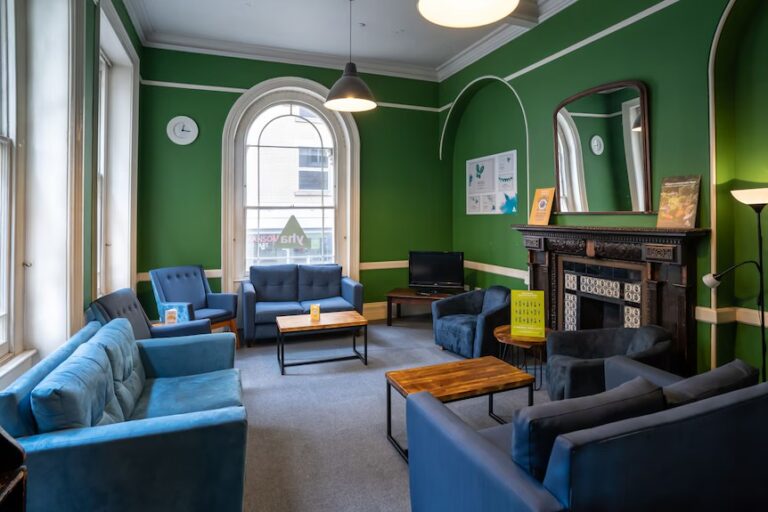
I may compare stays through Hostelworld, paying attention to location, facilities, and recent reviews rather than price alone.
Preparation does not remove risk, but it makes uncertainty more manageable.
Do I Want Company or Do I Want Distraction?
Solo travel does not mean avoiding people.
I may want conversation, a group activity, or someone to share a meal with. Organized experiences can make connection easier because the activity provides a natural structure.
I may use GetYourGuide to find a walking tour, food experience, or museum visit that adds context and temporary community.
Still, I ask why I want company.
Sometimes connection enriches the day. At other times, I am trying to avoid discomfort with my own presence.
The answer may change from one afternoon to the next.
What Does This Place Bring Out in Me?
Different places activate different parts of my personality.
A large city may make me more alert, ambitious, and socially curious. A small town may slow my thinking, while a coastal landscape can make ordinary problems feel less immediate.
Solo travel gives me space to observe those shifts.
I notice where I become guarded, where I relax, and which environments make me feel more expansive.
The destination does not create a completely new person. It reveals how surroundings influence the person already present.
Am I Trying to Prove That I Am Brave?
Solo travel often attracts praise.
People may call a woman brave simply because she booked a ticket alone. That admiration can become another form of pressure.
I do not need to accept every challenge to justify my independence. I can leave a situation, take a taxi, change accommodations, or decide that an activity is not worth the risk.
Good judgment may look less dramatic than courage.
I want decisions based on what protects the journey, not what creates the most impressive story later.
The Body Has Its Own Questions
Travel plans often begin in the mind.
The body asks different questions. Have I eaten enough? Do my feet need rest? Is the heat affecting me? Am I becoming sick, dehydrated, or overwhelmed?
When I travel alone, nobody else automatically notices those changes.
That responsibility makes physical awareness essential.
Rest, hydration, food, medication, and sleep belong inside the itinerary. They are not interruptions to the journey.
What Am I Willing to Spend?
Solo travel also reveals financial priorities.
There is no one to split the room, taxi, or meal. Every upgrade, tour, and transportation choice affects the budget directly.
I learn what I value enough to pay for.
Perhaps I choose a central location because it saves time and reduces late-night transportation. Maybe I skip an expensive attraction and spend more on a meaningful meal.
Money turns preference into consequence.
The budget becomes another map of what matters.
When Does Flexibility Become Avoidance?
Changing plans can reflect wisdom.
It can also become a way of escaping discomfort before giving an experience enough time.
I ask whether I want to leave because the place does not fit, or because I feel awkward, lonely, or uncertain.
Not every uncomfortable moment requires endurance. Still, growth often includes staying present long enough to understand what the discomfort means.
The distinction becomes clearer through reflection rather than impulse.
Do I Trust My Own Taste?
Travel recommendations are everywhere.
Lists tell me where to eat, what to photograph, and which neighborhood deserves attention. Reviews can provide useful information, but they can also make personal preference feel unreliable.
Solo travel gives me the opportunity to choose something simply because it interests me.
A small museum, ordinary café, or overlooked street may become more meaningful than the attraction everyone insisted I could not miss.
Trusting taste does not mean ignoring guidance. It means allowing my response to matter too.
What Will Remain Private?
Travel creates stories, but not every experience needs to become content.
A quiet conversation, emotional realization, or unplanned afternoon may lose something when immediately translated for an audience.
I want room for memories that remain mine.
Documentation can support storytelling, but it can also interrupt attention.
Sometimes the best question is whether I need to capture the moment at all.
Travel Coverage Supports the Practical Side
Self-knowledge does not prevent illness, injury, or disruption.
Travel medical coverage through SafetyWing may help with eligible medical needs and other covered circumstances.
I review the limits, exclusions, and destination requirements before depending on any policy.
Coverage does not replace awareness or preparation. It supports one part of the practical framework that allows the deeper questions to unfold.
What Do I Learn When the Day Goes Wrong?
Solo travel becomes most instructive when the plan fails.
A train is missed, the room disappoints, or the weather makes the itinerary impossible. Without another person to absorb frustration, I see how I respond.
Do I panic, become rigid, blame myself, or look for the next reasonable option?
Every disrupted day becomes a lesson in adaptation.
The goal is not to remain calm at all times. It is to recover enough judgment to decide what comes next.
A Woman Listening to Herself
Solo travel questions are not always answered immediately.
Some follow me home. They change how I understand appetite, safety, money, rest, and the amount of compromise I accept in daily life.
The journey gives me practice hearing myself without the noise of group consensus.
I learn when I want company, when I need quiet, and which decisions feel true even when nobody else understands them.
A woman listening to herself is not necessarily lost.
She may be standing at a station, studying the departures board, and realizing that several directions are possible.
The map matters. So do the schedule, budget, body, and practical risks.
Yet beneath all of that is another question: Which direction feels like mine?
That question is one of the most valuable things solo travel has given me.
For more reflections on independent journeys, confidence, safety, cultural curiosity, and finding your own pace, explore DG Speaks Travel.