Gold Mosaics, Imperial Memory and a Confederate Shadow at St Paul’s
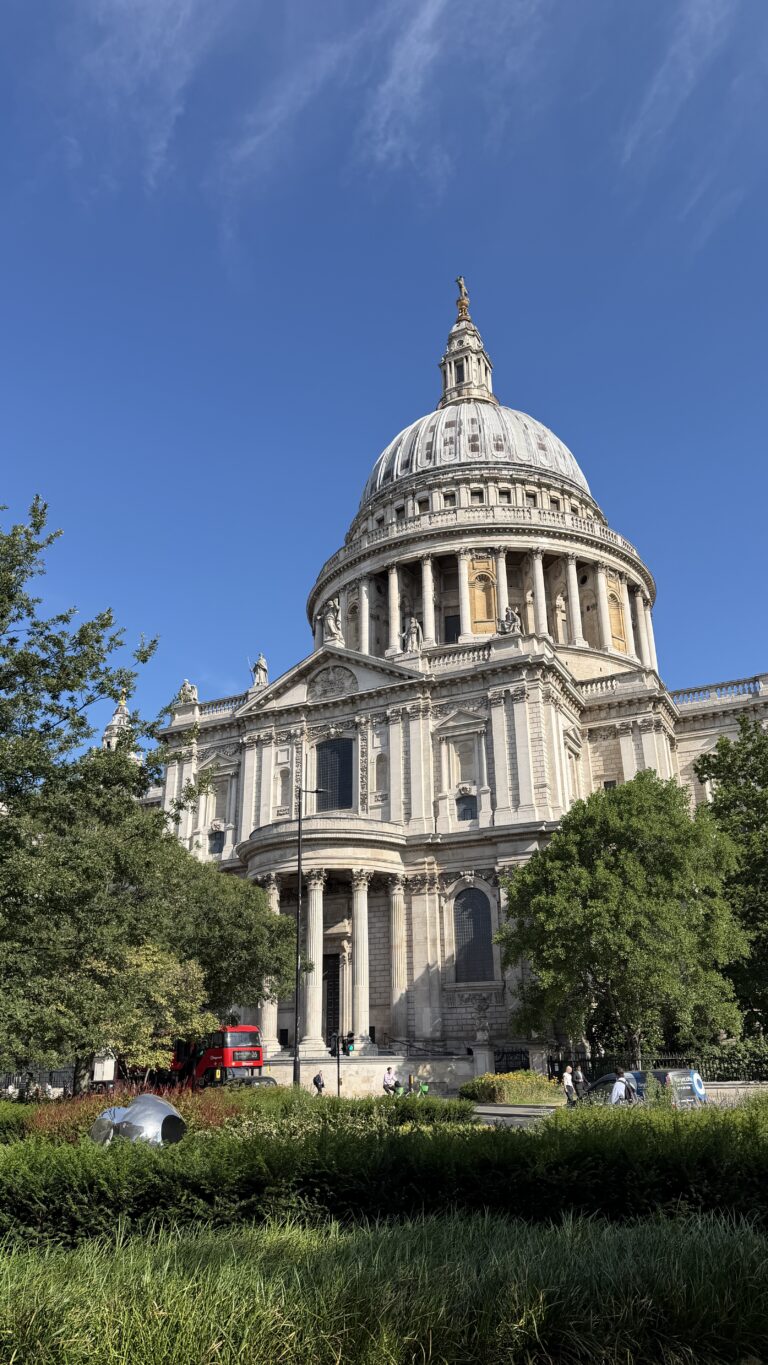
St Paul’s Cathedral was even more beautiful inside than I expected.
Its immense scale impressed me immediately, but the details held my attention. Towering arches, carved stone, painted ceilings, monuments, and carefully designed sightlines gave the building a sense of grandeur without making it feel visually empty. Everywhere I looked, the architecture revealed another layer.
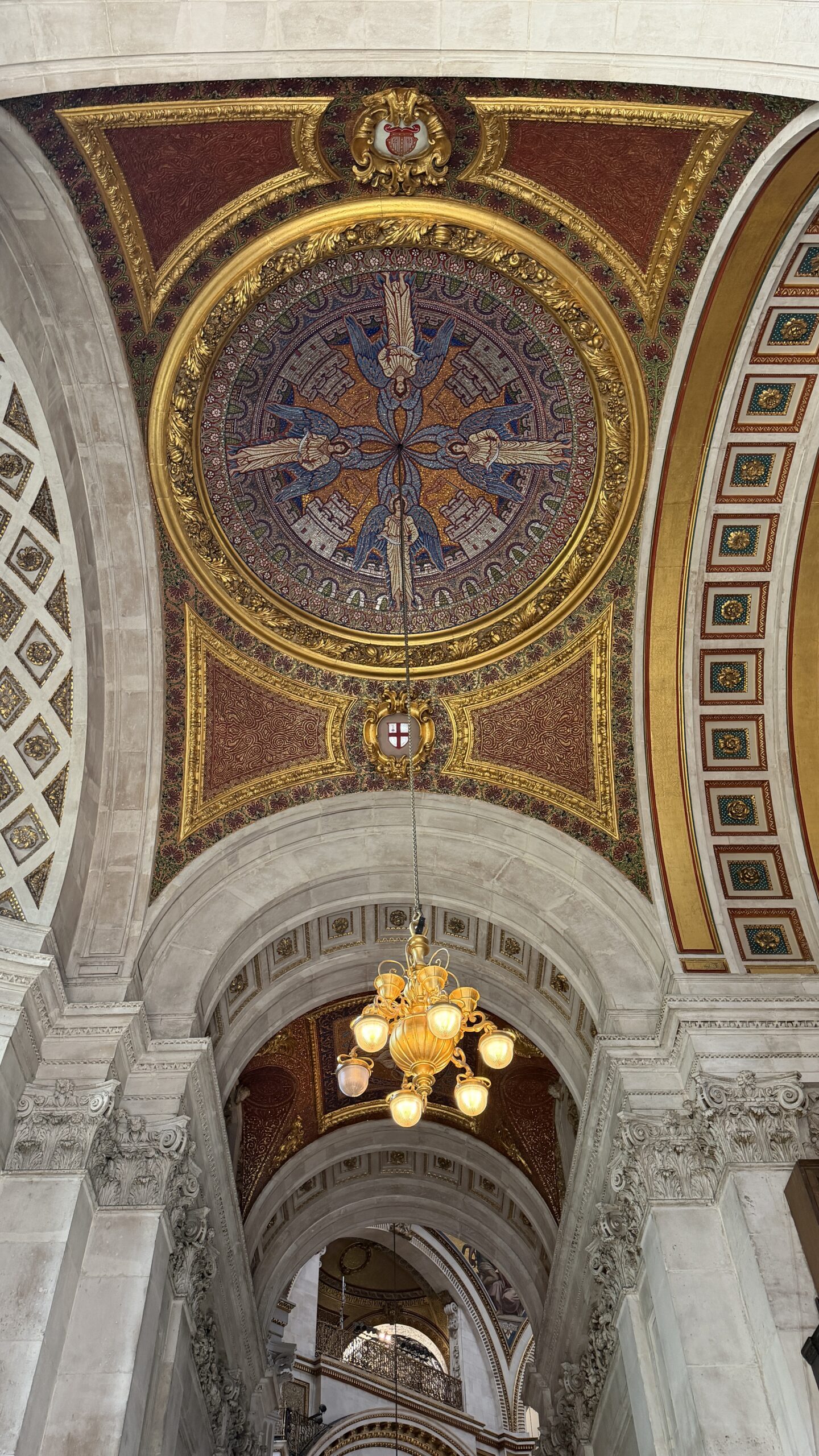
The mosaics captivated me most.
Gold, color, and light stretched across the ceilings, creating surfaces that seemed to shift as I moved beneath them. At first, I thought I was looking at elaborate murals. Once I understood that the images came from thousands of small mosaic pieces, I appreciated them even more.
Light reflected from the tiles and gave the artwork a luminous quality that paint alone could not have created. The technique made the ceilings feel alive.
I later learned that Queen Victoria had criticized parts of St Paul’s as “dreary, dingy and undevotional,” which helped inspire the addition of the mosaics. I understood the historical story, but “drab” did not describe the cathedral I experienced. The architecture already carried tremendous beauty. The mosaics added warmth, color, and another extraordinary layer of craftsmanship.
For much of the visit, I simply enjoyed looking upward.
Still, beautiful spaces can hold complicated histories.
As I moved from the cathedral floor into the crypt and eventually toward the American Memorial Chapel, admiration gave way to a more layered experience. St Paul’s remained architecturally magnificent, but some of what I encountered forced me to think about worship, empire, memory, and the racial associations we carry into historic spaces.
That was when the visit became about more than beauty.
Light, Color and Thousands of Tiny Pieces
The mosaics captured my attention immediately.
Their color and reflective surfaces made parts of the cathedral look almost illuminated. At first, I thought I was looking at paint that had somehow taken on the shine of tile.
The technique created movement as the light changed.
Learning that the decorative scheme came later fascinated me because I could not imagine the cathedral without it. The gold, color, and visual storytelling gave the enormous space warmth and texture.
St Paul’s itself highlights the cathedral’s mosaic ceilings and the conservation work required to preserve them. The official St Paul’s visitor information offers useful context before a visit.
Lifelike Figures in a Creepy Crypt
The crypt felt creepy.
I would not want to wander through it alone at night.
Still, the sculptures lying above the tombs fascinated me. Their clothing, posture, armor, and ornamentation felt so detailed that I could imagine what those people may have looked like in life.
History often becomes more accessible when we can visualize the individuals behind it.
The tomb figures gave me that access.
Instead of reading only names and dates, I studied how people represented themselves and what they wanted future generations to remember.
A Working Cathedral Filled With Tourists
During the tour, everyone stopped for prayer.
That pause reminded me that St Paul’s still operates as a working cathedral rather than a museum preserved only for visitors.
I found that dynamic interesting.
Thousands of people move through the building, take photographs, listen to guides, and study monuments. At the same time, worshippers still enter seeking prayer and spiritual connection.
Personally, I would struggle to reach a quiet spiritual state with tourists constantly moving around me.
However, the interruption also forced visitors to acknowledge that the building continues to serve a religious purpose.
St Paul’s describes itself as a living, working cathedral rooted in worship, even while it remains one of London’s major sightseeing destinations.
Alabama Jumped Out at Me
The American Memorial Chapel initially caught my attention because of its stained glass and connection to American history.
Then I saw Alabama.
The red diagonal cross immediately gave me Confederate flag energy.
It was giving racism.
My racial trauma felt triggered before I had time to intellectualize the symbol or explain its official meaning to myself.
That response mattered.
Symbols do not enter our minds as neutral design elements. They carry histories, associations, and emotional consequences. A red saltire connected to Alabama does not exist outside the legacy of the Confederacy and the violence attached to it.
The chapel honors Americans who died while stationed in Britain during World War II, but my encounter with that state emblem added another layer to the memorial.
I could respect the people being honored while still feeling disturbed by the imagery.
Beauty Does Not Erase Empire
St Paul’s contains memorials connected to British military power, colonial expansion, and imperial history.
The cathedral openly acknowledges that many monuments reveal the relationship between the church, Britain, and empire through its research on imperial monuments.
That honesty matters because cultural institutions should not ask visitors to admire beauty without examining the power that helped create and maintain it.
As a Black traveler, I cannot move through these spaces without noticing whose victories became monuments and whose suffering disappeared into the background.
The cathedral remained beautiful.
Its history remained complicated.
Both truths occupied the same space.
Why the Visit Stayed With Me
St Paul’s gave me more than architectural grandeur.
The mosaics dazzled me. The crypt unsettled me. The lifelike tomb figures pulled me closer to the past, while the American chapel pushed me into a deeply personal reaction.
That emotional range made the visit worthwhile.
Cultural travel works best when it allows us to admire, question, and feel at the same time. I do not need every destination to comfort me.
Sometimes I need a place to reveal what I already carry.