Historic Dockyard Chatham: My Pilgrims’ Way Discovery
By day four of our Pilgrims’ Way journey, I was ready for a shorter walking day. We had already put plenty of miles on our feet, so instead of rushing through Rochester and Chatham, we gave ourselves time to actually experience them.
That decision turned day four into one of the most interesting cultural days of the journey. We began at Rochester Cathedral and then walked all the way to the Historic Dockyard Chatham.
What waited for us there was centuries of maritime history and one very fun surprise.
Beginning the Day at Rochester Cathedral
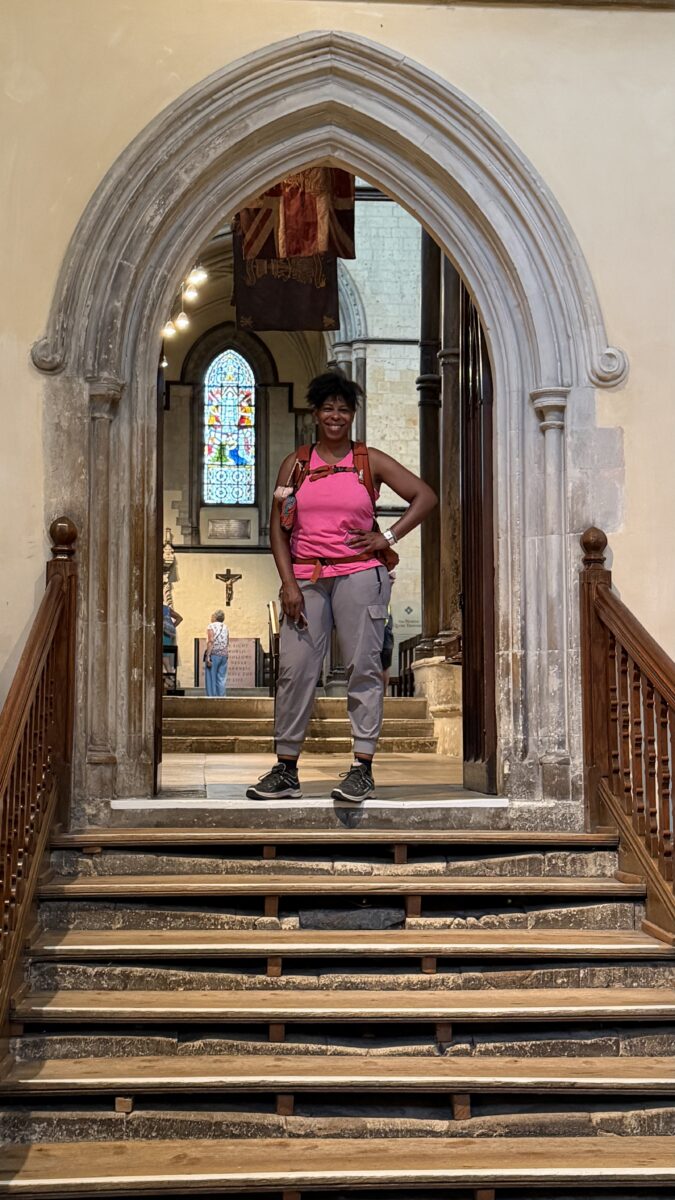
Before heading toward Chatham, we spent the morning exploring Rochester Cathedral. The cathedral has stood at the heart of Rochester for more than 1,400 years, with a history stretching back to AD 604.
However, its pilgrimage history particularly interested me. Medieval pilgrims traveling toward Canterbury stopped in Rochester to visit the shrine of William of Perth.
Inside the cathedral, the worn Pilgrim Steps provide a physical reminder of those travelers. That felt especially appropriate during our own journey toward Canterbury.
I am not religious, but I love places where history remains visible. There is something powerful about knowing people have been moving through the same space for centuries.
After exploring the cathedral, it was time to start walking again.
Walking From Rochester to Historic Dockyard Chatham
Our walk to Chatham was considerably shorter than some of our other days, and I appreciated that. Long-distance walking can easily become focused on mileage.
You start thinking about how far you have gone and how much farther you still need to walk. However, I was not walking across England simply to accumulate miles.
I wanted to see England. Having a shorter day allowed us to do that.
We walked all the way to the Historic Dockyard Chatham and still had enough time to explore once we arrived. That balance made the day special.
Discovering the Historic Dockyard Chatham
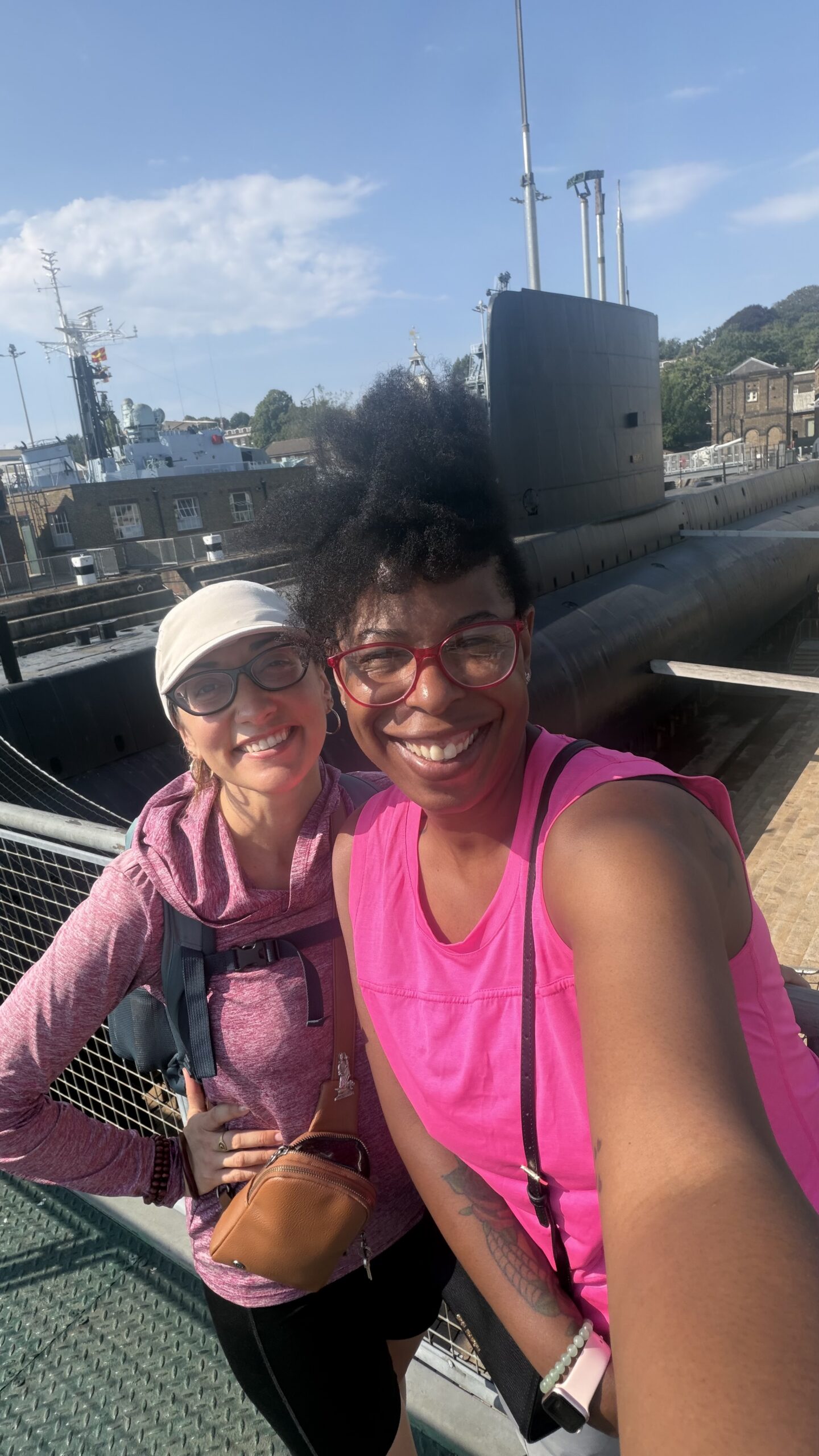
The scale of the Historic Dockyard Chatham immediately tells you this is not a small maritime museum. The preserved dockyard covers about 80 acres and contains more than 100 historic buildings and structures.
For more than 400 years, Chatham played a role in Britain’s maritime story. Walking through the site gives that history physical scale.
This is something I always appreciate about places where you can move through history rather than simply look at objects behind glass. Buildings remain, ships remain, and the relationship between the water, docks, and surrounding infrastructure remains visible.
It becomes easier to imagine this as a working place filled with people rather than simply a historic attraction.
Seeing Britain’s Maritime History Up Close
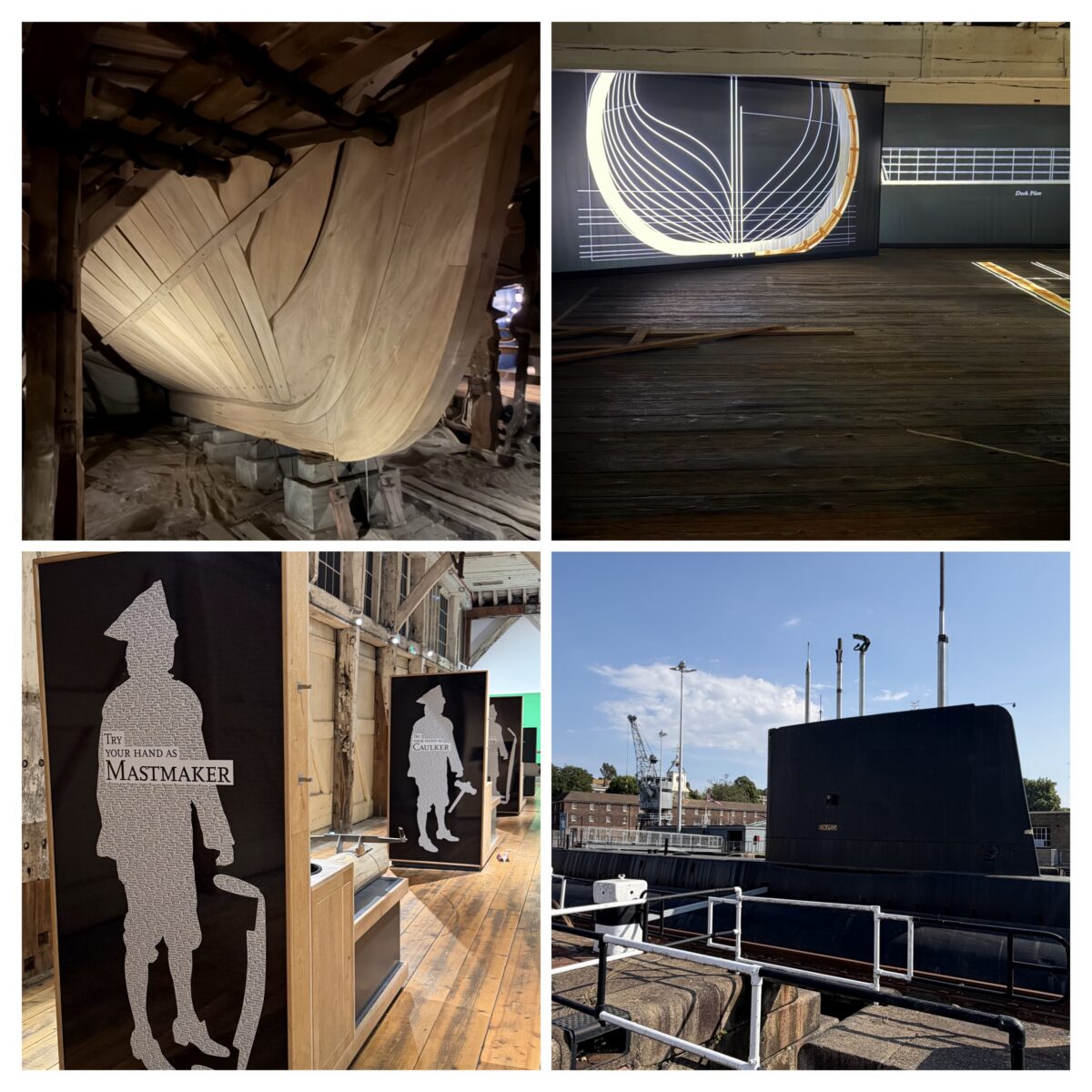
Three historic warships are preserved at Chatham: HMS Gannet, HMS Cavalier, and HMS Ocelot. Each represents a different period of naval history.
Seeing historic ships up close made me think about the enormous amount of human labor required to build, maintain, and operate them. History often reduces complicated systems to dates and famous names.
Places like Chatham bring ordinary workers back into the picture. Someone built these ships, someone maintained them, and someone worked aboard them.
Someone’s livelihood depended on everything happening around these docks. That human side of history always interests me.
A Place Built Around Work
One thing I appreciate about industrial heritage sites is that they remind us that history was also about work. We often visit palaces, castles, cathedrals, and grand homes when we travel.
Those places tell important stories, but they tend to center people with power. A dockyard tells a different story.
It makes you think about craftspeople, engineers, sailors, laborers, and families whose lives were connected to the work happening there. That perspective makes a place feel more human to me.
I can admire a ship as an engineering achievement while also thinking about the people who made that achievement possible.
Then Came the Call the Midwife Surprise
Now, here is where the visit became especially fun for me. I discovered that Call the Midwife films at Chatham.
If you watch the series, you know the story takes place in London’s East End. However, many of the outdoor scenes representing Poplar are actually filmed at the Historic Dockyard Chatham.
Once I knew that, I started seeing the site differently. The historic streets were not simply part of the old dockyard anymore.
They were also part of a television world I recognized. I love experiences where history and popular culture unexpectedly overlap, and this was definitely one of them.
Why Chatham Works So Well for Call the Midwife
Once you walk around Chatham, the location choice makes sense. The Dockyard has preserved groups of historic buildings rather than isolated structures surrounded by modern development.
That gives filmmakers entire streets and environments to work with. The Ropery buildings have appeared as streets where characters cycle through Poplar, while Thunderbolt Pier has also appeared in the series.
Even HMS Cavalier has been transformed for filming. The real history remains intact while the same environment takes on a completely different identity for television.
As someone who loves storytelling, I found that fascinating.
Why Call the Midwife Interests Me
Part of my enjoyment came from simply recognizing a show I like. However, Call the Midwife also touches on subjects that overlap with many things I have spent my career thinking about.
Women’s lives are at the center of the story. So are public health, poverty, community, and access to care.
The series uses individual stories to explore much larger social changes. That combination of personal storytelling and broader social context is something I appreciate.
So, yes, finding a filming location was fun. But I also enjoyed seeing where stories about women’s lives and community were being recreated.
History and Storytelling Can Share the Same Space
Chatham also made me think about the different ways we preserve stories. A museum preserves physical history through buildings, objects, ships, and records.
Television works differently. It uses real spaces to build fictional worlds.
Sometimes those fictional stories introduce people to history they might never seek out on their own. I think there is something interesting about those two forms of storytelling happening in the same place.
One visitor may come because she loves naval history. Another may arrive because she loves Call the Midwife.
Both can leave knowing more than they did before.
More Than a Television Location
I would not recommend visiting Chatham only because of Call the Midwife. The television connection is an added layer.
The real reason to spend time here is that the Dockyard brings several centuries of British history together in one enormous space. There is maritime history, industrial history, architecture, and stories about labor, engineering, and changing technology.
There are also complicated questions about Britain’s naval power and its place in the world. I prefer historic sites that leave room for complexity.
History becomes much more interesting when we resist turning it into either celebration or condemnation. Understanding requires context, and Chatham gives visitors plenty of material to think about.
The Official Call the Midwife Tour
If you are a serious Call the Midwife fan, you can go further than we did. The Historic Dockyard offers an official location tour created with Neal Street Productions.
Visitors explore filming locations and can see sets, costumes, and props connected to the series. I can see this being especially fun for fans traveling through Kent.
If you are building Chatham into a larger England itinerary, you can also browse tours and cultural experiences through GetYourGuide for London and other stops you may want to combine with your visit.
Why Chatham Fit Our Pilgrims’ Way Journey
Chatham was not simply an attraction we inserted into the itinerary. It became part of how I experienced the Pilgrims’ Way.
That distinction matters because one reason I enjoy walking is that destinations become connected rather than isolated. We did not wake up, drive to Rochester Cathedral, drive to Chatham, and then move somewhere else.
We moved through the landscape ourselves. We started our morning surrounded by centuries of pilgrimage history and then walked into centuries of maritime history.
By evening, we were resting in Chatham and preparing to continue toward Faversham the following day. That progression gave the day a natural story.
You can read the complete story of my Pilgrims’ Way journey from London to Canterbury to follow the adventure from the beginning.
Slowing Down Made the Visit Better
I was also reminded that slower travel does not only mean walking slowly. It means giving yourself enough time to actually experience a place.
If we had been rushing to cover more miles that day, we could have passed through Chatham without understanding what was there. Instead, the shorter distance gave us time to look around, learn something, and connect one part of England’s history with another.
That is the kind of travel I want more of. I do not need to check ten attractions off a list if three experiences give me better stories.
Planning a Visit to Historic Dockyard Chatham
If you are planning to visit the Historic Dockyard Chatham, give yourself enough time to explore. This is not the kind of place I would squeeze into a tiny window between other attractions.
There is too much history spread across the site. If you are interested in Call the Midwife, check what tours or special experiences are available during your visit.
I would also pair Chatham with Rochester if your schedule allows. Seeing Rochester Cathedral and the Dockyard on the same day gave me two very different perspectives on English history.
If you are making Kent part of a longer trip and want to control accommodation costs, you can compare budget accommodation through Hostelworld.
For travel gear and some of the items I use during longer trips, you can also browse my DG Speaks Amazon shop.
Should You Visit Historic Dockyard Chatham?
If you enjoy history, I think Chatham deserves a visit. If you love maritime history, give yourself enough time to explore.
If you are a Call the Midwife fan, you will have an entirely different reason to smile while walking around. For me, the Historic Dockyard Chatham represented exactly the kind of travel discovery I enjoy.
I learned something, found an unexpected connection to something familiar, and experienced a piece of Britain’s history while walking through the country rather than visiting it as an isolated attraction.
That afternoon reminded me why I do not like rushing from one famous place to another. Sometimes the place you did not know you needed to see becomes one of the stories you remember most.