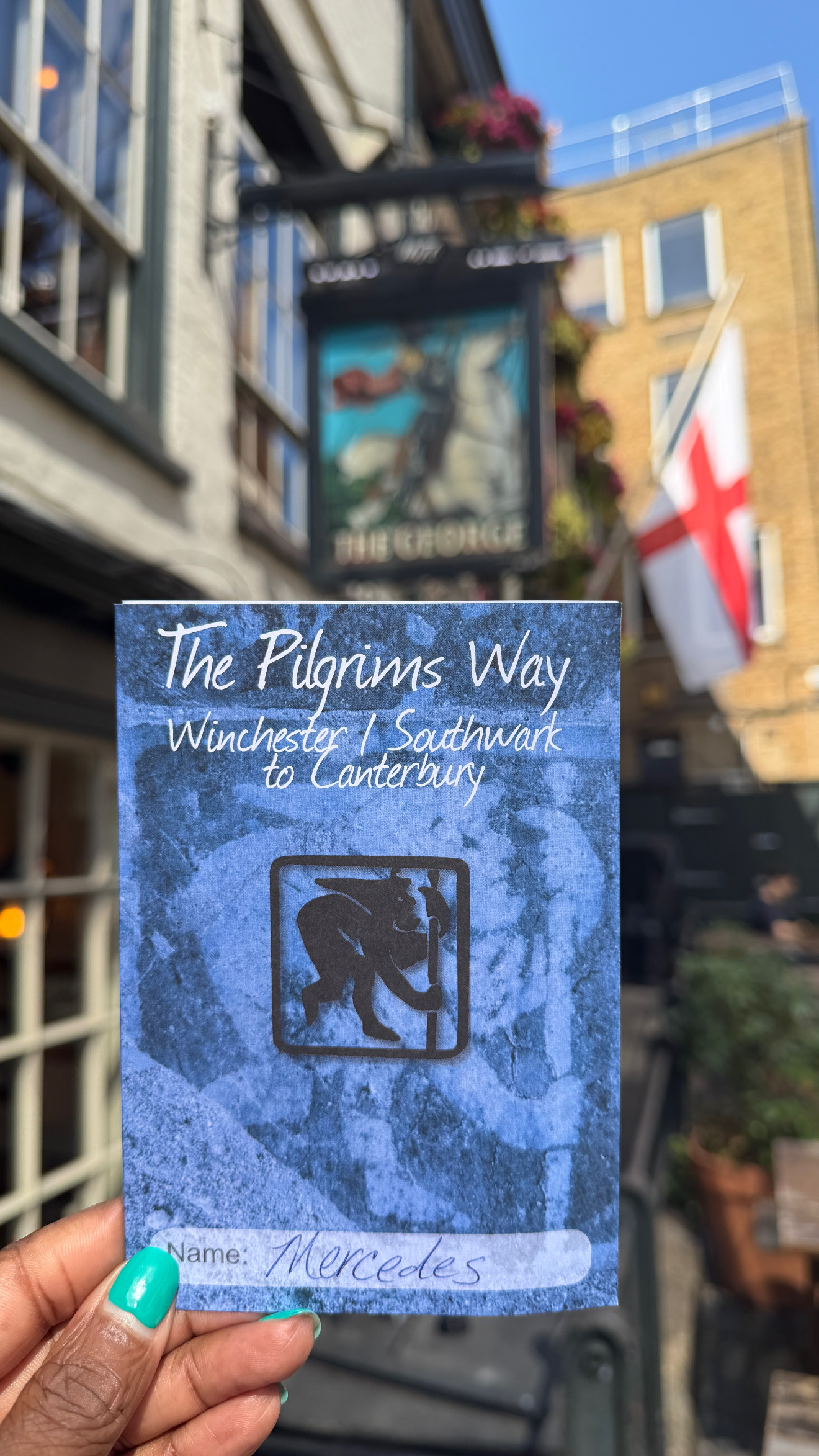
Walking the Pilgrims’ Way From London to Canterbury
Walking the Pilgrims’ Way from London to Canterbury gave me something I love about travel: the chance to experience a place slowly. I had already learned the value of moving through a country on foot while walking the Camino Francés in Spain.
That journey showed me how different a place feels when you stop rushing through it. You notice communities, landscapes, buildings, conversations, and small details that disappear when you travel by train or car.
So, when the opportunity came to walk from London toward Canterbury, I was ready for another adventure. This time, I was walking with another woman, and together we planned roughly 70 miles over seven days.
I knew England would not feel like Spain, and I did not want it to. I wanted to see what England would reveal when I slowed down enough to actually look at it.
Starting the Pilgrims’ Way in London
Our journey began at Southwark Cathedral, a fitting starting point for a pilgrimage toward Canterbury. Southwark has a long connection with the Canterbury pilgrimage tradition and with Geoffrey Chaucer’s The Canterbury Tales.
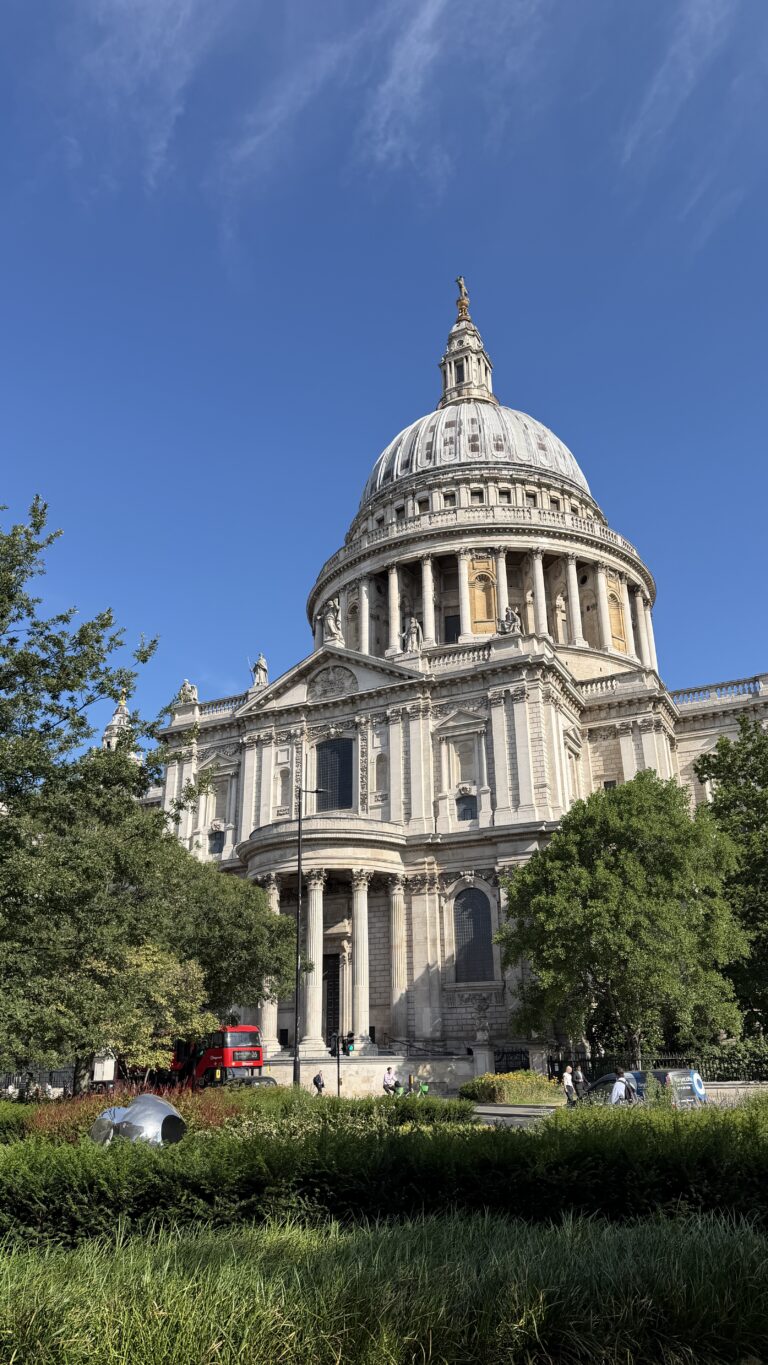
His fictional travelers gathered in Southwark before beginning their journey toward Canterbury. My own departure, of course, happened in a very modern London filled with buses, traffic, commuters, tourists, cafés, and construction.
Before reaching Southwark Cathedral, I first had to walk across part of the city from where I was staying. That meant my walking started before the official walk even began.
Once we set off, I quickly realized that leaving London on foot would be an experience in itself. There was no dramatic moment when the city ended and beautiful countryside suddenly began.
Instead, London slowly changed around us. Dense streets became outer neighborhoods, and those neighborhoods gradually gave way to a different England.
The Reality of Walking Out of London
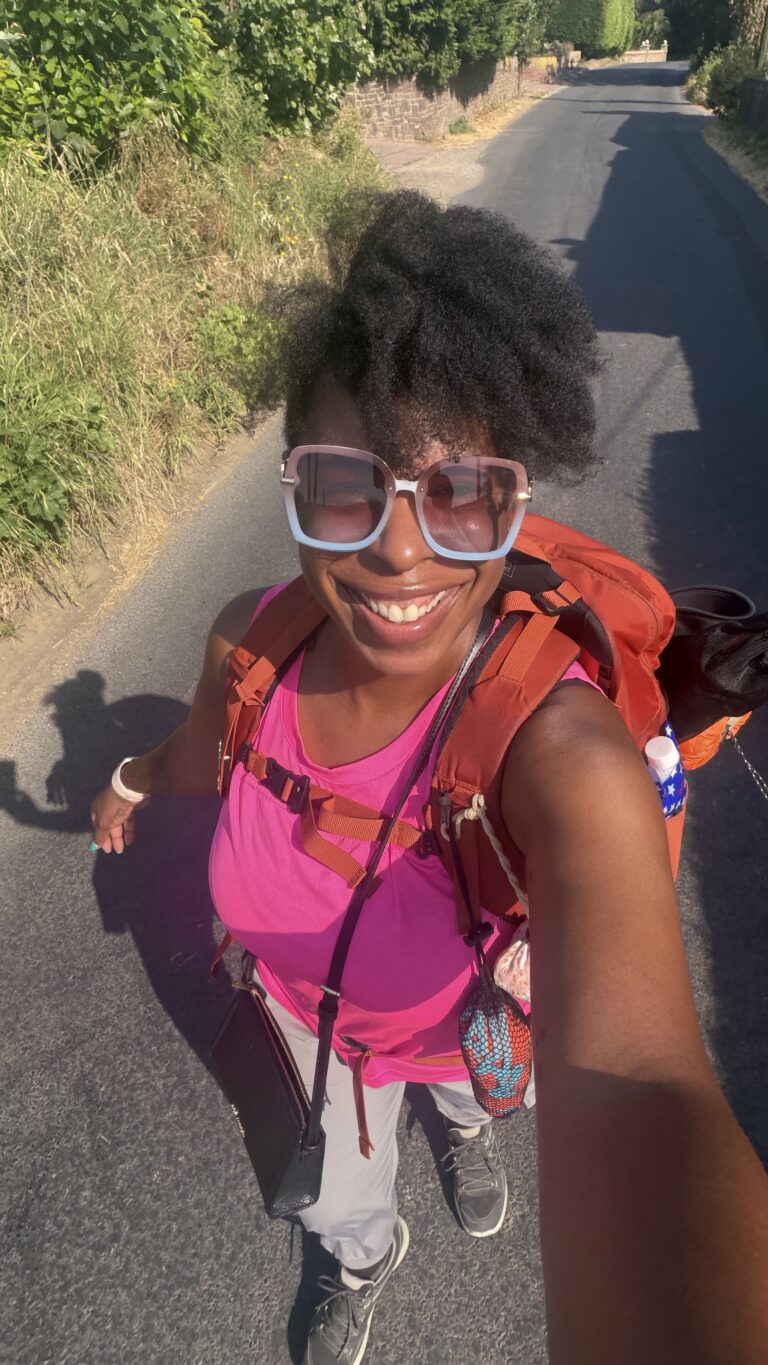
When people imagine a historic pilgrimage, they probably picture green countryside, quiet paths, and charming villages. There would be plenty of that later, but first there was pavement.
A lot of pavement.
Walking long distances on hard surfaces can be brutal. I had blisters, soreness, and the familiar aches that come when you ask your body to keep moving for hours.
Still, those difficult early miles taught me something important. Walking the Pilgrims’ Way was not going to be about recreating a romantic image of pilgrimage.
This was a real journey through modern England. We walked through ordinary neighborhoods where people were working, shopping, raising families, and going about their everyday lives.
Those communities would have disappeared from my experience if I had simply taken the train. That is one reason I continue to love traveling on foot.
The places between the attractions become part of the story.
Discovering England at Walking Speed
Travel often encourages us to move from highlight to highlight. We arrive in a city with a list, see the cathedral, visit the museum, photograph the famous building, find somewhere to eat, and move on.
Walking changes that rhythm because you cannot skip the ordinary parts. You have to physically move through them.
You notice where one community ends and another begins. You see houses, schools, parks, churches, corner shops, industrial areas, footpaths, and roads that rarely make it into travel brochures.
Not everything is beautiful, but everything gives you information about the place you are visiting. As someone who has spent much of my professional life thinking about communities and development, I find those transitions fascinating.
I want to understand how people actually live, not simply how a destination presents itself to tourists.
If you have a few days in London before beginning a long-distance walk, I recommend giving yourself time to experience the city rather than arriving and immediately setting off. You can browse London tours and cultural experiences through GetYourGuide and choose something that fits the way you like to travel.
Walking Toward Rochester
As the journey continued, the character of the walk changed. There were still difficult stretches, but we began seeing more of the England I had imagined when planning the route.
Historic towns replaced some of the urban sprawl, and the journey began to feel less like escaping London and more like moving toward Canterbury. Rochester became one of the most memorable stops for me.
By then, we had already spent several days walking. Arriving somewhere historic under your own power creates a different relationship with the place.
Rochester Cathedral and the Pilgrimage Tradition
Rochester Cathedral traces its history to AD 604 and has its own connection to pilgrimage. Medieval travelers stopped in Rochester to visit the shrine of William of Perth while traveling toward Canterbury.
The cathedral still contains physical reminders of those travelers. Its worn Pilgrim Steps connect the building to generations of people who passed through this space long before us.
Seeing them while completing my own long-distance walk made the history much easier to imagine. I am not religious, but pilgrimage fascinates me because the human desire to travel in search of meaning crosses cultures and centuries.
Sometimes that search is spiritual. Sometimes it is personal. Sometimes we do not fully understand what we are looking for until we are already moving.
Day Four: Rochester to Chatham
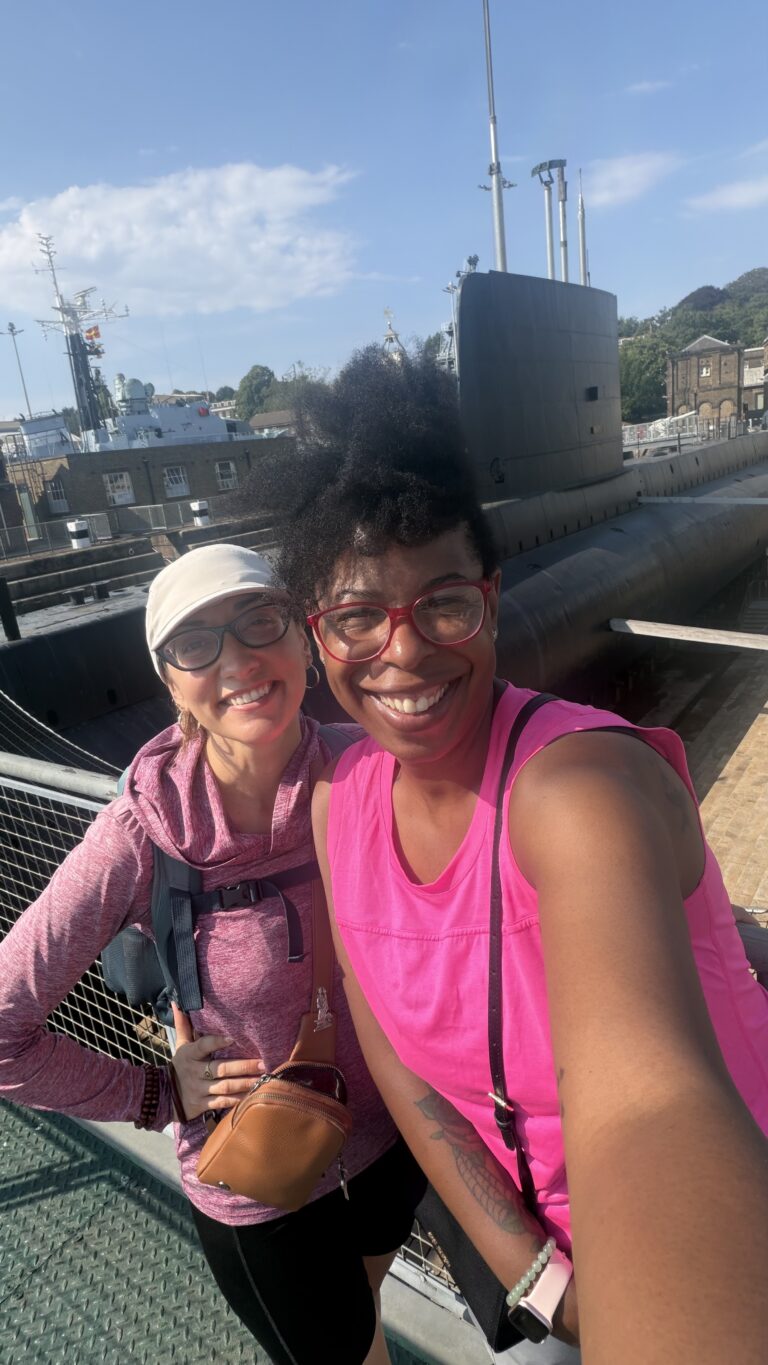
Our fourth day gave us a welcome change of pace. Instead of spending the entire day chasing miles, we toured Rochester Cathedral in the morning and then walked all the way to The Historic Dockyard Chatham.
The shorter walking distance meant we had time to explore. I was glad we did because Chatham brought several of my interests together in one place.
There was maritime history, historic architecture, cultural heritage, and even television. The Historic Dockyard Chatham preserves more than 400 years of British maritime history.
Then I discovered another connection: Call the Midwife. Parts of the television series are filmed at Chatham, where historic streets and buildings can become the show’s version of London’s East End.
As someone who enjoys Call the Midwife, that made exploring the Dockyard even more fun. It also reminded me that historic places can continue creating culture long after their original purpose changes.
The Journey Became More Scenic
After the early pavement-heavy days, I was ready for more greenery. Thankfully, the journey eventually delivered.
As we moved farther into Kent, the walk became much more scenic. There was more countryside and more of the peaceful walking experience I had hoped to find.
The change affected me physically and mentally. Hard pavement makes you think about your feet, while beautiful scenery allows your attention to move outward again.
I could look around, enjoy where I was, and settle into the simple rhythm of walking. That is when long-distance walking becomes one of my favorite ways to travel.
Walking Toward Faversham
The walk toward Faversham was one of the points where the journey really began to feel different from those first urban days. We also adjusted our route and moved onto another path for part of the journey.
Long-distance walks rarely unfold exactly as planned, and I have learned to accept that. Changing a route does not invalidate the experience, and neither does stopping to rest.
After walking the Camino Francés, I had already learned that there is no prize for suffering unnecessarily. At 50, I still want adventure, challenge, unfamiliar places, and experiences that test me.
However, I also know my body better. There is a difference between challenging yourself and punishing yourself, and I have become much better at recognizing it.
Experiencing Small-Town England
Faversham gave me something I increasingly appreciate when traveling: a smaller place with enough space to simply observe. Big cities are exciting, but they demand attention.
Smaller towns invite wandering. You notice architecture, businesses, local rhythms, and the way people interact with their community.
After several days of walking, even ordinary comforts felt wonderful. A meal tastes different when you have spent hours on your feet, and sitting down can suddenly feel luxurious.
A shower becomes one of the greatest inventions in human history. Long-distance walking has a funny way of resetting your definition of luxury.
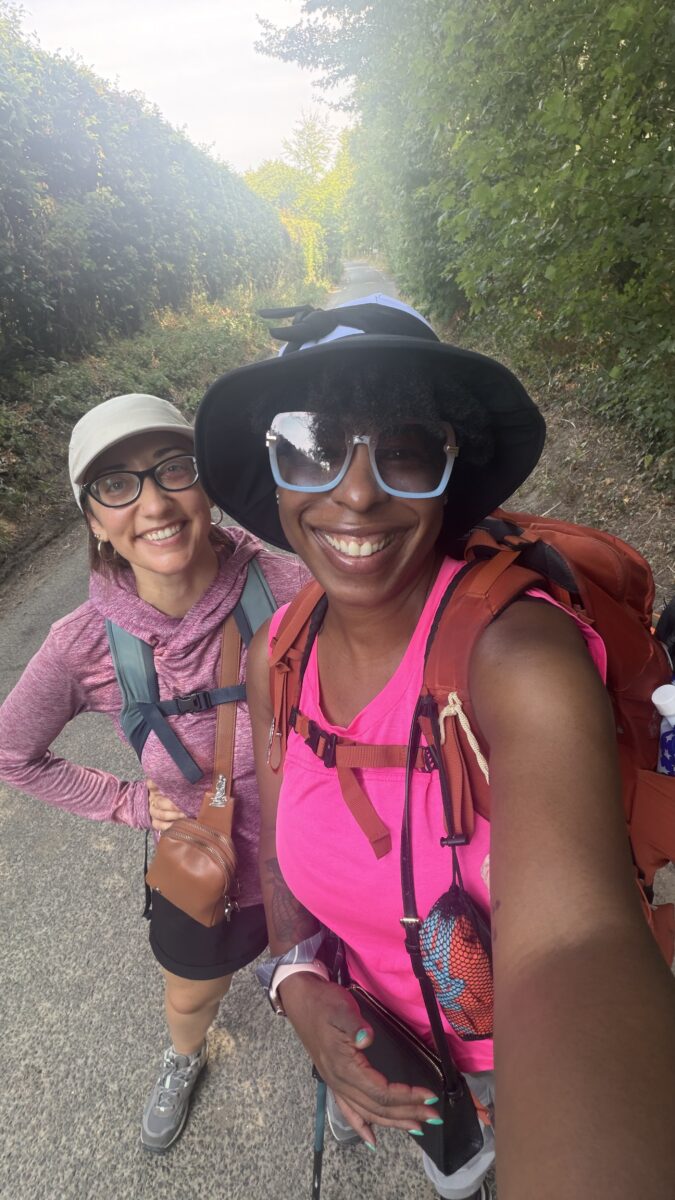
The Final Journey Toward Canterbury
Eventually, Canterbury stopped feeling like a distant destination. We were actually getting close, and that changes something psychologically.
Every mile toward the end carried all the miles that came before it. I was not simply approaching Canterbury.
I was carrying memories of London, endless pavement, Rochester, Chatham, Faversham, greener paths, sore feet, conversations, and all the small decisions that kept us moving forward.
This is why arriving somewhere on foot feels so different. When you arrive by train, distance becomes abstract.
Walking makes distance physical. Your body knows exactly how far you have traveled.
Walking the Pilgrims’ Way After the Camino Francés
I naturally compared walking the Pilgrims’ Way with my Camino Francés experience, but the two journeys felt very different. The Camino has an enormous modern pilgrimage culture surrounding it.
There are accommodations, cafés, signs, and services designed around people walking the route. England did not always feel like it was waiting for us to be pilgrims.
Sometimes that made the journey more difficult. Yet it also gave the experience its own character because we were moving through everyday England rather than a landscape organized around walkers.
Accommodation can also become one of the largest expenses on any extended walking trip. If you want to keep those costs manageable, you can compare hostels and budget accommodation through Hostelworld.
What Walking the Pilgrims’ Way Gave Me
I did not walk to Canterbury because I was searching for a religious experience. I walked because I am curious.
I wanted to see England differently. I wanted another physical challenge, and I wanted to experience the history of a route by actually moving through it.
Most of all, I wanted the freedom that comes with putting one foot in front of the other and seeing where the road takes me. Walking the Pilgrims’ Way reminded me why I continue choosing experiences like this.
Travel does not always need to be fast or glamorous. Every moment certainly does not need to be Instagrammable.
Sometimes I simply want to move through a place slowly enough to understand it. England gave me plenty to think about during those miles between London and Canterbury.
Once again, I discovered that reaching the destination was only part of the story.
Planning Your Own Pilgrims’ Way Journey
If you are considering walking the Pilgrims’ Way, prepare for variety. There will be historic sites and beautiful countryside, but if you begin in London, you should also expect urban walking and plenty of hard surfaces.
Give yourself time to stop. Rochester deserves more than a quick walk through, and so does Chatham.
Good walking gear also matters once you start spending full days on your feet. I keep many of the travel and walking products I use or recommend in my DG Speaks Amazon shop.
Most importantly, remain flexible. Routes change, bodies get tired, and weather happens.
The goal is not to create a perfect pilgrimage. The goal is to experience the journey.