Soup on a Cold Day Is a Kind of Mercy
One cold afternoon, I came home carrying the kind of chill that seemed to have settled beneath my clothes.
The wind had followed me for several blocks. My hands felt stiff, my face was cold, and the day itself had begun to feel sharper than it needed to be.
I did not want anything complicated.
I wanted warmth.
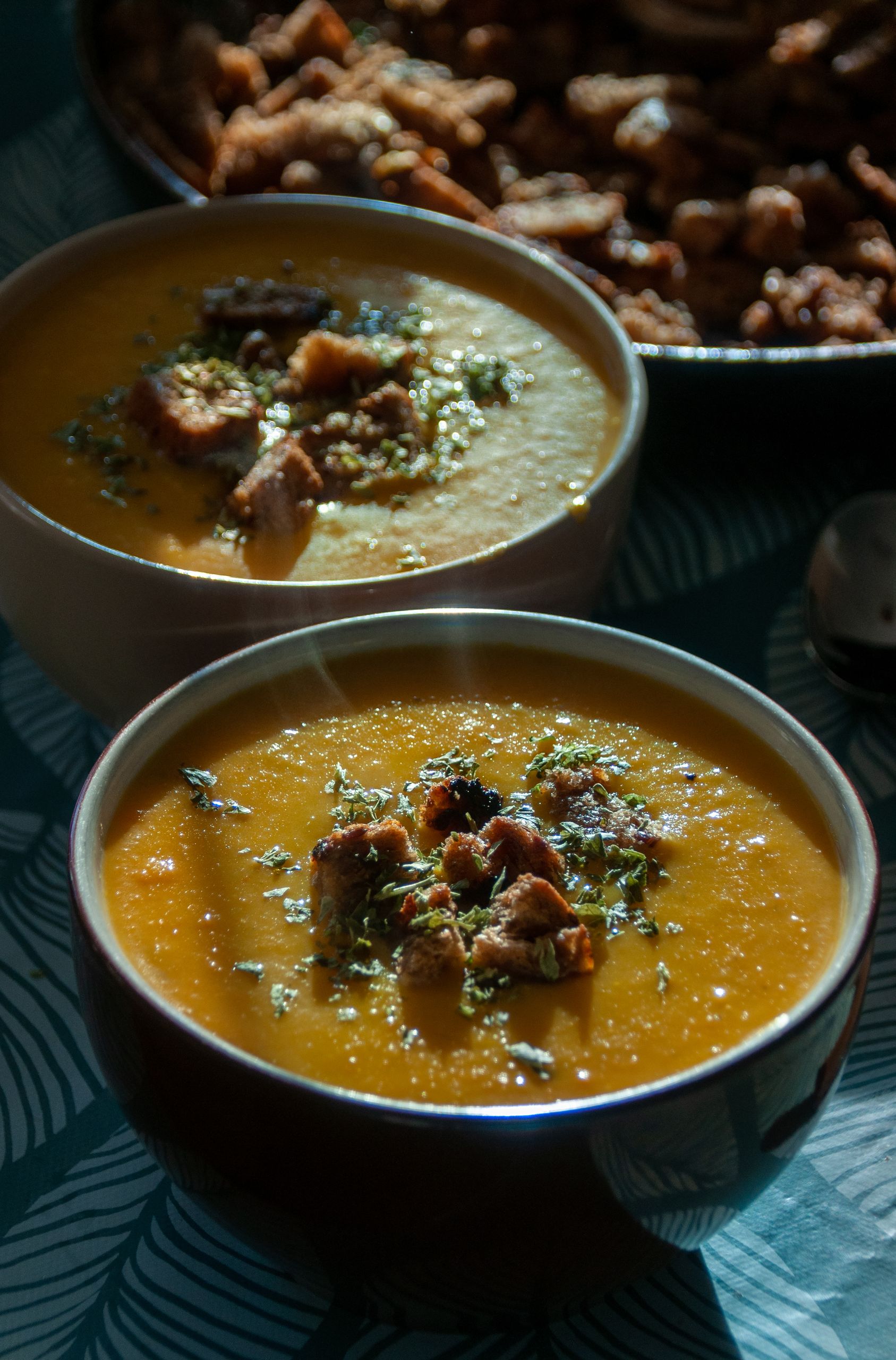
There was soup in the refrigerator from the day before, so I poured it into a small pot and turned on the stove. As it heated, steam began collecting above the surface. The smell of onions, herbs, and broth slowly filled the kitchen.
Nothing about the meal was impressive.
I did not arrange it beautifully or add anything for the sake of presentation. I carried the bowl to the table, wrapped both hands around it, and waited until the heat reached my fingers.
The first spoonful felt like relief.
That is why a bowl of soup on a cold day can feel like mercy.
Not dramatic mercy. Not the kind that needs a speech.
Just warmth, steam, and the quiet reassurance of holding something nourishing when the day feels too sharp.
The Pot Begins With What Is Available
Soup rarely demands perfection.
It begins with what is already present.
There may be bones, beans, greens, onions, herbs, rice, noodles, vegetables that need to be used, or a little of several things that do not look like a meal on their own.
The pot gives those ingredients another possibility.
An onion begins softening in oil or butter. Water or broth is added, and the kitchen slowly changes. What seemed disconnected begins becoming one thing.
That flexibility is part of soup’s brilliance.
It does not require abundance before it can create nourishment.
The Smell Arrives Before the Comfort
Soup begins changing the room before anyone eats it.
The aroma travels from the kitchen into the rest of the house. Steam fogs a nearby window, and the sound of simmering becomes part of the atmosphere.
That sensory preparation matters.
The body begins anticipating warmth before the bowl reaches the table.
Even when I am cooking only for myself, the smell creates a sense that someone is being cared for.
That person happens to be me.
Some Meals Hold the Body More Gently
Not every meal offers the same kind of comfort.
There are foods I enjoy because they are exciting, beautiful, or connected to celebration. Soup comforts me through softness.
It does not ask much from the body.
I can eat it slowly. The warmth reaches me gradually, and the spoon creates a rhythm that feels calmer than cutting, assembling, or managing several foods at once.
On a difficult day, that simplicity can feel generous.
The bowl asks only that I sit long enough to receive it.
Warmth Carries Memory With It
Soup often tastes like more than the ingredients in front of me.
A particular broth can remind me of childhood, illness, travel, or a kitchen where someone cooked without needing a formal recipe.
One smell may return an earlier winter. Another reminds me of being handed a bowl when I did not feel well enough to ask for anything.
This is why soup belongs naturally beside my reflections on the food memories that continue following us home.
Memory can settle inside something as simple as steam.
The bowl arrives in the present, but part of the comfort may come from every other bowl that taught the body what warmth means.
The Recipe May Live in Someone’s Hands
Many soups are difficult to explain through exact measurements.
The cook tastes, adjusts, and continues.
A little more salt. More water if the broth becomes too concentrated. Another handful of greens because they need to be used.
The knowledge exists through repetition.
Someone knows how the onions should smell before the next ingredient goes in. They recognize when the beans are ready or when the soup needs more time, even if a written recipe says otherwise.
That kind of practical knowledge is often carried through women’s work.
It connects with my reflections on women leading change throughout food systems.
Women have grown, purchased, preserved, stretched, cooked, and served food across generations, often without their expertise receiving the respect given to more formal forms of knowledge.
Soup Shows How Care Becomes Technique
Care is not only an emotion.
In the kitchen, it becomes skill.
It is knowing how much food a pot must hold, which ingredients will stretch, and how to season something so it feels satisfying even when resources are limited.
It is remembering who needs softer vegetables, who does not tolerate spice, and whether someone will need another serving later.
The finished bowl may look simple.
The thinking behind it may be complex.
Stretching Food Is a Form of Intelligence
Soup can turn a small amount of meat into flavor for an entire pot.
Beans, grains, potatoes, noodles, and vegetables add substance. Leftovers become useful again rather than remaining forgotten in separate containers.
This is not accidental.
People have always needed strategies for feeding families, communities, and unexpected guests with what they had.
A pot of soup reflects that intelligence.
It asks how ingredients can work together rather than whether each one is impressive alone.
Resourcefulness Should Not Be Romanticized
There is beauty in creating something satisfying from limited ingredients.
Still, I do not want to romanticize the conditions that made such creativity necessary.
Scarcity can produce innovation, but people should not have to remain poor, overworked, or food insecure in order for others to admire their resilience.
A family stretching one meal across several days may be demonstrating skill.
They may also be responding to a system that has failed to provide enough.
Respecting resourcefulness means honoring the knowledge without pretending hardship is charming.
The Pot Can Reduce Waste Without Feeling Like Punishment
Some leftovers become difficult to imagine as another meal.
A few vegetables remain. There is a little rice, a piece of meat, or herbs beginning to lose their freshness.
Soup creates a place for them.
The ingredients do not need to look perfect. They need to remain safe, useful, and capable of contributing flavor or texture.
Reducing food waste can feel restrictive when it is framed only as discipline.
Soup makes it creative.
The question changes from “How do I force myself to use this?” to “What can this become?”
A Good Broth Holds Everything Together
Broth can begin with carefully prepared stock or something much simpler.
Water becomes flavorful through time, salt, aromatics, vegetables, bones, herbs, and the ingredients cooking inside it.
The liquid gathers what each part releases.
That is what allows soup to feel cohesive.
Nothing remains entirely separate.
The beans affect the broth. The vegetables soften into it, and the herbs spread beyond the place where they first entered the pot.
The meal becomes an exchange.
There Is Comfort in a Pot That Improves Overnight
Some soups taste better the next day.
The flavors settle and deepen. Ingredients that seemed separate begin to understand one another more fully.
That makes soup practical for busy weeks.
One period of cooking can produce several meals, and the later bowls may feel even more satisfying than the first.
I appreciate food that plans ahead.
A pot in the refrigerator reduces the number of decisions waiting for me tomorrow.
Meal Planning Can Still Feel Human
Meal planning is often presented through containers, schedules, and rigid systems.
Soup offers a softer version.
I make enough to return to, but the meal does not need to look identical each time.
I can add bread one day, rice the next, or fresh herbs when I have them. The pot remains familiar while allowing small changes.
When I need proteins for slow cooking and other meals at home, I may use ButcherBox.
The ingredients support the plan.
The care comes from how I use them.
Soup Can Be Ordinary and Ceremonial at Once
Soup belongs to daily life.
It can also mark celebrations, religious traditions, seasonal rituals, and family gatherings.
The same form—a bowl containing broth and ingredients—can carry completely different meanings depending on who prepares it and when it appears.
One soup may be associated with recovery from illness. Another belongs to holidays, fasting, harvest, mourning, or welcome.
The bowl may be ordinary.
The context makes it ceremonial.
Every Place Has Its Own Version of Comfort
When I travel, I look for local soups because they reveal what a place considers warming, sustaining, and familiar.
The broth may be light or rich. It may contain seafood, meat, beans, noodles, grains, herbs, or ingredients I have never encountered before.
A food experience found through GetYourGuide can provide cultural and historical context for those dishes.
A guide may explain when people eat the soup, what region it comes from, or why a particular ingredient matters.
Still, some of the lesson comes from watching.
Who orders it? Does it arrive as a first course, a full meal, or something people seek when they need restoration?
Tasting Another Culture’s Comfort Requires Humility
I may not immediately understand why a soup feels comforting to the people who grew up with it.
The flavor may be unfamiliar. The texture may not match what I associate with comfort, and the ingredients may challenge my expectations.
That does not make the dish unsuccessful.
Comfort is cultural and personal.
I can appreciate the history and meaning of a food without pretending it must create the same emotional response in me.
Sometimes, understanding begins with accepting that the bowl is speaking most directly to someone else.
The Cheapest Dish May Carry the Deepest History
Soup can be one of the less expensive items on a menu.
That price may reflect its relationship with ordinary food, leftovers, staple ingredients, or traditions developed among people who needed meals to stretch.
Low cost should not be confused with low value.
Some of the most historically important foods emerged from cooks making the most of what others overlooked.
Those dishes deserve respect beyond being described as humble.
Humility may refer to price or ingredients.
It does not describe the depth of the knowledge.
A Bowl Can Make Solitude Feel Softer
Soup is also one of the meals I enjoy eating alone.
The warmth keeps me company without demanding conversation.
I can sit near a window, read, or simply listen to the spoon touch the bowl.
Solitude becomes less empty when something warm is in front of me.
The meal creates a small structure around the moment.
I am alone, but I am not uncared for.
Serving Soup Is an Intimate Gesture
There is something tender about handing someone a bowl.
The person must receive it carefully because it is warm. Steam rises between both bodies for a moment, and the server often includes a warning.
Be careful. It is hot.
That sentence carries practical concern.
The food is meant to comfort, but it must be received with attention.
Care often works that way.
It can be nourishing and still require us to slow down.
Illness Changes the Meaning of the Bowl
Soup becomes especially significant when someone is sick.
Appetite may be limited, and the body may need food that feels easier to tolerate. Warm liquid offers hydration, salt, calories, and comfort without requiring a complicated meal.
More than that, soup communicates presence.
Someone noticed.
They prepared, delivered, reheated, or offered something intended to make the difficult day slightly easier.
The food cannot cure every illness.
It can remind the person that they have not been forgotten inside it.
The Bowl Does Not Need to Solve the Day
Comfort food is sometimes expected to transform emotion.
A bowl of soup cannot repair grief, end financial stress, resolve conflict, or make winter disappear.
It does not need to.
Care can matter without solving everything.
The soup warms the body. It provides nourishment and creates a pause.
Sometimes, that limited help is exactly what the moment can hold.
The Last Spoonful Feels Different From the First
By the time I reached the bottom of my bowl that afternoon, I was no longer shivering.
The room felt warmer, although the temperature may not have changed much. My hands had relaxed, and the day seemed less hostile than it had when I came through the door.
The soup had not changed anything outside.
The wind still moved against the windows. The work waiting for me remained, and whatever had made the day difficult had not disappeared.
Still, my body had received what it needed most immediately.
Warmth.
That made the rest feel more manageable.
Why This Kind of Comfort Matters
A bowl of soup on a cold day reminds me that food does not need to be expensive, elaborate, or visually impressive to matter.
Soup begins with what is available and creates relationship among the ingredients. It stretches, transforms, preserves, and feeds.
Inside the pot, I can find practical wisdom, cultural memory, women’s labor, and the creativity people have used to make enough.
I can also find care.
Not the abstract idea of care, but care made physical through chopping, simmering, tasting, adjusting, and serving.
Sometimes, it arrives from someone else.
At other times, I make the pot for myself.
Both matter.
Soup reminds me that nourishment can be quiet. It does not always announce how much it is doing.
Sometimes, care arrives in a bowl, with a spoon, on a cold day when the body needs proof that it has not been forgotten.
Explore more stories about soup, comfort food, food memory, and the people whose labor nourishes us through DG Speaks Food. You can also discover how local dishes reveal what comfort tastes like in different places through DG Speaks Travel, or read more about care, labor, memory, and daily life through DG Speaks Culture.