Why Walking Alone Feels Like Coming Back to Myself
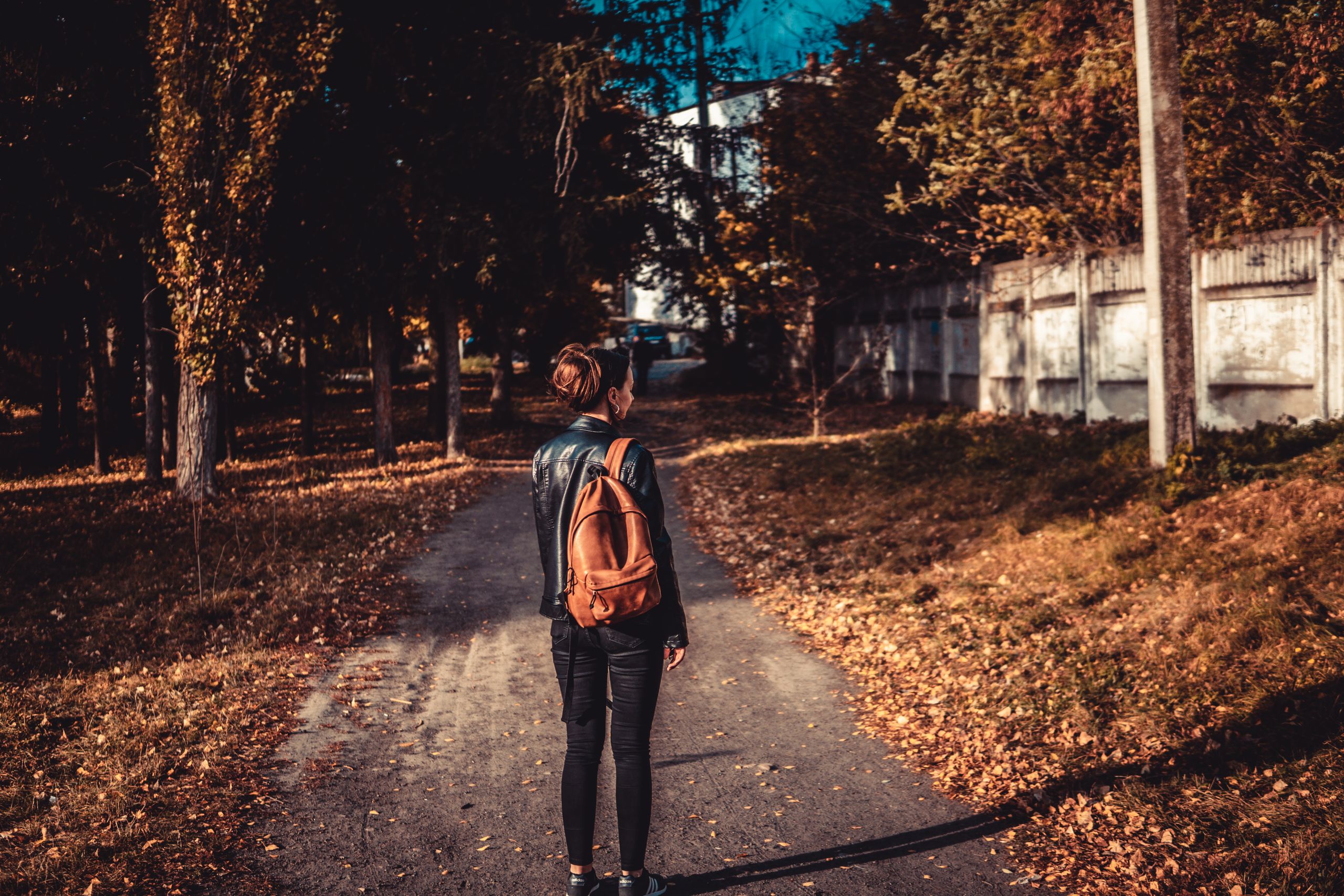
One morning, I left the house because my thoughts had become too crowded to stay inside with them.
I did not have a destination.
There was no appointment waiting, no landmark I needed to reach, and no carefully mapped route. I only knew that sitting still had stopped helping.
So, I put on my shoes, stepped outside, and began walking.
During the first few blocks, my mind came with me at full volume.
I remembered an email I had not answered. Then, I started rehearsing a conversation that had not happened yet. A problem I could not solve appeared beside a list of things I should have completed the day before.
My feet moved forward while my thoughts kept circling the same ground.
Then, somewhere after the third or fourth turn, I noticed the light.
It fell across the side of a corner store in a way I had never seen from the car. A flower stand farther down the street had buckets arranged along the sidewalk, and a woman was trimming stems while talking to someone inside.
Nothing dramatic had changed.
Still, I had returned to the street.
My breathing settled. The distance between one thought and the next widened, and I remembered why walking alone gives me a private kind of clarity.
I do not have to match anyone else’s pace. I do not need to explain why I want to stop, turn around, look through a window, or remain still long enough to notice how a place feels.
For a little while, movement belongs entirely to me.
The First Few Blocks Carry Everything With Me
Walking does not immediately make the mind peaceful.
At first, the body leaves the house while the mind remains at the desk, inside the argument, or beside the unfinished task.
I think about what I should be doing instead.
Perhaps I should return home and work. Maybe I have forgotten something important, or someone will need me while I am unavailable.
The thoughts arrive with urgency because they are accustomed to receiving immediate attention.
Walking changes that relationship gradually.
I cannot answer every message while crossing the street. I cannot reorganize the entire day while watching where I place my feet.
The body gives the mind another rhythm to follow.
Step. Breath. Corner. Light.
After a while, the thoughts stop shouting over one another.
My Body Finds the Rhythm Before My Mind Finds the Answer
There is a point when walking begins to feel less like an activity and more like momentum.
My stride becomes steady. Breathing grows deeper without instruction, and the tension I carried through my shoulders begins to loosen.
I do not always notice the change as it happens.
Then, I realize I have gone several minutes without replaying the problem that followed me outside.
The issue has not disappeared.
Instead, it has moved into proportion.
That distinction matters.
I often do not need an immediate solution. I need enough distance to see what actually requires action and what belongs to fear, repetition, or exhaustion.
Walking helps create that distance without demanding that I force clarity.
A Woman Moving at Her Own Pace
There is freedom in deciding how quickly I move.
When I walk with another person, we negotiate pace even when neither of us says so. One slows down. The other speeds up, or we stop according to a shared sense of what the walk is supposed to become.
Alone, I can move according to the body I have that day.
Some mornings, my stride feels strong and purposeful. On others, I move slowly, pausing whenever something catches my attention.
Neither walk is more legitimate.
That freedom connects deeply with what I have learned about building solo travel confidence by finding my own rhythm.
Confidence does not always look bold.
Sometimes, it looks like trusting my pace enough not to apologize for it.
Walking Alone Is Not the Same as Being Lonely
People sometimes interpret solitude as absence.
If I eat alone, travel alone, or walk alone, the assumption may be that someone is missing.
That is not how the experience feels to me.
Walking alone can create presence rather than emptiness.
I am not managing conversation or wondering whether the other person is tired, bored, or ready to turn back. My attention can move outward and inward without explanation.
I may notice a building for several minutes or follow a street simply because it looks interesting.
My company becomes sufficient.
That does not mean I never want companionship.
It means solitude can be nourishing rather than merely tolerated.
The Freedom Is Real, and So Is the Calculation
A woman walking alone is never moving through a completely neutral world.
I pay attention.
I notice who is behind me, whether the street is becoming empty, and how far I have wandered from a familiar route. I consider the light, the neighborhood, my phone battery, and whether I can return easily if the atmosphere changes.
That awareness does not cancel the freedom.
It shapes it.
I want to be careful without allowing caution to shrink my life into only the places where nothing uncertain could ever happen.
Safety requires attention, but constant fear is not the same as safety.
I am learning how to trust my observations without treating every unfamiliar person or street as a threat.
My Body Often Knows When to Turn Around
There are moments when a street stops feeling inviting.
Nothing obvious may have happened. Still, my pace changes, or I become more aware of my surroundings.
I do not need to debate the feeling endlessly.
Turning around is not failure.
Changing the route does not mean fear defeated me.
It means I remained responsive to the walk I was actually having rather than the one I intended to have.
Solo walking has strengthened that kind of self-trust.
I make decisions, adjust, and continue.
The Street Gives Back Small Gifts
Once my thoughts become quieter, the street begins offering details.
A child laughs from a passing stroller. A busker tunes an instrument before playing the first song, while the smell of bread escapes through a bakery door.
I notice shoes, gestures, dogs pulling toward trees, and conversations that become briefly audible before people move past me.
A mural appears on a wall I have passed many times from a vehicle.
These details are small.
That is why they help.
They ask nothing from me except attention.
The present moment becomes specific enough to interrupt whatever story my mind had been repeating.
Walking Restores the Scale of the World
When I remain inside with one problem, the problem can fill the entire room.
Walking places it beside other lives.
People are opening businesses, carrying groceries, waiting for transportation, repairing buildings, and beginning ordinary mornings I know nothing about.
The world continues beyond my concern.
That realization does not make the concern insignificant.
It reminds me that the concern is one part of a much larger day.
Perspective often enters through scale.
The street helps me remember that life is wider than the thought currently demanding all of my attention.
A Familiar Neighborhood Can Become New at Walking Speed
Cars flatten places.
From a vehicle, I notice traffic, signs, and whatever appears quickly enough to register before the next block.
Walking reveals texture.
I see the garden tucked beside a building, the hand-painted notice in a window, or the worn step suggesting how many people have entered the same doorway.
Distances change too.
What seemed far away becomes a manageable walk. Another place that appeared close by car reveals a series of difficult crossings or sidewalks that disappear unexpectedly.
Walking teaches me how a neighborhood actually functions for a body moving through it.
The Sidewalk Tells Its Own Story About Access
A pleasant walk depends on more than good weather.
Sidewalks, crossings, shade, lighting, public seating, and traffic speed all determine whether the street welcomes people.
I notice uneven pavement, missing curb cuts, and intersections where drivers treat pedestrians as interruptions.
A place may look beautiful while remaining difficult for older adults, disabled people, parents with strollers, or anyone who moves more slowly.
Walking turns infrastructure into lived experience.
It shows me who the street was designed to accommodate.
Unstructured Time Lets the Place Interrupt Me
When every minute of travel has been planned, a destination becomes a list.
I move from reservation to landmark to recommended restaurant, measuring success through how much I completed.
Unstructured walking creates another relationship with place.
I can change direction because music is coming from a square. I can stop at a small shop that did not appear in the guide or sit on a bench because the street feels worth watching.
The place becomes more than the attractions I selected before arriving.
It gains the ability to surprise me.
A Guided Walk Gives Me Context I Cannot Invent
Wandering has value, but observation alone does not give me history.
I may see a building without knowing what happened there. A neighborhood may appear charming because I do not understand the displacement, policy, labor, or migration that shaped it.
That is why I often appreciate a guided experience.
I may book a walking or cultural tour through GetYourGuide when I want someone with local knowledge to help me read what I am seeing.
A thoughtful guide can point out what would remain invisible to me.
Still, the tour and the unstructured walk serve different purposes.
One adds context.
The other gives the place room to meet me without an itinerary.
I Need Both Information and Silence
After a guided experience, I often want to walk alone.
The guide’s words need time to settle.
I retrace part of the route, notice what changed after I learned the history, and allow myself to think without immediately receiving more information.
Knowledge can deepen attention.
It can also become overwhelming when every street arrives with explanation.
Solo walking creates space between what I learned and what I make of it.
Walking Helps Me Understand Before I Interpret
Travel writing can tempt me to form conclusions quickly.
I arrive, observe, and begin deciding what the place means.
Walking slows that process.
A city changes from one block to another. The same neighborhood feels different in the morning, after work, or late in the evening.
One encounter cannot represent everyone.
Walking gives contradiction time to appear.
A beautiful street may lead toward neglect. A busy commercial area turns quiet after one corner, and a place that seemed unfriendly begins to make sense once I understand its pace.
The body gathers information before the writer shapes the story.
I Am Not Invisible When I Walk Alone
Solo movement can feel freeing, but I remain visible to the people around me.
My presence affects the space.
I may look like a visitor, a customer, a person with money, or someone who does not yet understand the rules of the neighborhood.
Curiosity does not give me unlimited permission.
I still need to avoid blocking doorways, photographing people without consent, or treating daily life as scenery arranged for my experience.
Walking alone allows observation.
Respect determines how I use what I observe.
The Walk Does Not Need to Become Content
As a storyteller, I can turn almost any experience into material.
A street becomes a photograph. A thought becomes a caption, and a passing interaction begins forming itself into an essay.
That creative instinct is part of how I make sense of the world.
Still, not every walk needs to be documented.
Sometimes, I need the experience to belong only to me.
I can notice the light without capturing it. I can let a beautiful moment disappear without treating disappearance as waste.
Privacy allows the walk to restore rather than perform.
The Real Tool Is Attention
Practical gear makes walking easier.
Comfortable shoes, clothing suited to the weather, a secure bag, and a charged phone can remove unnecessary difficulty. I keep useful travel and walking items in my Amazon travel shop.
Still, equipment cannot create the deeper experience.
The real tool is attention.
I can wear excellent shoes and remain absorbed in my phone. I can cross an entire city while noticing almost nothing beyond directions.
Walking becomes meaningful when I allow myself to be where my feet are.
Rest Can Happen in Motion
Rest does not always require stillness.
There are days when sitting quietly causes my thoughts to tighten. Movement offers another kind of relief.
I am not resting from the body.
I am resting through it.
The walk gives my mind fewer decisions to make. The next step is already available, and the body knows how to continue without a complicated plan.
This connects with my reflections on women, rest, and the strength found in softness.
Rest can be a slower pace, a break from demands, or time in which nobody requires me to explain myself.
Walking alone can offer all three.
Movement Helps Emotion Find a Way Through
Some emotions become stuck when I remain still.
Anger circles. Sadness grows heavy, and anxiety searches constantly for evidence that something is wrong.
Walking gives the feeling motion.
I may begin quickly, carrying tension in every step. Then, the pace changes as the emotion changes.
Occasionally, I cry while walking.
The tears arrive without requiring the experience to become a formal breakdown. I continue moving until the feeling has less pressure inside it.
The street does not ask me to explain.
The Answer Often Arrives Sideways
I rarely solve the problem by thinking directly at it throughout the entire walk.
More often, the mind wanders.
I notice a building, remember something unrelated, and then understand the original concern from another angle.
The answer arrives sideways.
Perhaps I recognize that I am asking the wrong question. Maybe I admit that the decision is already clear and what I fear is the consequence.
Sometimes, no answer comes.
Even then, the problem usually feels less tangled.
Clearer Thoughts Are Enough
I used to expect clarity to produce resolution.
If I understood the issue, I should know what to do.
Life does not always work that way.
I may return from a walk with the same choices in front of me. The difficult conversation still needs to happen, or the uncertainty remains beyond my control.
Yet, the thoughts feel more organized.
I know what belongs to me, what belongs to someone else, and what cannot be decided today.
That is useful clarity.
It does not solve the problem.
It helps me carry it differently.
The Walk Creates a Threshold Before I Return Home
When I turn toward home, the return feels different from the departure.
I recognize the final blocks. My pace changes, and the mind begins preparing to reenter the day.
The walk becomes a threshold.
I left carrying everything at once.
I return with some things set down, others better named, and a stronger sense of what deserves attention first.
The house has not changed while I was gone.
Still, I enter it as a slightly different version of myself.
A Woman Walking Alone Is Writing Her Own Route
There is something quietly powerful about a woman moving through the world without waiting to be led.
She may be heading somewhere important.
She may also be wandering.
Her movement does not need a dramatic purpose in order to matter.
Women are often taught to justify time spent alone. The walk should improve health, accomplish an errand, or lead toward a productive destination.
Sometimes, I walk because I want my own company.
That reason is sufficient.
Returning With Clearer Thoughts
By the time I returned home that morning, the problem that had driven me outside was still waiting.
Nothing had been magically repaired.
However, I no longer felt trapped inside it.
I had walked far enough to remember the world beyond my thoughts. I had seen flowers, storefronts, strangers, and the ordinary movement of a neighborhood continuing with or without my worry.
My body felt awake rather than tense.
The next step had become clearer, even though everything beyond it remained uncertain.
That is what walking alone gives me.
Not perfect answers.
Space.
Space to move at my own pace, observe without explaining, and hear my thoughts after the loudest parts have worn themselves out.
Walking reminds me that my own company is enough. It allows me to be careful and free, present and reflective, connected to the street without needing to belong to anyone else’s plan.
I return from these walks with clearer thoughts.
Not solved thoughts.
Clearer ones.
Sometimes, that is enough.
A woman walking alone is not always going somewhere dramatic.
Sometimes, she is simply coming back to herself.
Explore more stories about solo travel, walking, confidence, and moving through the world at your own pace in DG Speaks Travel. You can also read reflections on women, rest, identity, and personal freedom through DG Speaks Culture, or discover how food and neighborhood life shape the places we walk through in DG Speaks Food.