Why a Good Walking Tour Should Complicate the View
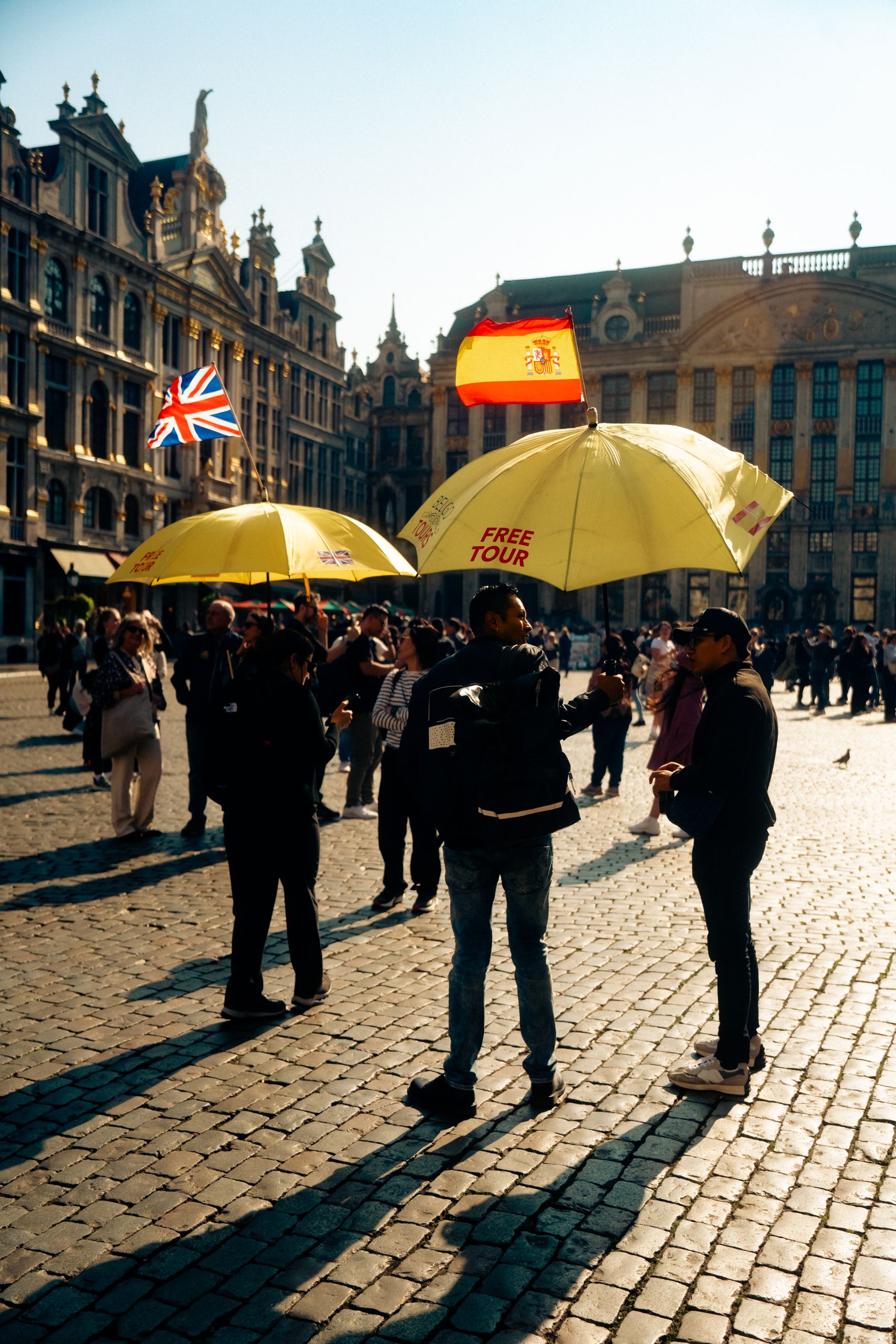
On one walking tour, I stood in a square I had already photographed earlier that morning. In the first image, the buildings looked elegant, the light fell beautifully across the pavement, and the café tables made the scene feel almost effortless.
Then the guide began explaining what had happened there.
The square had held political gatherings, commercial activity, protest, exclusion, and public spectacle across different periods of the city’s history. Buildings I had admired for their façades were connected to people, institutions, and decisions I would never have recognized from appearance alone.
The view did not become less beautiful. It became less innocent.
A good walking tour should complicate what I see. I do not mean that every travel experience needs to feel heavy. I mean the tour should help me notice what beauty, architecture, and atmosphere might otherwise allow me to overlook.
A Walking Tour Should Give Pretty Streets Their History
Travel invites us to respond quickly to what looks beautiful. A row of colorful houses, a grand square, a narrow stone street, or a lively market can seem to explain itself through visual appeal.
History often tells another story.
The charming building may have been financed through extraction or exclusion. A celebrated monument can honor one group while representing conquest or violence to another. The market may appear abundant while revealing deep inequalities in labor, land, and access to food.
Context does not require me to reject beauty. It asks me to understand what made the beauty possible and who may have paid for it.
The Best Walking Tour Guides Stand Between Me and Easy Conclusions
A skilled guide does more than lead a group from one stop to another. The guide helps translate what the city has made visible and what it has chosen to hide.
That role carries responsibility. Dates and names matter, but interpretation matters too. Which stories receive attention? Whose perspective becomes authoritative, and who appears only briefly as a footnote?
A thoughtful guide resists turning complicated histories into simple moral lessons. Instead, the tour offers enough context for visitors to recognize tension, contradiction, and change.
The guide does not stand between me and the place as a barrier. At their best, they interrupt the assumptions I might have carried into it.
A Walking Tour Can Teach Me How to Look More Carefully
Once someone points out the shape of an old doorway, the placement of a monument, or the difference between two neighboring buildings, I begin seeing the street differently.
The lesson often extends beyond the tour. I start noticing how cities organize power through architecture, who receives public commemoration, and which histories remain visible in street names, plaques, parks, and preserved façades.
This kind of attention connects with my reflections on respectful curiosity in cultural travel writing. Careful observation requires more than looking closely. It also requires enough humility to understand that my first interpretation may be incomplete.
A good tour does not simply fill my mind with facts. It improves the quality of the questions I ask afterward.
Questions I Did Not Bring With Me Matter Most
The strongest tours usually introduce questions I had not considered before arriving.
Who lived here? Who worked here? Which communities built the neighborhood, and who later profited from its image? Who was displaced, restricted, enslaved, excluded, or erased from the public story?
Other questions concern the present. Who still gathers here? Which residents can afford to remain, and how has tourism changed daily life?
Those questions do not turn the city into a problem to solve. They help me recognize it as a living place shaped by relationships, decisions, conflict, and unequal access to power.
A Walking Tour Reveals How Cities Keep and Edit Memory
Cities remember selectively.
Some people receive statues, museums, grand avenues, and carefully maintained birthplaces. Others survive through oral history, community archives, neighborhood traditions, or a small marker that most visitors pass without noticing.
A tour can expose that imbalance by asking why certain stories became official. Public memory does not emerge naturally. Institutions, governments, property owners, historians, and communities all influence what a city chooses to preserve.
That process continues in the present. Removing a monument, renaming a street, or adding historical context can become a debate about who has the authority to define collective memory.
Walking through the city makes those choices physical. Memory becomes something built into the landscape.
Slow Travel Helps the Walking Tour Continue After It Ends
A tour may last two hours, but its value can extend much longer when I have time to return.
I often want to revisit a street, museum, café, market, or neighborhood mentioned by the guide. Returning independently allows me to move without keeping pace with a group and to notice how the area feels outside the structure of the tour.
This connects with what I have learned about choosing presence over pace through slow travel. A guided introduction offers context, while repeated walks help the information settle into a more personal understanding of place.
One tour cannot explain a whole city. It can give me a stronger beginning.
Not Every Walking Tour Tells the Same City
Two guides can lead groups through the same streets and produce very different stories.
One tour may center architecture and political history. Another focuses on food, migration, labor, resistance, music, women, or communities pushed outside the dominant narrative.
That difference is not necessarily a problem. No single route can contain every perspective.
I become cautious when one version presents itself as the complete story. A city contains competing memories, and the people living there may disagree strongly about what happened, why it mattered, and how the past should be discussed now.
Seeking more than one perspective can reveal what the first tour left outside the frame.
Walking Tours Need to Respect the Neighborhoods They Enter
A tour group changes the space around it.
People gather on narrow sidewalks, block doorways, photograph residents, and speak loudly beneath windows that belong to someone’s home. What feels educational to the visitor can become disruptive when repeated several times each day.
Responsible guides set expectations. They choose stopping points carefully, discourage intrusive photography, and remind participants that a neighborhood is not an open-air museum.
Visitors share that responsibility. I can listen without standing in someone’s entrance, take notes without photographing every face, and remain aware that local people are trying to move through their ordinary routines.
Curiosity should not require residents to surrender privacy.
A Good Walking Tour Makes Labor Visible
Historic centers and cultural districts often appear polished by the time visitors arrive. Streets are cleaned, cafés are stocked, museums are staffed, and public spaces look ready to receive attention.
Someone performed that work.
A thoughtful tour can reveal the dockworkers, domestic workers, street vendors, builders, transport workers, cooks, cleaners, artisans, and market traders whose labor shaped the city. Their contributions should not disappear behind stories focused only on rulers, architects, and wealthy patrons.
Labor history gives texture to the places I walk through. It explains how ordinary people experienced political change, migration, industrialization, tourism, and economic crisis.
The city becomes more legible when workers remain inside its story.
Food Walking Tours Can Connect Flavor to Place
Food tours can offer more than a series of tastings.
A strong experience explains how migration, agriculture, trade, religion, labor, and class influenced what people eat. The dish becomes part of a larger history rather than a product presented only for pleasure.
I often use GetYourGuide to explore walking tours that combine food, history, architecture, or neighborhood culture. Before booking, I look at the guide’s background, group size, accessibility information, route length, and whether reviews mention meaningful context rather than only entertainment.
Eating can make history tangible. The experience becomes more valuable when the guide credits the communities and workers who kept those food traditions alive.
Practical Preparation Helps Me Stay Present on a Walking Tour
A meaningful tour can become difficult to absorb when I am thirsty, uncomfortable, late, or struggling to keep up physically.
I check the distance, terrain, weather, meeting point, and expected number of stops before booking. Supportive shoes, water, sun protection, and a lightweight layer can help me focus on the guide instead of managing preventable discomfort.
International travel also involves practical uncertainties beyond the tour itself. Coverage through SafetyWing may offer support when unexpected medical or travel problems arise, while iVisa can help travelers review visa and entry requirements before departure.
Those tools support the logistics. They cannot replace judgment, preparation, or respect for local conditions.

A DG Speaks Recommendation
I want more years to keep walking, asking better questions, and learning what every street is carrying
I partnered with Happy Aging to share products that support energy, vitality, and an active life shaped by movement, curiosity, and meaningful discovery.
A Walking Tour Should Leave Room for Uncertainty
A guide may be knowledgeable without possessing a definitive answer to every historical question.
Records can be incomplete, communities may preserve conflicting memories, and historians often revise interpretations when new evidence appears. Admitting uncertainty does not weaken the tour.
In many cases, it makes the experience more trustworthy.
I appreciate a guide who distinguishes between documentation, interpretation, oral tradition, and local debate. That honesty allows me to understand where knowledge feels solid and where the story remains contested.
Travel becomes more thoughtful when uncertainty invites further learning instead of immediate certainty.
Leaving a Walking Tour With More Than Directions
When I returned to the square after the tour, the buildings looked much as they had earlier. The cafés remained busy, sunlight still warmed the façades, and people continued taking photographs from almost the same position where I had stood.
My view had changed.
I could no longer see the square only as a beautiful setting. The guide had added workers, political struggle, commerce, exclusion, celebration, and memory to the landscape.
A good walking tour gives me more than directions through a city. It helps me understand what I am walking through.
The experience should not leave me feeling that I have mastered the place. Ideally, it makes me more aware of how much remains outside my understanding.
I want to leave with better questions. Who created this street? Who had the right to move through it freely, and who did not? Which stories survive in stone, and which ones remain alive only because communities continue telling them?
Those questions complicate the view, but they also make the city feel more human.
Beauty remains part of travel. I still want to admire architecture, sit in lively squares, photograph a striking street, and enjoy the pleasure of moving through somewhere new.
Context does not take that pleasure away. It keeps pleasure from requiring ignorance.
The best walking tour allows the city to become more than a backdrop. It reveals a place shaped by choices, power, labor, resistance, memory, and people whose lives continue beyond the route.
I may leave knowing exactly how to return to my hotel.
More importantly, I leave understanding that every street carries more than the eye can see.
Continue exploring stories about walking tours, cultural travel, history, and the questions that help us understand what lies beyond a beautiful view through DG Speaks Travel.