
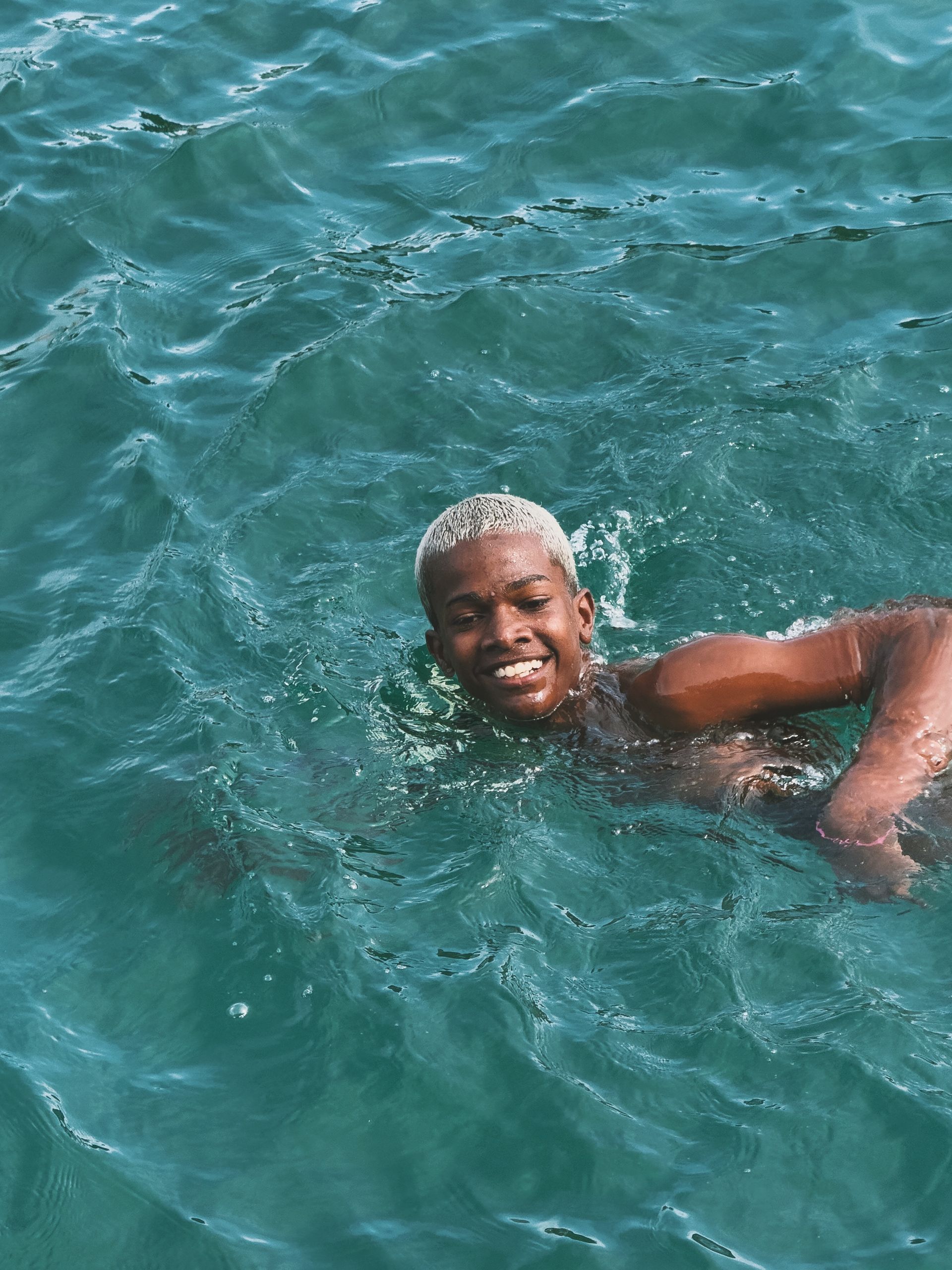
Who Says Black People Can’t Swim?
I cannot swim.
Growing up, most of my friends could not swim either. We were all Black, and water simply did not occupy an important place in our childhoods.
We rarely visited pools. When we did, we traveled to one in a neighboring town, entered the shallow end, splashed around, and called that swimming.
I did not attend a school with a pool or a swim team. Nobody around me treated swimming lessons as an ordinary part of childhood.
Swimming was not something I consciously rejected. It was simply not on my radar.
Years later, I began hearing the familiar stereotype that Black people do not swim. At first, I wondered whether it contained some truth.
Eventually, I understood that the stereotype asks the wrong question.
The issue is not whether Black people are naturally inclined to swim. The real questions concern access, history, fear, representation, public investment, and whether families have had safe opportunities to learn.
A DC Pool Celebration Made the Issue Visible
In 2018, Washington, DC Mayor Muriel Bowser and the Department of Parks and Recreation invited residents and city officials to “Jump In, DC” for the opening of the city’s outdoor pool season.
The event encouraged residents to enjoy the city’s aquatic facilities and presented swimming as something welcoming, public, and available to the community.
I especially appreciated seeing that kind of celebration take place in a predominantly Black part of the city.
According to the original DC Department of Parks and Recreation announcement, the event marked the beginning of the 2018 outdoor pool season and expanded opportunities for residents to use pools and spray parks throughout the summer.
Public events like that matter because they do more than open a pool.
They communicate that swimming belongs to everyone.
Why I Never Learned to Swim
My mother grew up on an island, yet she is afraid of water.
Because she did not feel comfortable swimming, she could not introduce me to the water with confidence. Her fear shaped my relationship with swimming long before I understood what was happening.
My girlfriends also had concerns about getting their hair wet. For Black girls, water could mean ruining a pressed hairstyle, losing hours of salon work, or creating another demanding hair-care process afterward.
That concern may appear trivial to someone unfamiliar with Black hair. However, hair care can require substantial time, money, planning, and emotional energy.
I discuss some of that deeper cultural pressure in my personal reflection on Black women, hair loss, beauty, and identity.
In my childhood, no adult consistently encouraged us to learn, no school program made lessons convenient, and no nearby swimming culture made the activity seem normal.
My friends and I were not unusual. We were part of a much larger pattern.
The Current Numbers Show a Serious Access Gap
Recent national data show that swimming inequity remains a public-health concern.
The Centers for Disease Control and Prevention reported that more than one in three Black adults said they did not know how to swim, compared with 15 percent of adults overall. Nearly two in three Black adults reported never having taken a swimming lesson.
You can review the CDC’s findings in its national report on drowning and access to swimming lessons.
The consequences can be deadly.
CDC data show that drowning death rates among Black people under age 30 are higher than those among White people. The disparity is especially severe in swimming pools, where Black children ages 10 to 14 drown at substantially higher rates than White children of the same age.
The CDC’s current health-equity overview of drowning disparities reports that Black children ages 10 to 14 drown in pools at 7.6 times the rate of White children.
Those numbers do not prove that Black children are somehow less capable in water.
They show what can happen when generations encounter unequal access to lessons, safe pools, experienced instructors, and consistent water-safety education.
The Stereotype Hides a History of Exclusion
The statement “Black people do not swim” turns a structural history into a racial punchline.
For much of the twentieth century, Black Americans faced exclusion from municipal pools, beaches, amusement parks, clubs, and other recreational spaces.
Segregation did not merely separate people socially. It denied Black families repeated access to places where children could learn to feel comfortable in water.
The Smithsonian National Museum of African American History and Culture has documented how segregation and redlining cut Black communities off from neighborhood pools and made it harder for African Americans to learn to swim in controlled environments.
Its work on Black women, swimming, and Olympic history places current disparities within that longer legacy of restricted access.
Black Americans also challenged segregation at pools and beaches as part of the broader civil-rights movement.
These struggles included wade-ins, protests, legal challenges, and attempts to enter public facilities that Black taxpayers helped fund but were not permitted to use.
That history matters because skills often travel through families.
Parents who never received lessons may feel frightened or unprepared to teach their children. Children then grow up without confidence in the water and may pass the same discomfort to the next generation.
What appears to be a personal preference can therefore reflect decades of public exclusion.
Fear of Water Can Become Intergenerational
Fear does not remain contained inside one person.
When a parent feels anxious near water, children notice. The family may avoid pools, beaches, boating, or lessons because those experiences feel dangerous rather than enjoyable.
The fear is understandable, especially when someone has never learned basic survival skills or has witnessed a frightening water-related event.
However, avoidance can increase vulnerability because children remain unfamiliar with water.
Swimming lessons cannot eliminate every drowning risk. Even strong swimmers need supervision, life jackets, safe environments, and respect for weather and water conditions.
Still, formal lessons can reduce risk by teaching people how to float, orient themselves, move through water, exit safely, and respond when something goes wrong.
The CDC identifies formal swimming lessons as an important drowning-prevention strategy and recommends teaching children swimming and water-safety skills.
You can find additional guidance in the CDC’s summer swimming and drowning-prevention recommendations.
I Made Sure My Son Learned
Although I never learned to swim, I was determined to give my son a different relationship with water.
I took him to the pool whenever I could and supported opportunities for him to become comfortable and capable in the water.
His father could swim, which gave my son something I did not have: a parent who could enter the water confidently and demonstrate that swimming was both possible and enjoyable.
When he was three, his father helped him enter the deep end while remaining close enough to respond immediately.
Looking back, I would emphasize that young children should learn through age-appropriate instruction, close supervision, and trained guidance rather than being unexpectedly thrown into deep water.
The important part of my son’s story is not the dramatic moment. It is that he received repeated exposure, encouragement, supervision, and opportunities to develop skill.
By his teenage years, he loved swimming and diving.
Watching him move through the water with confidence showed me that family patterns do not have to remain permanent.
Representation Changes What Children Imagine
Seeing Black people swim matters.
Children form ideas about what belongs to them by observing who participates, who leads, who teaches, and who appears comfortable in a space.
When a Black child sees Black lifeguards, instructors, competitive swimmers, parents, city leaders, and families enjoying the pool, swimming begins to look less foreign.
That is why Mayor Bowser’s participation in a public pool celebration felt meaningful to me.
A Black woman mayor visibly entering the water communicated something more powerful than a brochure could: this space is ours too.
Elite athletes can also disrupt assumptions. Black swimmers such as Simone Manuel have helped broaden public ideas about who belongs in competitive aquatics.
However, representation should not be limited to exceptional Olympians.
Children also need to see ordinary Black families at neighborhood pools, Black adults taking beginner lessons, and Black seniors enjoying aquatic exercise.
Belonging grows through repetition.
Swimming Is a Public-Health and Equity Issue
Swimming is recreation, exercise, sport, and joy. It is also a life-saving skill.
That means access should not depend entirely on whether a family can afford private lessons, transportation, club membership, or expensive summer programs.
Municipal pools, public schools, recreation centers, nonprofit organizations, and community programs all have a role to play.
Effective solutions may include free or low-cost lessons, transportation assistance, culturally responsive instructors, flexible schedules, accessible facilities, and outreach to adults as well as children.
The YMCA’s Safety Around Water program is one example of an initiative designed to provide basic swimming and water-safety skills to children at little or no cost.
The CDC provides more information about the YMCA Safety Around Water partnership.
Adult lessons matter too.
Parents who learn later in life gain more than a personal skill. They may become more willing to bring their children to the pool, supervise them confidently, and normalize swimming within the family.
Hair Should Not Be Ignored in Swimming Programs
Programs hoping to attract more Black girls and women should take hair concerns seriously.
Telling someone to “just get her hair wet” dismisses the time, cost, cultural meaning, and workplace expectations connected to Black hair.
More inclusive programs can offer practical education about swim caps, protective styles, pre-swim hair preparation, post-swim cleansing, chlorine exposure, and access to appropriate changing facilities.
No single solution will work for every hair texture or style. The point is to recognize the concern rather than mocking it.
When people feel heard, they are more likely to trust the program and find strategies that work for their lives.
What I Saw That Day Was Beautiful
The “Jump In, DC” event became one of the first times I remember seeing an entire public pool filled with Black people.
Many of them were not merely standing in the shallow end. They were actually swimming.
Children played, adults entered the water, families laughed, and city leadership treated aquatic recreation as a normal part of Black community life.
I found the experience beautiful because it contradicted the narrow image I had grown up with.
Black people can swim.
Black people have always had aquatic traditions across Africa, the Caribbean, and the wider African diaspora.
The issue has never been an inherent inability.
The issue is whether people receive access, instruction, encouragement, safety, and a reason to believe the water belongs to them.
The Question We Should Be Asking
Instead of asking why Black people do not swim, we should ask why so many Black families have lacked reliable access to swimming education.
We should ask why public pools disappeared from some neighborhoods, why lessons became unaffordable, why schools stopped offering aquatic programs, and why racial disparities in drowning remain so wide.
We should also ask what becomes possible when communities invest in changing that story.
My son learned to swim even though I did not.
That single change interrupted one family pattern.
Public policy, affordable instruction, representation, and community-based programs can interrupt the pattern for thousands more.
The stereotype does not need another joke.
It needs investment, understanding, and action.
Did you learn to swim as a child, as an adult, or not at all? What made swimming accessible—or inaccessible—in your family? Share your experience in the comments.
Frequently Asked Questions
Is it true that Black people cannot swim?
No. Race does not determine swimming ability. Differences in swimming participation and skill are connected to access, lessons, family experience, neighborhood resources, segregation, cost, fear, and representation.
Why are drowning rates higher among some Black children?
Several factors may contribute, including lower access to formal lessons, fewer safe swimming opportunities, family fear of water, economic barriers, and the historical exclusion of Black communities from pools and beaches.
Do swimming lessons prevent all drownings?
No. Lessons reduce risk but do not make anyone drown-proof. Children still need close supervision, appropriate barriers around pools, properly fitted life jackets during relevant activities, and safe behavior around water.
Can adults learn to swim?
Yes. Many recreation centers, YMCAs, colleges, private instructors, and community organizations offer adult beginner classes. Adults may benefit from instructors experienced in helping fearful or first-time swimmers.
How can communities improve swimming access?
Communities can fund public pools, offer free or affordable lessons, recruit diverse instructors and lifeguards, provide transportation, support school-based programs, and design outreach that addresses fear, hair care, scheduling, disability, and cost.
Keep Reading on DG Speaks
- What a Black Women’s Fitness Focus Group Revealed About Wellness
- When My Hair Fell Out, I Had to Find Myself Again
- Explore More DG Speaks Stories
References and Further Reading
- CDC: Health Disparities in Drowning
- CDC: Drowning Deaths and Swimming-Lesson Access
- CDC: Summer Swim Safety
- CDC and YMCA: Safety Around Water
- Smithsonian NMAAHC: Black Women, Swimming, and Olympic History
- Smithsonian NMAAHC: The History of Black Beaches and Recreational Spaces
- DC Department of Parks and Recreation: Jump In, DC 2018
Water-safety note: Swimming ability does not eliminate drowning risk. Closely supervise children near water, use properly fitted life jackets when appropriate, and follow guidance from qualified swimming and water-safety professionals.
