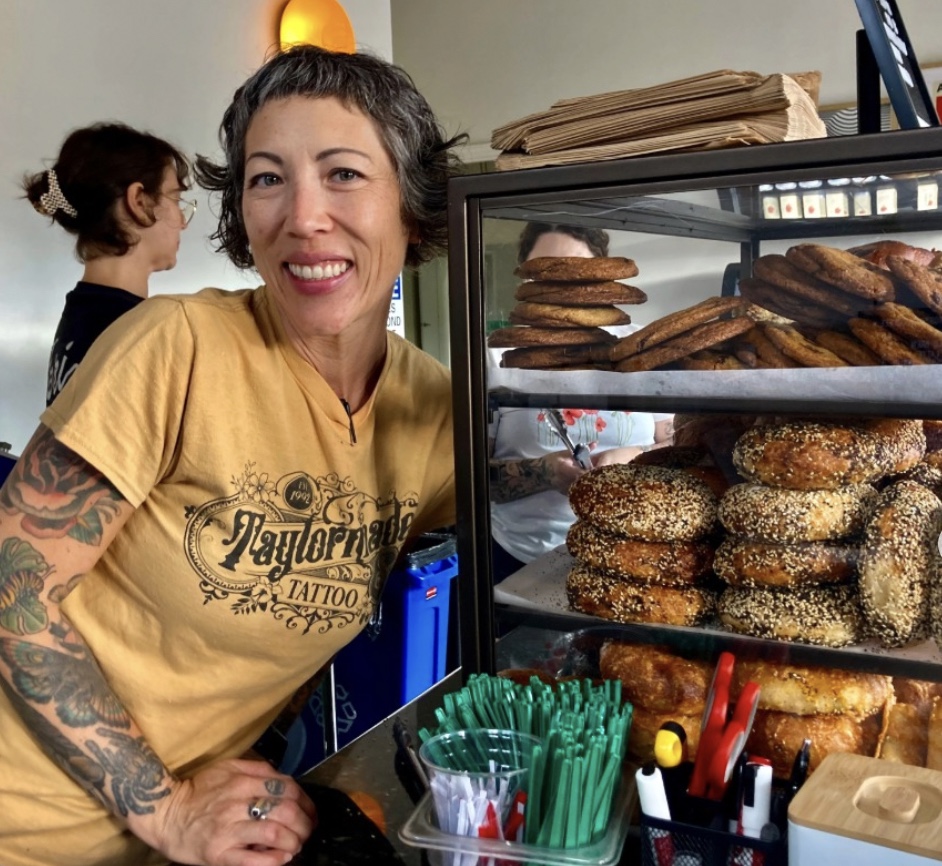
She Built It Her Way: Cheryl Storms, New Wave Bagel, and the Cost of Quality
Some Women Build on Inputs, Not Image
There is a lot of noise in food right now. Every week brings a new launch, a shiny concept, or a brand built for social media before it is built for sustainability. Beautiful boxes. Clever names. Weak foundations.
That is why speaking with Cheryl Storms caught my attention in a different way.
What came through in our conversation was not performance. It was sourcing, standards, process, and the kind of practical clarity that usually belongs to people who have spent years doing the actual work. During all the excitement around BagelFest West 2026, her perspective felt grounded in something increasingly rare: substance.
As a food systems consultant, I always primed to listen for how founders talk about inputs. Ingredients tell me as much as branding ever will.
Thirty Years in Food Teaches What Trends Cannot
Cheryl shared that she has been baking since she was sixteen and has spent close to thirty years working in food. She described early morning shifts at a bagel shop before school, then returning afterward to continue prep work. Later, her career included pastry, fine dining, and owning a San Francisco bakery that operated for eight years.
That kind of timeline matters.
Food expertise is cumulative. It is built through repetition, labor, mistakes, muscle memory, supplier conversations, customer feedback, and thousands of tiny adjustments the public never sees.
Too often people talk about food businesses as if they are cute lifestyle projects. In reality, serious operators are managing margins, waste, shelf life, staffing, procurement, quality control, and customer expectations all at once.
Thirty years inside those realities teaches lessons no trend forecast can.
Family Decisions Are Food System Decisions Too
Cheryl explained that she and her husband moved to San Diego after having a baby and wanting more community around their family.
I appreciated hearing that because women’s business stories are often stripped of their real context. We are told to discuss ambition, but not childcare. Growth, but not housing. Entrepreneurship, but not support systems.
Real life does not separate these things so neatly.
When women founders choose where to live, where to open, and how to work, they are responding to systems as much as dreams. Geography, caregiving, transportation, cost of living, and community all shape enterprise.
That is not background detail. That is the story.
California Values Can Show Up in a Bagel
After relocating, Cheryl worked with a San Diego bakery focused on local ingredients, organic sourcing, and community-minded values. She said that experience deepened her commitment to sourdough and fermentation.
That immediately interested me because fermentation is not just culinary style. It can reflect a slower production model that values flavor, digestibility, and patience over speed.
Later, she and her business partner saw room in the market for a stronger bagel concept.
What stood out most was how often the conversation returned to quality. The focus stayed on thoughtful work, strong execution, and products built with care instead of empty noise. In a world constantly chasing the next big thing, there was something refreshing about hearing people value substance, craftsmanship, and depth again.
That distinction tells me a great deal about how a founder thinks.
Price Tags Usually Tell a Deeper Story
One of the most candid parts of our conversation centered on pricing. Cheryl acknowledged that their bagels are among the more expensive options in San Diego. She also explained that their schmears cost more because they use a California-made cream cheese with only three ingredients and no fillers or stabilizers.
This is where food literacy matters.
Consumers often compare prices without comparing formulations, labor models, sourcing decisions, production scale, or ingredient integrity. Two products can share a name and come from completely different systems.
Cheap food is often made expensive somewhere else. The cost may show up in worker pressure, weaker ingredients, environmental strain, or nutritional trade-offs.
She also said these are foods she feels good feeding her family.
These are foods I feel good feeding my family.
Cheryl Storms, interview with DG Speaks
Honestly, that one sentence carried weight. Women who feed households know exactly what that means.
Not Every Dollar Is Aligned Capital
Cheryl also spoke honestly about growth. She noted that some competitors can expand quickly through venture capital, while her company has had to move more carefully and make calculated decisions.
That is a bigger conversation than many people realize.
Outside capital can accelerate growth, but it can also create pressure for shortcuts, overexpansion, formula simplification, or decisions driven by investor timelines instead of product integrity.
Growth matters, but not at the expense of our morals and values.
Cheryl Storms, interview with DG Speaks
She made clear that growth matters, but not at the expense of the company’s morals and values.
I respect that deeply because not every dollar is good money, and not every yes leads somewhere worth going.
Standards Are a Love Language
What stayed with me after speaking with Cheryl was her consistency. Whether discussing ingredients, pricing, sourcing, or growth, she kept returning to standards.
That word sounds simple, but in food it touches everything. Standards shape supplier relationships, customer trust, repeat business, waste levels, and long-term resilience.
Many women understand standards intimately because we are often the ones noticing when quality slips, balancing budgets against values, and deciding what enters the kitchen in the first place.
That awareness is expertise.
Some Women Let the Work Speak
Cheryl’s story is not built on hype. It is built on years in kitchens, hard-earned experience, family decisions, ingredient choices, and a clear sense of values.
I respect founders who move that way because the food world needs more substance and less theater.
Sometimes the most powerful people in the room are the ones who understand exactly what it takes to make one good product well, every single day.