The Compostela Was Never the Real Prize
The Compostela Was Never the Real Prize
The Compostela matters. Let me say that first. After walking all those miles, after collecting stamps, after following yellow arrows across Spain, receiving that certificate in Santiago de Compostela can feel deeply meaningful. It marks something real.
But for me, the Compostela was never the real prize.
The real prize was the woman who arrived to receive it.
The Certificate Marks the Journey
The Compostela is the traditional certificate given to pilgrims who complete the Camino for religious or spiritual reasons and meet the official distance requirements. The Pilgrim Reception Office in Santiago manages that process, and for many pilgrims, it is an emotional final step.
I respect that tradition. I respect the history behind it. I respect what it means to walk toward a place that has carried sacred significance for centuries.
Still, no certificate could hold everything the Camino gave me.
The Real Proof Was in My Body
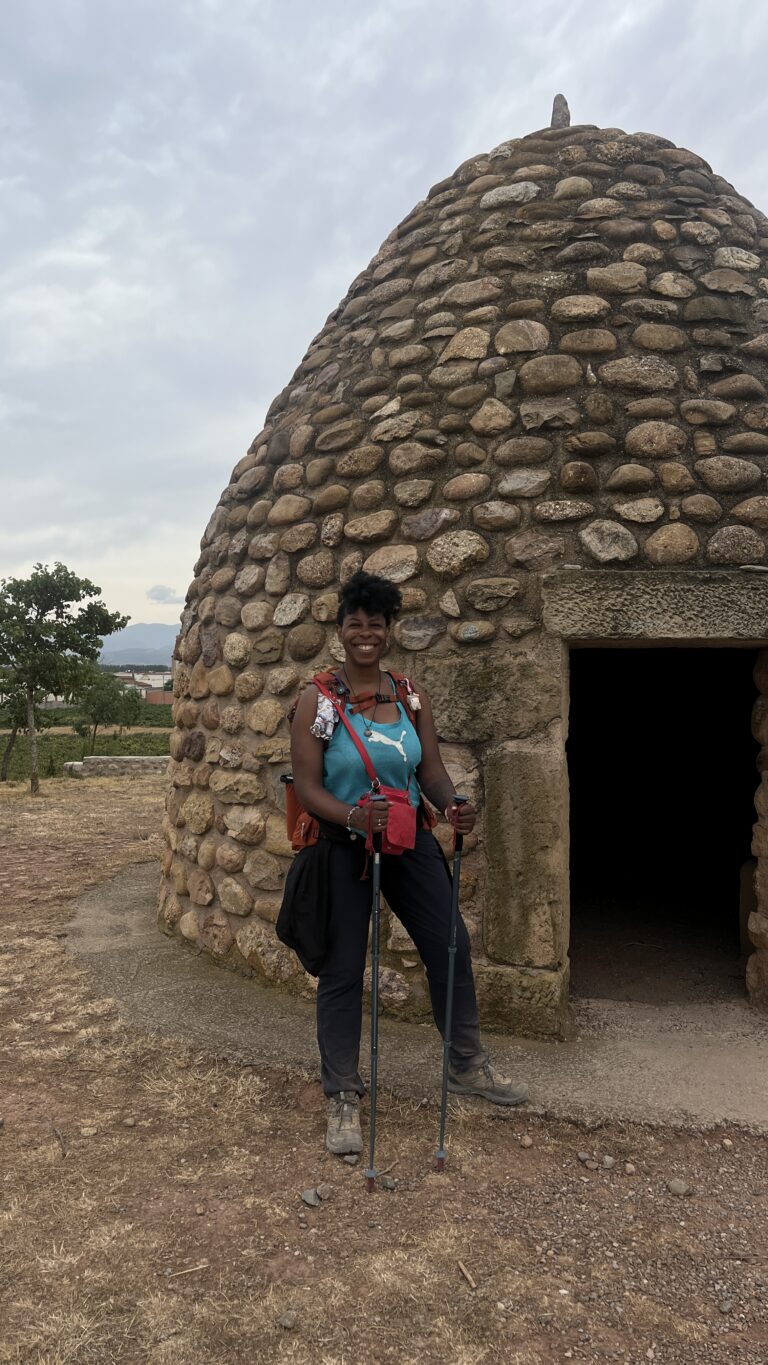
By the time I reached Santiago, my body knew the truth. It had crossed mountains, moved through villages, climbed, descended, carried, adjusted, complained, recovered, and continued.
That physical proof meant something to me. At 50, I did not need the Camino to tell me I was young. I needed it to remind me I was alive, capable, and still available for challenge.
I wrote about that in The Camino Was My 50th Birthday Gift to Myself. The certificate was beautiful, but my stronger legs and steadier spirit were already speaking.
The Real Prize Was Peace
The Camino did something to my nervous system. It made me less easily frazzled. It taught me that discomfort was not always an emergency. It showed me how much I could live without and how much more clearly I could hear myself when life got simple.
That peace did not arrive perfectly. I did not become a serene little pilgrim statue. I still had moods, preferences, frustrations, and opinions. But something softened.
That softness was worth more to me than paper.
The Real Prize Was Community
The Compostela has my name on it. But the Camino was never only about me. It was about the people who helped me, walked with me, fed me, hosted me, encouraged me, annoyed me, made me laugh, and reminded me that strangers can still become part of your story.
That moving community mattered. It mattered in albergues, cafés, churches, village streets, and hard walking days. It mattered after the Camino too, when conversations with pilgrims like Katie helped me process what had happened.
Read What Katie Taught Me About the Camino and The Camino Taught Me That Community Can Move for more of that story.
Santiago Was an Arrival, Not an Ending
Reaching Santiago mattered. I will not pretend otherwise. There is something powerful about arriving at a destination you have been walking toward for weeks.
But Santiago was not the end of the Camino’s work in me. In many ways, it was the beginning of understanding. The lessons kept unfolding after I returned home. The post-Camino blues, the memories, the changes in my body, the quieter relationship with enough, all of that continued.
That is why keeping the Camino alive after returning home became its own practice.
Walk for More Than the Paper
If you are planning your Camino, let the Compostela matter. Collect your stamps. Honor the tradition. Follow the official guidance. Take the photo if you want it. Celebrate what you completed.
But do not miss the real prize while chasing the final document. The real prize may be the morning you do not quit. The stranger who helps you. The village that slows you down. The meal that revives you. The moment you realize your body is stronger than your fear.
For planning, visit the official Camino de Santiago in Galicia. For travel support before or after Spain, consider SafetyWing, Hostelworld, and GetYourGuide.
The Compostela is a beautiful record of the Camino. But the real prize is what the road leaves inside you.