A Day in Eichstätt: The Bavarian Surprise I Needed
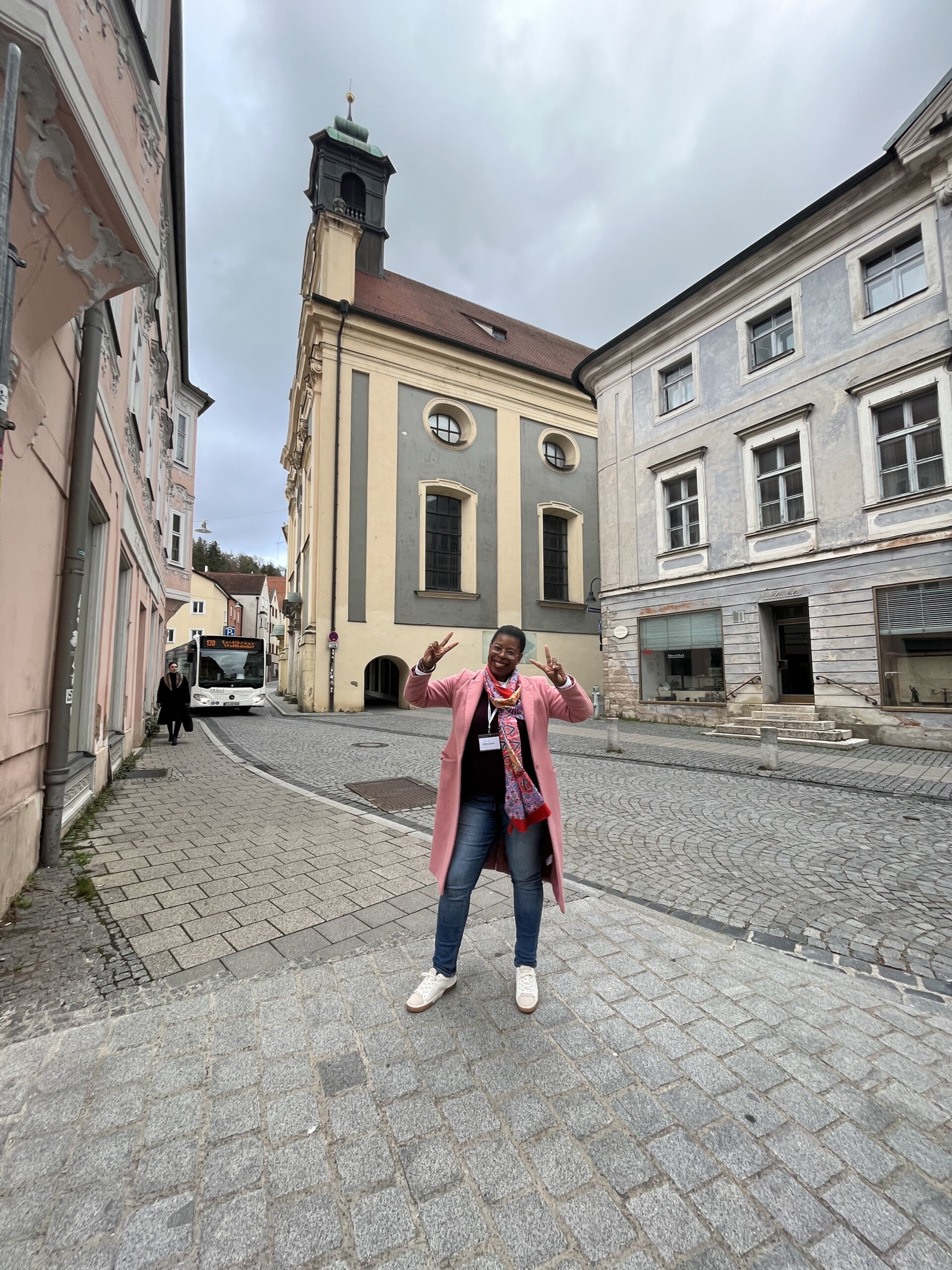
Eichstätt, Germany, did not announce itself with the force of Munich or the medieval drama of Nuremberg. Instead, the city unfolded in details.
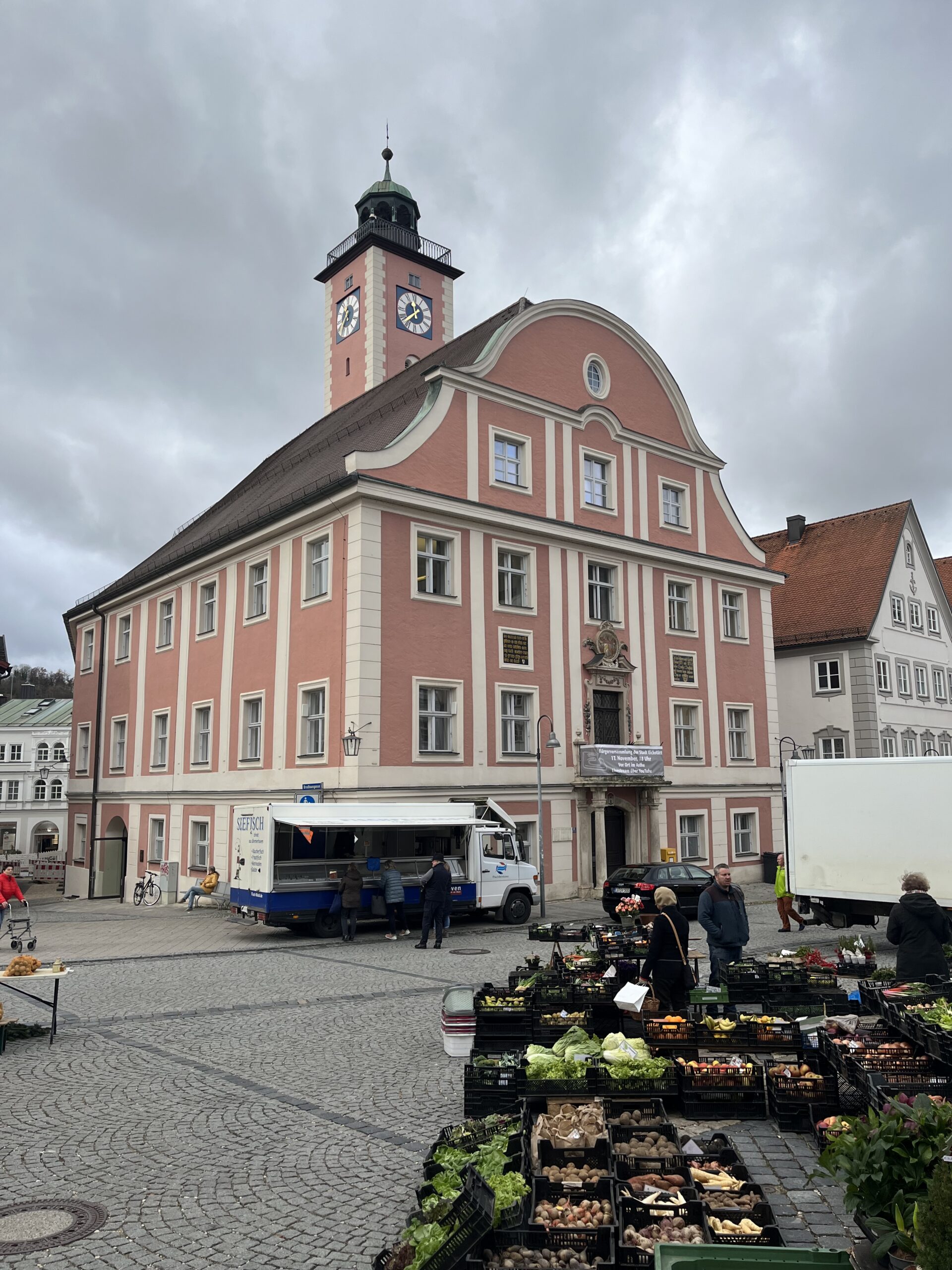
A pink town hall stood behind a produce market. A Marian image watched from a yellow wall. Contemporary sculptures interrupted Baroque streets. The Altmühl River carried the gray sky through town.
The Train Let Me Arrive Slowly
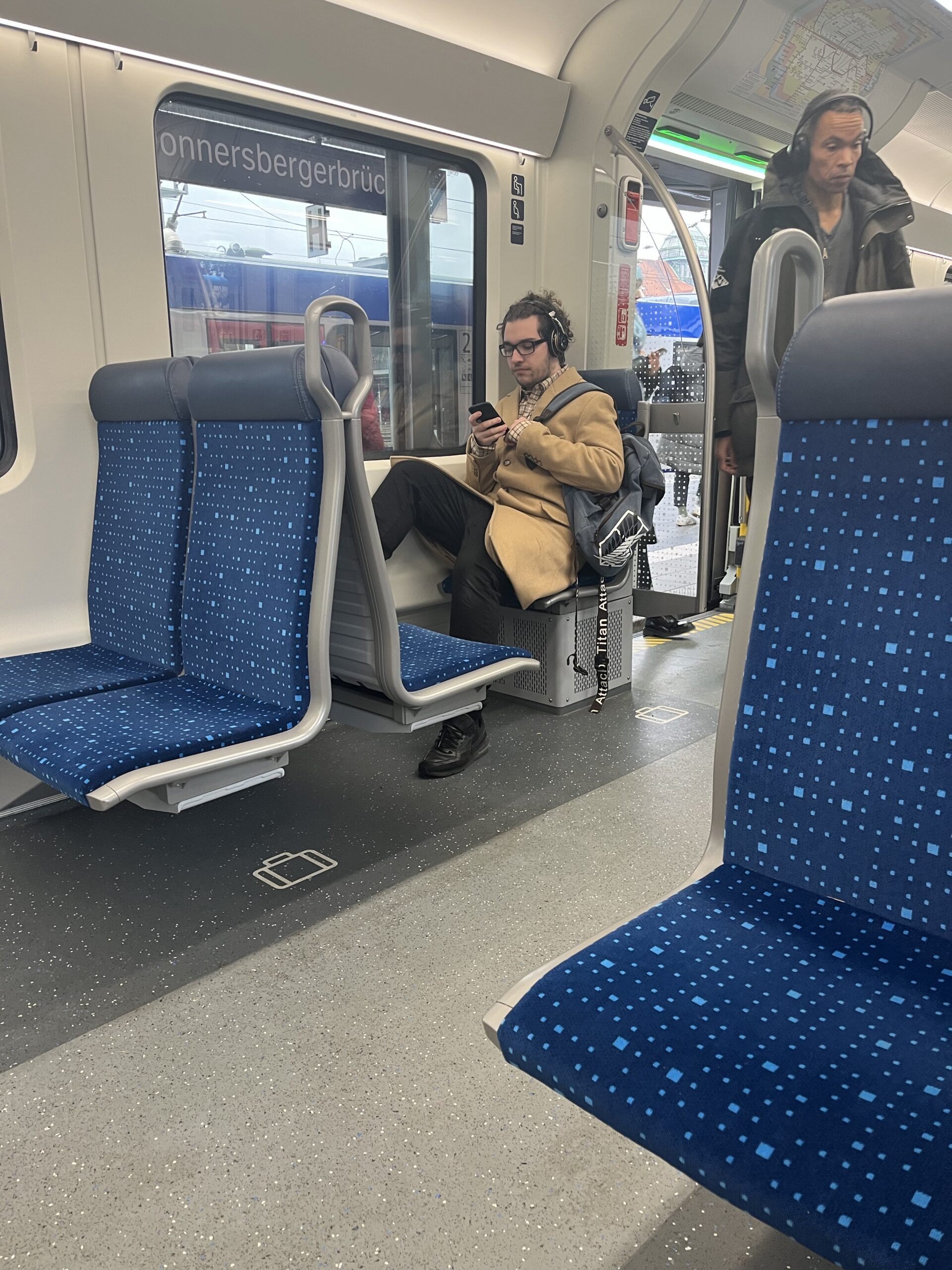
Rail travel shaped much of my time in Germany. Instead of navigating unfamiliar roads, I watched the landscape change through the window.
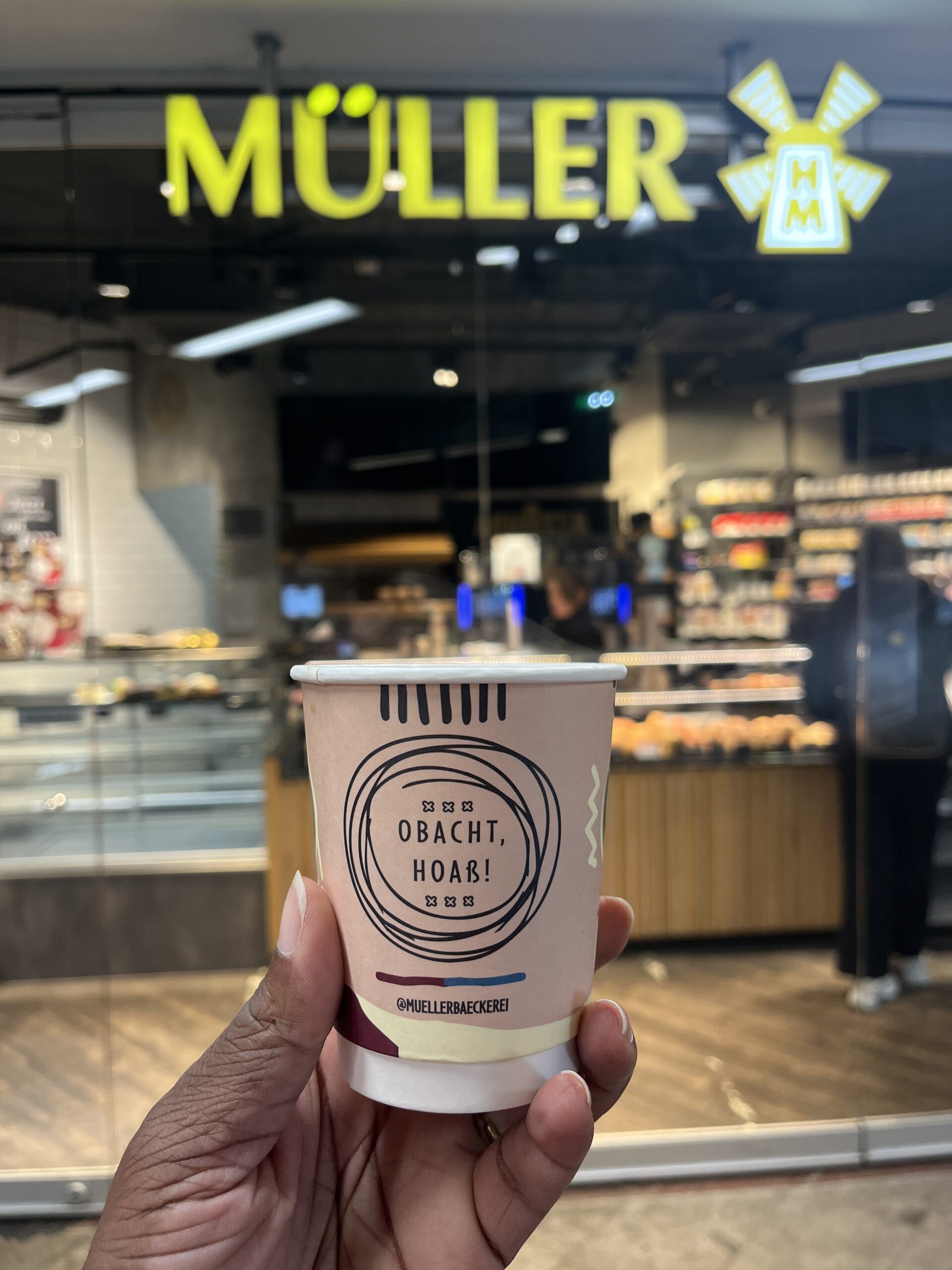
The cup carried the Bavarian warning “Obacht, hoaß,” roughly meaning “Careful, hot.” That small phrase rooted an ordinary drink in place.
The Market Square Felt Like Everyday Theater
Produce, conversation, bicycles, and pedestrians gave the square movement. I love markets because they show how a city feeds itself.
Architecture may reveal civic ambition. Market tables reveal daily priorities, seasonal rhythms, and the foods residents consider ordinary.
Baroque Beauty Showed Its Age
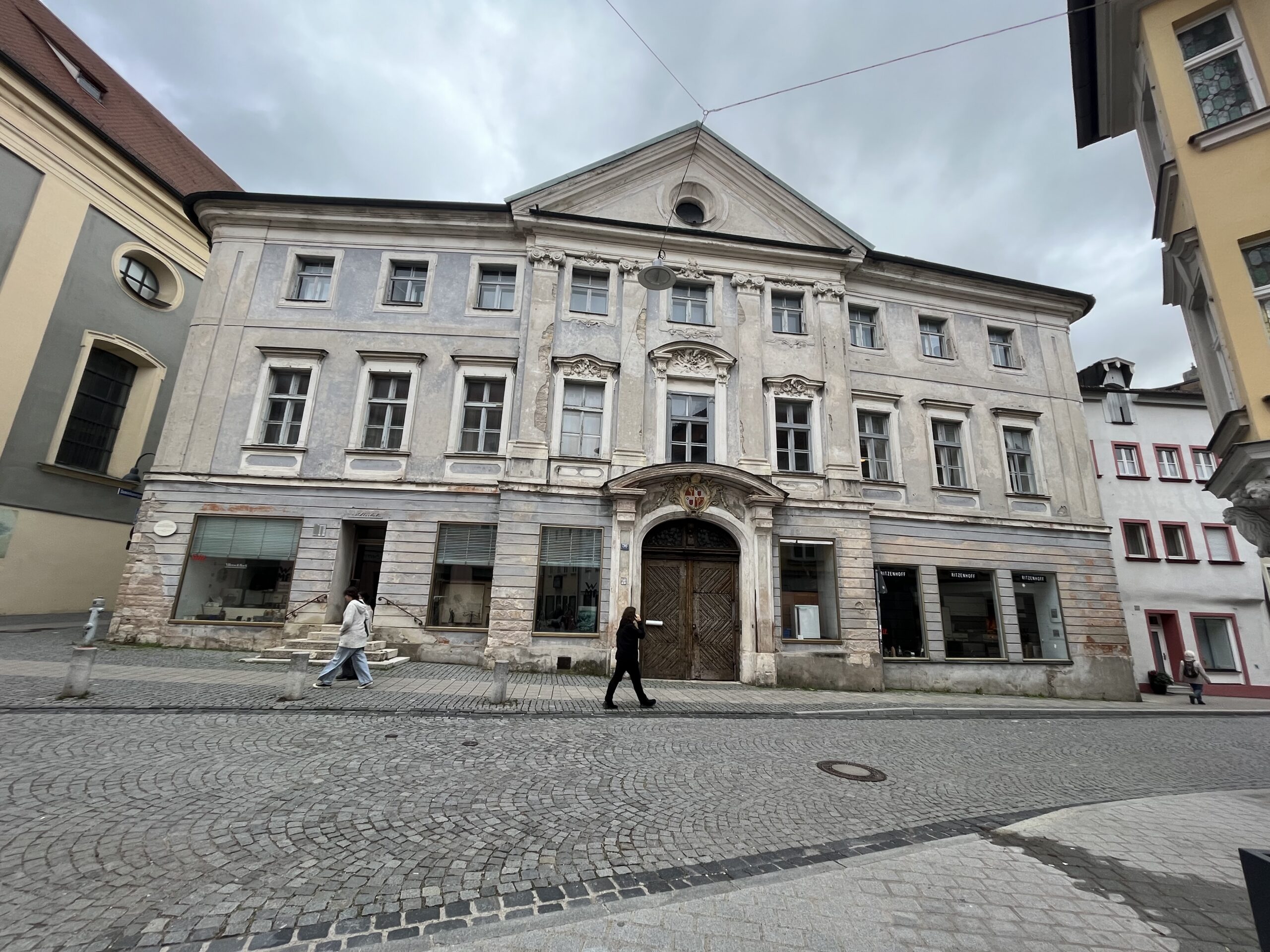
Eichstätt is known for Baroque architecture and Catholic history. Yet cracks, discoloration, and repairs gave the buildings more character because they revealed preservation as ongoing labor.
Faith Remained Part of the Streetscape
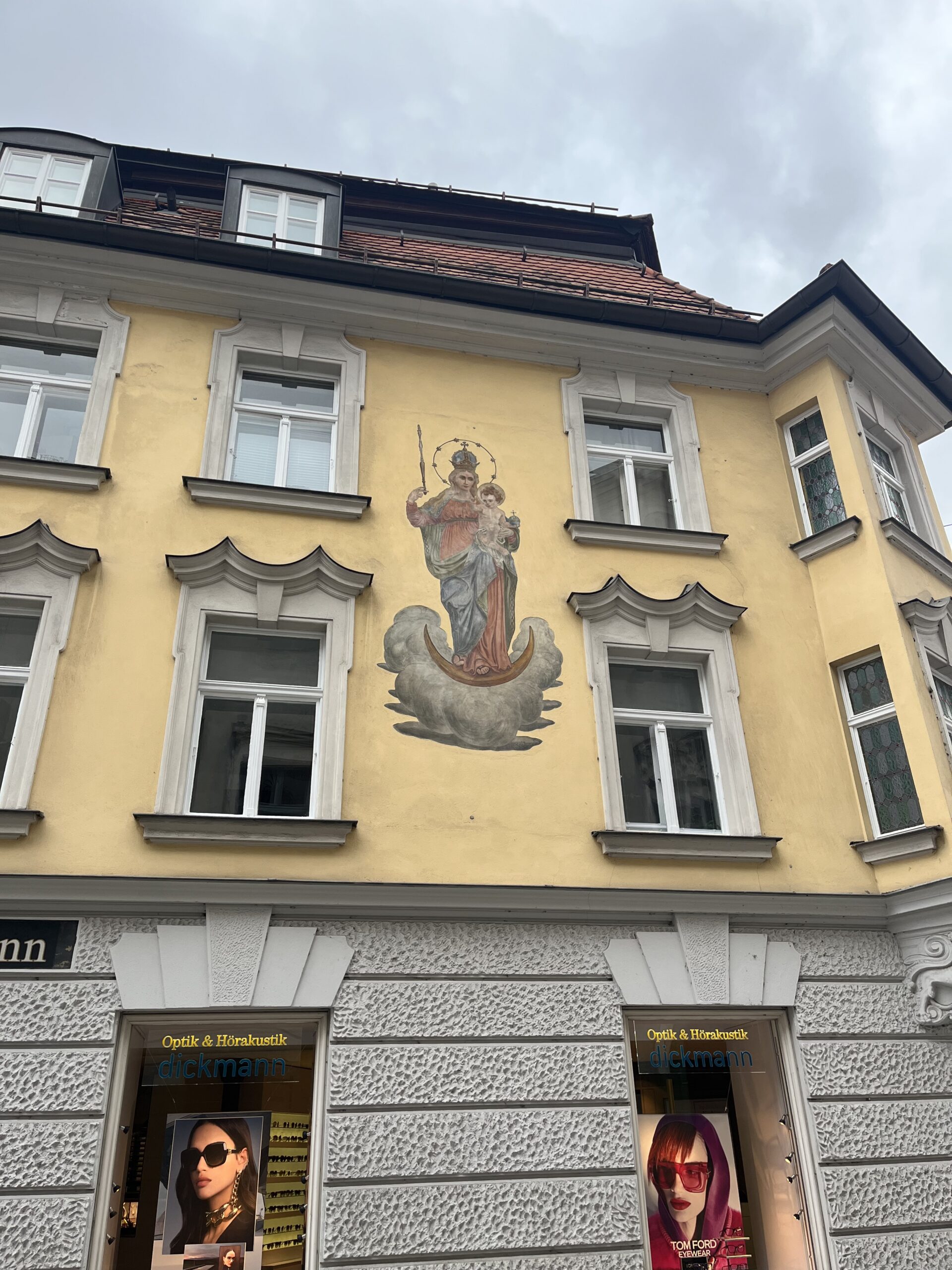
I do not need to share a religious belief to understand the cultural power of sacred imagery. Murals, churches, statues, and symbols show how communities have organized meaning across generations.
Contemporary Art Interrupted the Historic City
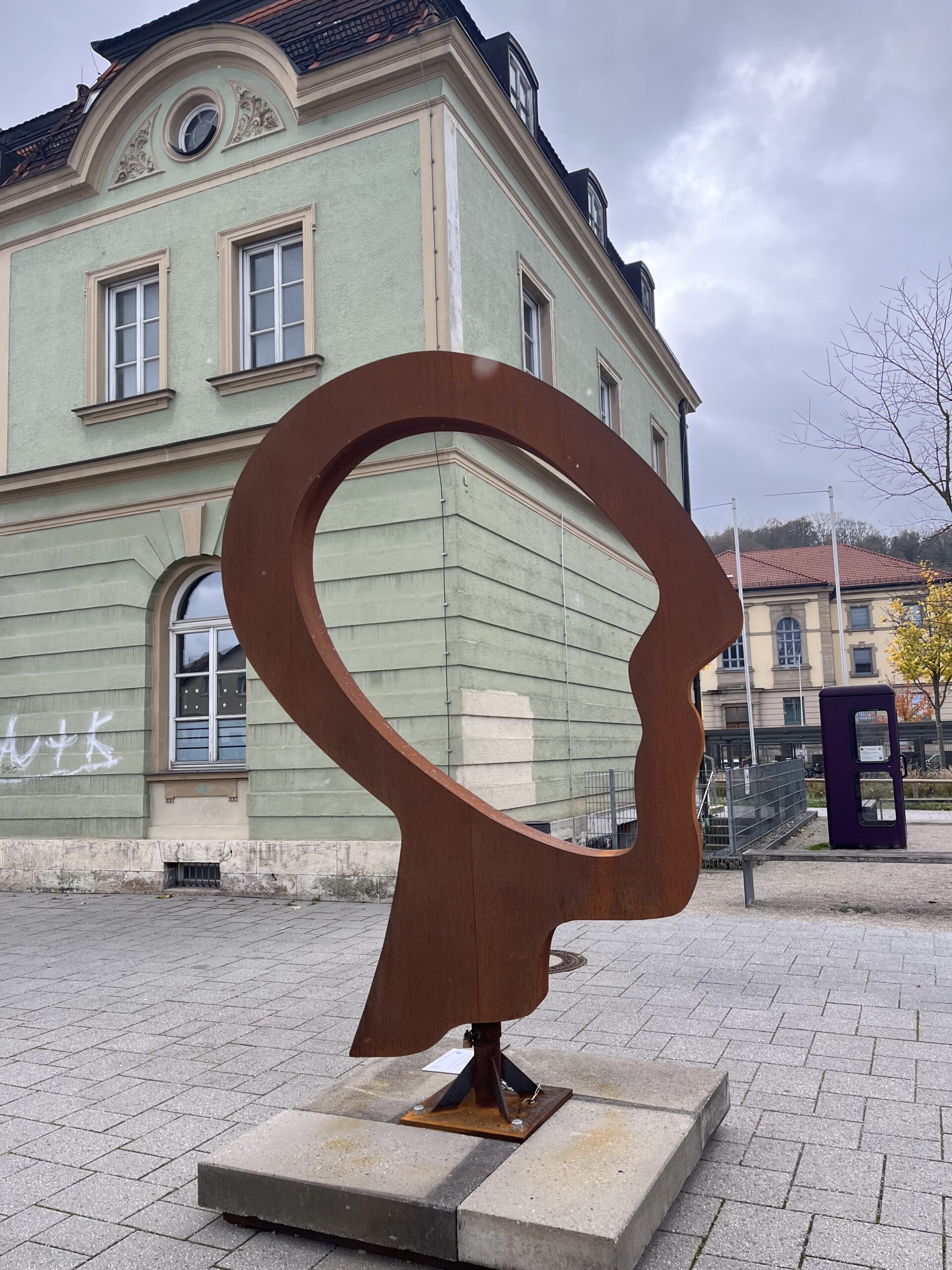
A monumental head allowed the building behind it to fill the face. Elsewhere, a red geometric sculpture broke through the muted November palette.
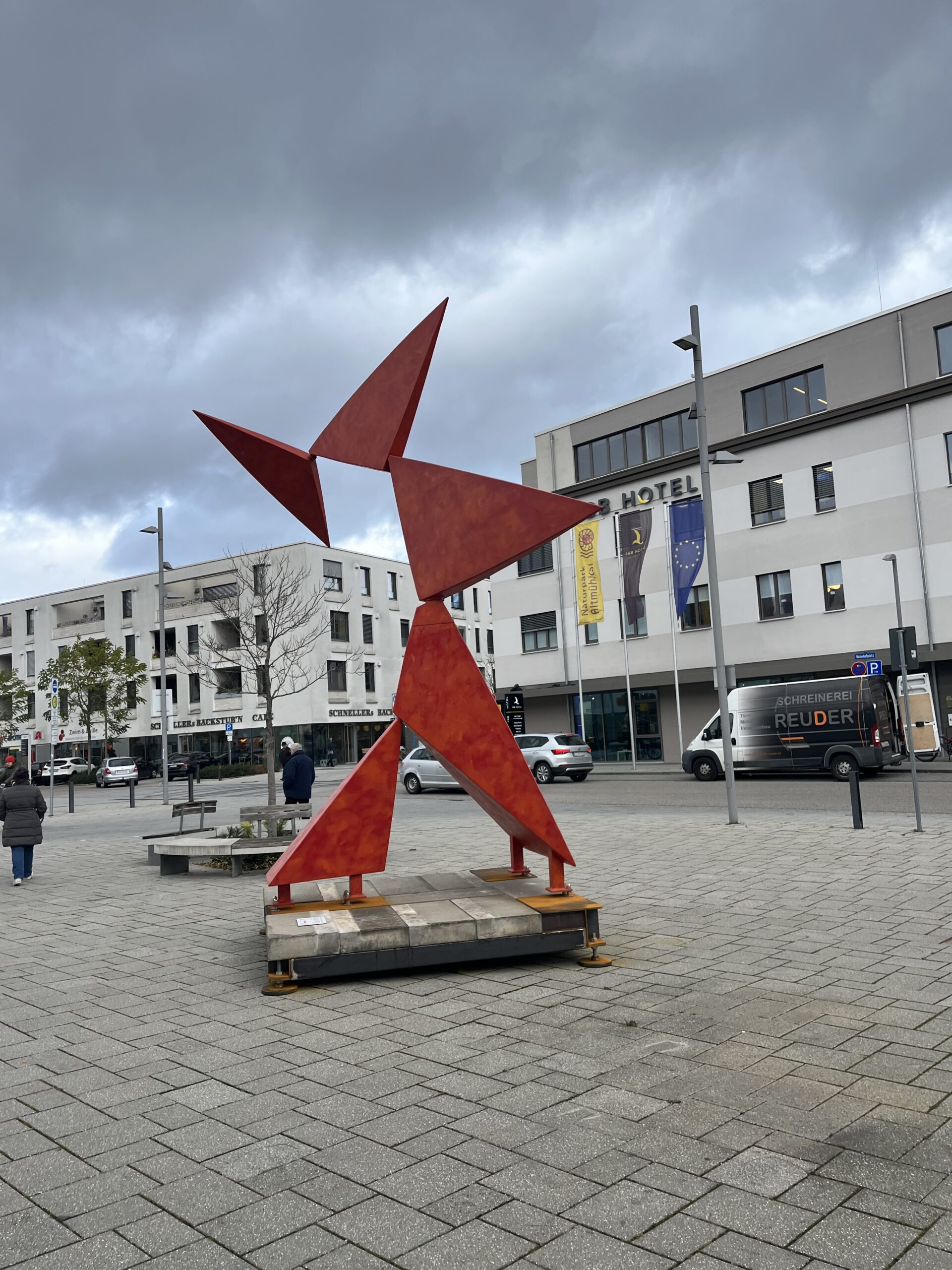
These works prevented me from reducing Eichstätt to a preserved religious town. The city could honor Baroque history while making room for contemporary questions.
A Cage Hung Above the River
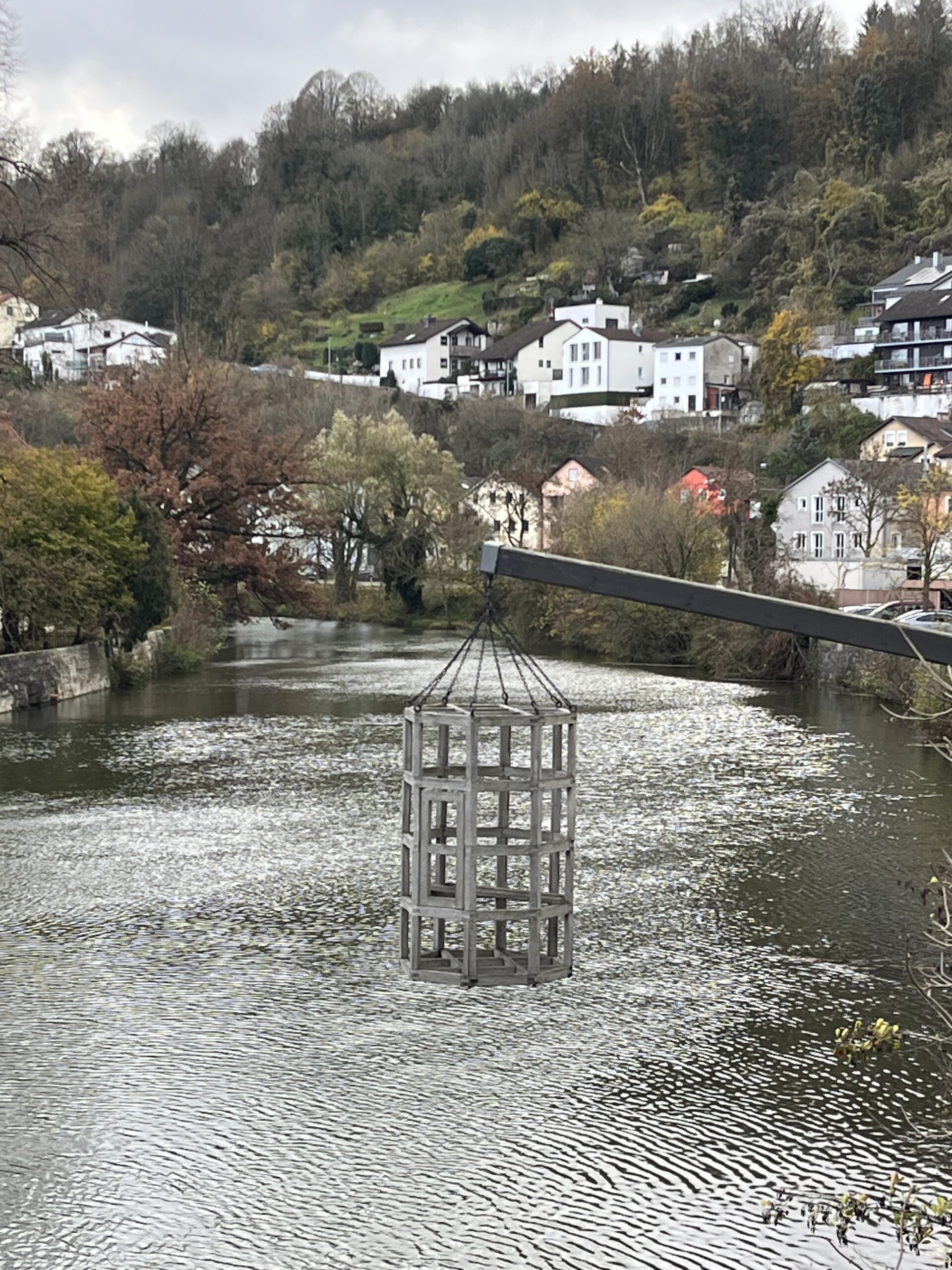
I could not confirm the official title or artist. Still, the image stayed with me. A cage suggests confinement, while moving water suggests flow. The contrast created an unanswered question above the river.
The Altmühl Quieted the Day
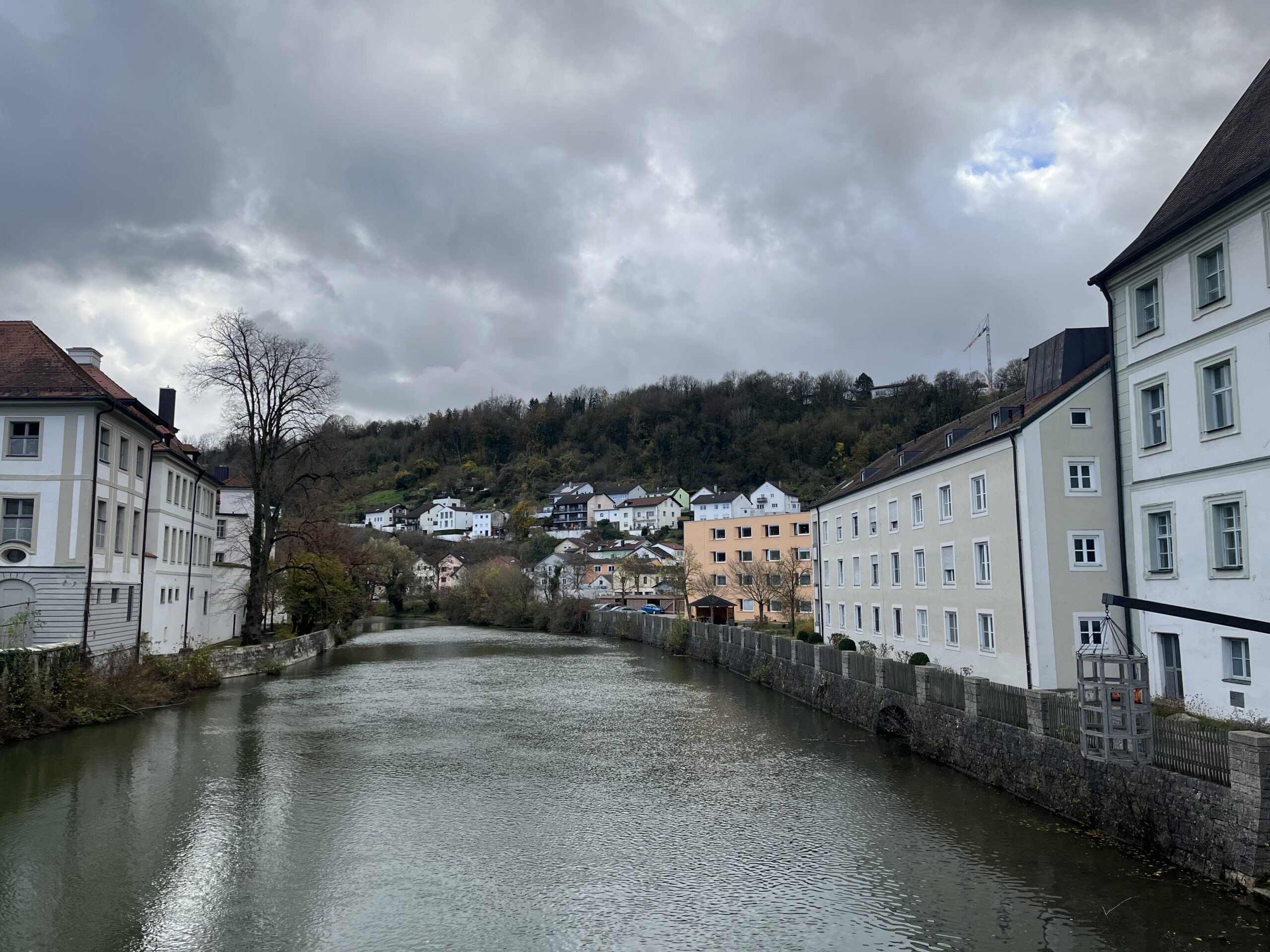
I did not need a dramatic activity. Walking beside the river became the experience.
Waldgasthof Zum Geländer Extended the Stillness
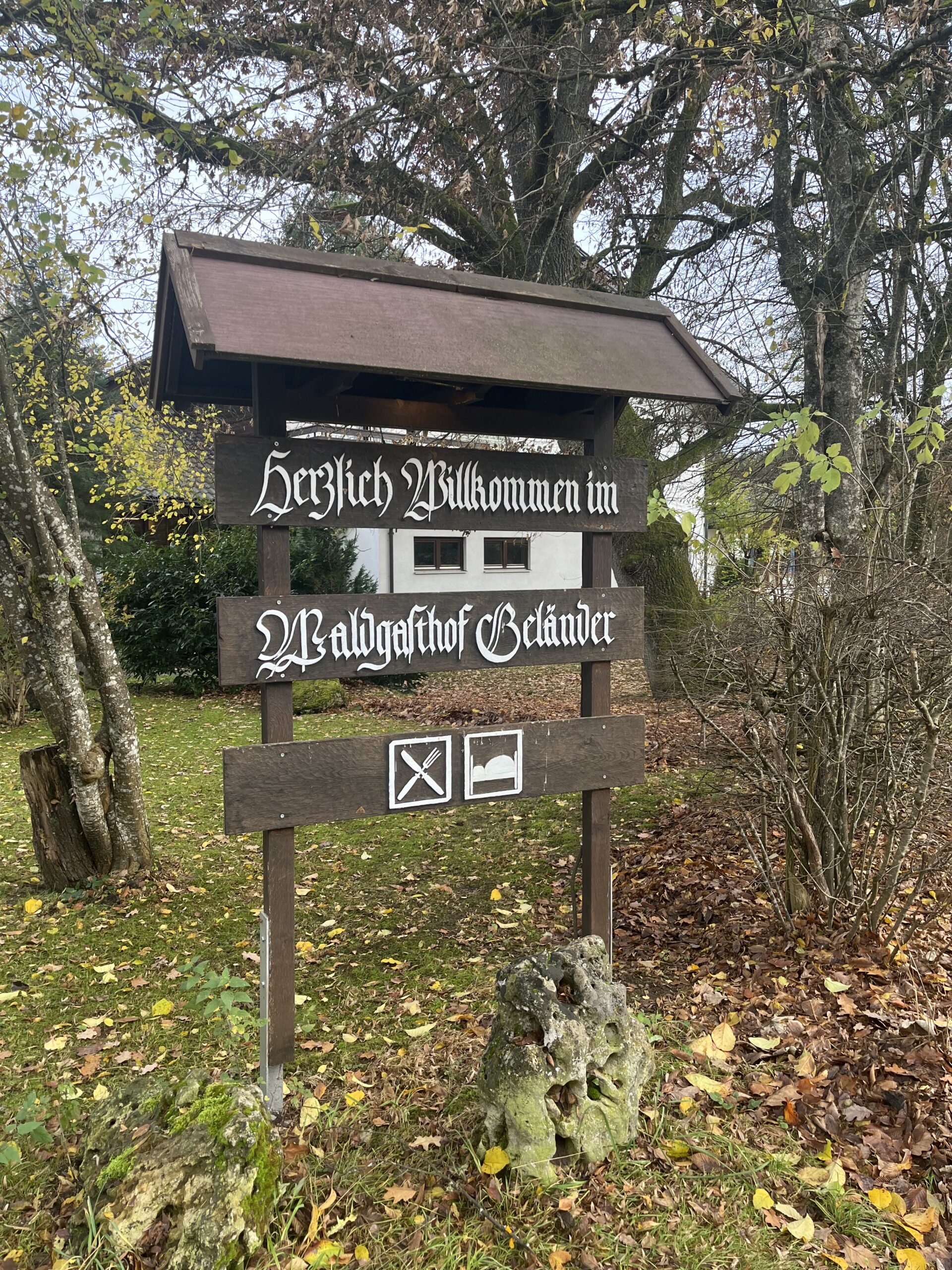
The interior used wood, stone, and hunting-lodge décor. My simple room offered a single bed, desk, television, and forest imagery.
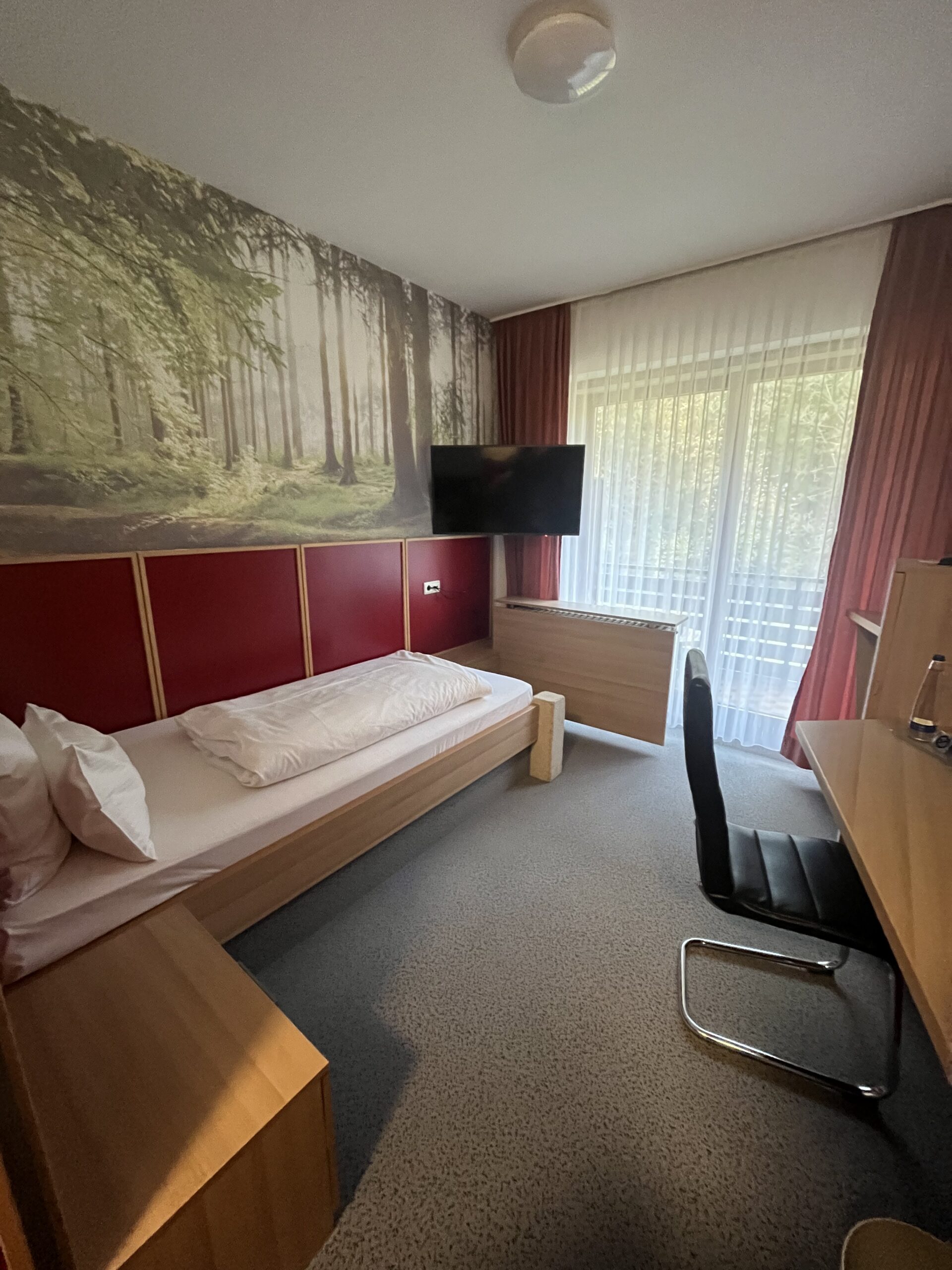
Travelers seeking nightlife may prefer another base. People wanting quiet, nature, and a traditional guesthouse atmosphere may appreciate the setting.
Why Eichstätt Belongs in My Germany Story
Major cities dominate travel coverage because they offer famous landmarks. Expertise, however, grows through attention to places beyond the obvious route.
Eichstätt gave me architecture, market culture, public art, river landscapes, religious history, and rural hospitality within one day.
Eichstätt’s quiet pace contrasted sharply with my museum days in Munich. My Deutsches Museum Munich review explores the scientific curiosity that shaped another side of the trip. Later, Five Reasons in Nuremberg gave me a walkable base for a very different city experience.
Use my Germany travel hub to connect Eichstätt with the wider journey. My Munich travel guide provides a useful Bavarian starting point, while my Austria guide supports a wider regional itinerary.
Search regional experiences through GetYourGuide. Always confirm local routes and schedules before traveling.
The Surprise Was the Point
I did not arrive with a long checklist. That freedom changed the day.
I followed the river, watched the market, studied walls, and let contemporary art interrupt my assumptions. Eichstätt became memorable by allowing me to slow down enough to see it.
Eichstätt Holds a Much Older Story Than Its Baroque Streets
The polished center can make Eichstätt seem like a city created in one elegant period. Its history reaches much further back.
Official tourism material traces human settlement in the region to prehistoric times. The city later developed as an important religious center on the Altmühl. Its cathedral, bishop’s residence, churches, and former religious institutions still shape the urban landscape.
The Baroque appearance reflects rebuilding and redesign after earlier conflict, particularly during the seventeenth and eighteenth centuries. Therefore, the graceful façades do not erase disruption. They show how institutions used architecture to restore authority and order.
The Altmühltal Landscape Shapes the City
Eichstätt sits inside the Altmühltal Nature Park, a broad landscape of river valleys, limestone formations, forests, cycling routes, and smaller communities.
The river does more than decorate the town. It explains movement, settlement, trade, recreation, and the shape of surrounding neighborhoods. Looking toward the hillside homes, I could see how the city fitted itself into the valley rather than spreading across flat land.
That geography also makes Eichstätt appealing to travelers who prefer walking and cycling. A visit can connect urban history with time outside, especially in warmer months.
The City’s Public Art Prevented Easy Nostalgia
Historic towns sometimes market themselves as if time stopped centuries ago. Eichstätt’s contemporary sculptures disrupted that comfortable illusion.
The steel head, red geometric forms, and suspended cage created conversations with the surrounding architecture. Instead of treating the old town as untouchable scenery, the artworks asked new questions inside it.
I appreciated that friction. Heritage should not require cultural silence. A living city needs room for present-day artists, difficult interpretations, and forms that residents may debate.
What a One-Day Visitor Should Prioritize
Begin with the old town and market square. Walk slowly enough to notice painted façades, religious details, civic buildings, and the changing condition of older walls.
Next, follow the Altmühl for a different perspective. The river path creates breathing room after the visual density of the center. Public-art pieces may appear along the way, although installations can change.
Travelers interested in religious architecture should review cathedral and church opening times. Market schedules, seasonal events, and guided tours also vary. The official Eichstätt tourism website provides current planning information.
Who Will Enjoy Eichstätt Most
Eichstätt suits travelers who enjoy architecture, local markets, river walks, religious history, public art, cycling, and slower observation.
People searching for nonstop nightlife or a long checklist of blockbuster attractions may prefer Munich. However, visitors who need a pause between larger destinations may find exactly what they need here.
I left with fewer dramatic stories than I carried away from Neuschwanstein. Still, Eichstätt deepened my understanding of Bavaria by showing me how history, faith, nature, and contemporary creativity can share a small city.
Affiliate disclosure: This article contains affiliate links. If you book or buy through one of these links, DG Speaks may earn a commission at no extra cost to you.