
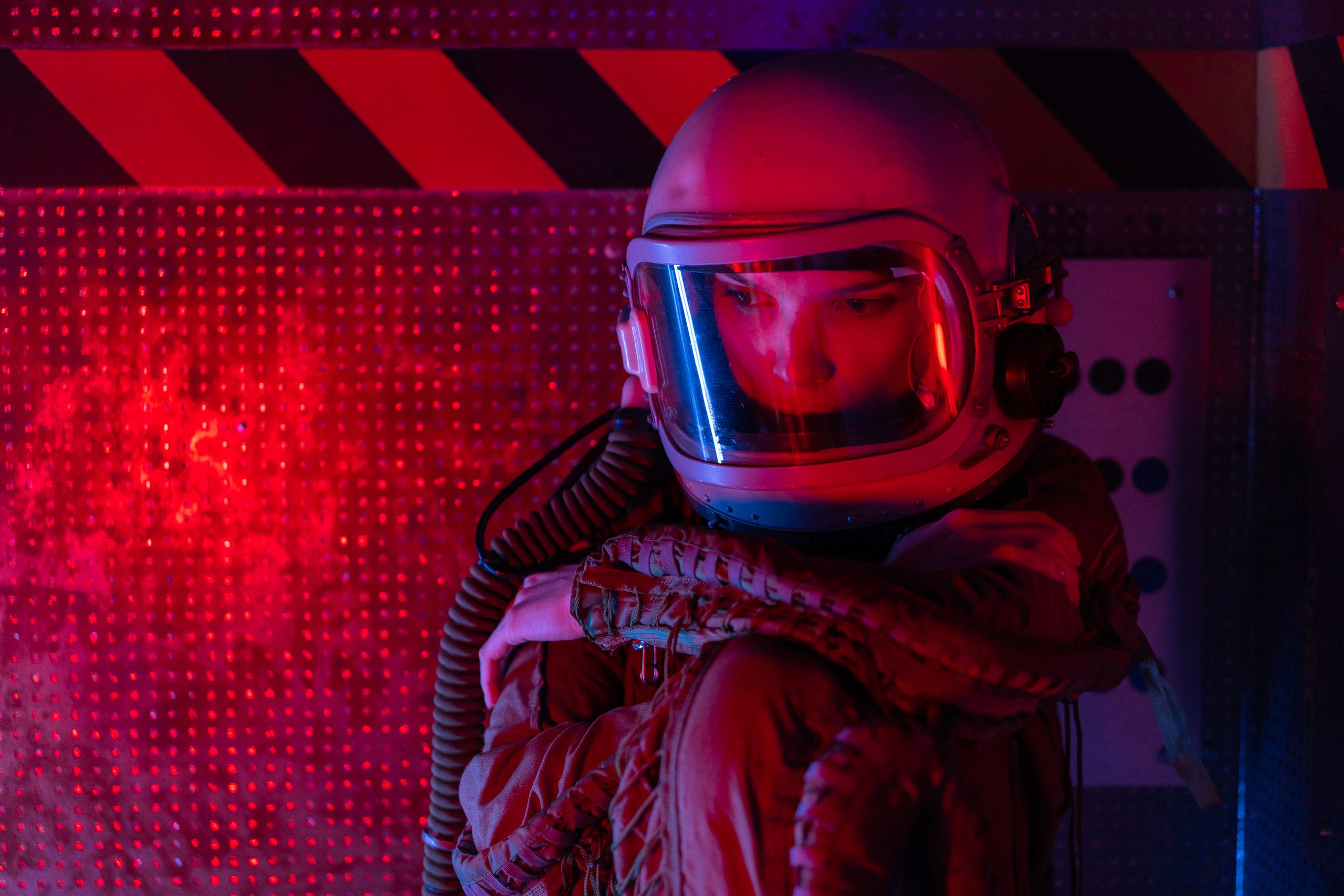
Exploring Gender Portrayal in Sci-Fi Films: Insights from DC Shorts Film Festival
One thing I almost always notice before I notice the plot is how a film imagines women. Long before I am thinking about dialogue or special effects, I am paying attention to who gets to be powerful, who gets to be vulnerable, and what the filmmaker believes strength actually looks like. After years of working on gender equality, I cannot turn that part of my brain off. Honestly, I do not want to.
That is why I keep thinking about strong women in sci-fi. Science fiction can imagine new worlds, advanced technology, alternate futures, and entire galaxies. Yet somehow, it still struggles to imagine female strength beyond toughness, rage, emotional distance, or masculine-coded power.
When Strength Looks Suspiciously Like Masculinity
Somewhere along the way, popular culture decided that a “strong female character” needed to borrow from the old male action-hero playbook. She can fight. She rarely cries. She trusts almost no one. She keeps everyone at arm’s length. Often, she becomes impressive because she has learned to reject softness.
I understand why that image appeals to people. For generations, women in film had too little agency, too little complexity, and too little power. So, of course, audiences wanted women who could fight back, lead missions, survive violence, and challenge the men around them.
However, replacing helplessness with hardness does not automatically create liberation. It simply trades one narrow box for another.
Real strength can include force, but it can also include empathy, intuition, patience, emotional intelligence, creativity, collaboration, sensuality, care, and the courage to remain open in a brutal world.
The Camera Tells on the Story
Gender representation does not live only in the script. It also lives in the camera. How does the film frame a woman’s body? Does the camera give her interior life, or does it simply admire her from the outside? Does the lighting make her feel powerful, exposed, mysterious, or decorative?
Costume design tells us something too. A woman may be dressed like a warrior, but the film may still frame her as an object. Likewise, a soft dress does not automatically mean weakness. Film language matters because viewers absorb meaning before anyone says a word.
Sound matters as well. A score can announce a woman’s power with drums and aggression, or it can reveal a quieter kind of authority through restraint. Editing choices matter too. If a film only cuts to a woman when she reacts to a man, then the story has already told us who it believes deserves the center.
The Hulk-Like Bride and the Question It Raised
At the DC Shorts Film Festival, one short stayed with me because of a striking transformation scene. A petite bride-to-be shifts into a hulk-like alter ego, and the film replaces her with a noticeably taller, muscular male actor for the transformation.
That choice fascinated me. Maybe it was a deliberate critique of sci-fi’s limited imagination around female strength. Maybe the film wanted viewers to notice how quickly we associate power with a male-coded body. If so, the moment worked because I kept thinking about it long after the screening.
Even so, the image raised a larger question for me. Why does female power so often need to leave the feminine body before the audience recognizes it as power?
Beauty Is Not the Enemy of Power
Science fiction also has a complicated relationship with beauty. Female characters often appear highly sexualized, yet the genre does not always allow them to be fully feminine in a rich or expansive way.
That contradiction matters. Beauty becomes acceptable when it serves the viewer’s gaze, but softness, grace, emotional openness, sensuality, or nurturing often get treated as weaknesses. As a result, women can be visually desirable while still being denied the full range of feminine expression.
I want films to imagine something better. A woman should be allowed to be beautiful and brilliant. Tender and dangerous. Soft and strategic. Emotional and capable. Feminine and powerful. The tension between those qualities only exists because culture keeps pretending they contradict each other.
Strength Can Look Like Survival, Not Spectacle
Some of the most powerful women onscreen do not announce themselves with weapons or muscles. They survive. They remember. They protect others. They tell the truth in rooms designed to silence them.
That is one reason a quiet film about trauma and voice can feel just as powerful as any sci-fi battle scene. Strength does not always roar. Sometimes it looks like a girl slowly reclaiming herself after the world has tried to erase her.
Likewise, a tender film about love and being seen reminds me that intimacy can be a form of courage. If cinema only recognizes power when it looks like domination, then cinema is missing half the story.
Sci-Fi Should Be Brave Enough to Imagine More
This is what frustrates me most. Science fiction has permission to invent anything. New planets. New bodies. New social systems. New technologies. New ways of being human. Yet too often, the genre repeats old gender rules inside futuristic settings.
That feels like a failure of imagination. If a film can create spaceships and alternate dimensions, surely it can create women whose strength does not depend on becoming less feminine, less emotional, or less whole.
The DC Shorts Film Festival gives filmmakers room to experiment with these questions, which is exactly why short films matter. In a smaller format, filmmakers can test ideas, challenge assumptions, and offer fresh ways of seeing familiar genres.
What I Want From Strong Women in Sci-Fi
I do not want weaker women. I want more complete women. I want characters whose strength comes from mind, body, emotion, instinct, community, desire, intelligence, humor, and moral imagination.
I want women who can fight when needed, but I also want women who can heal, lead, negotiate, nurture, build, seduce, protect, forgive, and refuse. I want filmmakers to understand that complexity makes a character stronger, not less believable.
More importantly, I want audiences to stop measuring female power against masculine templates. Women do not need to become men to be powerful. We need stories brave enough to honor the many ways power already lives in us.
DG Speaks Take
The problem with strong women in sci-fi is not that they are too strong. The problem is that too many films still imagine strength too narrowly.
If science fiction wants to imagine the future, it should also imagine a fuller version of feminine power. Not just rage. Not just toughness. Not just a woman placed inside a masculine mold. Give me women who are strategic, sensual, compassionate, brilliant, strange, graceful, angry, loving, and free.
That is the future I want film to imagine.
For more DG Speaks film and culture writing, explore my reflections on gender and self-definition, independent cinema that pushes boundaries, and women-centered filmmaking at Porto Femme.
