Food Along the Camino Taught Me About Community
Food along the Camino is rarely fancy, and that is part of its charm. After walking for hours, a simple plate can feel like a love letter. A bowl of hot soup can revive your entire personality. A thick slice of bread can make you believe in tomorrow again.
I did not walk the Camino Francés in search of luxury dining. I walked it looking for myself. I wanted strength, clarity, and whatever lessons the road was willing to give me. Still, food became one of my greatest teachers.
Food has always been one of the ways I understand culture. Therefore, I paid attention. I noticed what people served, where the ingredients came from, who gathered around the table, and what kind of hunger each meal satisfied.
Sometimes that hunger was physical. However, on many days, I was hungry for conversation, comfort, kindness, and the feeling that I was not walking through the world alone.
Camino Hunger Is a Special Kind of Hunger
Let me tell you, there is ordinary hunger, and then there is Camino hunger. Camino hunger comes with dusty shoes, damp socks, aching hips, and a backpack that has started to feel like a relative you never invited on the trip.
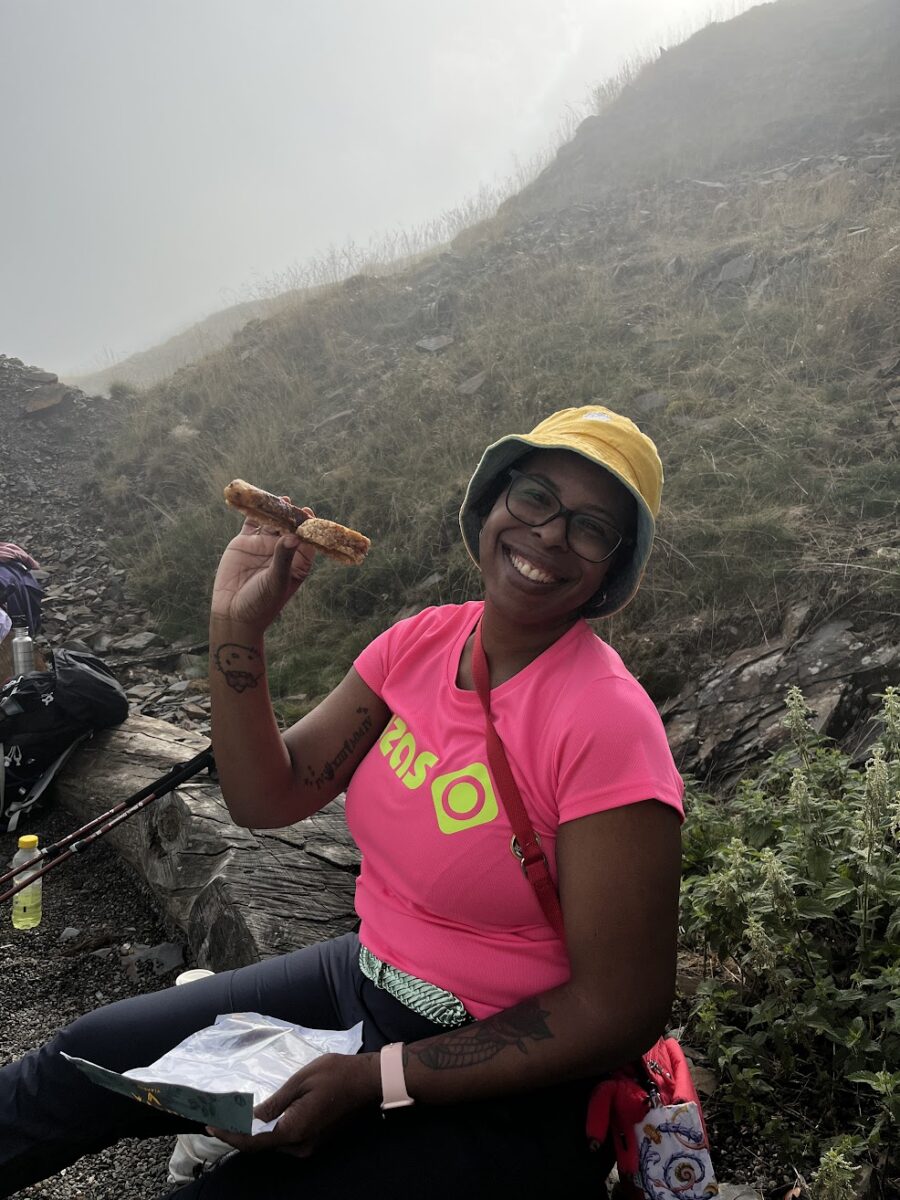
By lunchtime, I did not need a culinary performance. I needed something warm, salty, filling, and nearby. I wanted tortilla española, lentils, soup, potatoes, eggs, bread, or a sandwich that would carry me through the next stretch of road.
Then there was the coffee. Camino coffee did not need to be perfect. It only needed to appear at the right moment. Some mornings, that little cup tasted like rescue.
I also welcomed fruit, pastries, chocolate, and the occasional sweet treat. I was still me, after all. Walking hundreds of miles did not suddenly turn me into someone who could pass a bakery without looking inside.
If you are planning your own walk, do not overcomplicate Camino food. Carry a few practical snacks, especially if your body needs regular protein or you expect long stretches between villages. My Amazon storefront includes lightweight travel basics, walking-day essentials, and other items that may help you prepare.
The Camino Table Became a Meeting Place
The Camino creates temporary families. Some relationships last for one meal. Others last for several stages. A few people drift in and out of your journey until you realize they have become part of the story you will carry home.
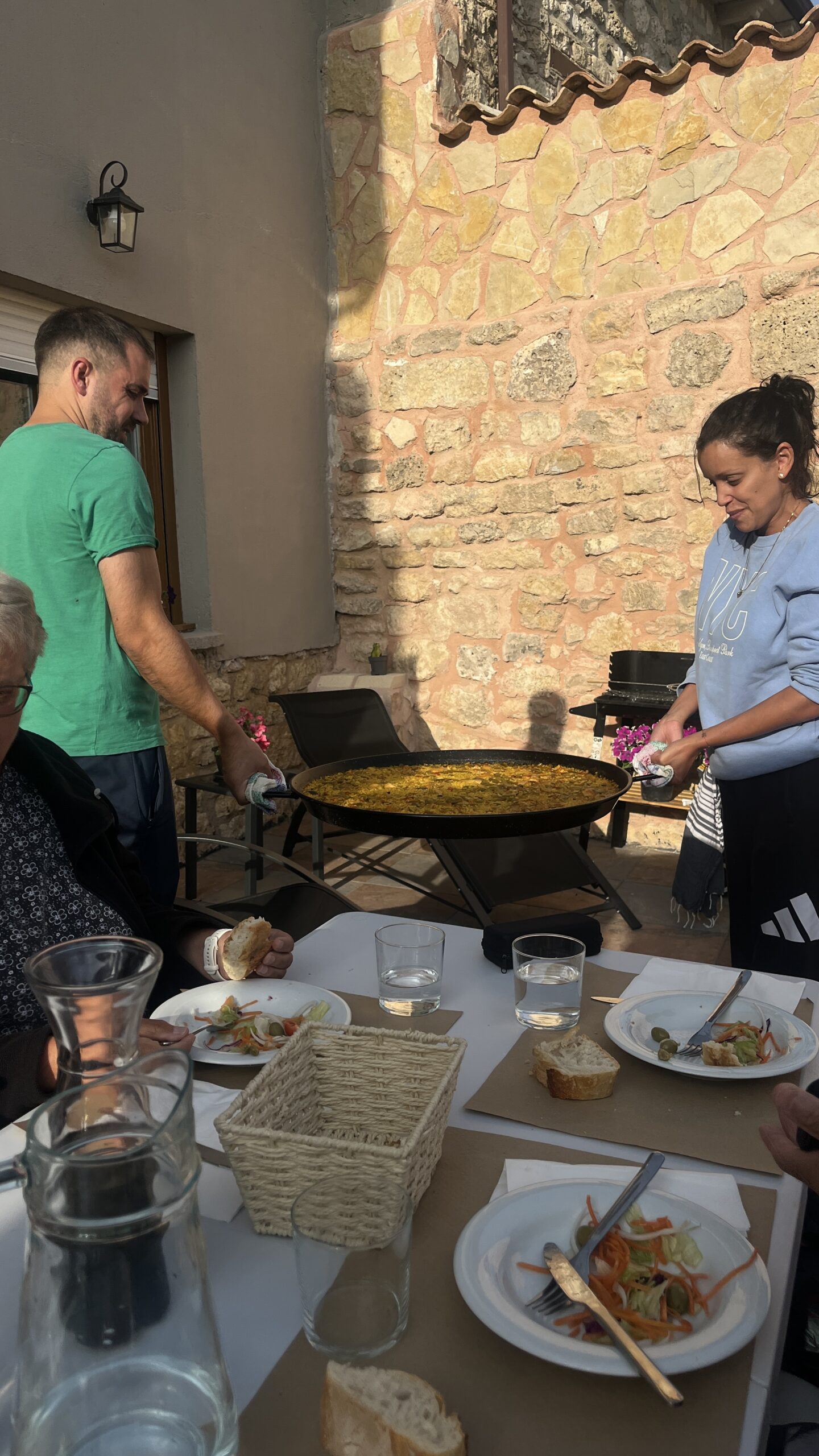
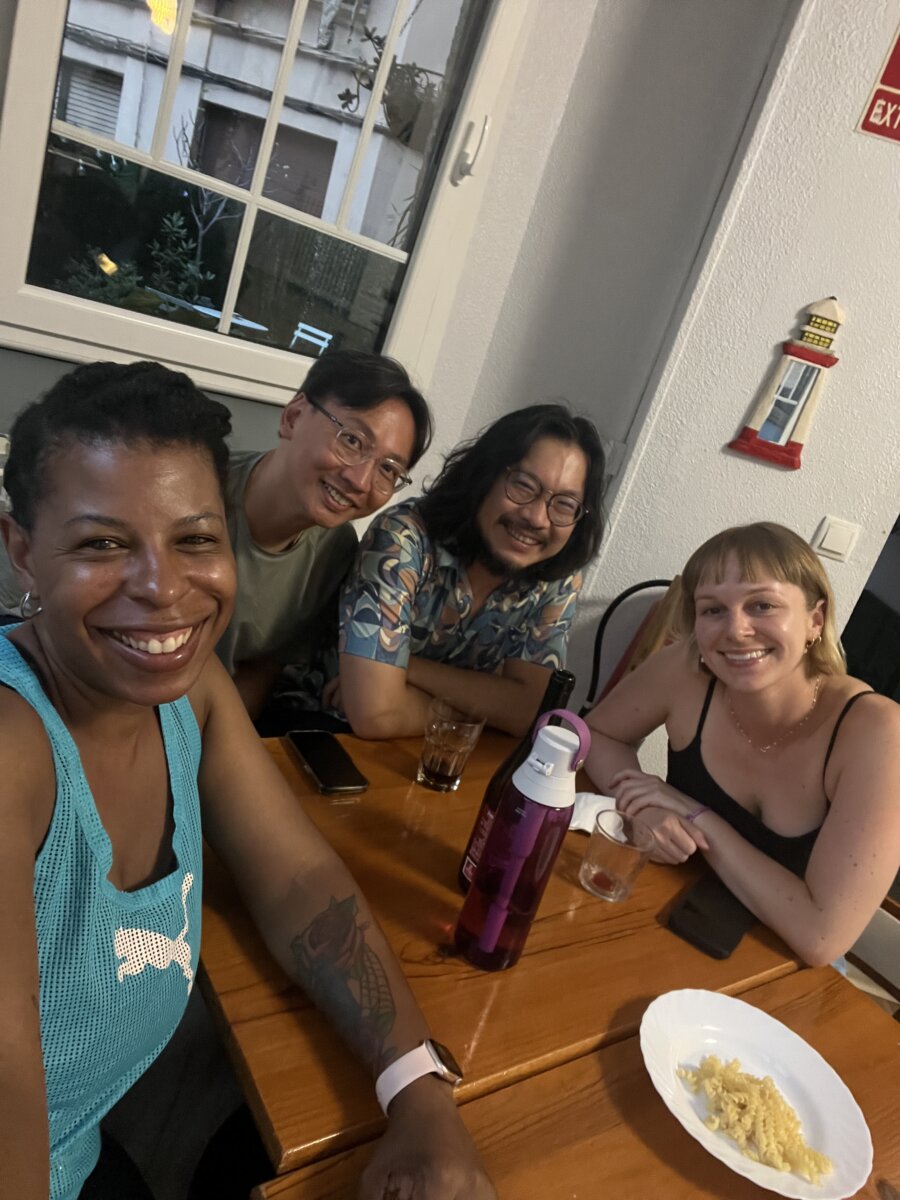
Shared tables helped those relationships form. You could sit down exhausted and soon find yourself talking with someone from Germany, Ireland, Korea, Canada, Colombia, Denmark, or Morocco.
Within minutes, someone would ask about your feet, your route, your pain, or where you planned to sleep that night. That is Camino intimacy. We might not know one another’s last names, but we knew the condition of each other’s blisters.
There is something wonderfully disarming about eating beside people who are just as tired, hungry, sweaty, and vulnerable as you are. The usual social barriers begin to fall away. Nobody has much energy left for pretending.
I wrote more about those connections in The Camino Family I Did Not Know I Needed. Food often became the bridge between us. It gave strangers a reason to stop walking, sit together, and remain still long enough to become familiar.
Spain Revealed Itself Through Everyday Food
The Camino is also a walking classroom in Spanish culture. As I moved through each region, the food shifted. The bread changed. The wine changed. The soups changed. Even the cafés carried their own rhythms and personalities.
A bar in one village might feel quiet and practical. In another town, the tables spilled into the street while neighbors talked over coffee and pilgrims examined their maps. Each stop offered a small glimpse into local life.
Sometimes the food was humble. Sometimes it was memorable. Occasionally, it was simply what I needed to reach the next town. Yet every meal reminded me that the Camino is not only a spiritual path or personal challenge.
It is also a living route through real communities. Those communities feed, house, guide, encourage, and patiently tolerate thousands of tired travelers every year.
The Camino could not exist as we know it without the bakers, farmers, cooks, servers, shopkeepers, café owners, and hospitaleros who support it. Their daily labor makes the journey possible.
For travelers who want to explore Spain before or after walking, GetYourGuide offers food tours, cultural walks, and city experiences in places such as Madrid, Pamplona, León, and Santiago de Compostela. You can also visit Spain’s official tourism website for regional information and travel-planning resources.
Not Every Camino Meal Was Magical
Now, let us be honest. Not every meal was magical. Some pilgrim menus became repetitive. Some café stops were more about calories than culinary wonder. On certain days, I ate because my body needed fuel, not because the food was calling my name.
However, that was part of the truth of the journey. The Camino does not exist to entertain you every second. It teaches gratitude in practical, sometimes uncomfortable ways.
You learn to appreciate the café that is actually open. You feel thankful for a clean glass, a hot bowl of soup, a bathroom, a wall outlet, and a chair that allows your aching body to rest.
You also appreciate the person who lets you remain at the table longer than your small purchase probably deserves. That quiet generosity matters when you are exhausted and still have miles ahead.
This kind of gratitude is not small. Over time, it changes how you move through the world. It reminds you that comfort often depends on someone else choosing to make room for you.
Food Along the Camino Revealed an Entire System of Care
Because I have spent years working in food systems and community development, I could not separate each meal from the system behind it. Somebody planted the food. Somebody harvested it. Somebody transported it, cooked it, served it, and cleaned the table afterward.
Somebody opened the café before sunrise because they knew pilgrims would arrive half-awake and desperate for coffee. Somebody stocked fruit, bread, cheese, and bottled water in a tiny village shop. Somebody prepared lentils knowing hungry walkers would eventually appear.
That labor often stays invisible. Yet it forms part of the Camino’s foundation.
Hospitality is not only a warm welcome or a beautiful dining room. Sometimes it is a plate placed in front of a stranger at the exact moment they need it. Sometimes it is a refill of water, directions to the next village, or permission to rest for a little longer.
Food along the Camino meant more to me than fuel. It showed me how a historic route survives through cooperation and service. It revealed how culture lives inside ordinary work. Most importantly, it showed me how much care can hide inside a simple plate.
The Meals Helped Me Feel Human Again
When I think about the Camino now, I remember the landscapes, conversations, villages, and difficult climbs. I remember the pain in my feet and the pride I felt each time I reached another destination.
However, I also remember the tables.
I remember sitting down tired and being welcomed into a conversation. I remember passing bread, laughing with people I had only recently met, and listening to stories from lives completely different from my own.
I remember arriving hungry and leaving with more than a full stomach.
Those meals reminded me that we need one another. We need the person who grows the food, the person who prepares it, the person who shares the table, and the person who notices when we are struggling.
Again and again, food along the Camino brought me back to myself. I would sit down exhausted, dusty, and emotionally worn thin. Then I would eat, rest, talk, and rise from the table feeling a little more connected and a little more human.
In the end, that may be one of the Camino’s most important lessons. We can walk alone for a while, but none of us completes the journey entirely by ourselves.