A Good Local Walk Can Change the Whole Day
I have taken walks that changed nothing about my circumstances and still changed the entire day.
The email remained unanswered. The decision still needed to be made. My responsibilities did not disappear simply because I tied my shoes and stepped outside.
Yet, something shifted once I began moving.
The walls of the room stopped containing every thought. Air reached my face. My body found a rhythm that had nothing to do with a deadline, and the problem I had been carrying so tightly began to take up a little less space.
That is what a local walk can do for me.
I do not always need a plane ticket, hotel room, or dramatic itinerary to experience movement. Sometimes, I only need to leave the house, turn toward a street I usually ignore, and allow the familiar world to become visible again.
Leaving Without Leaving Town
Travel is often defined by distance.
The farther I go, the more legitimate the experience seems. A journey should involve luggage, transportation, reservations, and a place different enough to photograph as proof that I went somewhere.
A local walk challenges that idea.
I may remain within a mile of home and still encounter something I have never noticed. A side street opens into a small park. A building carries a date above the doorway, or a garden reveals what someone has been tending quietly for years.
The geography has not changed.
My attention has.
That shift can be enough to make the outing feel like departure.
The Front Door Can Become a Starting Line
Beginning close to home removes some of the friction that makes travel feel difficult.
I do not need to coordinate transportation, check into a room, or create a complicated plan. The journey can begin at my own door.
That accessibility matters.
Money, time, health, caregiving, and work responsibilities can limit how often people travel far. Local exploration offers another way to create movement without pretending those constraints do not exist.
A walk nearby is not a replacement for every larger dream.
It is a reminder that curiosity does not need to remain dormant until the next major trip becomes possible.
The Familiar Street Was Not as Familiar as I Thought
I can pass the same street for years without truly seeing it.
Driving creates speed and separation. I notice traffic lights, parked cars, and whatever I need to reach the destination safely.
Walking changes the scale.
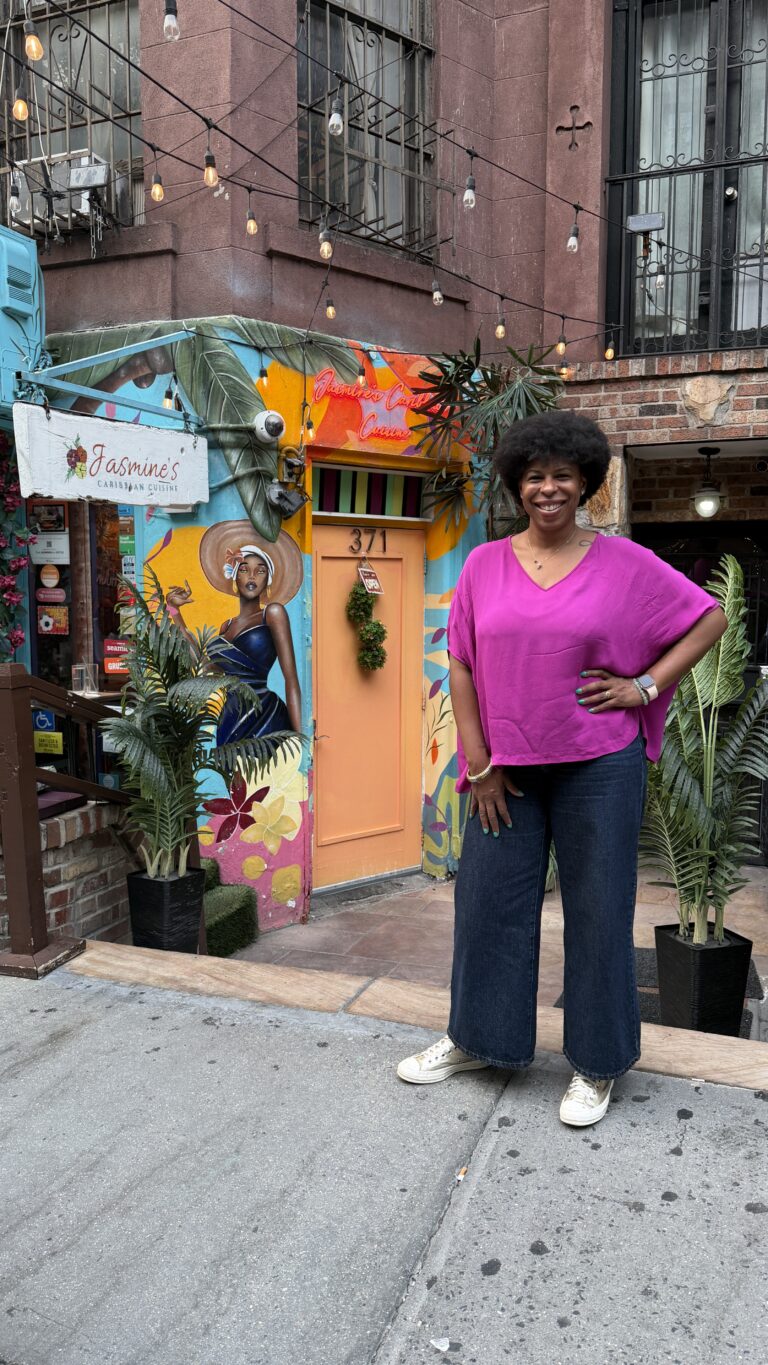
I see porch railings, handmade signs, cracked tiles, old trees, and the small decisions people make around their homes. A door has been painted an unexpected color. Someone has planted herbs in recycled containers, while another yard holds a chair facing the afternoon sun.
These details were always there.
I was moving too quickly to receive them.
The Neighborhood Stops Being Background
Daily life can flatten a place.
Home becomes where I sleep. The grocery store is where I complete an errand, and the street is something I cross on the way to somewhere more important.
A local walk interrupts that efficiency.
I stop treating the neighborhood as scenery behind my obligations. It becomes a place with history, personality, contradictions, and people whose lives continue whether I notice them or not.
The walk returns depth to the surroundings.
Slow Travel Can Begin Before the Trip
Slow travel is not only a method for visiting distant places.
It is a way of paying attention.
This connects with my reflections on slow travel and choosing presence over pace.
I can move slowly through another country while remaining mentally absent. I can also walk near home and become deeply aware of where I am.
Presence matters more than mileage.
A local walk gives me practice before the next journey. It teaches me to notice the street rather than rush toward the attraction.
I Do Not Need to Maximize the Route
There is a temptation to make every outing productive.
I should reach a step goal, complete an errand, take photographs, listen to a podcast, or use the time to solve a problem.
Those things can be useful.
They can also turn the walk into another task.
Sometimes, I want movement without optimization.
I do not need the fastest route, longest distance, or most efficient use of the hour. I can turn because a street looks interesting and return home before the walk becomes an achievement.
The Body Understands Movement Before the Mind Explains It
I may begin walking while still carrying tension.
My shoulders remain lifted, and my thoughts repeat themselves with the same urgency they had indoors.
Then, the body begins changing the conversation.
Breathing settles into rhythm. My arms move, and the repetitive motion creates a steadiness that thinking alone could not produce.
The problem may remain unsolved.
I carry it differently.
Movement gives the nervous system another message: I am not trapped in the chair, room, or moment where the worry began.
A Walk Is Not Therapy, but It Can Create Room
I do not want to turn walking into a cure for every emotional difficulty.
Some problems require professional care, material change, difficult conversations, or decisions that cannot be walked away.
Still, movement can create enough room for me to approach those needs more clearly.
I return with a little more patience. The thought that felt impossible may become specific enough to name.
A walk does not resolve everything.
It can help me hear what the real question is.
The Question Changes Shape on the Road
Indoor thinking can become circular.
I revisit the same possibility, imagine the same outcome, and tighten around the same uncertainty.
Walking introduces new information.
A dog barks behind a fence. A bus passes, and sunlight changes as I move beneath the trees. The mind no longer controls the entire environment.
Those interruptions can loosen a rigid thought.
I may not find an answer.
Sometimes, I realize I have been asking the wrong question.
Solo Walking Builds a Quiet Kind of Confidence
Walking alone gives me practice trusting myself in public space.
I choose the direction, decide when to stop, and notice how my body responds to the environment. I become responsible for my own pace.
That connects with my reflections on solo travel confidence and finding my own rhythm.
Confidence does not always arrive through a dramatic challenge.
It can grow through small acts of navigation repeated over time.
I take a new street, find my way back, and learn that I can move through the world without waiting for someone else to lead.
I Learn My Own Pace When Nobody Else Sets It
Walking with other people requires negotiation.
Someone moves faster. Another person wants to stop, and conversation influences the rhythm.
Alone, I hear my natural pace more clearly.
I slow down when something interests me. If my body feels tired, I rest without needing to justify the pause.
That freedom helps me understand how often I adjust myself around other people’s speed.
A solo walk lets the body choose.
Safety Changes the Meaning of Wandering
Not everyone can wander through every neighborhood with the same ease.
Gender, race, disability, age, sexuality, and local conditions shape how safe a person feels in public space.
Women often calculate lighting, traffic, isolation, and whether someone appears to be following us. Black walkers may experience surveillance or suspicion in spaces where others move without question.
A local walk can feel liberating.
It can also require vigilance.
I pay attention to my surroundings, trust discomfort, and choose routes according to the conditions of that day rather than an abstract idea of fearlessness.
Freedom Should Not Require Pretending Risk Does Not Exist
I do not need to ignore safety concerns in order to prove independence.
Confidence and caution can exist together.
I may share my route, keep my phone charged, avoid poorly lit areas, or change direction when something feels wrong.
Those choices do not diminish the walk.
They reflect the reality that public space is not experienced equally.
The larger goal should be neighborhoods where more people can walk without fear, not teaching individuals to carry every burden of safety alone.
The Sidewalk Tells Me What the City Prioritizes
A walk becomes an informal infrastructure audit.
I notice whether sidewalks exist, where they end, and how often I must step into traffic. Cracks, roots, parked cars, and construction can turn a simple route into an obstacle course.
These conditions affect everyone differently.
A broken path may be annoying for me and impossible for someone using a wheelchair, walker, or stroller.
Walkability is not only about distance.
It is about whether the route respects human bodies.
A Curb Cut Is a Small Piece of Public Freedom
Accessible design often appears in details people overlook.
Curb cuts help wheelchair users, but they also support travelers with luggage, parents with strollers, delivery workers, cyclists, and people recovering from injury.
When they are missing, blocked, or poorly maintained, the city becomes harder to move through.
A local walk reminds me that access is built one intersection at a time.
Shade Determines How Far the Walk Can Go
Summer changes the route.
A street lined with mature trees feels completely different from one exposed to direct sun. Shade can determine whether I walk comfortably or turn home early.
This is not merely an aesthetic preference.
Tree cover affects heat, air quality, and who can safely remain outside.
Neighborhoods without shade often reflect longer histories of disinvestment.
The walk reveals environmental inequality in a way a map may not.
A Bench Can Extend Someone’s World
Public seating makes walking possible for more people.
An older adult, disabled person, pregnant woman, or anyone with limited stamina may need regular places to rest.
Without benches, only people who can remain continuously mobile are fully accommodated.
I appreciate a bench because it allows the outing to pause without ending.
Rest should be part of movement, not evidence that the walk has failed.
Crossing the Street Should Not Feel Like a Test of Nerve
Wide roads, fast traffic, short signals, and unclear crossings shape whether a neighborhood feels walkable.
A street may contain shops and parks within a reasonable distance while remaining hostile to pedestrians.
The route exists geographically.
It does not exist safely.
Walking helps me understand how city design privileges speed in vehicles over the pace of human bodies.
A livable neighborhood should not require courage at every intersection.
The Local Shop Looks Different on Foot
Driving past a storefront gives me only seconds to notice it.
Walking allows the window to make its argument.
I see handwritten signs, changing displays, local flyers, and whether people inside seem to know one another.
A small business becomes part of the street rather than a destination isolated by parking.
Sometimes, I enter.
Other times, I simply remember that it exists and return later.
Foot traffic creates a relationship with local commerce that feels different from arriving only when I already know what I want.
The Corner Store Is Part of the Neighborhood’s Food Story
Local walks reveal where people buy everyday food.
A bakery opens early. A small grocery displays fruit outside, while another shop specializes in ingredients connected to the community’s cultural history.
These places show what residents need, value, and can access.
The food landscape becomes visible one block at a time.
I also notice what is missing.
A neighborhood may have several convenience stores but little fresh food, or restaurants may serve visitors while residents travel elsewhere for basic groceries.
Walking makes those patterns harder to ignore.
The Smell From a Kitchen Can Redirect the Entire Outing
Food enters a walk through smell before sight.
Bread, coffee, grilled meat, spices, or something frying can change the route immediately.
I begin looking for the source.
A local bakery or restaurant may become the unexpected center of the outing. The walk that began as movement turns into lunch, a snack, or a note to return later.
This is one reason I like leaving room for spontaneity.
The neighborhood may offer an invitation I could not have planned.
The Porch Is a Small Public-Private Border
Porches fascinate me because they sit between home and street.
People decorate, sit, wave, observe, and create a visible relationship with the neighborhood. A porch can make a street feel inhabited.
It also reveals cultural differences.
Some communities use front spaces socially. Others retreat behind fences, garages, or closed blinds.
Neither arrangement tells the full story.
Still, architecture influences how easily neighbors encounter one another.
Gardens Reveal What People Are Willing to Tend
A front garden offers a glimpse of care.
Flowers, vegetables, herbs, stones, and handmade decorations show how someone has shaped a small piece of land.
Not every yard is maintained, and that does not automatically mean the resident lacks care.
Time, money, health, housing status, and climate all influence what is possible.
Walking encourages curiosity without requiring judgment.
I can notice beauty while remembering that I do not know the circumstances behind every space.
The Tree Has Been Watching the Neighborhood Longer Than I Have
Mature trees create a sense of history.
They have survived construction, storms, changing ownership, and generations of residents. Their roots lift sidewalks while their branches hold birds, shade, and memory.
A local walk makes me appreciate their scale.
From a car, a tree becomes scenery.
On foot, I can see bark, roots, damaged limbs, and the way an entire block changes beneath its canopy.
Birdsong Makes the Neighborhood Feel Less Mechanical
Cities contain more nature than I often notice.
Birds move between wires, roofs, trees, and patches of grass. Insects work through gardens, while squirrels follow their own maps across fences and branches.
Walking places me close enough to notice.
The neighborhood stops feeling composed only of roads and buildings.
It becomes an ecosystem.
Weather Turns the Same Route Into a Different Place
A familiar street changes with the weather.
Rain deepens colors and empties sidewalks. Wind moves leaves, signs, and loose papers through the road.
Heat slows everyone down, while cold sharpens the air and makes warm windows look especially inviting.
The route remains geographically identical.
Emotionally, it becomes another place.
Repeating the same walk across seasons teaches me that familiarity is never complete.
Rain Can Make the Street Feel Newly Washed
I enjoy walking after rain when the air feels cooler and the pavement reflects light.
Water gathers in cracks, leaves shine, and familiar buildings appear slightly altered.
The neighborhood feels quieter.
People move with more purpose, and sounds become sharper against the wet street.
A walk after rain is not dramatic travel.
It can still create the feeling of seeing home again.
Golden Hour Does Not Belong Only to Vacation
Evening light can make an ordinary block feel cinematic.
Brick warms, windows reflect the sky, and shadows stretch across the sidewalk. A street I barely notice at noon becomes beautiful near sunset.
I do not need to travel somewhere famous to experience that transformation.
Beauty is not always absent from daily life.
Sometimes, I am simply not outside at the hour when it reveals itself.
The Walk Gives Me Time Without Making It Empty
Unstructured time can feel uncomfortable.
I am accustomed to filling it with screens, tasks, or information. Walking gives the time a gentle form.
I am doing something without needing to produce anything.
The body moves, the environment changes, and the hour gains shape without becoming another demand.
This kind of time feels restorative because it is neither fully idle nor tightly managed.
I Can Walk Without Turning It Into Content
There is constant pressure to document experience.
A mural, meal, or beautiful street becomes a possible post before I have fully encountered it.
Sometimes, I take photographs.
Other times, I leave the phone in my bag.
Not every walk needs proof.
An experience can belong entirely to the day it happened and still matter.
The Camera Can Help Me Notice, but It Can Also Narrow the View
Photography changes attention.
I begin looking for light, framing, texture, and details I might otherwise miss. That can deepen observation.
It can also turn the neighborhood into a collection of images.
I may focus so intensely on capturing the street that I stop inhabiting it.
I try to let the camera serve the walk rather than control it.
The Route Can Become a Personal Map of Memory
Repeated walks collect associations.
This is where I received a phone call. That corner is where I stopped during a difficult day, while another block reminds me of someone who once walked beside me.
The physical route becomes layered with personal history.
New experiences do not erase the old ones.
They accumulate.
Home becomes a map of moments as much as streets.
Walking With Someone Changes the Conversation
Face-to-face conversation can feel intense.
Walking places both people beside each other, looking forward. The body has somewhere to direct nervous energy, and silence feels less demanding.
Difficult conversations may unfold more naturally.
So can laughter.
The route creates movement when the conversation feels stuck.
By the time we return, the issue may not be resolved, but we have carried it together through physical space.
A Friend Can Show Me My Own Neighborhood
Walking with someone else changes what I notice.
They point toward a building I have ignored, ask about a street name, or react to something that has become invisible through familiarity.
Their curiosity refreshes mine.
Hosting a visitor can turn home into a destination because I begin seeing it through another person’s attention.
Sometimes, the best local guide is someone who does not yet know the route.
Children Understand the Value of the Detour
Children rarely walk with adult efficiency.
They stop for rocks, insects, puddles, sticks, signs, and questions that have nothing to do with reaching the destination.
That pace can be frustrating when time is limited.
It also reveals how much adults have trained ourselves not to notice.
A child’s walk is often an investigation.
The destination may matter less than everything that interrupts the route.
Older Neighbors Carry Histories the Buildings Cannot Explain
A longtime resident may know what occupied a corner before the current development.
They remember stores, families, community events, and buildings that no longer exist. Their stories add layers to what I see.
Local history does not live only in archives.
It lives in people who watched the neighborhood change.
A brief conversation on a walk can reveal more than a plaque.
The Street Name May Be Carrying a Story
I often pass street names without wondering whom or what they honor.
Walking gives me time to ask.
A name may refer to a local figure, historic landowner, political leader, geographic feature, or story the city has chosen to preserve.
Some names deserve celebration.
Others reveal histories of exclusion or power.
The map is never entirely neutral.
Murals Turn Walls Into Public Memory
A mural can change the emotional character of a block.
It may honor a person, express community pride, protest injustice, or transform an ignored wall into a visual gathering point.
I try to learn who created it and why.
Public art is more than decoration.
It can show which stories a neighborhood wants visible and which voices are demanding space.
Construction Tells Me What the Neighborhood May Become
Walking past construction raises questions.
What is being built? Who will be able to live, work, or shop there?
New development can create housing, services, and investment. It can also raise rents, remove familiar businesses, and reshape the area around people with greater wealth.
A changing skyline may look like progress from a distance.
At street level, the meaning becomes more complicated.
The Closed Storefront Has a Story Too
An empty shop is not simply blank space.
It may represent retirement, rising rent, a failed business, disinvestment, or a family whose plans changed.
Several empty storefronts can alter how safe and connected a street feels.
Walking allows me to see economic change in sequence.
One business closes, another opens, and the neighborhood’s identity shifts before official narratives catch up.
Local Travel Should Not Turn Residents Into Scenery
Exploring my own city or another neighborhood requires respect.
People are not attractions, and private homes are not sets for my photographs. Poverty, difference, and cultural life should not become material for a shallow sense of discovery.
I want curiosity without entitlement.
That means supporting local businesses, learning context, avoiding intrusive photography, and remembering that my outing unfolds inside someone else’s ordinary life.
A Neighborhood Is More Than Its Trendiest Block
Local travel content often concentrates on cafés, boutiques, murals, and photogenic streets.
Those places may be enjoyable.
They do not represent the whole neighborhood.
Schools, laundromats, bus stops, places of worship, clinics, parks, and grocery stores reveal how daily life functions. Walking beyond the polished district offers a fuller picture.
I do not want to reduce a community to the parts most easily marketed.
The Park Can Become the Turning Point
A nearby park gives the walk a natural destination without making it rigid.
I can sit, stretch, watch people, or decide whether to continue. The park creates a pause inside the route.
It also shows how the community uses shared space.
Children play, workers eat, older adults walk, and people without private outdoor space find somewhere to breathe.
The park is not simply scenery.
It is part of the neighborhood’s infrastructure.
The Library Is One of My Favorite Local Destinations
A library gives a walk purpose without requiring a purchase.
I can browse, read, use a restroom, charge a device, attend an event, or sit somewhere quiet.
Libraries make local exploration more humane.
They provide information and shelter while allowing people to remain without proving they can spend money.
A walk that includes the library feels like travel through both space and thought.
A Café Can Be a Pause, Not the Price of the Outing
I enjoy ending a walk with coffee or food.
Still, I do not want every outing to require a purchase.
The walk should remain valuable even when I spend nothing.
Commercial stops can add pleasure and support local businesses. Public benches, parks, and libraries make participation possible for people with different budgets.
A walkable community needs both.
Local Food Can Give the Route an Anchor
Sometimes, I build the walk around a bakery, market, or restaurant I have been meaning to try.
The food gives the route direction.
Walking there also changes the meal. Hunger develops naturally, and I see the streets connecting home to the business.
The restaurant becomes part of the neighborhood rather than a point reached by car.
I understand more about who passes it, what surrounds it, and how it fits into local life.
A Guided Experience Can Reveal What I Have Been Missing
Living near a place does not mean I know its history.
A walking tour can explain architecture, migration, food traditions, public art, and events that shaped familiar streets.
I browse nearby tours and local activities through GetYourGuide when I want more context about a city I think I already understand.
A guide can make the ordinary legible.
Afterward, the same route may never feel quite as invisible again.
Local Tourism Can Support the Economy Without Requiring a Major Trip
A nearby museum ticket, meal, workshop, or guided experience still supports local workers and businesses.
I do not need to leave the region to participate in its cultural economy.
This can be especially valuable during periods when larger travel is financially or logistically impossible.
Local travel keeps curiosity active while directing money toward places that contribute to the community.
The Right Shoes Can Protect the Pleasure
A local walk requires less gear than a major trip.
Comfort still matters.
Poorly fitting shoes, a heavy bag, or clothing unsuited to the weather can turn a restorative outing into discomfort.
I keep practical walking shoes, lightweight bags, and travel accessories in my Amazon travel shop.
The goal is not to purchase an identity as a walker.
It is to remove avoidable friction from the experience.
The Day Bag Should Carry Less Than My Anxiety Wants
I can overprepare for a short outing.
Water, charger, snacks, layers, notebook, umbrella, and several just-in-case items turn a simple bag into unnecessary weight.
Preparation matters.
So does remembering that I am close to home.
A local walk can teach me what I truly need and what I carry because uncertainty makes me uncomfortable.
Water Changes How Long the Walk Feels Good
Hydration seems obvious until I forget it.
Heat, distance, and pace influence how quickly a pleasant walk becomes draining. Carrying water may allow me to continue without needing to buy a disposable bottle.
Public fountains can help when they are available and functioning.
Their presence reveals whether the city expects people to spend meaningful time outside.
Walking Is Free, but Walkable Environments Are Not Accidental
People often describe walking as free exercise.
The movement itself does not require a membership.
Safe sidewalks, lighting, trees, crossings, benches, and public bathrooms require investment.
Some communities receive that infrastructure.
Others are told to walk more while living amid dangerous roads, poor air quality, and neglected public space.
Personal health advice cannot substitute for equitable city planning.
The Walk Reveals Where Public Investment Stops
Infrastructure can change noticeably at neighborhood boundaries.
Sidewalks become narrower. Trees disappear, lighting weakens, or road maintenance declines.
These transitions often align with income, race, and political power.
A local walk makes inequality physical.
I do not encounter it only through statistics. I feel it beneath my feet.
Public Transit Can Expand the Local Radius
A local walk does not need to begin and end at the same door.
A bus or train can carry me to another neighborhood, where I walk without the cost or complication of a longer trip.
This combination creates a larger sense of local exploration.
Transit also reveals how connected different parts of the city are.
Can people reach parks, jobs, food, and cultural institutions easily without a car?
Mobility shapes whose city feels available.
A One-Way Walk Can Feel More Adventurous
Knowing I do not need to retrace every step changes the route.
I can walk toward another part of town and return by transit or arrange a pickup. The distance feels less repetitive.
This requires planning.
Schedules, safety, battery life, and fare all matter.
Still, a one-way route can make local movement feel like a small journey rather than a loop.
Seasonal Repetition Keeps the Route Alive
I like returning to the same streets across the year.
Spring reveals blossoms and fresh growth. Summer brings shade and long evenings, while autumn changes the ground beneath every step.
Winter exposes architecture hidden by leaves.
The route becomes familiar without becoming finished.
Repetition deepens attention when I remain open to change.
A Routine Walk Can Become a Form of Belonging
Walking the same route regularly changes my relationship with it.
I begin recognizing dogs, workers, gardeners, and other walkers. People may nod or say hello.
These small interactions do not automatically become friendship.
They create familiarity.
Belonging often grows through repeated presence rather than one dramatic welcome.
The Neighborhood Begins Recognizing Me Too
There is comfort in becoming part of the local rhythm.
A shopkeeper notices when I return. Someone at a café remembers my order, and a neighbor becomes more than a face seen through a windshield.
Walking makes me visible at human speed.
I am not sealed behind glass or moving too quickly for recognition.
The street begins to know me through repetition.
Not Every Walk Needs to Be Beautiful
Some routes include litter, traffic, noise, neglected buildings, and long stretches without shade.
I do not need to romanticize them.
Beauty is not the only reason to walk.
The route can teach me about planning, inequality, change, and the conditions shaping local life. Discomfort may reveal something worth understanding.
Still, people deserve better than being told to find inspiration in neglect.
Observation should not replace advocacy.
Walking Can Become a Way of Caring About the Place
The more closely I know a neighborhood, the harder it becomes to treat its problems as abstract.
I notice the dangerous intersection, broken bench, missing tree, or small business at risk of closing.
Attention can lead to care.
I may support a local organization, report a maintenance issue, attend a community meeting, or simply spend money more intentionally.
Walking does not automatically make me civically engaged.
It gives me more information about what engagement might require.
The Street Has Something to Teach When I Stop Demanding Entertainment
Local exploration can disappoint if I expect every block to provide a spectacle.
Most neighborhoods are not designed as attractions.
They contain ordinary life.
That is precisely what makes them valuable.
A person sweeps a storefront. Children return from school, and someone waits for the bus with groceries at their feet.
The lesson may not be dramatic.
It can still deepen my understanding of place.
Movement Works Like a Reset Button, Not an Eraser
I return from a walk to the same life I left.
The work remains, and difficult decisions still require attention.
Movement has not erased anything.
It has interrupted the grip of stillness.
I often return more able to begin. The question feels less fused to my identity, and the next step becomes easier to see.
A reset does not remove the program.
It gives the system a chance to function again.
The Walk Can Mark a Transition in the Day
When I work from home, one part of the day can blur into another.
A walk creates a boundary.
It may signal the beginning of work, a lunch break, or the end of the day. The body crosses physical space, making the transition more tangible.
I return to the same room differently because I have left it for a while.
Walking Home Can Help the Day Release Me
Commuting on foot allows time to process what happened before entering home.
The mind replays conversations, settles unfinished emotions, and gradually changes roles.
Even a short walk around the block after work can create some of that separation.
I do not want every professional concern to enter the evening at full intensity.
The walk gives it somewhere to loosen.
The Walk Does Not Need to Become a Streak
Consistency can support a habit.
It can also turn movement into another measure of worth.
I do not need to preserve a perfect streak to receive the benefits of walking. Missing a day does not erase every previous step.
The walk should remain available as support, not become another authority demanding obedience.
Some Days the Walk Is Ten Minutes
Not every outing needs distance.
A short walk may be all my body, schedule, or mood can hold.
Ten minutes still changes the air I breathe and the view in front of me. It creates a small interruption in the day.
I try not to dismiss what is possible because it does not match an ideal.
Small movement still counts as movement.
Some Days I Keep Going
Other walks extend themselves.
I reach the corner where I planned to turn and feel curious about the next block. The body feels good, the weather cooperates, and time allows more.
I continue without turning the distance into a test.
Those unexpected miles can feel like a gift because I did not force them.
Local Adventure Can Begin With One Different Turn
I do not need to invent an entirely new route.
One different turn can change the walk.
A parallel street may contain another style of houses, a hidden path, or a business I had never seen. Small deviations keep familiarity from becoming automatic.
Adventure does not always require danger or distance.
Sometimes, it requires enough curiosity to avoid repeating the exact same choice.
The Destination Can Be Something Small
A walk feels purposeful when I give it a simple anchor.
I may look for a mural, visit a park, buy one piece of fruit, return a library book, or sit somewhere I have passed many times.
The destination does not need to justify the outing through importance.
It simply gives the body a direction.
The Neighborhood Gives Back When I Pay Attention
A neighborhood cannot love me in the way a person can.
Still, it can give something back.
Shade on a hot day. A familiar face, a place to sit, a smell from a kitchen, or a street quiet enough for me to hear my own thoughts.
These offerings are easy to miss when I treat the area only as the space between home and somewhere else.
Attention creates relationship.
The Road Closest to Home Still Has Something to Teach
A local walk reminds me that movement does not begin at an airport.
I can leave without leaving town. The familiar street can become less automatic when I slow down enough to see porches, storefronts, birds, gardens, public art, and the infrastructure shaping who can move comfortably.
The walk gives me exercise, but it also gives me information.
I learn how the neighborhood lives, where it welcomes people, and where public care has been neglected. I notice local businesses, changing buildings, old trees, and the small rituals connecting residents to place.
Movement works like a reset button for me.
It does not erase the question waiting at home. It changes the way I carry it.
I return with air in my lungs, distance around the problem, and a clearer sense that life is larger than the room where the day began.
I still want plane tickets, unfamiliar cities, and journeys that carry me far from home.
However, I do not want to spend the days between them waiting for life to feel like travel again.
Sometimes, the nearest road offers enough movement.
I only have to step outside and let it teach me.
Explore more stories about walking, local discovery, and slower ways of experiencing place through DG Speaks Travel. You can also discover neighborhood restaurants, markets, and the food found along the way through DG Speaks Food and read more about public space, belonging, and community change in DG Speaks Culture.