When Staying Close to Home Teaches Me More
I had passed the building more times than I could count.
Sometimes, I noticed the sign while driving. On other days, I looked straight through it because my mind had already moved to the next errand, deadline, or destination.
Then one afternoon, I finally stopped.
Inside, I found a small local museum filled with photographs, personal objects, and stories about the people who had shaped the area long before I arrived. Nothing about the visit required a flight, hotel, or complicated itinerary. Still, I left feeling as though I had traveled somewhere new.
The place had not changed.
My attention had.
That experience reminded me how easily distance becomes confused with discovery. I often imagine travel as movement toward somewhere far away, yet there are seasons when distance is not possible, practical, or wise.
Wonder does not disappear during those seasons.
Close-to-home travel asks me to look harder at what familiarity has taught me to ignore.
The Places I Know Least May Be the Ones I Pass Every Day
Proximity can create a false sense of knowledge.
I may recognize the main roads, know where to park, and remember which stores used to occupy a particular corner. Because the area feels familiar, I assume I understand it.
Yet familiarity often comes from repetition rather than attention.
I know how to move through the place efficiently. That does not mean I know its history, neighborhoods, food traditions, public art, or the people whose lives shaped the streets around me.
A familiar route can still contain unfamiliar stories.
Routine Makes the Landscape Disappear
Daily life trains me to move with purpose.
I drive to the grocery store, walk to an appointment, or cross town to complete a task. The destination matters, while everything between one point and another becomes background.
Over time, the streets lose detail.
I stop seeing the old theater, the family-run restaurant, the mural behind the gas station, or the park entrance hidden beyond a row of trees.
Local travel begins when I interrupt that automatic movement.
Instead of asking only how quickly I can get somewhere, I begin asking what I have been passing.
Curiosity Does Not Require a Plane Ticket
Travel is often measured through miles, borders, and dramatic changes in scenery.
Those journeys can be transformative. However, distance alone does not guarantee curiosity.
I can travel across an ocean and remain closed to the place around me. Likewise, I can walk through a nearby neighborhood with enough attention to notice architecture, language, history, food, and social life I had never considered before.
Curiosity is a practice.
It depends on how I arrive, not only how far I go.
A Changed Pace Creates a Changed Place
One reason nearby places feel ordinary is that I usually experience them in a hurry.
When I slow down, the same environment begins offering more information. Walking reveals details that disappear from a car, while sitting in a public square shows how people actually use the space.
This connects with what slow travel has taught me about choosing presence over pace.
Slowness does not need to involve a long international journey.
It can begin with spending an afternoon in a part of my own city without trying to complete several tasks at once.
Local Restaurants Offer More Than Convenience
Food often gives me the easiest entrance into a place.
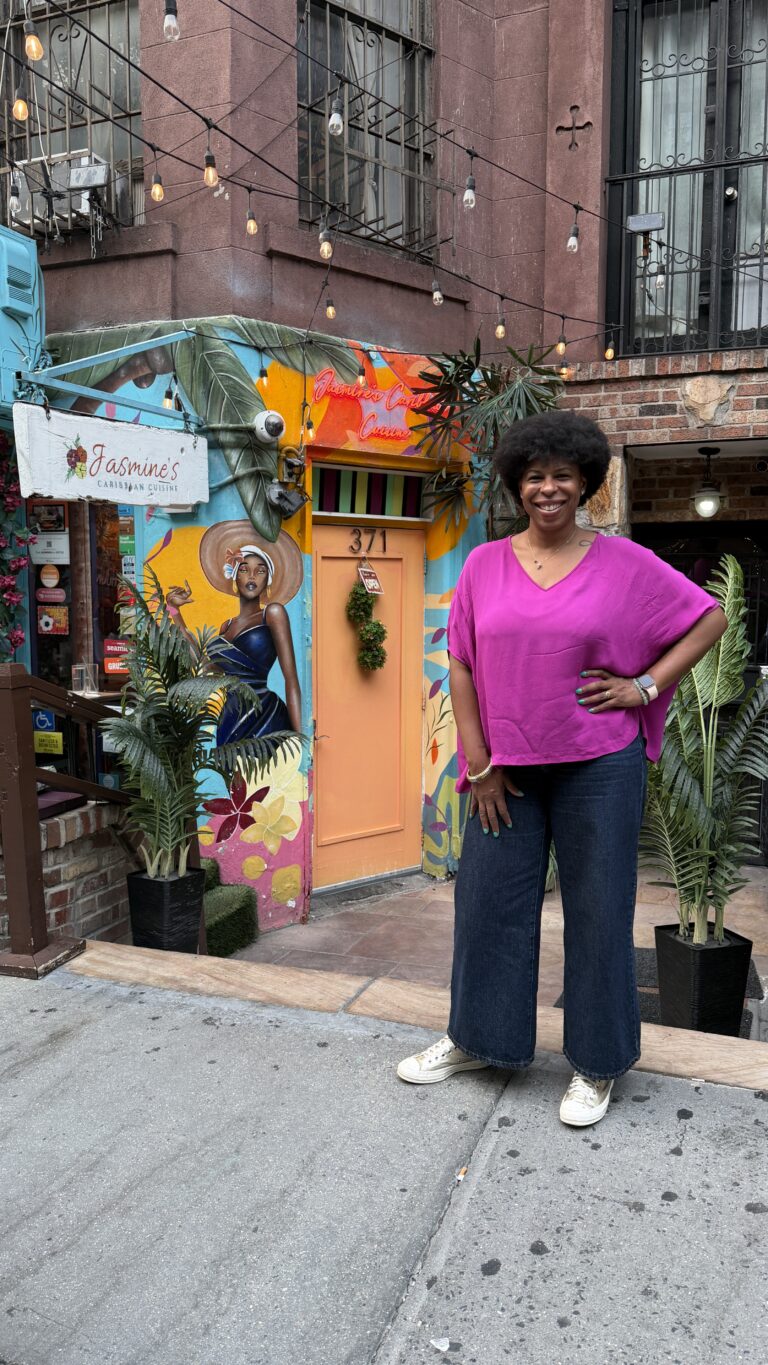
A neighborhood restaurant may reveal migration, family history, regional taste, or the changing identity of a community. The menu tells one story, while the room tells another.
I notice who gathers there, what people order repeatedly, and whether the restaurant functions as a quick stop or a social anchor.
This is why local restaurants teach me how a city feels.
A meal close to home can still become cultural discovery when I approach it with respect and curiosity.
Nearness Makes Return Possible
Distant travel often carries pressure because time is limited.
I may feel compelled to see everything before leaving, even when exhaustion begins replacing enjoyment. A nearby destination offers another possibility.
I can return.
If a museum closes before I finish, I can plan another afternoon. When a neighborhood deserves more time, I do not need to force the entire experience into one visit.
Return changes the relationship.
The place stops being something I consume once and becomes somewhere I can know gradually.
Local Travel Can Be More Accessible
Travel requires resources.
Transportation, lodging, meals, time away from work, caregiving, and physical energy all shape what is possible. For many people, long-distance travel remains difficult or completely out of reach.
Nearby exploration may reduce some of those barriers.
A day trip, public park, local festival, museum, historic site, or neighborhood walk can offer meaningful experience without the cost of airfare or several nights away.
That does not make local travel free or universally accessible. Even nearby places may lack affordable transit, safe sidewalks, accessible entrances, or clear information.
Still, a smaller radius can create options when a larger journey is not available.
Staying Close Can Support Local Economies
Where I spend money matters.
A meal at an independent restaurant, admission to a small museum, or purchase from a local market helps support businesses and institutions rooted in the community.
That spending does not automatically become ethical simply because it is local. I still want to consider labor, ownership, access, and who benefits from tourism.
However, close-to-home travel gives me an opportunity to invest in places I may encounter again.
The relationship can continue beyond a single transaction.
My Own Region Holds Histories I Was Never Taught
Local travel often exposes gaps in my education.
I may know the nationally recognized history of a region while remaining unaware of the labor struggles, Indigenous presence, Black communities, immigrant stories, environmental changes, or women’s leadership connected to a nearby site.
A small museum or guided walk can challenge the simplified version of place I inherited.
That discovery also requires humility.
Living near a story does not give me ownership of it. I still need to listen to the people and institutions carrying that history.
Traveling Locally Can Change How I Live There
A distant trip eventually ends.
Local exploration can influence daily life long after the outing is over.
I may discover a park that becomes part of my walking routine, a market where I begin shopping, or a cultural organization I want to support. A restaurant first visited as a destination may become a place I return with friends.
In that way, local travel can deepen belonging.
It turns discovery into relationship.
One Small Plan Is Often Enough
I do not need to create an elaborate itinerary for a nearby day.
One anchor usually works well. It might be a museum, walking tour, market, garden, historic site, or neighborhood meal.
I may use GetYourGuide to look for local tours or experiences when they are available. After choosing the main activity, I leave room to walk, eat, observe, and follow whatever catches my attention.
A lighter plan protects the sense of discovery.
Practical Preparation Still Helps
Nearby travel may feel easy because the destination seems familiar.
Even so, a few practical choices can improve the day. Comfortable shoes, water, a portable charger, weather protection, and a small bag can make walking and public transit less stressful.
I keep some of the travel basics I use or recommend in my Amazon travel shop.
The gear supports the experience, but it cannot create curiosity.
The most important preparation remains the decision to pay attention.
Familiarity Should Not Become Carelessness
Traveling close to home can make me feel overly comfortable.
I may assume I understand a neighborhood because it sits within my region. That assumption can lead to careless storytelling or quick judgments.
Every community contains complexity.
People who live there know the place differently from someone visiting for an afternoon. Therefore, I want to remain observant without pretending one walk, meal, or conversation has explained everything.
Local travel still requires respectful curiosity.
Sometimes Staying Close Is the Wiser Choice
There are seasons when long-distance travel does not fit.
Money may need to go elsewhere. Health, work, caregiving, uncertainty, or simple exhaustion can make a major trip feel unrealistic.
Choosing not to go far does not mean life has become small.
It may mean I am responding honestly to the season I am in.
A meaningful life cannot depend entirely on my ability to leave it.
The Familiar Place Can Meet a Different Version of Me
Even when a place has not changed, I may have.
A museum visited years ago can feel different after I have learned more about history. A neighborhood may reveal another layer after travel has changed the questions I ask.
Returning allows me to notice both the place and myself.
The same street can hold a different meaning because I am no longer the person who first walked through it.
What Nearness Gives Back
After leaving that small museum, I drove along roads I thought I knew.
Nothing looked completely unfamiliar. However, the area no longer felt quite as ordinary.
I had learned who once lived there, what people built, what disappeared, and which stories the community was still trying to preserve. The information changed the landscape because I could no longer move through it without context.
That is what close-to-home travel can give me.
It asks me to stop treating nearness as evidence that nothing remains to be discovered.
Travel is not only measured through distance. It also lives in attention, openness, and the willingness to meet a familiar place again.
A neighborhood I always drive through may hold a story I have never heard. A park I keep postponing may offer the quiet I thought I needed to travel elsewhere to find.
Local curiosity still counts.
Sometimes, the place I believed I already knew has simply been waiting for me to look at it differently.
Explore more stories about local travel, day trips, neighborhoods, and seeing familiar places with greater attention through DG Speaks Travel. You can also discover how local restaurants and food traditions reveal community life through DG Speaks Food, or read more about history, public space, belonging, and cultural memory through DG Speaks Culture.