The World Is Bigger Than Your Comfort Zone: A Love Letter to Cultural Diversity
May 21st is the World Day for Cultural Diversity for Dialogue and Development, established by the United Nations in the wake of the 2001 Universal Declaration on Cultural Diversity. It is a day that exists to remind us that the world’s cultural diversity is not a complication to be managed. It is an inheritance to be celebrated.
I take this one personally. Not because I am particularly virtuous about it, but because travel has made cultural diversity the organizing principle of how I move through the world. Every trip I take is, at its heart, an act of curiosity. A question asked with my feet and answered by the place I land.
And the places have always answered generously.
What Curiosity Has Given Me
I want to start here, with curiosity, because I think it is the engine of everything good that comes from cultural exchange. Not the tourism-brochure version of curiosity, which is sometimes more about collecting experiences than genuinely receiving them. The real kind. The kind that slows you down. That makes you sit with something unfamiliar long enough to begin to understand it.
I have tried to travel that way, with varying degrees of success depending on the day and my energy level, if I am honest. But the trips where I got it right are the ones I carry most carefully.
There was a village in Egypt where I was invited into someone’s home for tea, a ritual so specific and intentional that I felt the weight of it immediately. The pouring. The height from which the tea was poured. The three glasses, because one is not enough and four would be too many. The conversation that came with it, carried partly in Arabic and partly in the particular language of gesture and expression that transcends any single tongue.
I did not understand everything that was said or signaled in that room. But I understood that I was being welcomed, that generosity was being extended, and that the right response was to receive it without trying to immediately translate it into something familiar.
The Difference Between Visiting a Culture and Experiencing It
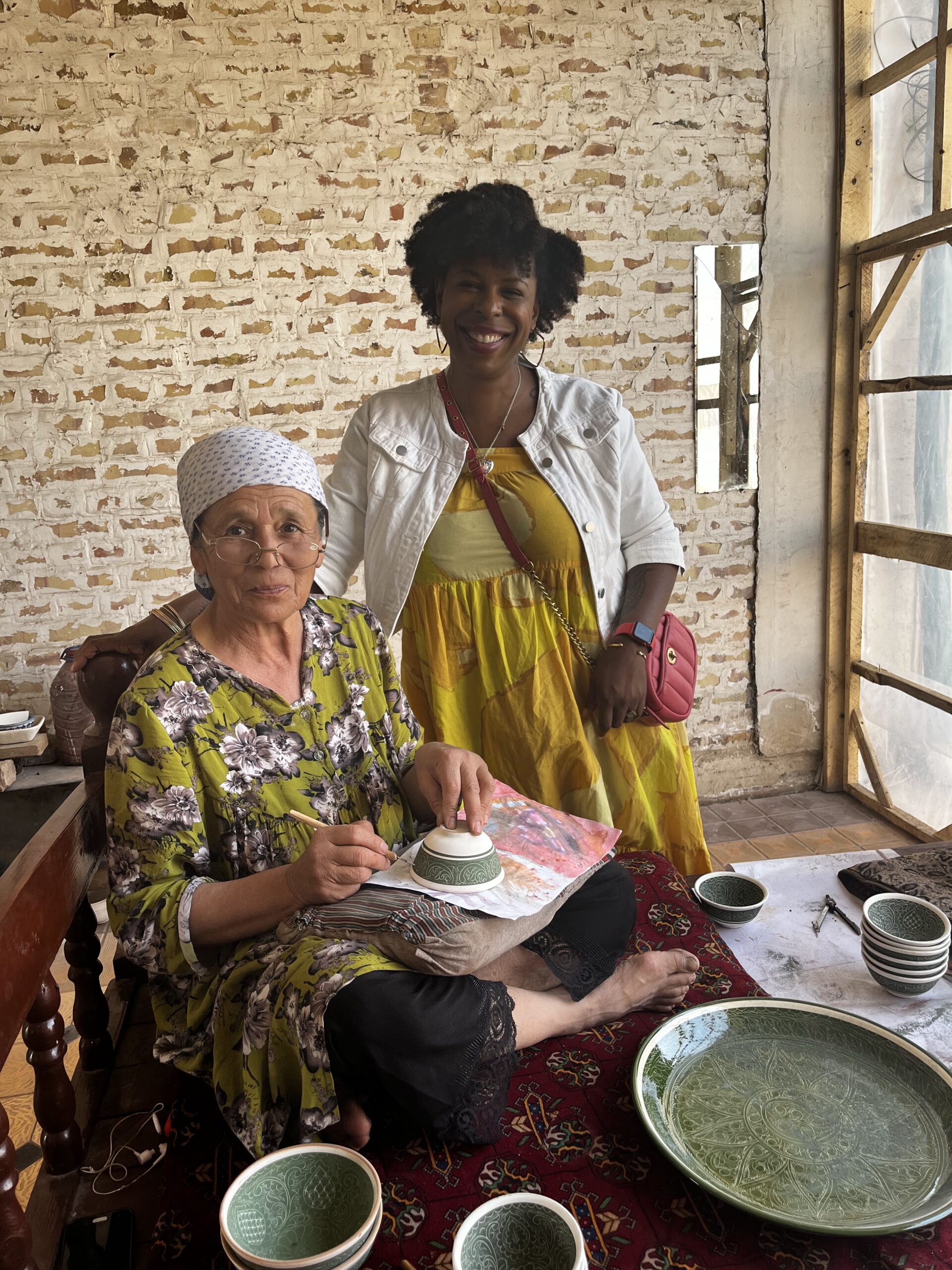
There is a version of travel that keeps you safely on the surface of a place. You see the monuments and eat at the restaurants recommended in the same three apps everyone uses and take photographs of things you have already seen photographed and go home with a checked box.
I am not judging that version. Getting out of your own context, even superficially, has value. But I want to advocate for going further when you can.
Going further looks different depending on the destination. Sometimes it means getting on a local bus instead of a private transfer. Sometimes it means eating lunch somewhere that has no English menu and pointing confidently at what the person next to you ordered. Sometimes it means accepting an invitation you did not expect and do not entirely understand, because the offer was made in good faith and deserves a good faith response.
What going further always requires is the willingness to not be the most knowledgeable person in the room. To be a student instead of a consumer. To let a place teach you something instead of confirming what you already believed about it.
That posture – humble, curious, genuinely open – is the foundation of cultural diversity as a lived practice rather than an abstract value.
What I Have Learned About Myself From Other Cultures
This is the part that surprises people when I talk about travel. They expect me to talk about what I have learned about other places and other people. But some of the most significant things I have learned from traveling have been about myself.
I learned, in Japan, that I am more comfortable with noise and chaos than I realized, because the contrast of their particular kind of orderly quiet made my own internal hum suddenly audible to me.
I learned, in Ghana, that there is a specific experience of being Black and American in an African country that is not what I expected – layered with recognition and distance simultaneously, a homecoming that is also a reminder of how much was lost and altered across generations.
I learned, in Colombia, that the versions of my Latina identity that feel most alive are the ones connected to music and food and the particular warmth of how people show up for each other. That those things translate across country lines in ways that language sometimes cannot.
You cannot learn those things from a documentary or a book. Not fully. You have to go, and be there, and let it happen to you.
Why Cultural Diversity Is Worth Protecting
The World Day for Cultural Diversity exists because cultural homogenization is a real threat. As global markets expand and media becomes more concentrated, there is a genuine risk that the stunning variety of human experience – in language, in art, in food, in ritual, in storytelling – gets flattened into something universally consumable and therefore universally forgettable.
UNESCO estimates that half of the world’s languages could disappear by the end of this century. When a language disappears, an entire way of understanding and describing the world disappears with it. The same is true for traditional food practices, craft traditions, musical forms, and oral histories that exist only as long as someone is alive to carry them.
Protecting cultural diversity is not nostalgia. It is an act of collective intelligence. A recognition that the world’s varied approaches to being human contain solutions, perspectives, and forms of beauty that we cannot afford to lose.
How I Observe This Day
By making a reservation, or a plan, or at minimum a decision. This is the day I commit to the next trip. The one I have been thinking about but not booking. The destination that challenges me a little, that requires some preparation, that will put me in a room where I am the student.
And if travel is not possible right now, I find a way to bring it to me. A restaurant I have never tried from a cuisine I do not know well. A film from a country I have not visited. A book by an author writing from a perspective fundamentally different from my own.
Cultural diversity is not only found at the airport. It is available everywhere, for anyone willing to look for it with genuine curiosity.
The world is larger than any of us will ever fully explore. That is not a problem. That is the whole point.
What is the most meaningful cultural experience you have ever had, traveling or at home? Tell me about it. I want the full story.