World Food Forum 2026: Who Gets a Seat at the Table?
I have spent enough time working in food systems to know that a conversation about feeding people is rarely just a conversation about food. It is about land, labor, history, money and the decisions made long before anything reaches our plates. That was the perspective I carried to Rome for World Food Forum 2026. I arrived curious about what the global conversation might reveal, but I was particularly interested in the questions it might leave unanswered.
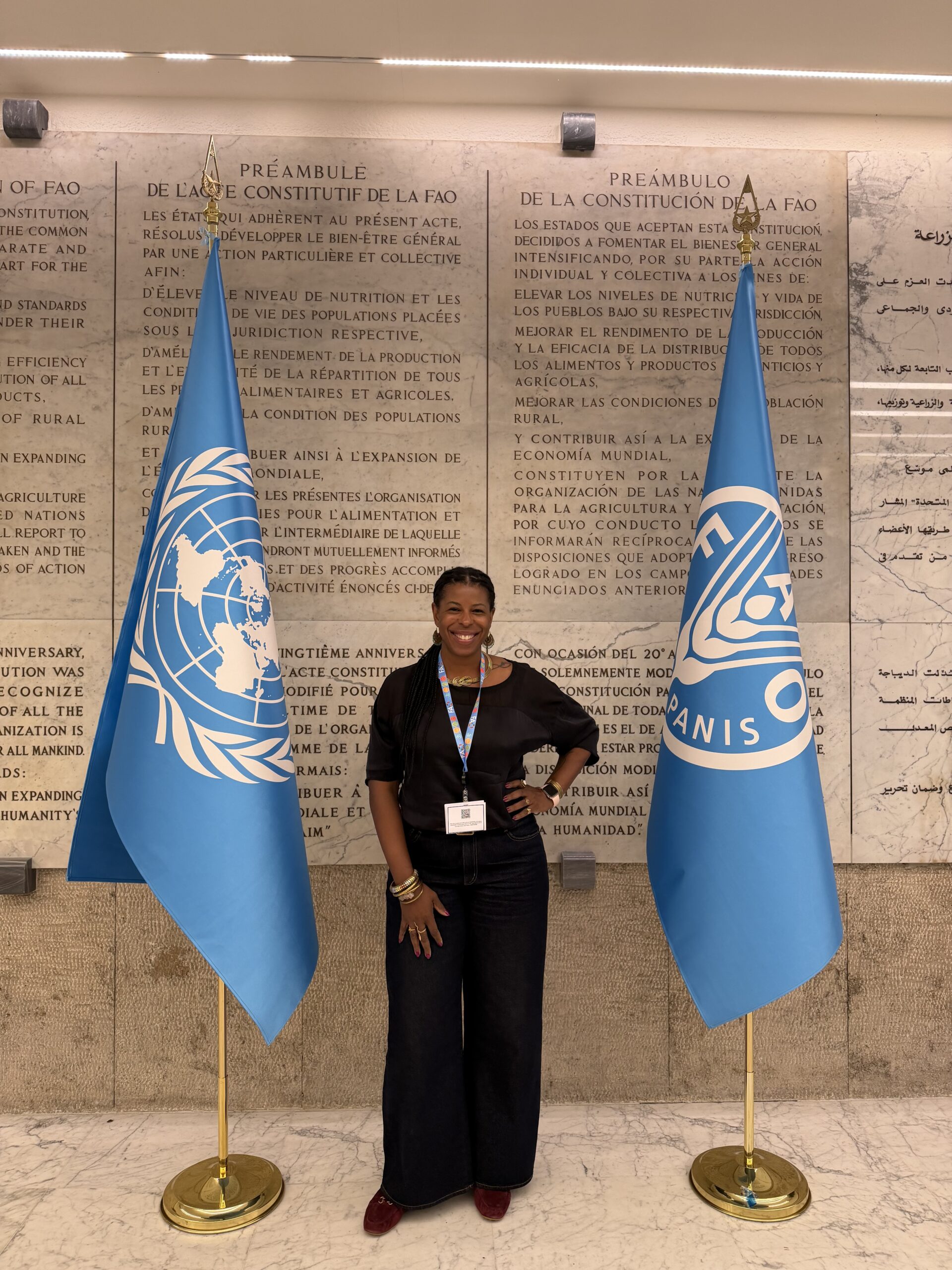
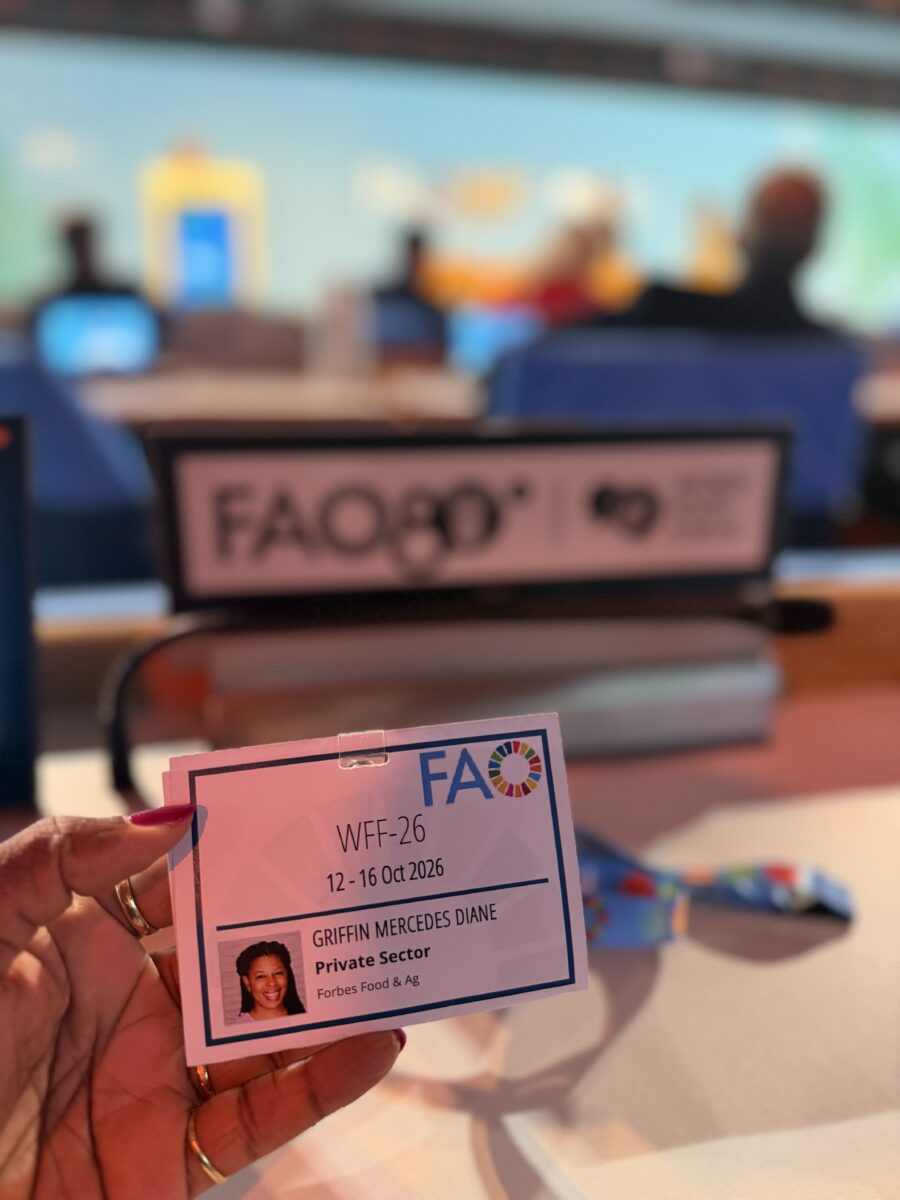
The Forum, hosted at the headquarters of the Food and Agriculture Organization of the United Nations, gathered people working across agriculture, science, business and public policy. Its theme, “Innovate Today. Nourish Tomorrow,” offered a hopeful invitation. Yet hope becomes meaningful only when it changes everyday conditions. I wanted to look beyond the language of transformation and consider whose lives that transformation is supposed to improve.
The question I kept coming back to
One phrase in my handwritten notes stands out: “Who benefits?” It is such a small question, but it can make an entire policy discussion uncomfortable. Who earns a living wage? Who owns the processing facility? Who has the right connections to secure financing? Who is invited into decision-making rooms? And who is expected to be grateful for a seat while somebody else determines the menu?
My work has taken me into agricultural communities in Africa, Latin America and elsewhere. Those experiences have taught me that people usually understand their own challenges better than distant institutions do. Farmers can often describe the practical obstacles with remarkable clarity. They know when a road is impassable, a buyer is unreliable or the financing terms simply do not work. The harder question is whether our institutions make room for that knowledge to influence their decisions.
Innovation must reach beyond the conference room
I appreciate technology. Better market information, stronger cold chains and appropriate tools can make a real difference. Still, innovation is not automatically inclusive. A digital platform means little to someone without reliable connectivity. A new lending product may exclude a farmer who cannot provide the collateral. Even a promising agricultural intervention can reproduce existing inequalities when the people designing it never ask who bears the risk.
The World Food Forum describes youth action, science, innovation and investment as central parts of its work. Those priorities matter. I would simply add that accountability deserves the same attention. Successful innovation should not be measured only by how many people adopt a new tool. We also need to ask who can afford it, who controls it and whether people have meaningful choices.
Food is cultural, even when policy forgets
Whenever conversations become too abstract, I come back to the foods people actually eat. A meal can tell us who migrated, what farmers grow, what families value and how histories have collided. In my essay Why Food Is the Fastest Way to Understand a Culture, I wrote about food as an invitation to understand another community. That curiosity belongs in development work as much as it belongs in travel.
Food security policies can fail when they treat local food traditions as an inconvenience. The crop that thrives in one landscape may not belong in another. The ingredient a funding agency considers unfamiliar may be essential to local identity. An effective food system must support nutrition, but it should also recognize dignity, heritage and the right to make culturally meaningful choices.
Whose expertise counts?
The language of expertise has always fascinated me. Degrees and technical knowledge matter, and I value my own education. Yet there is a difference between having studied a community and listening to its members. A woman who manages a farm, buys inputs, negotiates with traders and feeds her family holds knowledge that no conference presentation can fully reproduce.
This matters especially when decisions involve land, credit and climate adaptation. A farmer should not become merely a photograph in a funding proposal. Young people should not serve only as examples of hope. Women should not be celebrated for their resilience while the rules that make their lives difficult remain untouched. Real participation means sharing authority, not simply offering a microphone.
What I want the conversation to become
The 2026 edition of The State of Food Security and Nutrition in the World estimated that 2.69 billion people could not afford a healthy diet in 2025. That number deserves attention, but so do the systems beneath it. Price, income, infrastructure and unequal access shape what people can put on the table. A solution that addresses only one piece may leave the larger problem intact.
I left my notes with more questions than slogans, and I consider that a good thing. A serious food conversation should make room for disagreement and uncomfortable observations. It should connect the decisions made in Rome with the people growing, transporting, preparing and buying food everywhere else.
My hope is not that we stop gathering to discuss the future of food. It is that the next conversation becomes harder to separate from the daily realities of the people who sustain us. When I ask who gets a seat at the table, I am not speaking only about an invitation. I am asking who has the power to decide what happens after everyone sits down.
What accountability could look like
I would like to see organizations return to the communities featured in their announcements and explain what actually changed. Did farmers gain reliable customers? Did young entrepreneurs receive financing that they could use? Were women placed in positions with real decision-making authority? Those questions are less glamorous than a stage photograph, but they offer a much stronger measure of progress. Accountability also requires the humility to acknowledge projects that did not work. Development is rarely a straight line, and we learn little when every report promises success. A serious partnership should create space to change direction when local people identify a better approach. For readers, this matters because public and philanthropic resources are limited. We should expect them to support outcomes rather than impressive language alone.