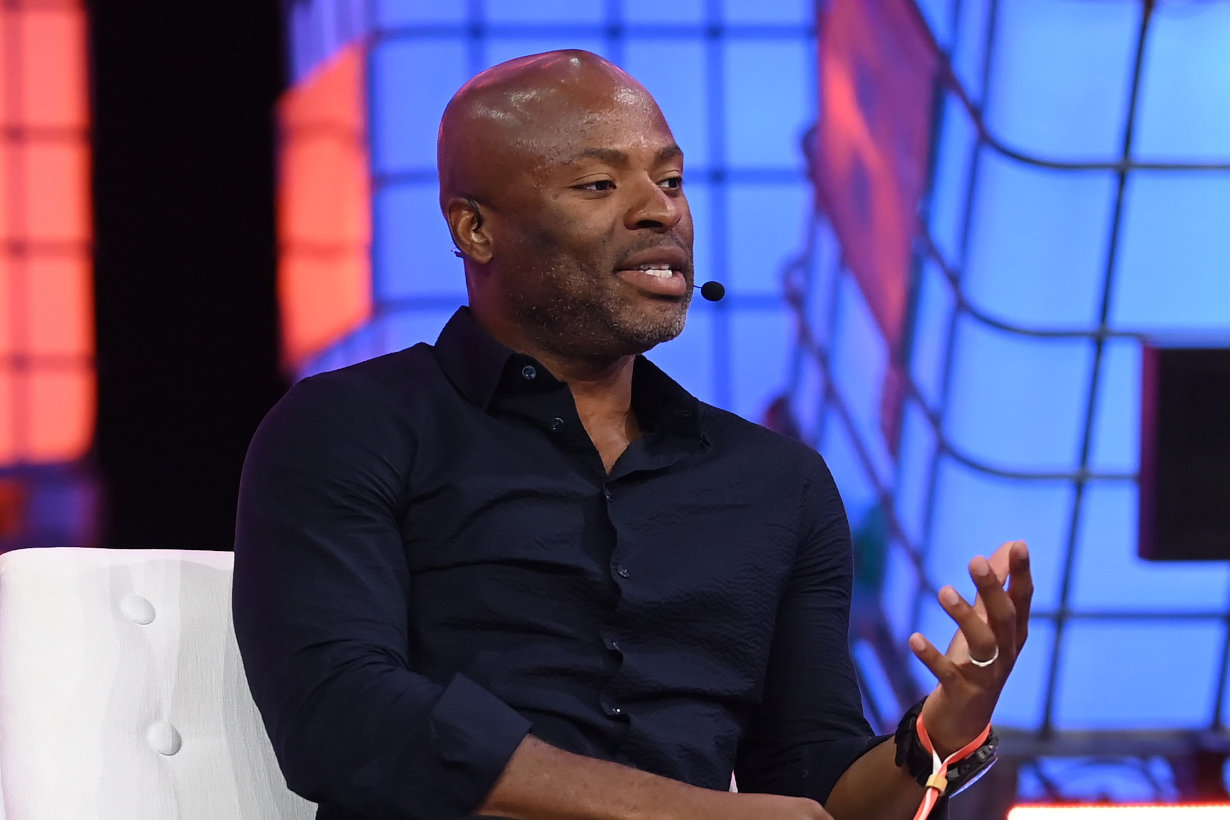
The Calendly Success Story: Tope Awotona Built Time Back Into Our Lives
The Calendly success story begins with a frustration almost everyone understands. Too much time disappears while people exchange emails, compare calendars, and search for one meeting time that works.
Tope Awotona recognized that problem and built a simple solution. Since founding Calendly in 2013, the Nigerian-born entrepreneur has transformed an everyday annoyance into a global technology company.
I use Calendly in my own work, so I already understood the practical value of the platform. However, seeing Awotona at Collision Conference gave me a deeper appreciation for the vision behind it.
Calendly does not sell an exciting gadget that people can hold in their hands. Instead, it gives us something even more valuable: time.
Meeting Tope Awotona’s Vision at Collision Conference
Collision Conference brings together founders, investors, journalists, technology companies, and global startups. Naturally, many speakers arrive ready to discuss artificial intelligence, venture capital, product development, and rapid growth.
Yet some of the most powerful ideas solve ordinary problems.
Awotona’s appearance at Collision highlighted that truth. Calendly became successful because it addressed a small but persistent source of frustration. Rather than chasing novelty, he focused on a task that wasted time across nearly every industry.
Doctors schedule patients. Consultants arrange discovery calls. Teachers meet with students. Recruiters coordinate interviews. Entrepreneurs speak with potential clients, while nonprofit leaders organize conversations with partners and donors.
Before tools like Calendly, each appointment could trigger a long chain of messages. One person suggested Tuesday. Another offered Thursday. Then a conflict appeared, a time zone caused confusion, or someone forgot to confirm the final choice.
Calendly removed much of that friction through one shareable link.
That simplicity may sound obvious now. However, many transformative businesses look obvious only after someone builds them well.
A Personal Frustration Inspired Calendly
Awotona developed the idea for Calendly after experiencing the difficulty of arranging meetings during his career in software sales. His work gave him a close view of the time professionals lost while coordinating schedules.
Instead of accepting that frustration as an unavoidable part of business, he began imagining a more efficient process.
That decision reflects one of my favorite aspects of entrepreneurship. Strong founders often notice problems that other people have learned to tolerate.
Most of us complained about scheduling. Awotona built a company around fixing it.
He founded Calendly in Atlanta in 2013 and invested his personal savings into the business. That choice required enormous confidence because scheduling software did not carry the same glamour as social media, entertainment, or consumer electronics.
Nevertheless, Awotona understood the size of the problem. Every unnecessary email represented wasted time, interrupted concentration, and delayed connection.
By focusing on that hidden cost, he created a product that could serve independent professionals, growing companies, and large organizations.
How Calendly Makes Scheduling Easier
Calendly works because users remain in control of their availability.
First, a user connects a supported calendar and chooses the days and hours available for meetings. Next, the user creates event types based on the conversations they regularly schedule.
A consultant might offer a 30-minute discovery call. Meanwhile, a teacher could create a one-hour lesson, and a recruiter might reserve 45 minutes for candidate interviews.
Once the event type is ready, Calendly generates a link. Invitees can view the available options and select a time that fits their schedules.
The platform then adds the meeting to the connected calendars. As a result, both people receive the details without another round of emails.
Calendly can also help users manage time zones, prevent double-bookings, establish buffers between meetings, limit daily appointments, and collect information from invitees before a call begins.
Those features do more than create convenience. They allow professionals to set boundaries around their time.
Calendly Helps Me Protect My Own Time
As someone who works across consulting, media, international development, teaching, and entrepreneurship, I often communicate with people in different industries and time zones.
Without a scheduling system, every meeting request could become another small administrative project.
Calendly allows me to decide when I want to accept calls. I can protect time for writing, client projects, travel, teaching, and personal commitments without explaining my entire schedule to everyone who needs to meet with me.
More importantly, the person booking does not need to wait for me to respond before choosing an available time.
That flexibility becomes especially useful when I travel. A scheduling link can display availability in the invitee’s local time zone, which reduces confusion and avoids preventable mistakes.
For independent professionals, that level of organization also communicates credibility. A clear booking process shows potential clients that the business values their time and has systems in place.
Readers who need an easier way to organize meetings can explore Calendly and create a scheduling page.
Calendly Sells More Than Convenience
At first glance, Calendly appears to sell scheduling software. In practice, the company sells smoother human connection.
Every meeting represents the beginning of something. A client may discover a consultant. A student may receive support. A job candidate might reach the next stage of an interview. Elsewhere, two founders may begin building a partnership.
Scheduling stands between the desire to connect and the connection itself.
By removing unnecessary friction, Calendly makes it easier for those conversations to happen. That benefit helps explain why the product spread so effectively through word of mouth.
Each user also introduces other people to the platform. When someone receives a Calendly link and enjoys the experience, that person may decide to create a link of their own.
Therefore, the product naturally demonstrates its value while people use it.
Simplicity Became Calendly’s Competitive Advantage
Technology companies often add features until their products become difficult to understand. Calendly succeeded by keeping its central promise clear.
Choose your availability. Share your link. Let the other person select a time.
That simple process reduces the mental effort required to coordinate a meeting. Users do not need advanced technical knowledge, and invitees usually understand what to do without extensive instructions.
Still, simplicity does not mean the platform lacks sophistication. Behind the clean user experience sits a system that must handle calendar conflicts, time zones, event rules, notifications, integrations, security, and millions of individual scheduling preferences.
Calendly hides much of that complexity from the person booking the meeting. That is often the mark of thoughtful technology.
The product handles the complicated work while allowing the user to experience a straightforward result.
Tope Awotona’s Success Matters in the Technology Industry
Awotona’s story carries additional significance because Black founders receive only a small share of venture capital investment.
Entrepreneurs from underrepresented communities often need to prove their ideas with fewer resources, smaller networks, and less room for failure. Nigerian immigrants and other African founders may also confront assumptions about where valuable technology companies originate.
Calendly challenges those narrow ideas.
A Nigerian-born founder built a global technology platform from Atlanta. His success demonstrates that innovation does not belong to one city, country, race, or social network.
Representation matters because people need examples of what remains possible. However, representation alone does not create equity.
Black founders also need investment, mentors, media visibility, contracts, technical talent, and opportunities to retain ownership in the companies they build.
That is why I pay close attention to Black and brown innovators during events like Collision Conference. Large technology gatherings should not only celebrate familiar companies. They should also help audiences discover who else is building the future.
Collision Conference Put Black Excellence on a Global Stage
Technology conferences influence which founders, products, and ideas receive attention. A place on a major stage can introduce an entrepreneur to investors, journalists, potential employees, and future customers.
For that reason, seeing Awotona featured at Collision carried meaning beyond one keynote conversation.
He represented a technology success story that audiences do not see often enough. His presence also disrupted the familiar image of the venture-backed software founder.
Collision gave him space to discuss leadership, innovation, and the future of Calendly. At the same time, his success offered a larger message about Black excellence in technology.
Black entrepreneurs do not lack ideas. Instead, many lack equal access to the systems that help ideas become global companies.
When conferences place founders such as Awotona on prominent stages, they expand the public understanding of who creates technology and who belongs in positions of leadership.
What Entrepreneurs Can Learn From Calendly
The Calendly success story offers several useful lessons for founders and small-business owners.
- Pay attention to recurring frustration. A problem may appear small, yet its frequency can create an enormous market.
- Solve one problem clearly. Calendly built its reputation around making scheduling easier rather than trying to become everything at once.
- Make the product easy to explain. People quickly understand the value of avoiding unnecessary scheduling emails.
- Let customers demonstrate the product. Every shared Calendly link introduces another potential user to the platform.
- Respect the user’s time. The platform creates value by reducing administrative work instead of demanding more attention.
- Build for real behavior. Calendly fits into the way people already arrange meetings rather than forcing them to adopt an entirely unfamiliar process.
Most importantly, Calendly shows that founders do not need to invent a dramatic new human desire. Sometimes, the strongest business helps people complete an existing task with less frustration.
Scheduling Tools Must Still Feel Human
Despite its benefits, scheduling automation can feel impersonal when people use it without context.
Sending a link without acknowledging the other person may create the impression that only one schedule matters. Therefore, technology should support courtesy rather than replace it.
A brief message can make the process feel collaborative: “Here is my calendar so you can choose whatever time works best for you.”
That language frames the link as a convenience for both people instead of a demand.
Users should also offer realistic availability. A scheduling page with no appointments for several weeks may frustrate someone who needs timely help.
Ultimately, software cannot create respect on its own. People must still bring empathy, flexibility, and good communication to the interaction.
The Future of Calendly Extends Beyond Booking Meetings
Calendly began by eliminating the back-and-forth required to choose a time. However, scheduling connects with many larger business processes.
A sales team may need to route prospects to the right representative. Recruiters must coordinate interviews with several employees. Customer-success teams schedule onboarding sessions, while service providers collect payments and information before appointments.
As Calendly grows, the company can build deeper connections between scheduling and those surrounding workflows.
Even so, the platform must protect the simplicity that made it valuable. More features only help when they reduce work rather than create another complicated system to manage.
Awotona’s greatest challenge may involve expanding Calendly without losing the clarity of its original purpose.
Why the Calendly Success Story Resonates With Me
I admire technology that helps people use their lives more intentionally.
Calendly does not promise to reinvent humanity. Instead, it removes one repetitive task that drains time and attention from millions of people.
That practical focus gives the company its power.
Awotona noticed an everyday problem, trusted his understanding of it, and invested in a solution. Then he created a platform capable of serving users across professions, industries, and borders.
His journey also reminds me why diverse voices matter in technology. Innovation grows stronger when people with different histories and experiences receive opportunities to define problems and build solutions.
At Collision Conference, the Calendly success story represented more than business growth. It showed what can happen when a Black immigrant founder receives the opportunity to turn a clear idea into a global company.
Calendly Gives Us More Than an Open Calendar
Time remains one of the few resources we cannot replace.
Every hour spent coordinating a meeting takes attention away from writing, creating, resting, solving problems, serving clients, or spending time with people we love.
Calendly cannot decide how we use the time it saves. Nevertheless, it gives us a chance to reclaim some of it.
That is the deeper meaning behind the Calendly success story. Awotona did not merely build a scheduling platform. He created a tool that helps people move more quickly from planning a conversation to actually having one.
Sometimes, the most meaningful innovation does not demand more of our attention. It quietly gives some of that attention back.
Disclosure: This article contains an affiliate link. DG Speaks may earn a commission when readers sign up through that link, at no additional cost to them.