Camino Glossary: Words Every Pilgrim Should Know
This Camino glossary is for anyone preparing to walk the Camino de Santiago and wondering what all these pilgrim words mean. The Camino has its own vocabulary. Once you understand it, the whole journey feels less mysterious.
These terms show up in albergues, guidebooks, pilgrim conversations, official resources, and daily life on the road. Some are practical. Some are cultural. Some carry centuries of history.
A
Albergue: Pilgrim accommodation along the Camino. Albergues may be municipal, private, parish-run, or donativo. Expect shared spaces, bunk beds, and the occasional snoring symphony.
Albergue municipal: A public pilgrim hostel operated by a municipality. These are often more affordable than private albergues.
Albergue privado: A privately run albergue. These may cost more but often include extra comforts or reservation options.
Apóstol Santiago: St. James the Apostle, traditionally associated with Santiago de Compostela and the origins of the pilgrimage.
B
Backpack transfer: A service that transports your backpack from one lodging to another. It can help when you are injured, exhausted, or simply need mercy.
Buen Camino: The classic greeting among pilgrims. It means “Good Camino” or “Good Way.” You will hear it constantly, and somehow it never gets old.
C
Camino de Santiago: The Way of St. James, a network of pilgrimage routes leading to Santiago de Compostela.
Camino Francés: The French Way, one of the most popular Camino routes. I walked this route from Saint-Jean-Pied-de-Port to Santiago.
Camino Portugués: The Portuguese Way, another popular Camino route, often starting from Lisbon, Porto, or Tui.
Camino Primitivo: The Original Way, considered one of the oldest Camino routes and known for its physical challenge.
Cathedral of Santiago: The cathedral in Santiago de Compostela, traditionally the final destination for pilgrims. Visit the official Cathedral of Santiago website for current information.
Compostela: The official certificate awarded to qualifying pilgrims. It is meaningful, but the real transformation happens along the road.
Credencial: Also called the pilgrim passport. Pilgrims collect stamps in it along the route to document the journey.
D
Donativo: Donation-based lodging or meal. Donativo does not mean free. Give what you can with respect.
E
Etapa: A stage or daily section of the Camino. Guidebooks often divide the Camino into etapas.
F
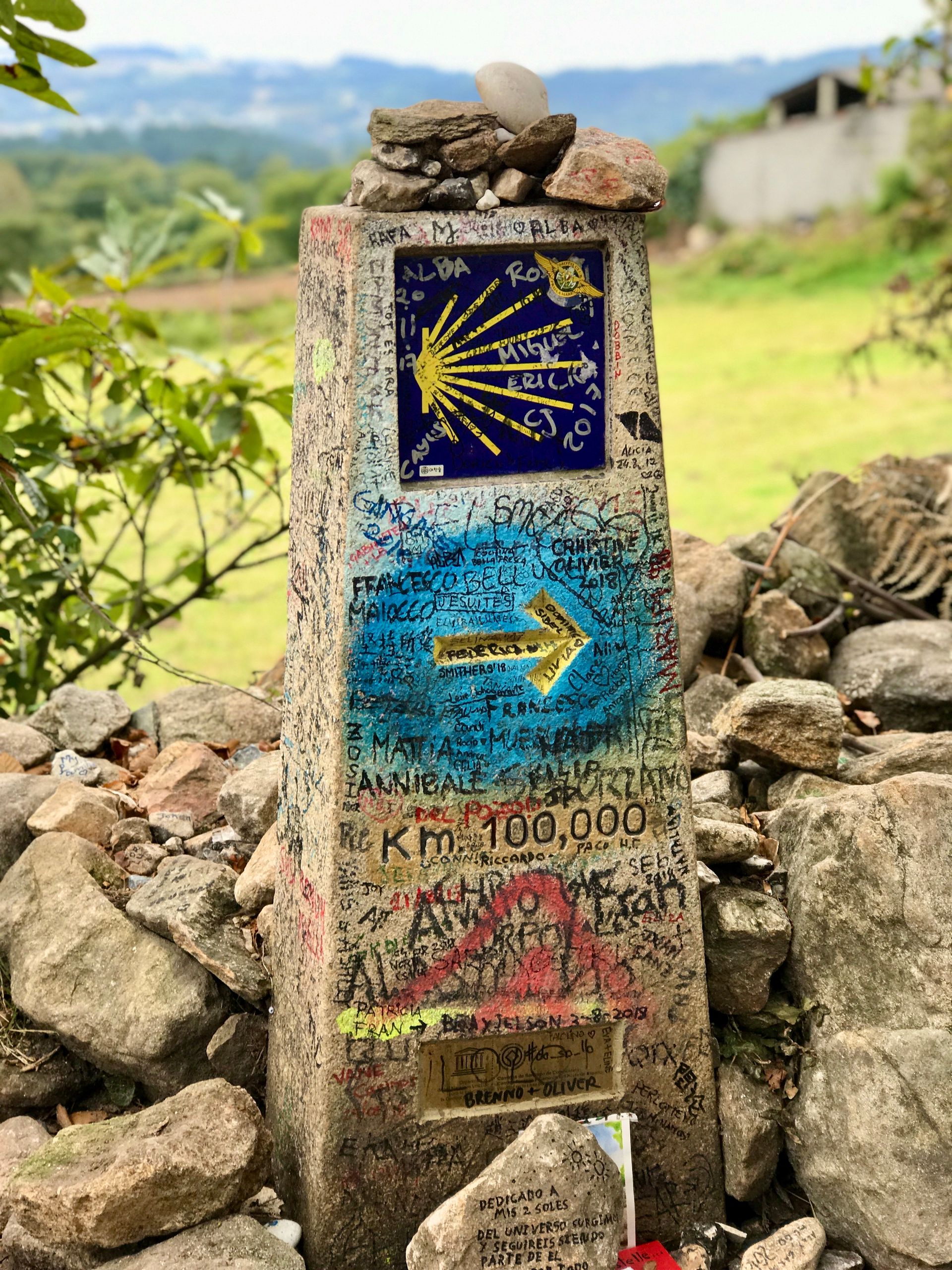
Flecha amarilla: Yellow arrow. These arrows guide pilgrims along the Camino. They become strangely comforting after a while.
Finisterre: A coastal destination many pilgrims walk to after Santiago. The name is often associated with “the end of the earth.”
G
Galicia: The region of Spain where Santiago de Compostela is located. Many pilgrims experience Galicia as the final emotional chapter of the Camino.
H
Hospitalero/Hospitalera: A person who welcomes and assists pilgrims, often in an albergue. Some are staff. Some are volunteers. A good hospitalero can make a long day feel kinder.
M
Meseta: A long, open section of the Camino Francés known for its flat landscapes and mental challenge. Some pilgrims dread it. Others love its silence.
Municipal albergue: Public pilgrim accommodation usually managed by a local authority.
O
Orisson: A popular stop after Saint-Jean-Pied-de-Port on the way over the Pyrenees. Stopping there helped me break up a difficult first stage.
P
Pamplona: A major city on the Camino Francés, known internationally for the running of the bulls and locally as an important pilgrim stop.
Peregrino/Peregrina: Spanish for pilgrim. Peregrino is masculine, peregrina is feminine.
Pilgrim menu: An affordable meal offered in many Camino towns. It often includes several courses and a drink.
Pilgrim passport: English term for the credencial. You need stamps in it to qualify for the Compostela.
R
Roncesvalles: A major stop after crossing the Pyrenees. For many pilgrims, it marks the first night in Spain after starting in France.
S
Saint-Jean-Pied-de-Port: A common starting point for the Camino Francés in France. It is beautiful, atmospheric, and followed by a serious climb.
Santiago de Compostela: The destination city for pilgrims walking to the shrine of St. James.
Sarria: A popular starting point for pilgrims walking the final 100 kilometers required for the Compostela.
Scallop shell: A symbol of the Camino. Pilgrims often attach one to their backpacks.
Sello: A stamp collected in your pilgrim passport. Albergues, churches, cafés, and tourist offices may offer sellos.
T
Tarta de Santiago: A traditional almond cake associated with Galicia and Santiago. Try it when you can.
W
Way of St. James: English name for the Camino de Santiago.