Why I Love Food That Comes Wrapped in Paper
I remember standing outside a market with something hot wrapped in paper warming both of my hands.
I had not planned the meal. There was no reservation, table setting, or carefully timed course. I had followed the smell, joined a short line, pointed toward what everyone else seemed to be ordering, and accepted the paper-wrapped package through a small window.
The first thing I noticed was the sound.
The paper crinkled as I opened it. Steam escaped, carrying the smell of seasoning, toasted bread, and hot oil. I took the first bite before finding anywhere to sit.
That food did not ask me to wait for the perfect setting.
It was ready to be eaten on the sidewalk, shared on a bench, carried through a market, or finished while standing near the stall that made it.
That is what I love about food wrapped in paper. It feels immediate. The distance between the cook, the food, and my appetite becomes very small.
The Paper Crinkled Before I Tasted Anything
Paper creates anticipation.
Before I see the entire meal, I hear it opening. The wrapper moves beneath my fingers, grease begins leaving translucent marks, and the smell grows stronger with every fold I pull back.
The experience feels informal, but it is not incomplete.
The paper becomes part of the presentation.
It tells me the food was designed to travel a short distance, fit inside the hand, and survive without a plate. It may not remain beautiful for long, but beauty is not always the point.
The point is eating while the food is still hot.
The First Bite Rarely Waits for a Table
Food wrapped in paper invites impatience.
A sandwich may begin losing its crispness. Fried food should not sit too long, and melted cheese has its own brief window of perfection.
So, I take the bite.
I may still be walking away from the counter. One hand holds the package while the other tries to keep sauce from reaching my clothes.
That immediacy creates pleasure.
I am not waiting for ceremony to declare the meal ready. The food, temperature, and hunger have already made the decision.
The Wrapper Is a Small Form of Engineering
Wrapping food well requires thought.
The paper needs to hold heat without trapping so much steam that everything becomes soggy. It should contain grease, protect the filling, and allow the customer to eat without the meal falling apart.
A poorly wrapped sandwich reveals itself quickly.
Sauce escapes from one side. The filling slides downward, and the paper tears exactly where support is needed most.
A good wrapper disappears into the experience.
It opens gradually, supports each bite, and keeps the meal together until the final piece.
That function may look simple.
It reflects practical knowledge.
Casual Does Not Mean Careless
Some people associate simple presentation with simple cooking.
That assumption misses the skill behind many casual foods.
A taco requires balance. A sandwich depends on structure, while fried fish demands temperature control and timing. A pastry can take hours of preparation before someone places it inside a paper bag.
The wrapper does not reduce the work.
It removes some of the ceremony around receiving it.
Some of the best food in the world arrives without porcelain, silverware, or elaborate plating. The cook trusts flavor, texture, and temperature to make the argument.
The Sandwich Has to Survive Its Own Ingredients
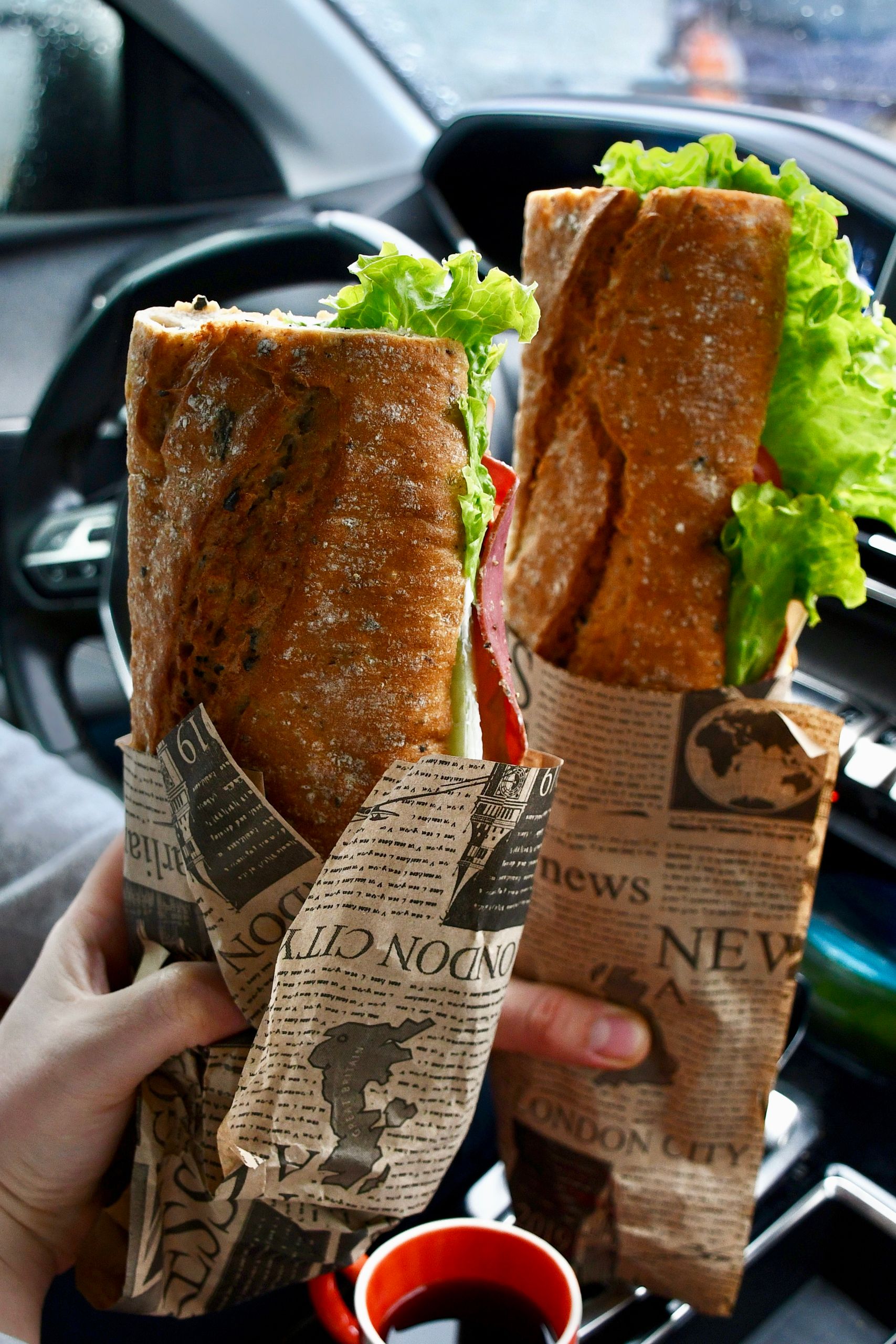
A great sandwich is an architectural achievement.
Bread needs enough strength to hold the filling without becoming difficult to bite. Sauces should add moisture without dissolving the structure.
Every ingredient needs a place.
Something rich may require acidity. Soft fillings benefit from crunch, while heat needs balance from sweetness, creaminess, or freshness.
Then, the entire creation gets wrapped tightly enough to travel.
The paper holds the architecture until hunger begins taking it apart.
The Grease Mark Is Part of the Promise
Paper changes as it holds food.
Warm butter, oil, sauce, or melted cheese begins leaving evidence. The wrapper becomes translucent in places, revealing something about what waits inside.
That grease mark does not always look refined.
It looks honest.
The paper is doing its job. It absorbs what it can, holds what it must, and protects my hands from the rest.
Sometimes, the mark becomes a warning.
I need more napkins than I thought.
Street Food Understands the Human Hand
Street food has to function in motion.
Customers may be standing, walking, talking, or carrying bags. They do not have an entire table available for arranging the meal.
The food must make sense in the hand.
This requirement shapes size, structure, and preparation. A dish may be folded, skewered, stuffed, sliced, or wrapped so that people can eat it in public without stopping everything else.
Portability becomes part of the cuisine.
It is not merely packaging added at the end.
A Market Stall Can Deliver a Complete Experience in Minutes
Market food happens quickly.
I see ingredients cooking, hear the order being called, and watch the meal pass directly from heat into paper.
The exchange feels transparent.
There is little distance between production and consumption. The person making the food may also take payment, answer questions, and recognize returning customers.
That closeness creates energy.
I become part of the stall’s rhythm, even if only for a few minutes.
The Line Is Often My First Recommendation
A line can reveal trust.
Workers wait during limited lunch breaks. Families return, students count change, and regular customers already know what will sell out first.
I pay attention to those patterns.
A long line does not automatically guarantee quality. However, repeat customers suggest that the food has delivered before.
Local appetite leaves visible evidence.
Sometimes, I trust that evidence enough to join the line without knowing exactly what I will order.
The Menu May Be Small Because the Skill Is Focused
Street vendors and small stalls often serve a limited menu.
Space, equipment, storage, and speed all shape what is possible.
That limitation can create mastery.
A cook may prepare the same few items repeatedly, refining timing and technique until each movement becomes efficient.
The food is not limited because the cook lacks imagination.
The menu may be focused because the business understands what it does best.
The Biscuit Does Not Need Fine China
A warm biscuit wrapped in paper already carries enough.
It may hold butter, meat, egg, jam, or nothing beyond its own richness. The paper catches crumbs and protects the hand from heat.
Serving it on an elaborate plate would not necessarily improve the experience.
Some foods feel most themselves when received simply.
The modest presentation leaves room for texture, aroma, and memory.
Fried Food Has a Short Window of Greatness
Fried food does not enjoy waiting.
The crust is crisp when it leaves the oil. Steam begins working against that crispness immediately.
Paper can help by absorbing excess oil, but timing remains essential.
The best moment often occurs within minutes.
That urgency explains why fried fish, chicken, potatoes, fritters, and similar foods taste so satisfying near the place that made them.
Transport changes them.
The first bite beside the stall captures something delivery cannot preserve completely.
The Fish Fry Carries More Than Flavor
A fish fry can be meal, gathering, fundraiser, tradition, and neighborhood event at once.
Paper-wrapped portions move quickly through the crowd. People eat while standing, talking, and deciding whether to order more.
The food creates social movement.
Someone seasons the fish according to a method learned through family or community. Others manage oil, sides, payments, and the constant demand for fresh batches.
The simple wrapper carries a larger network of labor and tradition.
A Taco Is Small Enough to Hide Serious Complexity
Tacos can look effortless.
A tortilla holds meat, vegetables, herbs, sauce, and perhaps a squeeze of citrus. The format appears straightforward.
Balance determines everything.
The tortilla must hold. The filling needs seasoning, and toppings should add contrast rather than bury the central ingredient.
A good taco delivers complexity in a few bites.
Paper supports the experience without competing with it.
Pastries Travel With Their Own Kind of Fragility
A pastry in a paper bag creates a different challenge.
Flaky layers break. Sugar shifts, glaze sticks, and anything filled may escape if the bag tilts too far.
Still, that fragility adds pleasure.
I open the bag carefully, knowing crumbs will fall. The aroma rises, and the pastry feels slightly protected but still close enough to touch.
The bag becomes part container, part plate, and part crumb catcher.
Paper Lets Food Stay Close to the Body
A plated meal creates distance.
The food rests on a surface, and utensils mediate the experience.
Handheld food changes that relationship.
I feel temperature through the wrapper. My fingers adjust pressure to keep the filling in place, and every bite alters the shape of what remains.
The meal becomes physical.
I am not only tasting it. I am holding, turning, supporting, and managing it.
That closeness makes casual food feel intimate.
The Bench Becomes a Dining Room
Food wrapped in paper can transform almost any place into somewhere to eat.
A bench, curb, park wall, train platform, market step, or car seat becomes a temporary dining room.
The setting may lack comfort.
It can still hold pleasure.
I have eaten memorable food without a table, watching people pass while trying to protect the final bites from wind, birds, or gravity.
The surroundings enter the memory because the meal remains exposed to them.
The Pigeons Understand the Assignment
Eating outside attracts attention.
Birds notice the wrapper, crumbs, and movement quickly. They gather with the confidence of customers who believe the meal includes them.
I become more careful with every bite.
A falling piece does not remain unclaimed for long.
This is another reminder that public eating happens inside an ecosystem, even when that ecosystem includes extremely bold pigeons.
A Meal Without Ceremony Can Still Feel Important
Not every meaningful meal requires an occasion.
I can stand on a sidewalk with a warm sandwich and feel completely satisfied. The experience may last fifteen minutes and still become one of the strongest food memories from a trip.
Importance does not depend entirely on duration or formality.
Sometimes, the right food appears at the right moment.
Hunger, place, weather, and mood align.
The paper wrapper holds the result.
The Food Often Tastes Like the Neighborhood
Casual food reflects local routines.
It shows what people eat between responsibilities, after work, during school breaks, or while moving through markets and streets.
That connection relates to my reflections on how local restaurants teach me how a city feels.
Food wrapped in paper offers another version of that lesson.
It reveals appetite in motion.
I see which flavors draw lines, what portions feel normal, and how much people expect to spend on something quick.
The wrapper may be disposable.
The cultural information is not.
Farmers Markets Turn Ingredients Into Immediate Meals
Farmers markets often place raw ingredients and prepared food beside each other.
One stall sells produce. Another turns local ingredients into pastries, sandwiches, preserves, or hot meals.
The connection between farm and plate feels physically close.
This relates to my writing about farmers markets and the food stories worth slowing down to notice.
Markets do more than sell ingredients.
They allow producers, cooks, and customers to meet inside the same public space.
Street Food Carries Migration in Its Hands
Many casual foods tell stories of movement.
People carry recipes across borders, adapt them to new ingredients, and shape them for different customers. A familiar dish may take on another form because it needs to travel well or fit the pace of a new city.
Migration appears through seasoning, technique, language, and business ownership.
Food wrapped in paper can hold several places at once.
It may reflect memory of one country and adaptation inside another.
“Authentic” Is Not Always the Most Useful Question
Travelers often ask whether street food is authentic.
I understand the desire to encounter food with cultural integrity. Still, authenticity can become a narrow test applied to living traditions.
A vendor may adjust a recipe because ingredients changed, customers differ, or a family has developed its own version over generations.
That does not automatically make the food less meaningful.
I prefer asking who made it, what story it carries, and why it has taken this particular form.
Those questions allow tradition and creativity to exist together.
The Vendor Is Balancing Speed and Attention
Street food service requires speed.
Customers are waiting, ingredients are hot, and space remains limited. Every movement must support the next order.
Speed cannot replace attention.
Food still needs proper cooking, safe handling, seasoning, assembly, and packaging.
A skilled vendor works quickly without making the food feel rushed.
That balance deserves respect.
The Small Stall May Hold a Large Business Dream
A modest food stand can represent serious entrepreneurship.
Behind the counter sit permits, purchasing, preparation, transportation, marketing, pricing, and risk. Weather, foot traffic, equipment, and ingredient costs can determine whether the day succeeds.
The business may look casual because customers interact through a window or across a table.
The owner’s commitment is not casual.
Every wrapped order contributes to the larger possibility that the business can continue.
Women Are Building Livelihoods One Order at a Time
Women operate stalls, bakeries, carts, trucks, and home-based food businesses around the world.
For some, casual food offers a path into entrepreneurship with lower costs than opening a full restaurant. It allows culinary knowledge to become income.
Women still face barriers.
Capital, permits, safe vending locations, caregiving demands, and access to equipment all influence whether a business can grow.
When I buy food from a small vendor, I may be supporting much more than one meal.
I may be helping sustain a household, preserve a recipe, or expand someone’s economic independence.
The Price Includes More Than Ingredients
Customers sometimes expect street food to remain extremely cheap.
The format feels informal, so the price is expected to reflect that informality.
However, vendors still face real costs.
Ingredients, labor, transportation, packaging, fees, storage, fuel, and equipment all shape the final price.
Affordable food matters.
So does the ability of the person selling it to earn a living.
Cheap should not depend on invisible exploitation.
The Wrapper Carries Environmental Questions Too
Paper may seem more environmentally friendly than plastic.
The reality depends on coatings, grease, local waste systems, and whether the material can actually be recycled or composted.
Food contamination often limits what happens after disposal.
Single-use packaging also accumulates quickly.
Street markets and food events can produce large amounts of wrappers, cups, napkins, and utensils in a short time.
Convenience carries a material cost.
Vendors, customers, and local systems all share responsibility for reducing waste and disposing of it properly.
The Paper Should Not End Up in the Street
Portable food makes eating public.
It also makes waste public.
A wrapper dropped near the stall affects the neighborhood, nearby businesses, wildlife, and the vendor’s relationship with the community.
Enjoying food in public space comes with a simple responsibility.
I need to leave the space no worse than I found it.
The wrapper may be part of the experience.
It should not become part of the landscape.
Food Safety Still Matters Without a Dining Room
Casual service does not reduce the importance of food safety.
Hot food must remain hot, cold ingredients need proper storage, and cross-contamination requires prevention. Handwashing, cleaning, and safe preparation matter even more inside small or fast-moving spaces.
Customers may not see all of those systems.
Trust depends on them.
A strong vendor creates speed without sacrificing safety.
The Best Street Food Experiences Include Context
Travelers can approach street food as a checklist.
Find the famous stall, take the photograph, eat the signature item, and move on.
I want more than that when possible.
Who owns the stall? What role does the food play locally? Is it an everyday meal, celebration food, or something now produced mainly for tourists?
A knowledgeable guide can help answer those questions.
I browse food tours and culinary experiences through GetYourGuide when I want to explore casual food with more historical and cultural context.
The best tours help me understand the people and place behind the bite.
Popularity Can Change the Food It Celebrates
When a street food becomes famous, demand grows.
More visitors arrive, prices may rise, and the vendor may need to produce larger quantities. The dish can shift from everyday local food into a tourist attraction.
Visibility creates opportunity.
It can also change the relationship between the business and the community that supported it first.
I want to celebrate culinary success while noticing who benefits and whether longtime customers can still access the food.
The Food Should Not Become a Costume
Casual food from another culture can be treated as novelty.
People focus on how unusual, messy, cheap, or photographable it appears. The food becomes entertainment detached from the people who created it.
Respect requires more.
I can enjoy the flavor while recognizing the dish as part of someone’s living culture, labor, and livelihood.
Curiosity should deepen appreciation rather than turn difference into spectacle.
Simple Meals at Home Can Carry the Same Spirit
I cannot recreate every street food experience at home.
The market noise, weather, public movement, and immediacy belong to the place.
Still, I can carry some of the philosophy into my kitchen.
Simple food can be deeply satisfying when ingredients are handled well. A strong sandwich, grilled protein, biscuit, or casual plate does not need excessive complexity.
I may order proteins through ButcherBox when planning straightforward meals built around quality ingredients.
At home, I may use a plate.
The meal can still carry the directness I love about food from a window.
The Wrapper Can Become Part of the Memory
Food memories are rarely only about taste.
I remember where I stood, what the weather felt like, and how quickly I tried to open the package without dropping anything.
The paper appears in that memory too.
It held warmth against my palms. It caught sauce, absorbed oil, and became increasingly wrinkled as the meal disappeared.
By the end, the wrapper looked completely different.
So did my mood.
The Mess Can Be Part of the Pleasure
Some food refuses to be eaten neatly.
Sauce reaches my fingers. Crumbs fall, and a filling escapes from the opposite side of the sandwich.
I need more napkins.
This does not always reduce the experience.
Mess can signal abundance, texture, and a meal that has not been designed primarily for elegance.
There is a limit, of course.
I still want the food to remain manageable. However, I do not need every bite to leave no evidence behind.
The Paper Removes Some of the Social Rules
Formal dining comes with expectations.
There are questions about seating, utensils, pacing, dress, and how to move through the room.
Food wrapped in paper simplifies the exchange.
I order, receive, open, and eat.
That accessibility can make the experience feel democratic. People with different backgrounds may stand in the same line and approach the same window.
Still, affordability, safety, and public welcome shape who truly feels included.
Simplicity of format does not erase every barrier.
The Curb Is Not Equally Comfortable for Every Body
Casual food often assumes customers can stand, walk, balance packages, or sit wherever space becomes available.
That is not true for everyone.
Older adults, disabled people, parents with small children, and anyone managing pain may need proper seating, shelter, and accessible pathways.
Public food culture becomes more inclusive when markets and vendors consider those needs.
Great food should not require physical endurance simply because it comes without a dining room.
Weather Changes the Entire Meal
Food wrapped in paper remains close to the weather.
Cold air cools it quickly. Wind threatens napkins and wrappers, while summer heat influences what feels appealing.
Rain creates immediate logistical problems.
I may be balancing food, an umbrella, a bag, and the need to find shelter before the wrapper becomes part of the meal.
Weather makes the experience unpredictable.
It also makes the memory specific.
The Meal Ends Quickly, but It Can Stay for Years
Handheld food often disappears faster than a restaurant meal.
There are no courses, long pauses, or check to wait for. I eat, dispose of the wrapper, and continue moving.
Still, the memory can outlast more elaborate meals.
Perhaps the food matched the moment perfectly.
Maybe it introduced me to a new flavor or gave me comfort when I was tired, hungry, and far from home.
Duration does not determine significance.
I Trust Food That Knows What It Is
I appreciate food without unnecessary performance.
A strong sandwich does not need to pretend it is something else. A market pastry, taco, burger, biscuit, or fried fish plate can arrive confidently in paper because the flavor carries the experience.
That directness feels honest.
The food knows what it came to do.
Feed me while it is hot. Satisfy hunger. Offer pleasure. Carry a story if I am willing to pay attention.
Why Paper Feels Like Memory
Food wrapped in paper feels memorable because it remains close to the hand, the street, and the moment.
The wrapper crinkles before the first bite. Heat travels through it, grease leaves evidence, and the shape changes as the food disappears.
There is little distance between appetite and satisfaction.
The meal may come from a truck, bakery, diner window, market stall, family fish fry, or neighborhood counter. It may carry migration, entrepreneurship, tradition, necessity, and serious culinary skill inside a presentation that asks for very little attention.
Casual does not mean careless.
Simple does not mean forgettable.
Some of the most satisfying food I have eaten required no reservation and arrived without a plate.
I held it in both hands, stood somewhere public, and ate before the warmth had a chance to leave.
The paper did not try too hard.
It allowed the food to remain warm, real, and close.
Then, when the last bite disappeared, I folded the wrapper around the crumbs and carried the memory with me.
Explore more stories about street food, markets, and the people shaping local food culture through DG Speaks Food. You can also discover culinary journeys and neighborhood experiences through DG Speaks Travel and read more about migration, entrepreneurship, and cultural memory in DG Speaks Culture.