The Kind of Gratitude That Includes Everybody
One year, I arrived early enough to see the table before it became beautiful.
The chairs were still out of place. Serving dishes waited on the counter, and the kitchen felt warmer than the rest of the house. Someone was chopping. Someone else was looking for a missing spoon, while another person wiped the same section of the table twice because there were too many things happening at once.
By the time everyone sat down, the room looked effortless.
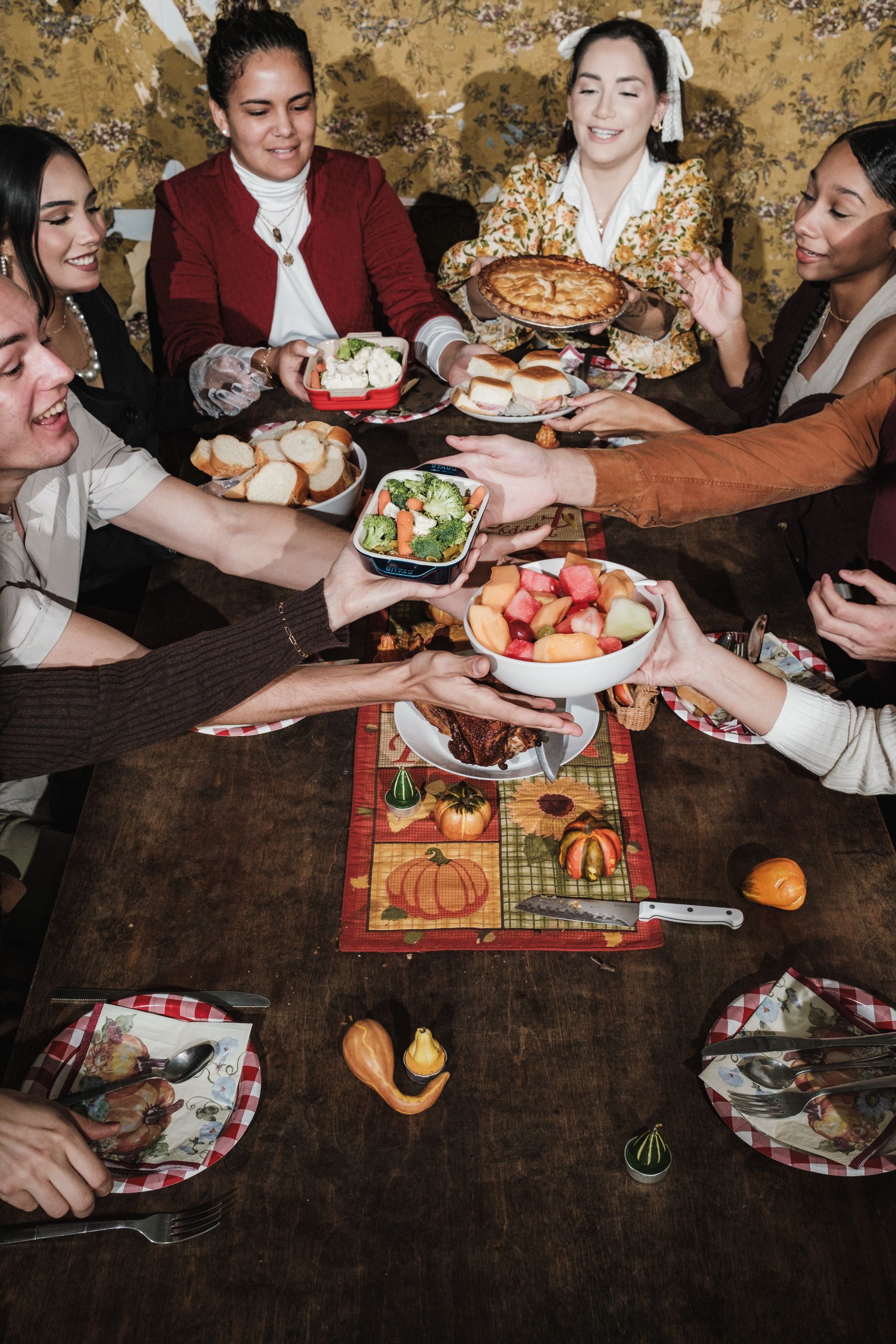
The food had been arranged. Glasses were filled, and the final dish arrived just as someone called everyone to the table. There was laughter, conversation, and the familiar pause before eating.
Then came the expressions of gratitude.
People thanked the host. They admired the meal and spoke warmly about being together. All of that gratitude was sincere.
Still, I found myself thinking about everyone whose work had disappeared into the finished table.
The person who had been standing over the stove for hours was still watching to see whether anyone needed more. Someone had cleaned before the gathering and would clean again after everyone left. Another family member had made the phone calls, coordinated the timing, managed a difficult personality, and quietly ensured that an older relative had a comfortable place to sit.
Beyond the house, farmers had grown the food. Workers had harvested, packed, processed, and transported it. Drivers had carried ingredients across long distances, while store employees had stocked the shelves where someone eventually placed them into a cart.
The meal may have begun at the table for most of us.
It had begun much earlier for everyone who made the table possible.
That is the kind of gratitude I want to practice now: gratitude that includes everybody.
Not only the visible host or the person who leads the public expression of thanks, but the farmers, cooks, cleaners, servers, drivers, elders, children, and quiet helpers whose labor makes joy possible.
Inclusive gratitude matters because appreciation becomes more honest when it notices the full story.
Thank You Is Only the Beginning
I believe in saying thank you.
The words matter, especially when they are offered sincerely and specifically. Still, gratitude cannot end with a pleasant sentence spoken after the work is complete.
Real gratitude pays attention.
It notices who arrived first, who remained standing, and who anticipated needs before anyone voiced them. It asks whether the person receiving praise also received help.
A host may hear that the meal was wonderful while facing a kitchen full of dishes after the final guest leaves.
A family may describe one woman as “the heart of every gathering” without recognizing that she has spent years carrying the labor of making those gatherings happen.
Compliments can feel good.
They do not automatically create fairness.
Sometimes, the most meaningful thank you is getting up from the table and beginning to clear it without being asked.
The Finished Table Hides the Work
Beautiful meals create the illusion that everything came together naturally.
The food arrives warm. The table looks inviting, and people settle into their seats without seeing the list of decisions behind the moment.
Someone chose the menu. They considered allergies, preferences, cost, timing, and how many people the food needed to serve.
Ingredients had to be purchased, stored, prepared, cooked, and presented. The home required cleaning before guests arrived, and the kitchen continued generating work as the meal unfolded.
Even joy needs infrastructure.
When that infrastructure functions well, it becomes nearly invisible.
Inclusive gratitude makes it visible again—not to reduce the pleasure of the gathering, but to understand what the pleasure required.
The Hands Behind the Meal Extend Far Beyond the Kitchen
A meal connects people who may never meet one another.
The person roasting vegetables may never know who planted or harvested them. The guest eating bread may never see the baker beginning work before dawn, and the person carving meat may know little about the workers involved in raising, processing, packaging, and transporting it.
Distance makes labor easy to forget.
Food appears on shelves clean, sorted, and separated from the conditions that produced it.
Yet, every ingredient carries human effort.
That understanding belongs beside my reflections on the women leading change throughout food systems.
Women contribute at every stage, from farming and processing to cooking, selling, caregiving, and household food management. Much of that work remains underpaid, informal, or treated as an extension of what women naturally do.
There is nothing natural about labor being taken for granted.
The Person Feeding Everyone May Be the Most Tired
I have watched women move through gatherings without fully joining them.
They serve the plates, check the oven, refill drinks, and notice that someone needs a napkin before the person asks. While everyone else settles into conversation, they remain alert.
By the time they sit down, someone wants seconds.
This pattern becomes so familiar that families may describe it as love rather than labor.
It can be both.
Care may come willingly and still deserve support. A woman can enjoy creating a meal while also needing others to carry part of the work.
Inclusive gratitude does not romanticize her exhaustion.
It asks whether she has eaten while the food is hot. It notices whether anyone has offered to wash dishes, pack leftovers, or take responsibility for the next gathering.
Emotional Labor Also Sets the Table
Not all gathering work happens in the kitchen.
Someone often manages the atmosphere.
They decide where people should sit, avoid subjects likely to cause conflict, and make sure a relative who feels overlooked receives attention. They may call in advance to prevent tension or quietly redirect a conversation before it becomes painful.
This labor leaves no stack of dishes behind.
Because it cannot be easily photographed, people may not recognize it as work at all.
Still, emotional management can be exhausting.
A joyful gathering may depend on one person remaining aware of everyone else’s comfort while having little space for her own.
Gratitude with a wider lens includes the people who made the room feel safe enough for others to relax.
Children Contribute to Family Life Too
Adults often speak as though children only receive care.
In reality, children contribute energy, humor, creativity, and connection. They carry messages between rooms, help set tables, entertain younger cousins, and sometimes bring older relatives into conversations that might otherwise pass around them.
At the same time, children should not be expected to absorb adult responsibilities simply because they are capable.
Inclusive gratitude can acknowledge their contribution without turning appreciation into another demand.
A child who helps deserves thanks.
They also deserve the freedom to remain a child.
Elders Hold Knowledge That the Meal May Depend On
Sometimes, an elder no longer performs the visible labor but remains central to the gathering.
She knows how the dish should taste. He remembers why the family prepares it a certain way, or which ingredient changed after migration made the original unavailable.
That knowledge may never have been formally written down.
It survives because someone asks, watches, tastes, and remembers.
Elders also carry stories about earlier tables—who was present, what was scarce, and how people fed one another during more difficult years.
Gratitude includes listening before those histories disappear.
It also means treating elders as whole people rather than only as archives of tradition.
Abundance Is Never Only Personal
A full table can create the impression that abundance belongs entirely to the household hosting the meal.
However, abundance is rarely self-contained.
Roads, utilities, wages, public systems, agricultural knowledge, transportation networks, and community relationships all contribute to what appears on the table.
Even the ability to host depends on conditions not everyone enjoys: adequate housing, working appliances, time, money, and enough physical capacity to prepare the space.
That awareness does not need to produce guilt.
It can produce responsibility.
If I recognize that my meal depends on a wider system, then gratitude should extend beyond my private enjoyment.
Community Care Is Rarely Distributed Evenly
Some people give more than they receive.
They are the ones others call in a crisis. They organize support, deliver food, remember birthdays, check on elders, and ensure that people do not fall completely through the gaps.
Communities often rely on these people without building systems to support them in return.
This connects with my reflections on why community resilience must begin before a crisis.
Resilience cannot depend entirely on the same dependable women, neighbors, and volunteers absorbing every new need.
If the helpers become exhausted, the whole network becomes more fragile.
Inclusive gratitude asks who repeatedly carries the community—and whether the community carries them back.
Gratitude Should Change How Work Is Shared
Appreciation has practical consequences.
If I am truly grateful for someone’s cooking, I can offer to chop, serve, clean, or pay for part of the meal. When I value the person organizing a family gathering, I can take responsibility for a task rather than waiting to receive instructions.
At work, gratitude might include fair pay, manageable workloads, and recognition that leads to actual opportunity.
In public life, it can mean supporting policies that protect workers rather than praising them for surviving difficult conditions.
Gratitude that never changes behavior can become sentimental.
It sounds warm while leaving the original imbalance untouched.
Calling Workers Essential Is Not Enough
People often express intense gratitude during moments of crisis.
Workers are praised as essential. Their sacrifice becomes part of public speeches, signs, and campaigns.
Then, the urgency fades.
Wages remain low. Benefits remain limited, and the conditions that made the work dangerous or exhausting return to normal.
If a worker is essential during a crisis, her dignity should remain essential afterward.
Inclusive gratitude moves beyond celebration into material respect.
It asks whether the person can afford housing, healthcare, food, rest, and a life outside the labor everyone claims to value.
The Price of a Meal Does Not Reveal Every Cost
When I buy food, the receipt shows what I paid.
It does not always show what others absorbed.
A low price may depend on poorly compensated labor, environmental damage, public subsidy, or risk transferred onto farmers and workers.
Likewise, a higher price does not automatically guarantee that everyone involved received fair treatment.
Consumer choices matter, but they cannot answer every question.
When I use a service such as ButcherBox to support meal planning, the purchase remains only one part of the story.
Gratitude asks me to keep looking beyond convenience.
Who worked? Under what conditions? Who held the risk, and who received the reward?
Not Everyone Is Present at the Table
Gatherings can make absence more visible.
Someone may be working while others celebrate. Another person may live too far away, lack transportation, or feel unsafe returning to a family environment that has not made room for who they are.
Financial strain may keep someone from contributing in the way they believe is expected. Grief may make the gathering feel impossible, while illness or disability changes what participation looks like.
Inclusive gratitude notices who is missing without turning absence into judgment.
It asks whether the invitation was truly accessible and whether belonging required a performance someone could no longer provide.
Some People Are Present but Still Excluded
A person can sit at the table without feeling included.
The conversation may ignore her experience. Jokes may come at her expense, or family traditions may leave no room for her identity, dietary needs, mobility, language, or beliefs.
Physical presence does not automatically create belonging.
Gratitude for gathering should include attention to how people experience the space.
Who can speak freely? Who spends the evening editing themselves, and whose comfort receives immediate protection?
A table becomes more inclusive when belonging does not require silence.
Gratitude Can Hold Joy and Critique Together
Some people worry that examining labor and inequality will ruin the beauty of a meal.
I do not believe that.
Understanding the work behind the table can deepen the joy.
The bread becomes more meaningful when I recognize the farmer, miller, baker, driver, and person who carried it home. A family recipe grows richer when I know whose hands preserved it and what circumstances required it to change.
Critique does not always destroy appreciation.
Sometimes, it removes the illusion that appreciation must remain shallow in order to feel pleasant.
Honest Joy Does Not Need Innocence
I can enjoy abundance while recognizing that access remains unequal.
I can celebrate a beautiful gathering while noticing that the labor should have been shared more fairly.
Those truths do not cancel one another.
Joy becomes more honest when it does not require me to look away.
Innocence says the table simply appeared.
Gratitude says people made it possible, and their well-being matters as much as the beauty of what they created.
Remembering Should Lead to Recognition
It is easy to offer generalized thanks.
I am grateful for family. I am grateful for food, shelter, and another year together.
Specific gratitude reaches further.
I can name the person who cooked, the one who traveled far, and the family member who made sure an elder did not sit alone. I can thank the person who cleaned, organized, drove, paid, listened, or brought calm into a difficult room.
Recognition tells people their contribution was seen.
When possible, that recognition should happen while they are present rather than after years of invisible labor.
I Want to Ask Different Questions at the Table
Who made this possible?
Who has not yet had a chance to sit down?
Who usually carries this responsibility, and how can we redistribute it?
Whose labor do we praise while continuing to underpay it?
Who feels welcomed here, and who must hide part of themselves to remain?
These questions may feel less comfortable than a simple expression of thanks.
Still, they can lead toward a more generous form of gratitude—one that does not end when the meal does.
After the Guests Leave, Gratitude Remains
That gathering eventually ended.
People gathered coats, carried containers of leftovers, and called out final thanks while moving toward the door.
The room grew quiet.
Then came the evidence of everything the celebration had required.
Glasses remained on tables. Pans needed soaking, crumbs covered the floor, and chairs had to be returned to their usual places.
I began helping in the kitchen.
The work was ordinary. We scraped plates, filled containers, and passed damp towels across counters that had already been cleaned once that day.
There was something honest about that part of the evening.
The beautiful table had done its work.
Now, gratitude could become action.
Inclusive Gratitude Makes Joy More Honest
I want a kind of gratitude that includes everybody.
I want to notice the visible host and the person working quietly in the next room. I want to remember the farmers, cooks, cleaners, servers, drivers, elders, children, and helpers whose contributions may never receive public attention.
Inclusive gratitude widens the story.
It recognizes that abundance depends on labor, infrastructure, memory, sacrifice, and care. It also asks whether the people creating comfort receive enough comfort themselves.
Thank you is only the beginning.
After the words, there should be attention. After attention, there should be recognition, fairer distribution, and a willingness to participate in the work.
Gratitude with a wider lens does not make the meal less joyful.
It makes the joy more honest.
It allows me to celebrate what is beautiful without pretending it appeared without effort. Most importantly, it reminds me that the people who make care possible should never become invisible inside the care they provide.
Explore more stories about labor, community, food systems, and the people sustaining everyday life through DG Speaks Culture. You can also read more about the hands, histories, and systems behind our meals through DG Speaks Food, or discover how hospitality and community care shape the experience of place through DG Speaks Travel.