How to Build a Library Review: Reclaiming Memory, History, and Cultural Identity
Every society leaves clues about what it values. Sometimes those clues sit inside monuments. Sometimes they live in recipes, songs, street names, family stories, or the books a community chooses to keep within reach. That is what drew me into this How to Build a Library review. Beneath the story of restoring one historic building in Nairobi lives a much bigger question: who gets to decide which stories a nation remembers?
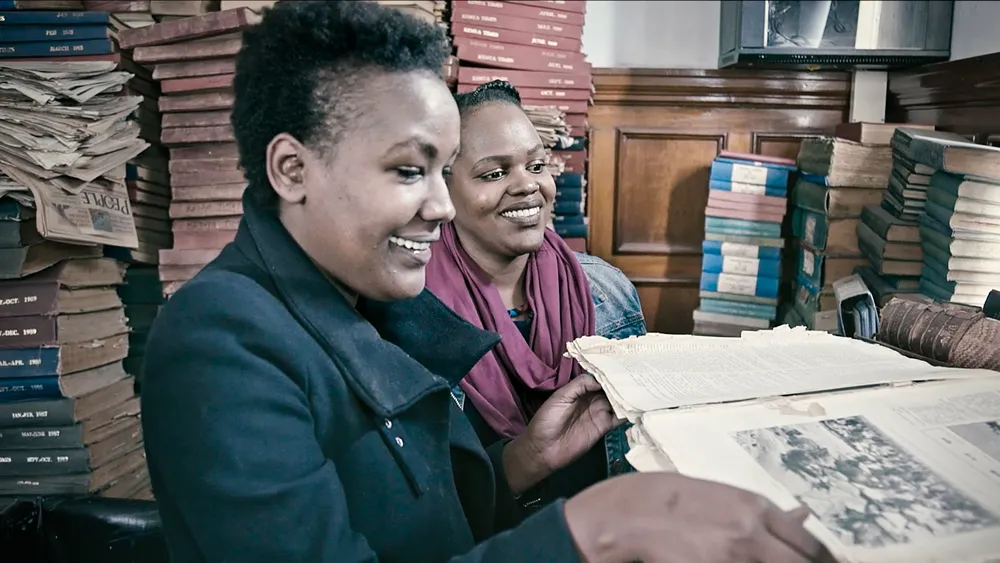
How to Build a Library follows two Kenyan women working to restore and reimagine the McMillan Memorial Library. However, the film never treats the project as a simple renovation. The building carries colonial history, public memory, political weight, and the possibility of becoming something more useful to the people who now need it.
That tension pulled me in immediately. I have spent enough time working across Africa to know that buildings can hold complicated stories. A school, a market, a ministry office, a farm cooperative, or a library can reveal who had power, who lacked access, and who still fights to shape the future from inside inherited systems.
The Library Becomes a Character
One of the smartest choices in the film is the way the directors let the library breathe onscreen. The camera does not treat the building like background scenery. Instead, it moves through rooms, shelves, corridors, dust, light, and architectural details as if the building itself has something to say.
Visually, that matters. Colonial buildings often perform authority through design. They tell people who belongs, who should feel small, and whose knowledge deserves preservation. The film understands that architecture is never neutral when history has used it to organize power.
At the same time, the cinematography avoids turning the library into a museum piece. The space feels worn, alive, and unfinished. Sunlight moves across surfaces. Old shelves carry possibility. Empty rooms invite imagination. Because of that, the building becomes both evidence and invitation.
That visual patience reminded me of another film that treats memory as something active rather than frozen. In a very different kind of archive story, images move like a living conversation. Here, the archive sits inside walls, shelves, records, and the women determined to make the space speak differently.
Women Doing the Hard Work of Reimagining
The women at the center of How to Build a Library give the film its heartbeat. They are not presented as flawless heroines floating above bureaucracy. Instead, the film shows them thinking, negotiating, organizing, questioning, and pushing forward through systems that do not move quickly.
I appreciated that honesty. Development work often sounds glamorous from the outside, but anyone who has done it knows the truth. Real change involves meetings, budgets, permits, delays, relationships, personalities, institutional memory, and the stamina to keep returning to the table.
Because of that, the film felt familiar to me. I recognized the quiet labor of women who carry vision while also managing logistics. They understand the dream, but they also know someone has to answer emails, chase approvals, find partners, and convince people that the work matters.
The editing respects that labor. Rather than skipping over the slow parts, the film allows viewers to see how transformation actually happens. Progress does not arrive as a montage. It arrives through persistence.
The Craft: Patience, Texture, and Institutional Memory
The film’s craft works because it understands restraint. A louder documentary might have pushed the colonial history harder or turned every scene into a declaration. Instead, How to Build a Library lets the tension unfold through texture.
The pacing mirrors the work itself. Restoration takes time. Trust takes time. Institutional change takes time. Therefore, the film does not rush to make the viewer comfortable. It lets us sit with the difficulty of transforming a space without pretending that good intentions solve everything.
Sound also plays an important role. The film does not overwhelm the viewer with a score that tells us how to feel. Instead, quieter moments allow the building, the conversations, and the rhythm of the work to carry emotion. That choice gives the documentary room to think.
Meanwhile, the editing creates a balance between practical obstacles and larger questions. One moment may focus on the physical building. Another opens into memory, access, or national identity. As a result, the film never becomes only about restoration. It becomes about reclamation.
Whose Knowledge Gets Preserved?
The deeper question in How to Build a Library is not whether a library should survive. Of course it should. The harder question is what kind of library it should become.
Every library makes choices. Which books enter the collection? Which languages appear on the shelves? Which histories receive funding? Which children walk in and see themselves reflected there? Those questions may sound simple, but they carry enormous cultural power.
For countries shaped by colonial rule, those choices become even more urgent. A library can preserve knowledge, but it can also preserve exclusion if no one has the courage to challenge what the shelves already say.
That is why this story reached beyond Nairobi for me. Around the world, communities continue asking who controls memory and who gets left out of the official record. For broader context on the global role of libraries in access to information, the International Federation of Library Associations and Institutions offers valuable resources on libraries, knowledge, and public access.
This same question travels through many of the films I have been watching lately. Sometimes memory lives in a library. Sometimes it lives in land. Sometimes it survives through music, movement, and the stubborn refusal to let culture disappear quietly.
Public Space Still Matters
One of the most hopeful parts of How to Build a Library is its belief in public space. We live in a digital world, so people often assume access only means internet access. However, physical places still matter deeply.
A library gives people somewhere to gather, study, question, rest, research, dream, and belong. It can serve students, elders, artists, teachers, families, and neighbors who need more than information. They need a space where knowledge feels available instead of locked away.
That belief in shared space connects with the way I think about culture itself. Culture is not decoration. It is infrastructure. It shapes how people understand themselves, how communities organize memory, and how future generations imagine their own possibilities.
Looking Beyond the Building
By this point, the library almost disappears from the center of the story, and I mean that as a compliment. What remains is a conversation about ownership, identity, and imagination. The building becomes a doorway into much larger questions about who has the authority to define culture and whose knowledge becomes part of the public record.
I kept thinking about how many countries I have worked in where beautiful institutions existed, yet not everyone felt they belonged inside them. Sometimes the barriers were economic. Sometimes they were political. Sometimes they were invisible, built from history instead of brick. Even so, they shaped who walked through the front door and who stayed outside.
How to Build a Library understands that belonging cannot simply be declared. Communities have to experience it. They have to recognize themselves in the stories being preserved and trust that their voices deserve space alongside the ones already on the shelves.
A Conversation About Africa’s Future
Although this documentary is rooted in Nairobi, it speaks to conversations taking place across the African continent. Young leaders are asking how to preserve history without becoming trapped by it. Artists, educators, entrepreneurs, and cultural institutions are imagining futures that honor the past while refusing to be defined solely by colonial narratives.
That broader context gives the film its quiet power. It is not simply documenting one restoration project. Instead, it captures a generation asking what inherited institutions should become in the decades ahead.
As someone who has spent years working throughout Africa, I appreciated that the documentary never falls into the tired habit of portraying the continent as a collection of problems waiting to be solved. Instead, it centers African leadership, African expertise, and African imagination. That perspective feels refreshingly honest.
Why This Film Stayed With Me
Some documentaries leave you with information. Others leave you with better questions. How to Build a Library belongs firmly in the second category.
Long after the credits rolled, I found myself thinking less about shelves and books than about stewardship. Every generation inherits something. Sometimes it is land. Sometimes it is language. Sometimes it is music, memory, or institutions built by people with very different ideas about who belonged.
The real challenge is deciding what deserves preservation, what deserves transformation, and what deserves to be left behind.
That question connects naturally with several of the films I saw this season. One documentary explores how people carry home after displacement, while another asks what happens when communities fight to hold onto land across generations. Although each story unfolds in a different place, all three films wrestle with memory, belonging, and the responsibility of passing something meaningful forward.
Ultimately, How to Build a Library reminded me that preserving culture is never just an act of looking backward. It is an act of believing that future generations deserve access to the full richness of their own story.
That feels especially important at a time when libraries, archives, museums, and public institutions continue to face questions about funding, access, and representation. Organizations like UNESCO have long recognized that protecting cultural heritage is essential to sustainable development because communities cannot build strong futures if they lose the stories that explain where they came from.
Perhaps that is why this film resonated with me so deeply. It is not really asking us how to build a library.
It is asking how we build a society that believes every child deserves to find themselves somewhere on those shelves.
Keep Exploring on DG Speaks
If thoughtful, independent cinema is your thing, you’ll probably also enjoy my coverage of IndieLisboa 2026, my review of BLKNWS: Terms & Conditions, my thoughts on Khartoum, and my review of Seeds. Together, these films explore memory, identity, power, and the stories that shape how communities understand themselves.
Disclosure: This story may include affiliate links. If you purchase through them, DG Speaks may earn a small commission at no additional cost to you. Read my full disclosure. If you’re interested in discovering more independent cinema, visit the Sundance Film Festival and IndieLisboa International Film Festival websites for current programming and filmmaker information.