Seeds Review: Black Land Ownership, Legacy, and Resilience in the South
I have stood in cassava fields in Mozambique, maize plots in Zambia, women’s vegetable gardens in Egypt, and cashew orchards in Ghana. The conversations almost always began with farming. Before long, though, they became conversations about family, inheritance, weather, markets, children, and who would still be there to work the land twenty years from now. That is why this Seeds review felt immediately familiar to me.
Although Seeds is rooted in the American South, the questions it asks travel far beyond one region. Who gets to keep land? Who gets pushed off it? Who carries the responsibility of maintaining a family legacy? More importantly, what happens when land becomes one of the last physical witnesses to a community’s history?
Directed with patience and deep respect, Seeds follows Black farmers and landowners whose connection to the soil reaches beyond economics. The film understands something I believe with my whole chest: farming is never only about food. It is about memory, power, survival, and the right to imagine a future from the ground beneath your feet.
The Land Speaks Before Anyone Explains It
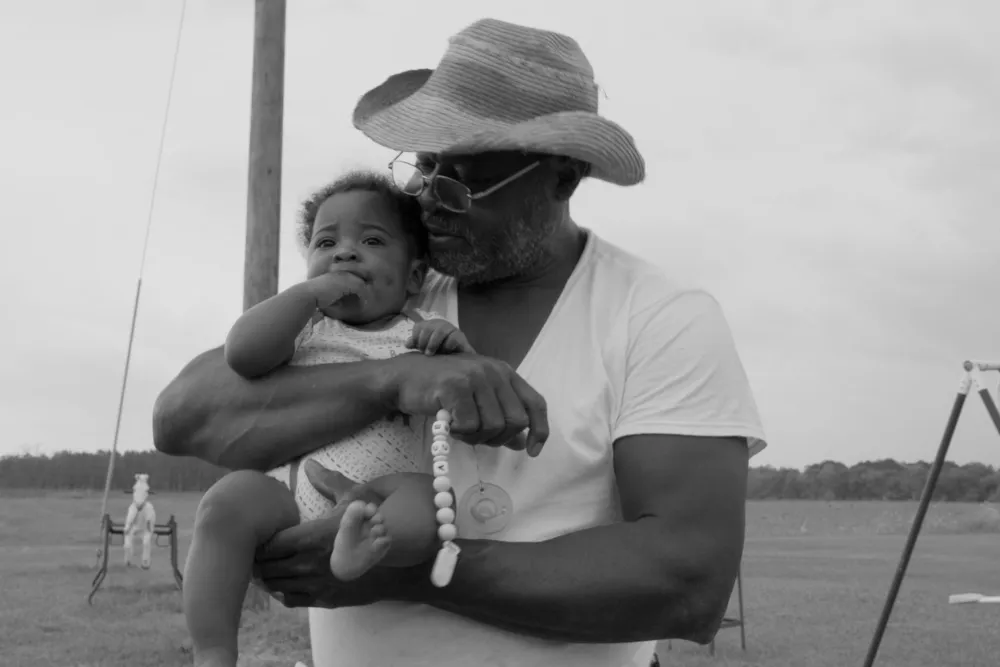
What struck me first was the film’s visual patience. The camera does not rush across the landscape looking for a dramatic moment. Instead, it lingers. It lets fields, porches, fences, trees, and weathered hands become part of the testimony.
That choice matters because land carries emotion differently than dialogue does. A long shot of a field can say what a statistic cannot. A quiet porch conversation can hold more history than a policy report. Meanwhile, the sound of footsteps in soil reminds us that these families are not discussing abstract property. They are standing inside inheritance.
The cinematography gives the land dignity without turning it into a postcard. Nothing feels overly polished or romanticized. Instead, the images feel grounded, almost tactile. You can sense heat, labor, silence, and pride moving through the frame.
That visual restraint gives Seeds its emotional authority. The film trusts viewers to understand that a field can be beautiful and burdened at the same time.
Black Land Is Never Just Property
For Black families in the South, land ownership has always carried a particular kind of weight. It represents labor, danger, hope, sacrifice, and the audacity of people who believed their children deserved something more stable than survival.
Because of that history, every acre in Seeds feels layered. The land is not just where crops grow. It is where ancestors worked, where families gathered, where decisions were made, and where a future once seemed possible because someone had something to pass down.
I appreciated that the documentary never flattens this story into nostalgia. Nostalgia can be dangerous when it makes struggle look prettier than it was. Seeds honors the beauty of Black land ownership while still acknowledging the systems that have made holding onto land so difficult.
That tension reminded me of other films that explore memory from a different angle. In a documentary that treats archives as something alive, memory moves through media and image. Here, memory grows from soil, fences, family stories, and the daily work of staying rooted.
The Craft Feels Quiet, But Never Passive
Seeds does not push emotion with heavy-handed music or dramatic narration. Instead, the filmmakers build feeling through rhythm. The pacing mirrors rural life in a way that feels intentional. Conversations unfold slowly. Silences matter. Small gestures receive space.
That kind of filmmaking takes confidence. A less patient film might have rushed toward a clear argument or filled every pause with explanation. However, Seeds allows meaning to gather over time. As a result, viewers begin to feel the weight of what families are trying to protect.
The editing also respects the people onscreen. It does not treat them like case studies. Instead, it allows their personalities, humor, fatigue, pride, and uncertainty to show. That matters because too many documentaries about rural Black life focus only on hardship. This film gives us hardship, yes, but it also gives us texture.
Even the quieter scenes feel alive. A glance carries concern. A pause holds memory. A simple movement through a field becomes a form of testimony. Because of that, the film feels intimate without becoming intrusive.
Farming Is Also a Family Conversation
Development organizations often talk about agriculture through yields, income, market access, and productivity. Those things matter. I have spent much of my career working around those conversations, so I know how important they can be. Still, farmers rarely talk about land only in technical terms.
Eventually, the conversation always becomes personal. Who taught you to plant? Who kept the records? Who left? Who stayed? Who wants the land, and who feels trapped by it? What happens when a family legacy becomes both a blessing and a responsibility?
Seeds understands that farming happens inside families before it happens inside markets. The film pays attention to those intergenerational questions without forcing easy answers. That nuance gives the documentary a richness I deeply appreciated.
It also connects naturally to the way I think about food systems and the wisdom people carry through lived experience. Real expertise does not always arrive with a title or a certificate. Sometimes it comes through years of watching weather, saving seed, feeding people, and learning what the land will or will not forgive.
The Future of Black Family Farms
One of the most tender questions in Seeds is also one of the hardest: who will carry this forward?
Younger generations face real choices. Some feel called to stay close to the land. Others need opportunities elsewhere. Meanwhile, parents and elders have to reckon with the possibility that the next chapter may not look like the one they imagined.
The film handles that tension with care. It does not shame anyone for leaving. It also does not romanticize staying. Instead, Seeds shows how complicated it can be to love a place and still wonder whether that place can sustain your life.
That honesty made the film stronger for me. Rural life deserves more than sentimental language. Black farming families deserve stories that honor both the beauty and the pressure of inheritance.
Holding On Takes More Than Love
Love for the land matters, but love alone cannot protect a farm. Families also need clear titles, legal support, fair lending, reliable infrastructure, markets, training, and policies that do not quietly push them out. That is where Seeds becomes more than a beautiful film. It becomes a reminder that land justice is also food justice.
The history behind Black land loss in America is not accidental. Discriminatory lending, heirs’ property challenges, unequal access to credit, and generations of exclusion have shaped what many families still face today. For additional context, the Federation of Southern Cooperatives continues to work with Black farmers and rural communities across the South on land retention, cooperative development, and agricultural justice.
That larger context gives the documentary even more weight. The film does not need to explain every policy detail because the families make the stakes visible. We see what people are trying to keep. We also feel what could disappear if the land leaves the family.
What Stayed With Me
I kept thinking about how quietly the film builds emotion. It does not chase tears. Instead, it lets ordinary moments gather force. A conversation across a table. A look toward a field. A pause before someone answers a question about the future. Those moments reveal more than any dramatic narration could.
That restraint matters because the subject already carries enough weight. The filmmakers do not need to decorate it. They simply need to listen well, frame carefully, and trust the people onscreen. For the most part, Seeds does exactly that.
Watching it, I thought about how often Black cultural memory lives outside official archives. Sometimes it lives in songs. Sometimes it lives in kitchens. Sometimes it lives in land records, fence lines, family cemeteries, and the way someone still knows where a grandparent planted a particular tree. That kind of memory deserves protection too.
Another film might have turned this into a simple story of decline. Fortunately, Seeds offers something richer. It shows vulnerability without helplessness. It shows uncertainty without surrender. Most importantly, it shows Black farmers as thinkers, stewards, family members, and cultural keepers.
Why This Story Matters
Seeds matters because it understands agriculture as culture. Too many conversations about food systems separate the crop from the person who grew it. This film refuses that separation.
When I think about sustainable food systems, I think about more than production. I think about who controls land, who holds knowledge, who gets financing, who has access to markets, and who gets written out of the story after doing the work for generations.
Because of that, Seeds feels essential. It reminds viewers that Black land ownership is not only a historical issue. It remains a living question tied to wealth, food security, rural futures, family identity, and cultural survival.
This is also why the film pairs so naturally with stories about Black creativity moving through culture. One film follows rhythm and sound. Another follows soil and inheritance. Yet both ask how Black communities protect what they created when the wider world keeps taking from the source.
What May Challenge Viewers
Viewers who expect a fast-paced documentary may need to settle into the film’s rhythm. Seeds moves with patience, and that patience feels connected to the land itself. Farm life does not always unfold on the schedule of modern attention spans.
Even so, the slower pace serves the story. It gives the viewer time to notice texture, listen closely, and understand the emotional weight behind ordinary decisions. In a world that rushes everything, that kind of pacing can feel almost radical.
I also wanted even more historical context in a few places. Still, I understand why the filmmakers chose intimacy over explanation. The film’s power comes from being close to the people, not from turning their lives into a policy lecture.
DG Speaks Take
Seeds is patient, grounded, visually tender, and deeply necessary. It honors Black farmers not as symbols, but as people carrying memory, responsibility, fatigue, pride, and hope across generations.
Watch it if you care about Black land ownership, food systems, farming, rural America, family legacy, or the long fight to keep what ancestors worked to secure. More importantly, watch it if you understand that land can hold a story long after the rest of the world stops listening.
For more DG Speaks film writing, explore my review of a documentary about reclaiming public memory in Nairobi, my reflection on Black storytelling as a living archive, and my coverage of independent cinema that asks bigger questions about culture and belonging.