A Beautifully Quiet Reckoning: The Birthday Gift Review
There is something uniquely devastating about stories that unfold quietly.
The ones that slowly pull you into the emotional lives of their characters before you even realize how deeply invested you’ve become. The ones where tension lives inside silence, memory, and the things left unsaid.
That is exactly what The Birthday Gift accomplishes.
Going into this short film, I was completely unprepared for where the story would ultimately lead me emotionally. What begins as an intimate birthday gathering between an Argentine mother and daughter gradually unfolds into something far deeper and far more haunting. By the end, I found myself sitting in silence, reflecting not only on the characters, but on the generations of families shaped by political violence, disappearance, migration, and memory throughout Latin America.
I watched the film twice. The second time, I watched it with my mother, and somehow the emotional weight became even heavier.
Directed by Arianna Ortiz and adapted from Stephanie Alison Walker’s acclaimed stage play The Abuelas, The Birthday Gift began its festival run with a World Premiere at the 50th Cleveland International Film Festival before continuing on to the 25th anniversary edition of the Los Angeles Latino International Film Festival (LALIFF). The film’s inclusion in both festivals feels especially fitting given its deeply human exploration of memory, identity, family, and the lasting emotional impact of political violence across generations.
A Family Dinner That Becomes Something Much Bigger
On the surface, The Birthday Gift feels intimate and deceptively simple. Set during a birthday dinner on a cold Chicago evening, the story follows an Argentine mother and daughter whose lives are unexpectedly disrupted by the arrival of a mysterious guest.
That is all I want to reveal about the plot because this film absolutely deserves to be experienced without spoilers.
What makes the storytelling so effective is the restraint. The film does not rely on dramatic excess or emotional manipulation. Instead, it trusts silence, tension, body language, and carefully placed moments to guide the audience toward its emotional truths.
And when those truths finally begin to emerge, they land with incredible force.
The emotional twist in this story genuinely caught me off guard. I knew very little about the subject matter going into the screening, which made the experience even more powerful. What begins as a quiet family drama slowly unfolds into something far deeper, layered with history, grief, identity, and generational trauma.
The Shadow of Argentina’s Dirty War
What gives The Birthday Gift its emotional gravity is the historical reality quietly sitting beneath the narrative.
The film draws from the legacy of Argentina’s Dirty War, the devastating period of state violence and forced disappearances that terrorized the country from the mid-1970s into the early 1980s. During that time, thousands of people were abducted, tortured, and killed by the military dictatorship. Among the most heartbreaking aspects of that era was the systematic theft of children born to political prisoners, many of whom were illegally adopted into other families while their biological relatives searched for them for decades.
That historical pain echoes throughout The Birthday Gift in subtle but deeply affecting ways.
As someone with family from Colombia, the emotional themes in this film struck me immediately because I understand what prolonged political conflict leaves behind in families and communities across Latin America. Even though this story centers on an Argentine family, the emotional residue felt painfully familiar to me.
Across the region, generations have inherited silence, displacement, grief, and unanswered questions. This film captures that emotional inheritance with remarkable humanity.
Visually Intimate and Emotionally Immersive
Beyond the storytelling itself, this film is simply beautiful to watch.
The cinematography creates an atmosphere that feels both intimate and emotionally claustrophobic at the same time. I especially loved the color grading, which gave the film a soft but haunting warmth that perfectly matched the emotional tone of the story. Every frame felt intentional.
The score also deserves enormous praise.
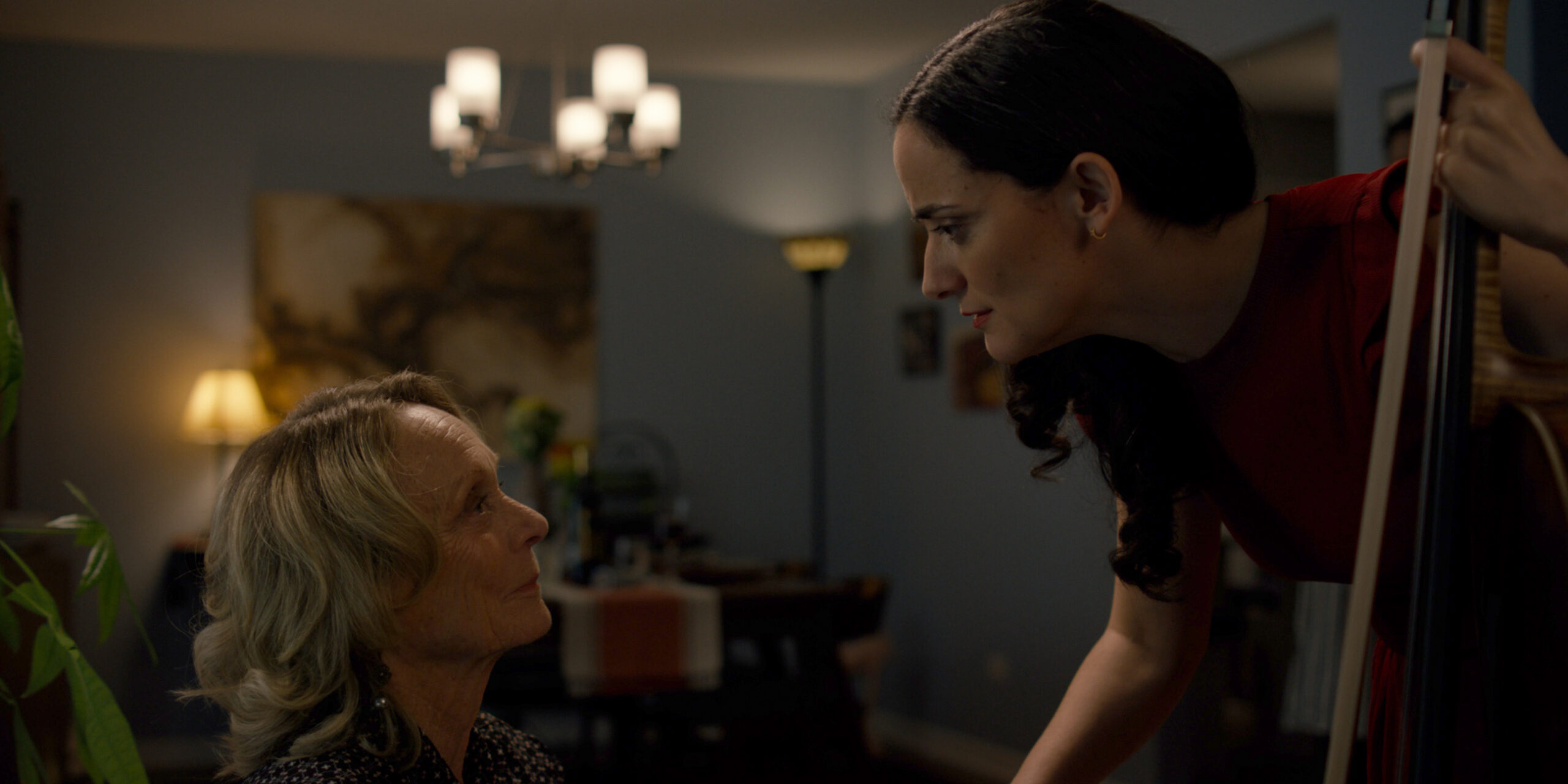
One of my favorite aspects of the film was the integration of music through Gabriela’s cello playing, beautifully portrayed by actress Cruz Gonzalez-Cadel. Knowing the deeper truth behind Gabriela’s identity made those musical moments feel even more emotionally devastating in retrospect. Her music becomes more than artistic expression. It becomes memory, longing, identity, and connection all woven together.
What made those scenes especially powerful for me was watching how deeply Gabriela’s music resonated with Carolina, the older woman whose quiet presence carries so much emotional weight throughout the film. There is something profoundly moving about seeing emotion travel through sound before words are ever fully spoken. The film handles those moments with incredible restraint and tenderness, allowing the music itself to carry much of the emotional weight.
And honestly, those quiet musical moments are part of what makes The Birthday Gift so unforgettable.
There are no overly dramatic speeches. No exaggerated performances. Instead, the film allows emotion to exist naturally inside silence, glances, pauses, and memory.
That level of trust in both the audience and the material is rare.
A Story About Mothers, Memory, and Survival
What affected me most deeply was the perspective of the mother.
The perspective of Carolina was portrayed with remarkable emotional restraint by Paula Pizzi.
As a mother myself, I found parts of this film almost unbearable to imagine emotionally. The grief embedded within this story feels enormous, yet the film handles it with extraordinary tenderness and care. Nothing feels exploitative. Nothing feels sensationalized.
Instead, The Birthday Gift reminds us that history is not abstract. It reminds me of another film, La Llorona and its chilling view into The Mayan Genocide in Guatemala. Political violence does not simply disappear once governments change or headlines fade. The emotional consequences continue living inside families for generations.
And that is precisely what makes this short film so powerful.
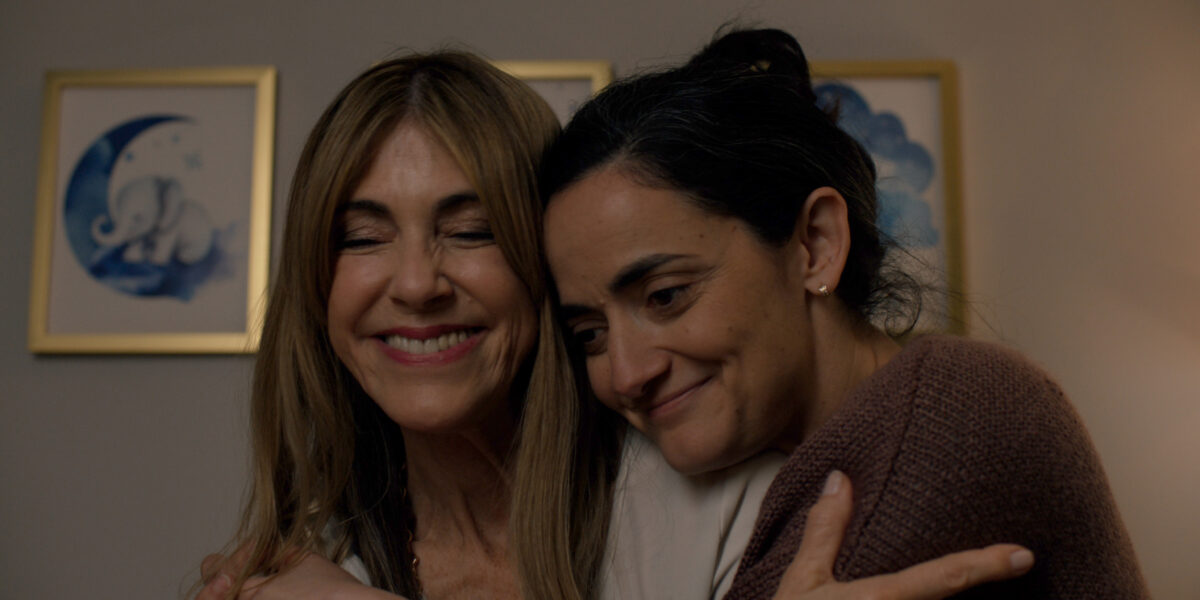
In just sixteen minutes, The Birthday Gift manages to say more about memory, identity, silence, and survival than many full-length features accomplish in two hours.
The Weight Carried Between Generations
Independent cinema matters because it creates space for stories like this to exist. Stories rooted in humanity. Stories willing to sit inside emotional complexity instead of simplifying it.
The Birthday Gift is beautifully acted, visually immersive, emotionally intelligent, and quietly devastating in all the right ways.
It is a film that lingers.
And for me, the films that linger are always the ones worth talking about.