What’s Hiding in Our Beauty Cabinets? A Plea for Safer Beauty for All
I stood in my aunt’s bathroom surrounded by bottles, creams, fragrances, cosmetics, and hair products. Nothing about the scene looked unusual. Most of us have similar collections lining our counters, filling our cabinets, and spilling across our shower shelves.
Yet one unsettling question entered my mind and stopped me in my tracks:
Which one of these products gave my aunt cancer?
I know that I cannot trace my aunt’s cancer to one bottle on one shelf. Cancer develops through complex interactions involving genetics, age, environment, lifestyle, occupational exposure, and many other factors.
Still, that question revealed how little confidence I had in the system meant to protect us.
How many products had my aunt used throughout her life? Which ingredients entered her body through her skin or lungs? Had companies fully studied those substances? Did manufacturers know everything their suppliers placed in their formulas?
Most importantly, why should my aunt, or any of us, have to carry that uncertainty alone?
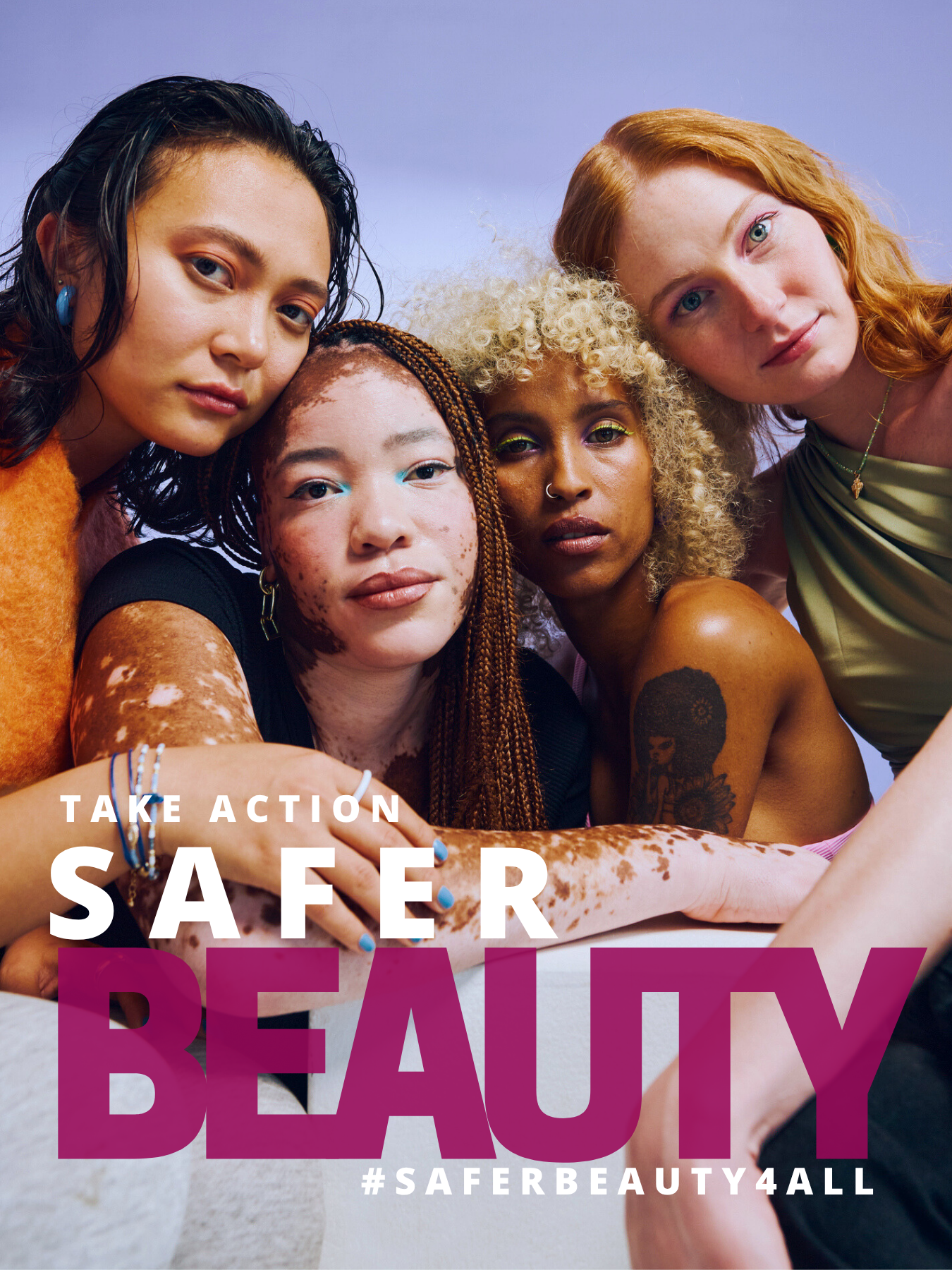
On July 15, 2026, I am sharing this story as part of the National Clean Beauty Day of Action. Advocates, organizations, creators, responsible businesses, and consumers are joining together to send a powerful, unified message to Congress and our communities.
We need stronger cosmetic safety protections, clearer ingredient information, more accountable supply chains, and safer products for everyone.
That is what Safer Beauty for All means to me.
My Search for Safer Products Started Early
Long before clean beauty became a popular marketing category, I paid attention to the products I used.
Even when I was young, I searched for natural and organic options. I preferred simple formulas and tried to avoid ingredients that could harm my body or the planet.
Part of that awareness grew from my concern for the environment. However, my family’s experiences with cancer made the issue even more personal.
Several family members have faced different forms of cancer, particularly breast cancer. Because of that history, cancer remains one of my greatest fears.
Over the years, I have turned countless bottles around and studied their labels. Sometimes, I recognized several ingredients. At other times, the list resembled a chemistry lesson written in a language I did not understand.
Nevertheless, I kept trying.
I researched ingredients, compared brands, searched for organic certifications, and read what companies said about sourcing and sustainability. Whenever possible, I purchased the products I believed offered a safer choice.
Unfortunately, those choices often carried a much higher price.
When Safety Comes With a Premium Price
Anyone who has spent time in the clean beauty aisle understands the problem.
A simple moisturizer may cost two or three times more because it carries a green label, an organic certification, or a shorter ingredient list. Shampoo, deodorant, sunscreen, makeup, and hair care products can quickly become luxury purchases.
During some seasons of my life, I could afford to pay more for the products I preferred. During others, economic reality made the choice for me.
I have stood in store aisles holding two products while doing a mental calculation. One appeared to contain ingredients I trusted. The other fit my budget.
Sometimes, rent mattered more. Groceries mattered more. Gas, utilities, school expenses, and family responsibilities mattered more.
So, like millions of other people, I compromised.
That choice never felt fair. No one should have to wonder whether protecting their health requires money they simply do not have.
Moreover, people should never feel ashamed for purchasing what they can afford. Consumers did not create the gaps in our regulatory system, and we cannot expect individual households to buy their way out of them.
Safety should not sit behind a premium price tag. It should not belong only to people who can shop at upscale retailers, order specialty products online, or embrace an expensive wellness lifestyle.
The goal should not be a small luxury market filled with safer products. We need a safer marketplace for everyone.
July 15, 2026: National Clean Beauty Day of Action
This National Clean Beauty Day (July 15, 2026) the campaign is calling on partners and supporters to join a coordinated Day of Action.
Together, we can send a unified message that cosmetic safety matters to consumers, families, workers, businesses, and communities across the country.
National Clean Beauty Day should involve more than sharing product recommendations or celebrating brands. It should also give us space to examine the systems behind the products we use every day.
Who decides which ingredients enter the marketplace? What information do manufacturers receive from their suppliers? Which ingredients must companies disclose? What happens when credible research raises concerns about a chemical?
The National Clean Beauty Day of Action turns those questions into a direct public response.
The campaign asks us to contact our members of Congress and urge them to cosponsor and support the four bills in the Safer Beauty Bill Package.
A prepared digital action alert makes the process simple. You can enter your information, review the letter, personalize it with your own story, and send it directly to the lawmakers who represent you.
One message may feel small. However, thousands of messages delivered during a coordinated Day of Action can demonstrate widespread demand for stronger protections.
Most of Us Assume Someone Already Checked
Nearly everyone uses beauty or personal care products. We wash our hands, brush our teeth, apply lotion, use deodorant, style our hair, and perhaps add makeup or fragrance before leaving home.
Because these routines feel so ordinary, most consumers assume someone has already evaluated every product on the shelf.
A familiar retailer creates a sense of trust. Professional packaging reinforces it. Words such as “gentle,” “clean,” “pure,” “natural,” or “dermatologist tested” make that trust feel even stronger.
Many people understandably believe the federal government approves each cosmetic and all its ingredients before the product reaches the marketplace.
However, the system does not work that way.
According to the U.S. Food and Drug Administration, cosmetic products and ingredients generally do not require individual FDA approval before entering the market. Color additives remain the primary exception.
Companies carry the legal responsibility for ensuring their products are safe when used as directed and properly labeled. The FDA can also act against products and companies that violate federal law.
Still, a bottle’s presence on a store shelf does not necessarily mean the government reviewed and approved every ingredient before that product went on sale.
Reading labels helps, but reading a label is not the same as understanding risk. A consumer may not know what each ingredient does, how much the formula contains, or what repeated exposure could mean over several years.
We should not need chemistry degrees to buy shampoo, lotion, deodorant, lipstick, toothpaste, or shaving cream.
MoCRA Created Progress, but Gaps Remain
The United States has made important progress in recent years.
Congress passed the Modernization of Cosmetics Regulation Act of 2022, commonly called MoCRA. The FDA describes MoCRA as the most significant expansion of its authority over cosmetics since 1938.
Among other changes, the law established requirements involving cosmetic facility registration, product listings, serious adverse event reporting, safety substantiation records, and access to certain company records.
Under specific circumstances, the FDA can also order a mandatory recall.
Those changes matter. Nevertheless, one law could not address every weakness in a system that had gone without a major federal update for decades.
Critical gaps remain around hazardous chemicals, ingredient disclosure, supply chain information, synthetic hair products, and repeated exposure among salon professionals and disproportionately affected communities.
The Safer Beauty Bill Package would build on MoCRA by addressing several of those gaps.
Four Bills, Four Missing Protections
Lawmakers introduced the four-bill package in the 119th Congress in July 2025. Each proposal addresses a different part of cosmetic safety.
Together, the bills would:
- Ban 18 hazardous substances and two broader chemical classes from beauty and personal care products.
- Increase the disclosure of hazardous ingredients, including qualifying ingredients within fragrance and flavor mixtures.
- Require upstream suppliers to provide cosmetic companies with more complete ingredient and safety information.
- Fund research, public education, safer alternatives, and protections for communities and workers facing greater exposure.
- Direct federal attention toward the safety of synthetic hair products.
These proposals reflect a principle that should already guide the marketplace: consumers cannot carry all the responsibility for protecting themselves.
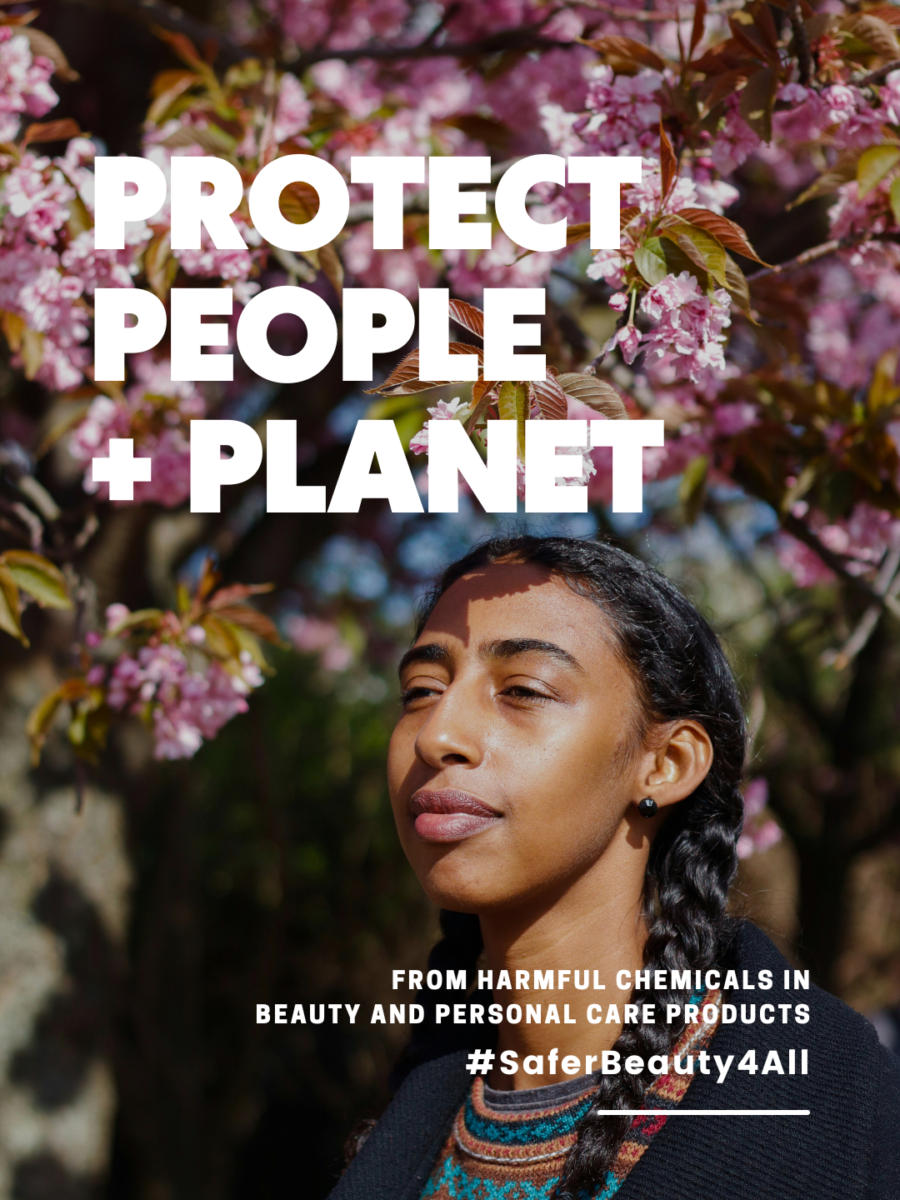
Companies need to know what they sell. Suppliers should disclose what they provide. Regulators require useful information and meaningful authority. Meanwhile, lawmakers must create standards that protect people across incomes and communities.
The Toxic-Free Beauty Act
The Toxic-Free Beauty Act of 2025, H.R. 4433, would ban 18 specified hazardous substances and two chemical classes from cosmetics and personal care products sold in the United States.
The proposal addresses substances that include lead, mercury, asbestos, toluene, and certain parabens. It also covers phthalates and formaldehyde-releasing preservatives as broader classes.
Most people would never knowingly purchase a product advertised as containing lead, mercury, or asbestos. Yet consumers cannot avoid a substance they do not know is present.
I should not have to stand in a store searching every ingredient on my phone. Responsible shopping has value, but it cannot replace responsible manufacturing and meaningful regulation.
At some point, society must decide that certain hazards should not remain individual shopping problems.
The Cosmetic Hazardous Ingredient Right to Know Act
I have spent years turning bottles around and trying to understand their labels. Yet a label cannot fully inform me when one familiar word—“fragrance”—may represent a complicated mixture.
Companies often protect fragrance formulas as trade secrets. Businesses may have valid reasons to prevent competitors from copying original formulas.
However, commercial secrecy should not stop consumers from learning about hazardous ingredients in products they apply directly to their bodies.
The Cosmetic Hazardous Ingredient Right to Know Act of 2025, H.R. 4435, would increase transparency around hazardous cosmetic ingredients. The proposal would also address qualifying substances contained within fragrance and flavor mixtures.
Better disclosure would help consumers make informed decisions. It could also provide researchers and health professionals with more useful information when investigating exposures or adverse reactions.
Transparency will not answer every scientific question. Nevertheless, secrecy should not become the default when health concerns arise.
The Cosmetic Supply Chain Transparency Act
Most beauty products begin far from the store shelf.
Raw materials may pass through several suppliers, processors, laboratories, and manufacturers before a brand places its name on the final package.
Along the way, information can become incomplete. A cosmetic company may rely on an upstream supplier to disclose ingredients, contaminants, processing aids, or relevant safety data.
That creates a serious problem. How can a brand protect consumers when it does not have complete information about the materials used to make its products?
The Cosmetic Supply Chain Transparency Act of 2025, H.R. 4434, would require upstream suppliers to provide cosmetic companies with fuller ingredient disclosures and safety information.
Although supply chains may sound like a behind-the-scenes business concern, they directly affect what reaches our bathrooms.
Responsible companies need accurate supplier information. Without it, even a brand committed to making safer products may struggle to identify every concern.
Accountability should follow a product from its raw ingredients to the bottle sitting on our shelves.
Protections for Communities and Salon Professionals
Chemical exposure does not affect everyone in the same way.
Some communities experience greater exposure through products developed and marketed specifically to them. Salon professionals face another concern because they may handle dyes, glues, sprays, straighteners, solvents, and nail products repeatedly throughout the workday.
The Cosmetic Safety Protections for Communities of Color and Professional Salon Workers Act of 2025, H.R. 4436, responds to those unequal exposures.
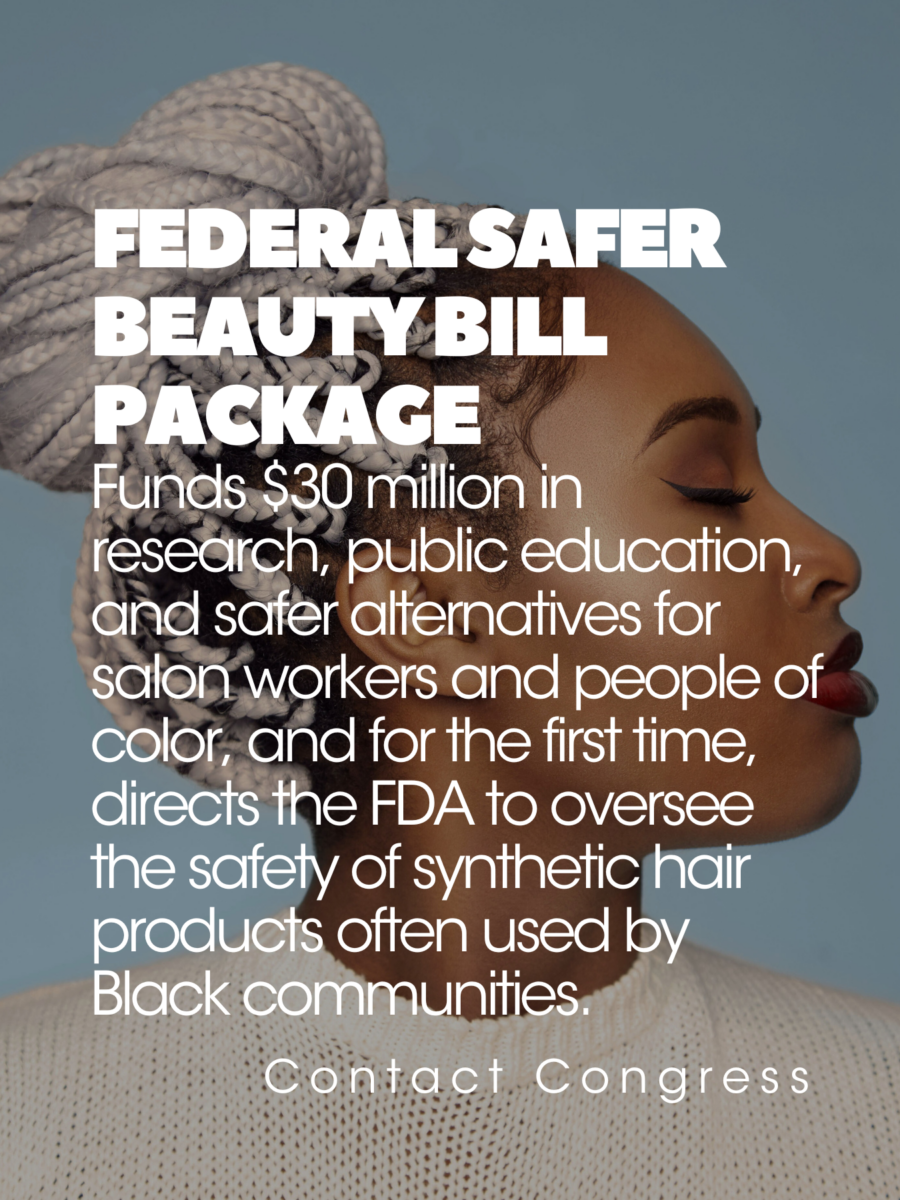
The proposal would establish grant programs for research, public education, community and salon interventions, and the development of safer alternatives. The campaign states that the measure would provide $30 million in funding and direct attention toward synthetic hair product safety.
This part of the package holds personal significance for me as a Black and Latina woman who has spent a lifetime navigating beauty standards, cultural expectations, hair care choices, and product marketing.
The beauty industry does not sell only shampoo, lipstick, or hair extensions. It also sells ideas about femininity, professionalism, acceptance, age, race, and worth.
Those messages become especially powerful in the Black hair industry, where product choices often carry cultural and political meaning.
I have written before about how racism, Eurocentric beauty standards, and enormous financial interests helped shape that market. You can explore that history in The Black Hair Industry: A $2.5 Billion Business Built on Racism and Self-Hate.
Safety must become part of that conversation too.
Hair products marketed to Black consumers should not expose them to unnecessary risks. Synthetic braids, straighteners, adhesives, dyes, edge controls, and styling products deserve careful scrutiny.
Meanwhile, professional exposure extends across the entire beauty industry. Hair stylists, barbers, nail technicians, estheticians, and makeup artists may spend hours around products their clients encounter only occasionally.
Some workers operate in small spaces with limited ventilation. Others lack complete ingredient information or access to safer alternatives.
No one should have to choose between earning a living and protecting their health.
Addressing unequal exposure does not make this campaign relevant to only one group. Instead, it ensures that the people carrying some of the greatest risks do not disappear from the conversation.
When policies protect highly exposed people, everyone can benefit from better research, clearer information, safer formulas, and stronger standards.
Natural Does Not Automatically Mean Safe
Because I have sought natural and organic products for much of my life, I understand the appeal of those words.
They can suggest simplicity, environmental responsibility, and thoughtful sourcing. In some cases, they reflect meaningful certifications and company practices.
However, “natural” does not automatically mean harmless. Nature produces allergens, irritants, poisons, and other powerful substances. Likewise, a synthetic ingredient is not dangerous simply because scientists created it in a laboratory.
Safety depends on evidence. Researchers must consider the specific substance, concentration, route of exposure, frequency of use, product formulation, and other relevant factors.
That is exactly why consumers need evidence-based standards rather than fear-based marketing or vague claims on attractive packaging.
A green leaf on a label cannot substitute for meaningful oversight.
Beauty Is Cultural, Emotional, and Deeply Human
Supporting stronger cosmetic safety laws does not mean rejecting beauty.
I love beauty as a form of creativity, culture, ritual, pleasure, and self-expression.
A familiar fragrance can bring back memories of a mother or grandmother. Hair rituals carry traditions across generations. Makeup can become art, while skincare can offer a quiet moment of care after a difficult day.
None of those experiences should require silence about safety.
We can love lipstick and demand transparent ingredients. We can celebrate creative hair styling while asking serious questions about dyes, straighteners, adhesives, and synthetic products.
Consumers can enjoy fragrance while expecting companies to disclose hazardous substances. Salon clients can appreciate their stylists while supporting safer working conditions.
Beauty can evolve. True innovation should make products more effective, inclusive, sustainable, accessible, and safe.
Share the Campaign and Build Public Pressure
Contacting Congress offers the most direct way to support the Safer Beauty Bill Package. However, public education also matters.
Many people have never heard of these bills. Others do not know how cosmetic regulation works or how recently Congress expanded the FDA’s authority.
The National Clean Beauty Day of Action toolkit includes ready-to-use graphics, sample posts, and suggested hashtags. These materials make it easier for individuals and organizations to participate.
You can share a campaign graphic on Instagram, post the action alert on Facebook, discuss the bills on TikTok, or bring the issue to a professional audience on LinkedIn.
Personal stories may carry the greatest power.
Tell people why safer beauty matters to you. Perhaps cancer has touched your family. Maybe you work in a salon, experience severe sensitivities, or struggle to afford products you trust.
Your story may help someone understand that cosmetic safety is not an abstract political issue. It touches our bodies, homes, workplaces, families, and finances.
When you post, use #SaferBeauty4All to connect your message with the larger campaign.
I Do Not Want Another Family Asking My Question
I still think about that moment in my aunt’s bathroom.
The products sitting around me looked ordinary. Someone could have purchased most of them without a second thought.
Yet after cancer enters a family, ordinary objects can begin to look different.
A bottle becomes a question. A fragrance becomes an unknown. A daily routine begins to feel like a lifetime of exposures that no one can completely reconstruct.
I cannot go back into my aunt’s bathroom and find a simple answer.
However, we can build a future in which families have fewer reasons to ask the question that haunted me that day.
We can demand transparent labels, safer ingredients, accountable supply chains, stronger research, and meaningful protection for workers and consumers.
Parents should not have to wonder whether everyday products contain avoidable hazards. Salon professionals should not spend years breathing fumes or touching chemicals without adequate information.
Consumers should not have to choose between an affordable product and one they believe is safer. Responsible companies should not struggle to obtain complete information from their suppliers.
Most of all, we should not accept preventable uncertainty as the price of caring for our bodies.
Please Ask Congress to Support Safer Beauty for All
I am sharing this story because private concern is not enough.
For years, I have read labels, paid more when I could, and compromised when I could not. I have tried to reduce my personal risk while knowing that no individual shopper can evaluate every product, ingredient, supplier, and exposure alone.
Now I am asking lawmakers to do their part.
On this National Clean Beauty Day of Action, please contact your members of Congress. Ask them to cosponsor and support the Safer Beauty Bill Package.
The prepared action alert only takes a few minutes to complete. You can send the provided letter or personalize it with your own experience.
Tell Congress that safety should not depend on income, geography, race, or luck. Ask lawmakers to support ingredient transparency, supply chain accountability, safer workplaces, and stronger protections from hazardous substances.
One letter may feel small. Thousands of letters, however, can show Congress that the public is paying attention and expects action.
Beauty should help us care for ourselves. It should not leave us wondering whether that care came at the expense of our health.
Safer beauty should not belong only to those who can afford it.
It should belong to all of us.
Frequently Asked Questions About Safer Beauty for All
What is the National Clean Beauty Day of Action?
The National Clean Beauty Day of Action takes place on July 15, 2026. Campaign partners, advocates, organizations, businesses, creators, and consumers are using the day to contact Congress, share educational resources, and build support for the Safer Beauty Bill Package.
What is the Safer Beauty Bill Package?
The package contains four proposed federal bills: the Toxic-Free Beauty Act, the Cosmetic Supply Chain Transparency Act, the Cosmetic Hazardous Ingredient Right to Know Act, and the Cosmetic Safety Protections for Communities of Color and Professional Salon Workers Act.
What would the four bills do?
Together, the bills would restrict 18 hazardous substances and two chemical classes, strengthen ingredient disclosure, improve supply chain transparency, fund research and education, support safer alternatives, and address the needs of highly exposed communities and salon professionals.
How does the package build on MoCRA?
MoCRA expanded FDA authority and added requirements involving recalls, adverse event reporting, facility registration, product listings, records access, and safety substantiation. The Safer Beauty Bill Package would address additional gaps involving chemical bans, ingredient disclosure, supply chain transparency, synthetic hair products, and protections for highly exposed communities and workers.
Does the FDA approve every cosmetic before it is sold?
No. According to the FDA, cosmetic products and ingredients generally do not require individual premarket approval. Color additives are the primary exception. Companies remain legally responsible for selling products that are safe and properly labeled.
Does natural always mean safer?
No. Natural substances can cause irritation, allergic reactions, or other harm. Synthetic ingredients are not automatically dangerous either. Safety depends on the ingredient, concentration, method of exposure, product formulation, frequency of use, and available scientific evidence.
Has the Safer Beauty Bill Package become law?
No. The four measures remain proposed federal legislation. Members of Congress may cosponsor the bills, but each measure must advance through the federal legislative process before becoming law.
How can I support the campaign?
Use the campaign’s digital action alert to contact your congressional representatives and ask them to cosponsor and support the Safer Beauty Bill Package. You can also share campaign graphics, sample posts, and the hashtag #SaferBeauty4All with your network.
Sources and Further Reading
- FDA Authority Over Cosmetics
- Modernization of Cosmetics Regulation Act of 2022
- Congressional Safer Beauty Bill Package Announcement
- Breast Cancer Prevention Partners: Safer Beauty Bill Package
- Toxic-Free Beauty Act of 2025
- Cosmetic Supply Chain Transparency Act of 2025
- The Black Hair Industry: A $2.5 Billion Business Built on Racism and Self-Hate
Editor’s note: This article shares my personal perspective and discusses proposed legislation related to cosmetic safety. It does not provide medical advice or claim that one particular product caused a specific person’s cancer.