The Meal I Make When I Need to Feel Grounded
One evening, after a day that felt scattered from beginning to end, I stood in the kitchen without knowing exactly what I needed.
I knew I was hungry, but hunger was not the whole problem.
My thoughts felt loose and unfinished. I had moved from one task to another without ever feeling fully present in any of them. By late afternoon, even simple decisions seemed to require more energy than they should have.
I opened the refrigerator, looked at what was there, and felt no interest in anything complicated.
Instead, I reached for an onion.
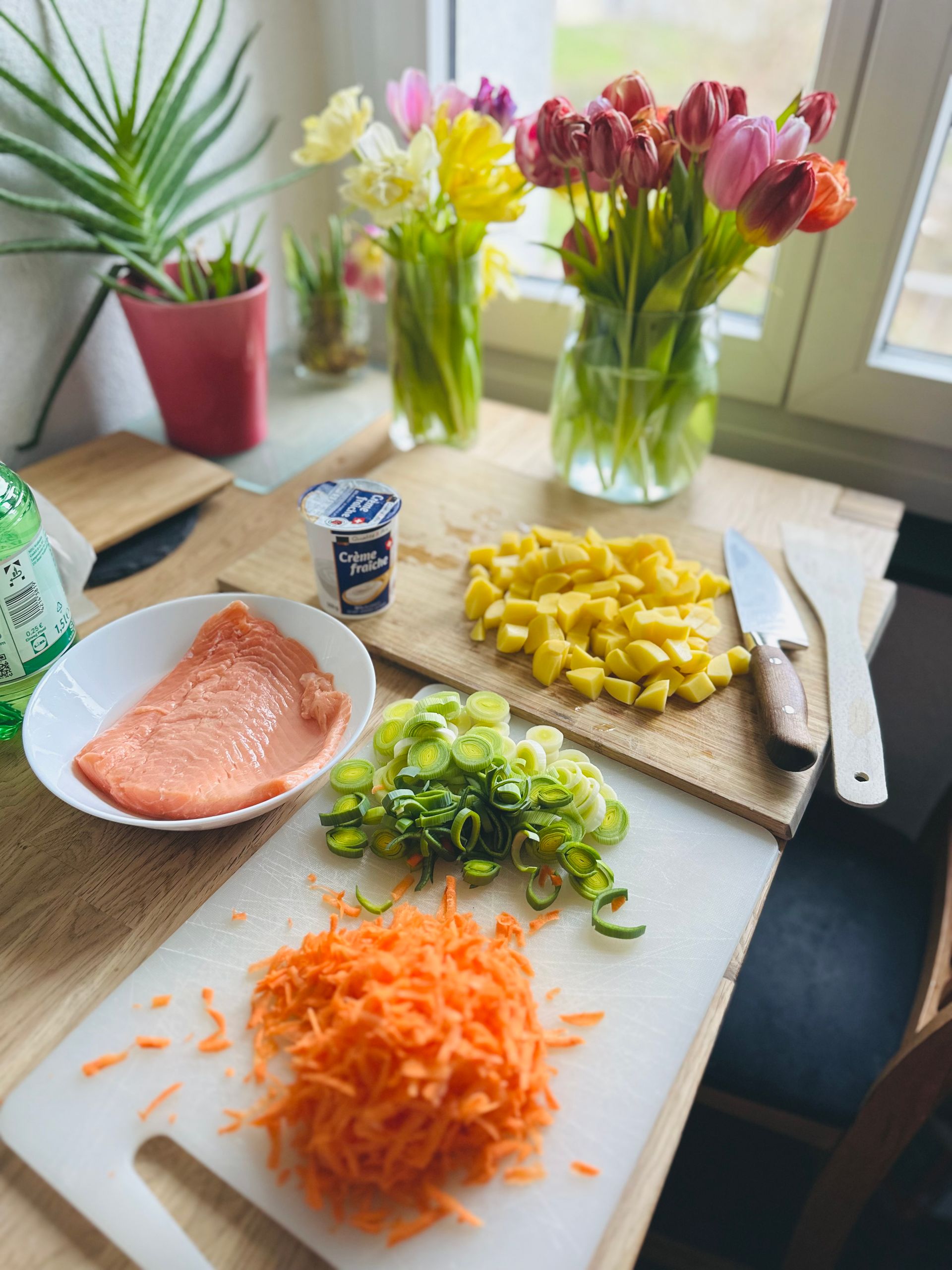
Soon, the knife began moving against the cutting board. The onion softened in the pan, rice steamed nearby, and greens waited in the sink. None of it was dramatic. Still, those ordinary motions started bringing me back into the room.
By the time I sat down with a warm plate, I understood what I had been looking for.
I needed a grounding meal.
Not a perfect meal. Not something beautiful enough to photograph. I needed food that could return me to my body when the rest of the day had pulled me in too many directions.
The Kitchen Before the Calm
The kitchen does not always look peaceful before the calm begins.
There may be dishes in the sink, groceries that still need to be put away, and ingredients spread across the counter without a clear plan. The room can feel like one more place demanding my attention.
Yet, once I begin, the work becomes specific.
Wash the greens.
Cut the onion.
Rinse the rice.
Heat the pan.
Each task asks only for what comes next.
That simplicity helps me when my mind has been trying to carry everything at once.
The Knife Gives My Thoughts a Rhythm
Chopping can become meditative without trying to become meditation.
The knife rises and falls. The pieces gather, and my hands understand the task even when my mind still feels crowded.
I have to pay enough attention to remain safe, which pulls me away from the mental loops I had been repeating all day.
Gradually, thought begins matching movement.
Nothing is solved, but the noise becomes less chaotic.
The kitchen gives the mind a rhythm it can follow.
The Onion Softens Before I Do
Onions begin sharp.
They sting the eyes, release a strong smell, and hold their shape in the pan. Then, heat begins changing them.
They become translucent, sweet, and easier to fold into everything else.
I have always appreciated that transformation.
Sometimes, I arrive in the kitchen feeling equally sharp. The day has left me tense, impatient, or emotionally crowded.
As the onion softens, something in me often begins to follow.
Cooking Brings Me Back to the Physical World
When I feel overwhelmed, much of the discomfort lives in thought.
I replay conversations, anticipate problems, or move through possibilities that have not happened. The mind travels everywhere while the body remains hungry, tired, and largely ignored.
Cooking interrupts that separation.
The pan is hot. The greens need water, and the food needs seasoning. Steam reaches my face while the smell of garlic and onions fills the room.
My senses return before my thoughts fully settle.
That is often enough to begin.
A Real Meal Can Be Evidence That I Still Matter
There are days when feeding myself becomes the first concrete act of care.
I may have spent hours responding to other people, meeting deadlines, solving problems, or trying to make sense of something that remains unresolved.
Then, the meal appears in front of me.
It says that my body still belongs inside the day.
I still need nourishment, even when work feels urgent. I deserve more than whatever I can grab while standing, scrolling, or moving toward the next obligation.
A real meal becomes proof that I have not disappeared beneath everything I am carrying.
Food That Knows My Name
Some meals feel familiar before I take the first bite.
They do not need explanation. The smell alone tells me what kind of comfort is coming.
Beans, rice, soup, eggs, chicken, vegetables, or warm bread can carry that recognition. Their power does not come from complexity.
It comes from memory.
This connects directly to my reflections on the food memories that continue following us home.
The meals that steady us often carry history. They taste like someone’s hand, someone’s lesson, or an earlier version of home.
Memory Lives in Technique Too
Food memory is not limited to a finished recipe.
It can live in how someone washes rice, seasons beans, stirs a pot, or checks whether something is ready without using a timer.
I may remember a person through the way they moved around a kitchen.
They tasted from the spoon, added more seasoning, and somehow knew when the food needed another ten minutes.
Those gestures become part of what I inherit.
Even when I adapt the meal, the earlier hands remain present.
The Meal Can Return Me to an Earlier Home
A familiar dish can collapse distance.
I may be living in another city or traveling far from the kitchen where I first knew the food. Still, one smell can bring the room back.
The memory arrives through steam, spice, texture, and sound.
Suddenly, I remember a table, a relative, a neighborhood, or a moment in life when the meal meant something different.
Food cannot recreate the past exactly.
It can make the past briefly available.
A Plate With Roots Does Not Need to Be Elaborate
Grounding food is often simple.
Rice provides structure. Beans bring depth, while eggs, chicken, soup, vegetables, or bread make the plate feel complete.
The ingredients do not need to be rare.
They need to feel reliable.
When life feels uncertain, dependable food can create a small sense of order. I know how it should taste, how it should feel, and what kind of hunger it can satisfy.
Familiarity becomes part of the nourishment.
Rice Gives the Plate Somewhere to Rest
Rice has a quiet steadiness.
It sits beneath sauces, beans, vegetables, and meat without demanding attention for itself. At the same time, it holds the meal together.
A plate with rice feels anchored.
The grains absorb flavor while remaining recognizable. They create enough substance to make the meal feel lasting rather than temporary.
For me, that matters on days when everything else has felt unsettled.
Beans Carry Both Survival and Memory
Beans know how to stretch.
A pot can feed several people, support multiple meals, and transform according to the seasoning around it.
They offer practicality without losing cultural meaning.
Across households and communities, beans have helped people make enough from limited resources. They have also become beloved dishes tied to family, region, and identity.
That combination of survival and memory gives them a particular authority.
They are humble food, but never insignificant food.
Eggs Can Rescue the Evening
Some nights, I do not have the energy for a long recipe.
Eggs give me another path.
They cook quickly, welcome seasoning, and can turn rice, vegetables, bread, or leftovers into a complete meal.
The simplicity does not make the plate less legitimate.
Instead, it reminds me that care can be practical.
I do not need to exhaust myself in order to deserve dinner.
Soup Holds What the Day Has Scattered
A bowl of soup gathers ingredients that began separately.
Vegetables, broth, herbs, grains, beans, or meat enter the pot with their own textures and flavors. Over time, they begin carrying parts of one another.
That unity comforts me.
On scattered days, soup offers a meal in which everything has found somewhere to belong.
I may not have found the same order in my thoughts.
Still, the bowl shows me what integration can look like.
Warm Bread Makes the Meal Feel Safer
Warm bread can change the entire emotional weight of a plate.
It gives the hands something to tear, dip, and hold. The texture offers comfort before I have decided whether I am comforted.
Bread also makes the meal feel generous.
Even a simple bowl of soup can feel complete when something warm rests beside it.
The addition is small.
The sense of care is not.
The Body Often Knows Before the Mind Does
There are moments when I cannot name what I am feeling.
I only know that I am restless, irritable, unfocused, or emotionally distant from myself.
Then, I eat.
Sometimes, the mystery becomes less dramatic once the body receives food. I had waited too long, relied on coffee, or moved through the day without enough protein, water, or substance.
Not every emotional problem is hunger.
Hunger can make every problem harder to understand.
Grounding Begins With Something Concrete
When life feels abstract, a meal is specific.
The plate is in front of me. The food has temperature, texture, flavor, and weight.
I chew. I breathe, and my body begins responding to something real rather than to every imagined outcome in my mind.
This is why grounding often begins with the senses.
Food brings me back to what exists now.
The First Few Bites Change the Room
I have noticed how different the world can feel after the first few bites.
Before eating, every sound may feel irritating. Small problems appear larger, and patience seems unavailable.
Then, the body begins receiving what it needs.
The room has not changed.
My capacity has.
A grounding meal gives me enough support to meet the same circumstances differently.
Cooking for Myself Is Not a Lesser Form of Care
It is easy to prepare a proper meal when other people are expected.
The table matters. The food receives attention, and I want everyone to feel welcomed.
When I am alone, the standards can disappear.
I may eat over the sink, skip the plate, or convince myself that assembling something barely sufficient counts as dinner.
Sometimes, that is all I can manage, and I do not judge it.
Still, cooking for myself reminds me that care does not require an audience.
I Am Still Worth Feeding When Nobody Is Watching
A meal for one can reveal what I believe about my own worth.
Do I use the good bowl? Do I sit down, or do I treat myself as someone who should remain productive even while eating?
The answer does not need to become ceremonial every night.
However, I want my body to know that it matters beyond what it produces for other people.
Feeding myself becomes one way of making that belief physical.
The Table Creates a Boundary Around the Moment
Sitting at the table changes the meal.
The food no longer competes with standing tasks. I am not walking between rooms, answering messages, or eating from a container balanced beside my laptop.
The chair creates a pause.
Even if the meal lasts only fifteen minutes, the table tells the body that this time has a purpose.
I am here to eat.
A Grounding Meal Does Not Need to Become a Performance
Food culture can make ordinary cooking feel inadequate.
The meal should look beautiful, use special ingredients, and reveal something impressive about the cook.
Grounding food resists that pressure.
It may be beige, uneven, or served in a bowl that does not photograph well.
Its purpose is not to perform abundance.
Its purpose is to support a person.
Practical Ingredients Can Still Carry Deep Care
I do not need to make every component from scratch.
Canned beans, frozen vegetables, prepared broth, rotisserie chicken, or leftover rice can all become part of a nourishing meal.
Convenience can protect the cook’s energy.
That matters, especially on the days when the need for grounding arrives because I am already depleted.
The meal should help me recover.
It should not demand that I prove how much labor I can endure.
The Protein Can Give the Meal Staying Power
When I need a meal to steady me, protein often helps it last.
Chicken, beef, fish, eggs, beans, or another protein can give the plate enough substance to carry me beyond the next hour.
When I want to plan ahead with proteins delivered to the house, I may use ButcherBox.
The service does not replace the meaning of home cooking.
It simply helps ensure that an ingredient is available when I need to begin.
The Meal Can Start With What Is Already There
Some of the most grounding meals begin without a recipe.
I look at what remains in the refrigerator and ask what can become dinner.
Cooked rice meets vegetables. Leftover chicken moves into soup, while an egg gives new life to food that seemed incomplete.
This kind of cooking feels resourceful rather than restrictive.
It asks me to see possibility in what I already have.
Using What I Have Can Reduce Another Kind of Noise
Decision fatigue does not stay outside the kitchen.
Too many ingredients, recipes, and possible meals can make cooking feel harder.
When I begin with what is already available, the choices narrow.
That limitation can become a relief.
I do not need the perfect meal.
I need one that can happen.
Travel Has Taught Me That Every Culture Has Grounding Food
Wherever I travel, I notice the foods people return to when they want comfort.
The dishes differ, but the emotional purpose often feels familiar.
One culture may turn toward rice and beans. Another reaches for soup, noodles, bread, porridge, stew, dumplings, or a dish tied to childhood.
These foods often carry more meaning than the restaurant dishes promoted to visitors.
They belong to home, recovery, family, and ordinary appetite.
The Most Meaningful Meal May Not Be the Most Famous
Travel often directs attention toward signature dishes and celebrated restaurants.
I enjoy those experiences.
Still, the meal that reveals the most about a place may be something people eat regularly without thinking of it as special.
A bowl served at home, in a market, or at a small neighborhood restaurant can carry a deeper story of survival and belonging.
Food experiences through GetYourGuide can help introduce me to local dishes and culinary traditions, especially when guides provide the history behind what appears on the plate.
Even then, I want to listen beyond the tasting.
Comfort Food Is Cultural Knowledge
What comforts one person may feel unfamiliar to another.
That difference matters.
Comfort food is not a universal list of heavy or indulgent dishes. It comes from repetition, family, geography, memory, and the body’s relationship to familiar flavors.
A food does not need to make sense to an outsider in order to hold deep meaning for the people who love it.
The Meal Can Carry Migration
Grounding foods often travel with people.
Recipes change when ingredients become unavailable, new cultures influence the kitchen, or the next generation adapts the dish to its own life.
Still, something recognizable remains.
The meal becomes a way of carrying home without pretending home has remained unchanged.
Migration may alter the recipe.
Memory holds the thread.
Food Can Create Belonging in an Unfamiliar Place
When I am far from home, a familiar meal can restore a sense of orientation.
The language outside may be different, the room temporary, and the day full of unfamiliar decisions.
Then, I find rice, beans, soup, or a seasoning that reminds me of somewhere I know.
The meal does not erase the distance.
It gives me a place to stand within it.
Grounding Is Not the Same as Escaping
A comforting meal cannot solve every problem.
It does not replace therapy, financial support, medical care, community, or the difficult conversation that still needs to happen.
Grounding serves another purpose.
It helps me become present enough to face what comes next.
I am not using the food to disappear from reality.
I am eating so I can return to it with more capacity.
The Meal Gives the Question Somewhere to Land
Before eating, my thoughts may feel too scattered to examine.
Afterward, the problem often becomes more specific.
I can identify what needs action, what requires patience, and what belongs to fear rather than fact.
Food does not provide the answer.
It gives the mind enough stability to ask the question more clearly.
Sometimes I Need Nourishment Before Insight
I have spent too much time trying to think my way out of states created partly by physical neglect.
I wanted clarity while dehydrated, overtired, overstimulated, and hungry.
The mind struggled because the body had received no support.
Now, I try to address the basic need before demanding wisdom from myself.
Drink water.
Eat something substantial.
Rest long enough to hear the next thought.
A Meal Can Mark the End of Survival Mode
Some days move so quickly that I remain in reaction long after the emergency has passed.
The body keeps rushing. I eat quickly, speak quickly, and move toward the next task as though something is still chasing me.
A grounding meal can interrupt that momentum.
The food is warm. The chair is steady, and nothing requires me to finish the plate in three minutes.
Sitting down tells the nervous system that the immediate danger has ended.
The Pace of Eating Matters Too
I can prepare a nourishing meal and still rush through it.
When I eat too quickly, the body barely has time to register what I have given it.
Slowing down does not require an elaborate ritual.
I can put the fork down between bites, taste the food, and notice when hunger begins changing into satisfaction.
The meal becomes more grounding when I actually remain present for it.
Texture Helps Bring Me Back
Grounding happens through more than flavor.
The crisp edge of roasted vegetables, softness of rice, warmth of broth, or chew of bread gives the senses something immediate to recognize.
Texture keeps the meal from becoming abstract.
I am not merely consuming nutrients.
I am experiencing food.
A Little Crunch Can Wake Up a Soft Meal
Many comforting foods are soft.
Soup, rice, beans, eggs, and stewed vegetables create warmth and ease. Still, a crunchy element can add enough contrast to keep the plate alive.
Toasted bread, seeds, fresh vegetables, or crisped edges may provide that shift.
Contrast reminds me that grounding does not have to mean dullness.
Seasoning Can Create Recognition
Sometimes, one spice makes the meal feel like mine.
The ingredient may be simple, but its presence changes everything. Garlic, cumin, thyme, ginger, black pepper, or another familiar seasoning tells the body what kind of food has arrived.
Flavor becomes a language of recognition.
I know where I am because I know what I am tasting.
Acid Can Lift the Weight
Comforting food can become heavy if every flavor moves in the same direction.
A squeeze of citrus, a splash of vinegar, pickled vegetables, or yogurt can bring brightness.
That small contrast often makes the meal feel more complete.
The grounding remains.
It simply gains light.
The Kitchen Can Become a Place of Repair
When I return to the kitchen after a difficult day, I am not only making food.
I am repairing the relationship between myself and the body I ignored while trying to manage everything else.
The repair may begin with something as ordinary as washing rice or scrambling eggs.
Care does not always announce itself dramatically.
Sometimes, it looks like making sure I do not go to bed hungry.
Home Cooking Can Restore a Sense of Agency
Overwhelm often comes with the feeling that too much sits outside my control.
I cannot change another person, reverse a decision, or solve every financial or professional concern in one evening.
I can decide what goes into the pot.
I can taste, adjust, and create something useful from the ingredients available.
That limited agency does not solve the larger problem.
It reminds me that I am not powerless in every part of my life.
The Meal Does Not Need to Fix Me
I do not want to turn food into another form of self-improvement.
The meal does not need to make me productive again or prepare me to return immediately to work.
Sometimes, it only needs to nourish me.
Care loses something when every act must produce a more efficient version of the person receiving it.
I can eat because I am hungry.
That reason is enough.
Grounding Can Be Gentle
I once imagined grounding as discipline.
Pull yourself together. Focus. Stop being emotional and return to the task.
Now, I understand grounding differently.
It can be warm, sensory, and kind.
It can look like soup, a chair, and enough time to finish the bowl without interruption.
The Table Can Hold What I Cannot Yet Explain
There are feelings I understand only after I have cared for myself physically.
At first, I may know only that something feels wrong.
Once the body settles, sadness becomes recognizable. Anger separates from fear, and exhaustion stops disguising itself as failure.
The table gives the feeling somewhere to wait until language arrives.
Eating With Other People Can Ground Me Too
Grounding does not always happen alone.
A shared meal can return me to relationship. Conversation moves around the table, plates pass, and the day begins to feel less private and heavy.
I do not need to explain everything.
Sometimes, eating beside someone who feels safe provides enough connection.
Hospitality Can Be as Simple as Another Plate
A grounding meal often stretches easily.
Rice, beans, soup, stew, chicken, vegetables, or bread can make room for another person without requiring a performance.
The food says, “Sit down. There is enough.”
That kind of hospitality feels deeply human.
It responds to the person before worrying about whether the table looks impressive.
Someone Else’s Meal Can Carry Me
There are moments when I cannot cook for myself.
Illness, grief, exhaustion, or emotional strain may make even simple preparation feel impossible.
Then, someone brings food.
The container holds more than dinner. It carries time, attention, and recognition of the fact that I still need care while struggling.
A meal prepared by another person can become a bridge back to myself.
Grounding Food Should Not Be Treated as a Luxury
Everyone deserves access to food that is nourishing, culturally familiar, and sufficient.
Yet, many people live where ingredients cost too much, transportation limits choice, or work leaves little time for cooking.
A conversation about grounding meals must include food access.
The body cannot receive proof of care from a system that repeatedly leaves it hungry.
Enough Food Changes Emotional Possibility
Food insecurity affects more than the stomach.
It creates anxiety, difficult tradeoffs, and the constant need to calculate what will last.
When enough food becomes uncertain, meals carry pressure instead of comfort.
Grounding requires some degree of safety.
That safety should not depend entirely on personal income or luck.
Community Kitchens Create More Than Meals
Community cooking, food pantries, mutual-aid programs, and shared meals can provide practical nourishment.
They can also reduce isolation.
People receive food while becoming visible to one another. Needs become known, and resources move through relationships rather than remaining abstract.
A grounding meal can support a person.
A reliable food system can help ground an entire community.
The Meal Gives Me a Way Back
That evening, I sat down with rice, greens, and the simple food I had made from what was available.
The meal did not erase the day.
The unanswered questions remained, and several tasks still waited for me.
Yet, the room no longer felt as chaotic.
I could taste the onion, feel the warmth of the plate, and recognize that I had done one clear thing for myself.
I had eaten.
Sometimes, that is the first step back.
Why Grounding Starts at the Table
A grounding meal brings me back into my body when thought, work, worry, or uncertainty have pulled me too far away.
It does not need to be elaborate.
Beans, rice, soup, eggs, chicken, vegetables, or warm bread can all do the work when they offer familiarity, substance, and care.
The meal reminds me that I am still here.
I have hands that can chop, a mouth that can taste, and a body that needs more than instructions to keep going.
Grounding starts at the table because the body needs proof of care.
Not a promise that I will treat myself better later.
Not a plan for what I will cook when life becomes easier.
Proof now.
A warm plate. A chair, a few quiet minutes, and enough food to feel myself returning.
Explore more stories about home cooking, food memory, and the meals that carry us through ordinary life in DG Speaks Food. You can also read more about identity, care, and the emotional rituals shaping daily life through DG Speaks Culture, or discover how food creates connection and belonging across destinations in DG Speaks Travel.