Never Go Alone Turned Pandemic Protection Into Thoughtful Design
Never Go Alone wellness accessories arrived during a moment when masks, sanitizer, and cleaning wipes had become part of everyday life. Yet most of those products still looked temporary, clinical, or disposable.
We carried bottles that leaked inside our bags. Disposable masks collected in coat pockets, cars, and kitchen drawers. Sanitizing wipes came in plastic packages designed to be thrown away as soon as they became empty.
Never Go Alone approached those new routines differently.
Rather than treating personal protection as an unpleasant obligation, the health and wellness startup worked with London design studio LAYER to create products people might intentionally carry, display, refill, and reuse.
The inaugural Edition 01: Sandstone collection included a reusable face mask, refillable hand sanitizer, and a refillable case for sanitizing wipes. Together, the products explored what could happen when health, style, sustainability, and human behavior became part of the same design conversation.
Never Go Alone Emerged From a Personal Experience
London-based entrepreneur Nga Nguyen and California-based creative director Carl Adelson co-founded Never Go Alone during the early months of the COVID-19 pandemic.
Nguyen had contracted COVID-19 early in the global outbreak. Fashion publications widely documented her experience because she had recently attended major fashion events in Europe.
However, reducing her story to the sensational label “fashion’s patient zero” overlooks what happened next.
Nguyen transformed an intensely personal health experience into a business concept focused on preparedness, collective care, and daily wellness. The brand’s name reflected the idea that protecting ourselves and protecting others are not separate responsibilities.
Never Go Alone describes its beginnings as a response to the uncertainty of 2020. The founders wanted to develop everyday products that supported responsible living and travel without looking like disposable medical supplies.
That goal became the foundation for its collaboration with LAYER.
LAYER Designed More Than a Product Collection
Never Go Alone partnered with Benjamin Hubert’s experience design studio, LAYER, during the brand’s early development.
Over approximately one year, the studio helped shape the product designs, packaging, visual identity, art direction, and broader experience surrounding the company.
That full-system approach gave the collection a level of consistency that individual wellness products often lack.
The colors, materials, containers, typography, scents, and physical interactions all contributed to the same story. Instead of creating another anonymous sanitizer bottle, LAYER considered how someone would hold it, refill it, attach it to a bag, and display it at home.
The result felt closer to a lifestyle collection than a package of emergency supplies.
That distinction may sound superficial during a public-health crisis. Yet design influences whether people consistently use, carry, maintain, and replace essential products.
A product cannot support a daily habit when it feels inconvenient, unpleasant, or easy to forget.
Edition 01: Sandstone Reimagined Everyday Hygiene
The inaugural collection took its name and visual inspiration from sandstone.
Sandstone forms as individual grains combine over time, creating structures that can appear both strong and fragile. Never Go Alone used that natural metaphor to represent human connection, adaptation, and resilience.
Earthy neutrals and vivid orange accents gave the products a warm, recognizable identity. Meanwhile, rounded forms and soft-touch materials created an experience far removed from the stark appearance of conventional medical packaging.
The collection also engaged several senses.
Users encountered tactile surfaces, carefully considered shapes, distinctive colors, and branded fragrances. Those details helped transform repetitive hygiene routines into more deliberate personal rituals.
That idea became especially relevant in 2020 and 2021. People were not simply washing and sanitizing more often. They were renegotiating how they moved through public space, interacted with strangers, and understood personal responsibility.
The Reusable Mask Combined Protection and Personal Style
The reusable face mask became the collection’s most visually distinctive product.
Inspired partly by athleisure, the mask used a seamlessly bonded construction rather than prominent seams and stitching. Adjustable components allowed wearers to modify the fit, while interchangeable ear loops introduced an element of personalization.
The three-layer structure included a breathable outer knit, a shaped Ultrasuede middle layer, and an inner technical knit containing antibacterial fibers.
An internal pocket held a replaceable PM2.5 filter. Additionally, a moldable nose bridge and adjustable straps helped the mask sit closer to the face.
Never Go Alone offered the mask in multiple sizes and designed it to fold flat inside a travel pouch when not in use.
Those decisions recognized that fit varies from one face to another. A mask designed around a single assumed head shape cannot provide the same comfort or seal for everyone.
Still, consumers should distinguish a reusable lifestyle mask with a replaceable filter from a certified medical respirator.
A PM2.5 filter may reduce exposure to some airborne particles. However, the complete mask’s performance also depends on fit, filtration testing, construction, wear, and whether it meets an established protective standard.
Good design can encourage use, but appearance alone does not establish medical effectiveness.
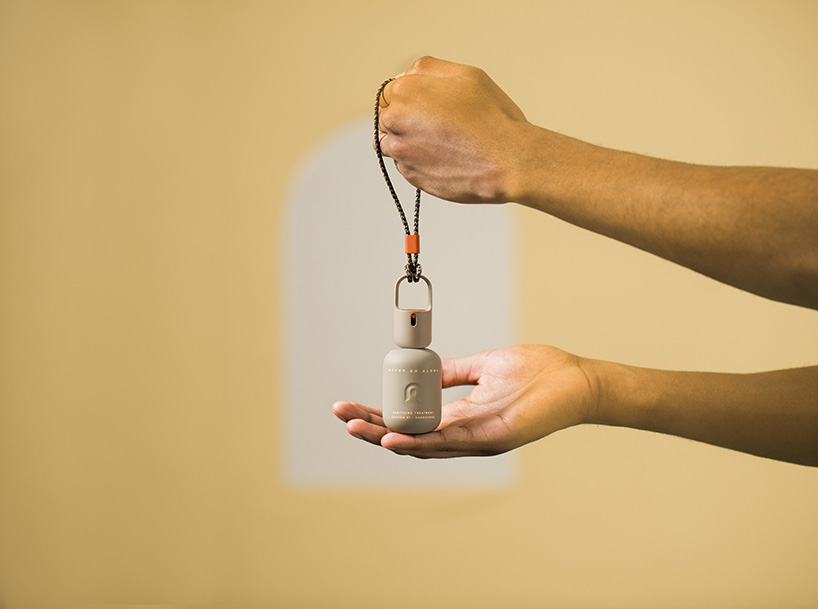
The Refillable Sanitizer Made Portability Part of the Design
Hand sanitizer became one of the most commonly carried products during the pandemic. Unfortunately, the small plastic bottles available at the time often felt disposable and poorly designed.
Never Go Alone created a refillable container that users could keep rather than discard after every use.
The rounded bottle featured a lanyard that allowed it to hang from a handbag, backpack, keys, or belt loop. That simple detail addressed a familiar problem: sanitizer provides little value when it sits at the bottom of a crowded bag.
By making the container visible and accessible, the design supported repeated use throughout the day.
The company also treated scent as part of the experience. Rather than relying only on the sharp alcohol smell associated with many sanitizers, Never Go Alone developed fragranced formulas intended to make frequent use feel less clinical.
That sensory approach reflected the brand’s larger argument. Products connected with health and hygiene do not need to feel cold, institutional, or joyless.
A Refillable Wipes Case Challenged Disposable Packaging
The sanitizing wipes case applied similar thinking to another frequently discarded product.
Traditional travel wipes usually come inside lightweight plastic packets. Once the package becomes empty or loses moisture, the entire container enters the waste stream.
Never Go Alone replaced that model with a sturdier refillable case designed for repeated use.
Like the sanitizer bottle, the wipes container included a lanyard for easy attachment. Its shape and finish also allowed it to sit comfortably beside other personal accessories instead of looking like something that needed to remain hidden.
That visibility carried practical value.
People are more likely to use a product when they can locate and open it quickly. Therefore, the design addressed both aesthetics and behavior.
Refillable Does Not Automatically Mean Sustainable
The refillable packaging offered a clear improvement over products designed for immediate disposal.
However, refillability alone does not guarantee environmental sustainability.
A reusable container creates meaningful waste reductions only when customers continue using it. The environmental calculation must also consider materials, manufacturing, transportation, refill packaging, cleaning, product lifespan, and end-of-life disposal.
Premium objects can even create additional consumption when brands release frequent color changes or encourage customers to collect multiple versions.
Therefore, the most sustainable relationship involves purchasing one durable container, maintaining it, and refilling it for as long as possible.
Never Go Alone’s initial sanitizer bottle and wipes case were made from injection-molded recycled plastic. That material choice addressed one part of the problem, while the refill model attempted to extend each container’s useful life.
The collection demonstrated how design can reduce waste. Still, responsible consumption depends on what people do after purchasing the beautifully designed object.
The Brandmark Created a Visual Language of Connection
LAYER also designed the Never Go Alone brandmark.
The lowercase, n-shaped symbol used a structured architectural form that resembled an arched entrance. Equal attention to positive and negative space created a feeling of balance.
The arch could suggest shelter, passage, welcome, or connection. Those interpretations supported a brand built around the idea that wellness is both personal and collective.
That visual restraint helped the identity stand apart from the crowded graphics and clinical symbols commonly used on personal-protection products.
Nothing about the mark shouted danger.
Instead, it communicated calmness, confidence, and continuity. Those qualities made sense for products meant to help people navigate an anxious period without constantly reinforcing fear.
Design Shapes Whether Healthy Habits Last
The most interesting part of the collaboration involved its attention to human behavior.
Public-health recommendations often assume that giving people correct information will automatically change their behavior. In reality, people also respond to convenience, comfort, identity, cost, social expectations, and emotion.
A mask that constantly slips may remain at home. An unattractive sanitizer bottle may stay hidden inside a bag. Wipes that are difficult to reach will not become part of a dependable routine.
Design cannot replace clear health information. Nevertheless, it can make healthier actions easier to repeat.
Never Go Alone and LAYER recognized that people form relationships with objects. We carry items that reflect our personalities, fit comfortably into our routines, and make us feel prepared.
By turning hygiene products into desirable accessories, the collection attempted to strengthen those relationships.
Wellness Products Should Not Become Symbols of Privilege
The collection also reflected a growing premium-wellness market.
Beautiful materials, custom scents, and sophisticated packaging gave the products emotional appeal. At the same time, elevated design usually carries an elevated price.
That tension matters because basic health protection should never become available only to people who can afford luxury accessories.
During the pandemic, race, income, occupation, housing, and access to healthcare strongly influenced who faced the greatest exposure and who could protect themselves.
A stylish refillable sanitizer bottle could improve one consumer’s routine. It could not resolve the lack of paid leave, safe working environments, affordable healthcare, or protective equipment facing many essential workers.
Those realities do not make design irrelevant. Instead, they remind us to separate personal wellness products from public-health solutions.
Individual preparedness matters, but collective safety also requires strong institutions, fair policies, and equitable access to protection.
Never Go Alone Grew Beyond Its Pandemic Origins
Although Never Go Alone emerged during the COVID-19 crisis, the company did not remain limited to face masks and emergency supplies.
The brand later expanded into a broader lifestyle and well-being business with products such as treatment mists, hand cream, candles, home wipes, and other daily essentials.
That evolution suggests the founders saw the pandemic collection as the beginning of a larger conversation about personal rituals.
The transition also raises an interesting business question. Can a company created in response to one historic crisis build a lasting identity after consumer priorities change?
Never Go Alone’s sensory branding, refillable packaging, and focus on portable wellness gave it a foundation that could extend beyond masks.
Rather than selling fear, the company positioned its products around care, optimism, and intentional living.
Why This Collaboration Still Matters
The LAYER and Never Go Alone collaboration captured a specific moment in design history.
During 2020 and 2021, objects associated with hospitals and emergency preparedness entered our homes, workplaces, handbags, and travel routines. Designers suddenly had to reconsider what those objects should look and feel like.
Never Go Alone answered by treating protection as part of everyday culture.
The collection did not hide its purpose. Instead, it made preparedness visible and allowed users to incorporate it into their personal style.
That approach connected with many of the ideas I explore through my broader technology and innovation coverage. The most compelling products rarely succeed because of technology or appearance alone. They stand out because designers understand how people actually live.
My Takeaway From LAYER x Never Go Alone
Never Go Alone’s Edition 01: Sandstone collection showed how thoughtful design could transform products associated with anxiety into objects connected with care and confidence.
The reusable mask addressed comfort, fit, storage, and personal style. Meanwhile, the refillable sanitizer and wipes containers made portability and repeated use part of their design.
LAYER also created a brand identity that felt calm and hopeful rather than clinical or fear-driven.
Still, attractive packaging should never distract us from questions about effectiveness, affordability, waste, or equity.
Wellness cannot depend entirely on what an individual carries in a designer pouch. Public health requires shared responsibility, accessible resources, and systems that protect people regardless of income.
Even so, daily objects matter.
When designers make protective products easier to carry, refill, use, and maintain, they can help healthier routines become more sustainable.
Never Go Alone demonstrated that protection and personal expression do not need to compete.
Sometimes, better design helps us care for ourselves while remembering that none of us moves through the world alone.