Why Soup Season Feels Like a Return to the Body
My body usually notices soup season before my mind does.
The air changes first. Evening arrives earlier, the floor feels colder underfoot, and foods that seemed too heavy a few weeks before begin making sense again.
Then I want a pot on the stove.
The first soup after summer feels like a return. Heat becomes welcome. Steam gathers above the pot, broth begins carrying the smell of herbs through the house, and the kitchen shifts from a place of quick assembly back into a room where time matters.
Soup season is not only about colder weather. It marks a change in appetite, pace, memory, and the way I want to care for myself.
The First Pot Changes the Kitchen
Summer cooking often asks for speed.
I want food that does not heat the room, require long preparation, or keep me standing near the stove. Meals become lighter, cooler, and easier to assemble.
The first cold evening reverses that logic.
Suddenly, the warmth of the stove feels useful. A simmering pot makes the kitchen feel occupied in a comforting way. The room begins smelling like someone has decided to stay for a while.
Soup changes the atmosphere before it reaches the bowl.
Its preparation creates anticipation. Onions soften. Garlic becomes sweeter. Broth changes color, while roots, greens, beans, grains, or meat begin giving themselves to the liquid.
The kitchen starts telling the household that food is coming.
Steam Is a Signal
Steam rising from a pot carries information.
It tells me the food is becoming something different. Separate ingredients are beginning to share flavor, and the water that once looked plain is turning into broth.
The signal is physical too.
Warm air reaches my face when I lift the lid. The smell makes hunger more specific. Instead of wanting something to eat, I begin wanting that particular bowl.
This sensory recognition is part of why food memories continue following us home.
A soup can bring back an entire room through aroma alone.
Soup Carries Memory Differently
Many foods are remembered through exact appearance.
Soup is less fixed.
The same recipe changes depending on the pot, cook, season, and ingredients available. One person adds more broth. Another makes it thick enough to stand between soup and stew.
That flexibility allows memory to survive variation.
I may not reproduce a family soup exactly, but the scent of herbs, beans, or stock can still bring the original table closer.
Memory does not always require precision. Sometimes resemblance is enough.
The Pot Makes Room for What Is Available
Soup is generous toward imperfect ingredients.
Vegetables that are no longer crisp can still offer flavor. Leftover meat can be cut into smaller pieces, while beans, rice, noodles, or grains help turn a modest amount of food into a complete meal.
This adaptability makes soup practical.
The pot allows ingredients to meet one another where they are rather than demanding visual perfection.
Still, I do not want to romanticize scarcity.
Being able to stretch food demonstrates knowledge. Having to stretch too little food across too many people reflects a larger failure of access, wages, and support.
Resourcefulness deserves respect, but it should not excuse hunger.
Broth Holds the Meal Together
Broth can seem like the least visible part of soup.
It is also what connects everything.
Water becomes meaningful through bones, vegetables, herbs, spices, time, and heat. Flavor moves out of individual ingredients and into something shared.
A strong broth can carry a simple meal.
It does not need to be complicated. What matters is attention to salt, acidity, depth, and the balance between richness and freshness.
Soup often succeeds because the liquid has been given enough time to become more than water.
Time Is One of the Ingredients
Some soups come together quickly.
Others improve through slow cooking, resting, cooling, and reheating. The flavor deepens after the ingredients have had more time together.
That process can feel reassuring in a culture that wants immediate results.
The pot cannot be rushed past every stage.
Beans need to soften. Meat must become tender, while certain vegetables need time to release their sweetness.
Soup reminds me that waiting can be active.
Something is happening even when the surface appears calm.
The Labor Begins Before the Simmer
A finished bowl can make soup look effortless.
Before the simmer, someone planned, shopped, washed, peeled, chopped, opened containers, checked the pantry, and decided how much food the household would need.
Afterward, the work continues.
The pot must cool. Leftovers need containers, and a heavy piece of cookware waits in the sink.
Comfort food still requires labor.
That labor often falls to women, especially in families where food preparation is treated as a natural expression of care rather than skilled work.
A warm bowl should not depend on one exhausted person remaining invisible.
Rest and Cooking Can Exist Together
Soup is sometimes described as easy because it cooks in one pot.
One pot can reduce cleanup, but ease depends on the recipe, equipment, and ingredients. Chopping a large amount of food still requires time and physical effort.
Planning can make the process gentler.
Pre-cut vegetables, canned beans, frozen greens, prepared broth, or leftovers can reduce the work without making the meal less meaningful.
This connects with my reflection on women, rest, and why softness is not surrender.
Care does not become more authentic because it is exhausting.
A Pot Can Reorganize Several Meals
One soup can solve more than one day.
The first bowl becomes dinner. Another portion becomes lunch, while the rest can be frozen for a night when energy is lower.
That practicality matters.
Batch cooking can reduce decision fatigue and make it easier to eat something nourishing during a busy week.
The second bowl may taste even better because the flavors have settled.
Repetition does not always feel boring when the food offers relief.
Beans Bring Their Own Kind of Comfort
Beans are among the ingredients I associate most strongly with soup season.
They add texture, protein, and substance without requiring the pot to center meat. Their starch thickens broth, while herbs, vegetables, and spices give them different identities across cultures.
A bean soup can be humble and deeply satisfying.
It also reflects agricultural history, migration, regional cooking, and the creativity of people who learned how to make affordable ingredients feel complete.
Beans carry more than nutrition.
Roots Taste Different in Cold Weather
Carrots, potatoes, sweet potatoes, turnips, parsnips, beets, and other roots belong naturally in winter cooking.
They hold up under long heat and bring sweetness, starch, or earthiness to the pot.
Root vegetables also make seasonality visible.
They can be stored longer than delicate summer produce, which helps explain their place in colder-weather meals.
The ingredients reflect what people could grow, preserve, and keep through winter.
Greens Keep the Bowl From Feeling Heavy
Rich soup needs contrast.
Greens can bring bitterness, color, and freshness to a pot built around beans, meat, or starch.
Kale, collards, spinach, cabbage, or other leafy vegetables may soften into the broth while keeping enough character to shape the final bowl.
That balance matters to me.
Comfort does not have to mean heaviness. A soup can feel warm and substantial without leaving the body overwhelmed.
Meat Can Support the Pot Without Dominating It
When meat fits the recipe, it can provide richness and depth.
Ingredients from ButcherBox may support soups made with chicken, beef, pork, or bones for stock.
A large amount is not always necessary.
Smaller pieces can flavor beans, greens, vegetables, and broth throughout the pot. The meal becomes satisfying because the ingredients work together rather than because one element dominates.
Soup can make abundance feel distributed.
The Right Pot Becomes Part of the Ritual
Cookware changes how soup feels to make.
A heavy pot holds heat differently. A lid that fits well helps the simmer remain steady, while a comfortable ladle makes serving easier.
Kitchen tools from my Amazon shop may support the ritual, especially when they reduce friction or help the food cook more evenly.
Still, the object does not create the care.
A basic pot can hold a meaningful meal when the ingredients and attention are there.
Soup Travels Across Cultures
Nearly every food culture has some relationship with broth, stew, porridge, or a dish that lives between those categories.
The ingredients change according to climate, trade, religion, agriculture, and history.
One place builds soup around seafood. Another uses beans, fermented ingredients, coconut milk, noodles, grains, or root vegetables.
Travel teaches me that comfort food is not universal in form.
What feels soothing depends on memory and familiarity.
The emotional role may be shared even when the flavor is entirely different.
Illness Gives Soup Another Meaning
Soup is often offered when someone is sick.
The warmth can feel soothing, while broth and soft ingredients may be easier to eat when appetite is low.
More than that, soup communicates attention.
Someone noticed the illness, prepared something manageable, and placed care into a form the body could receive.
The bowl does not cure every problem.
It tells the person that she does not have to care for herself alone.
A Bowl Can Become a Pause
Soup encourages slower eating.
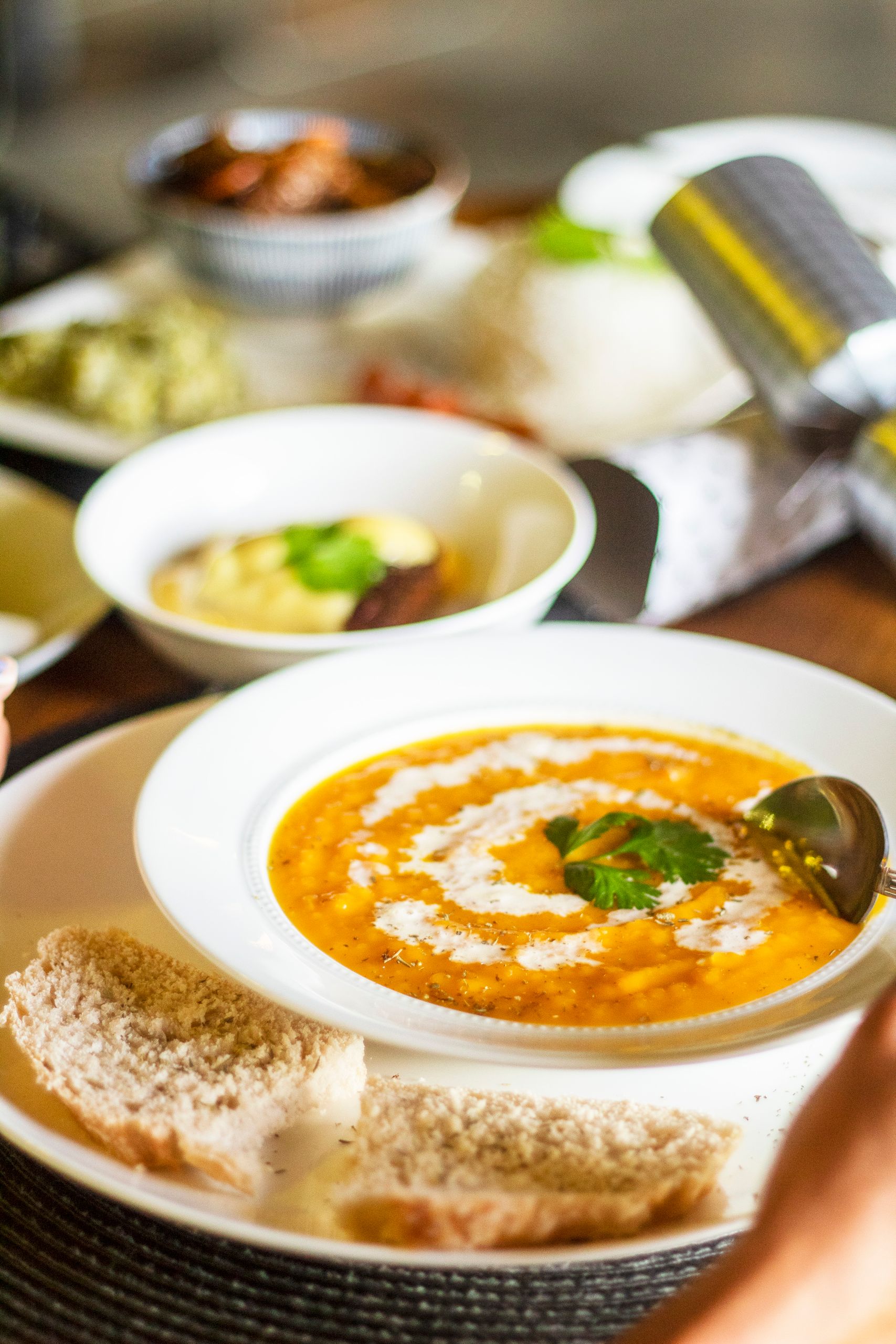
The temperature requires patience. I lift the spoon, wait, taste, and allow the bowl to cool gradually.
Both hands may wrap around it between bites.
That posture brings me back into the body.
Instead of eating while moving through another task, I have a reason to sit still.
The meal creates its own pause.
The Bowl Holds More Than Dinner
A bowl of soup can contain leftovers, family knowledge, seasonal ingredients, and the evidence of several hours of quiet work.
It can feed one person or many.
The same pot may move between comfort, economy, hospitality, and recovery without needing to announce any of those purposes.
That flexibility gives soup its emotional range.
The First Pot Means the Season Has Changed
Soup season begins when warmth feels welcome again.
The first pot after summer changes the kitchen and the body’s relationship with food. Steam becomes a signal that the pace has shifted.
I want meals that respond to that shift.
Beans, broth, roots, greens, grains, meat, herbs, or noodles can become comfort when given enough time and attention.
The final bowl does not need to be beautiful.
What matters is the warmth, the nourishment, and the sense that someone noticed what the season required.
With both hands around the bowl, I feel myself return.
For more stories about comfort food, seasonal cooking, kitchen labor, and the memories held inside everyday meals, explore DG Speaks Food.